
Identifying a honda click ball race genuine bearing requires a systematic approach that combines packaging analysis, physical inspection of the metal components, and digital verification. For scooter riders in the Philippines, where the Honda Click 125i and 150i are ubiquitous daily workhorses, maintaining the integrity of the transmission system is vital. Counterfeit parts are common in the aftermarket, and installing a fake bearing can lead to catastrophic engine or transmission failure. This guide outlines how to verify the authenticity of your replacement ball race bearings before they are installed in your motorcycle, ensuring your safety on the road.
Why Authentic Bearings Matter for Your Honda Click's Transmission
The transmission system of a Honda Click relies on high-precision components to transfer power smoothly from the engine to the rear wheel. Within the continuously variable transmission (CVT) and the final reduction gear assembly, ball race bearings play a crucial role. These bearings reduce rotational friction and support the shafts that carry heavy mechanical loads. Because the Honda Click operates in demanding tropical conditions, characterized by high ambient temperatures, heavy stop-and-go traffic, and intense humidity, these bearings must withstand extreme thermal and mechanical stress.
Using counterfeit or low-quality bearings introduces severe risks to your scooter’s drivetrain. Fake bearings are typically manufactured from inferior steel alloys that lack proper heat treatment. Under the stress of daily commuting, these substandard metals wear down rapidly. As the bearing degrades, it can shed microscopic metal shavings into the transmission or gear oil. These shavings act as an abrasive agent, quickly destroying adjacent gears, shafts, and seals.
Products mentioned in this guide
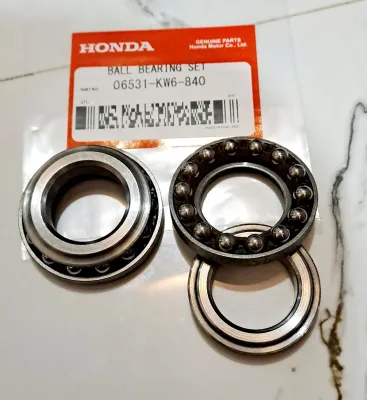
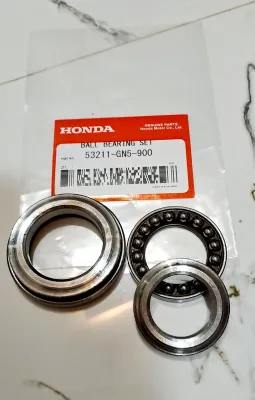
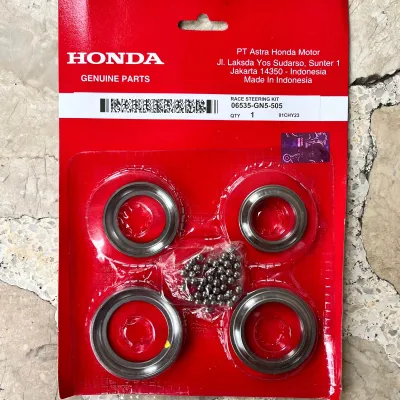
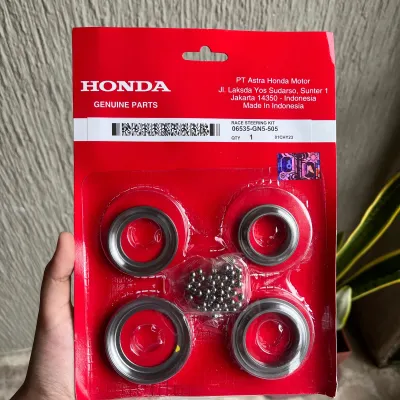
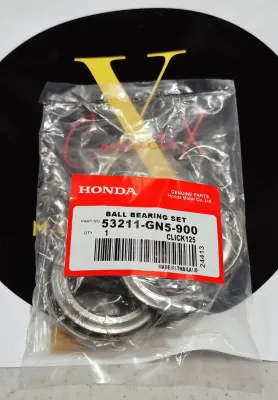
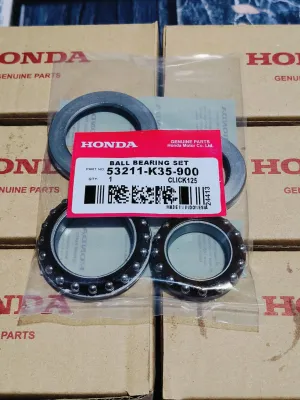
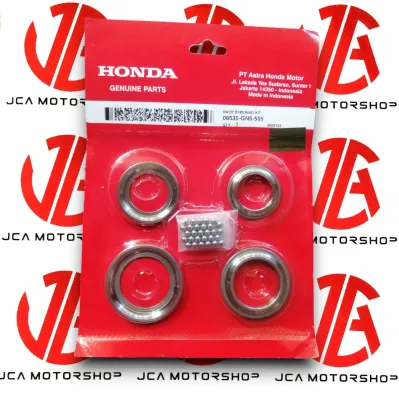
Prices are valid at publication and may change. Please refer to the product page for the latest price.
In worst-case scenarios, a counterfeit bearing can seize entirely while you are riding. A sudden transmission seizure locks the rear wheel, which can cause an immediate loss of control, putting you in extreme danger on busy highways. Furthermore, a seized bearing can crack the aluminum engine casing or final drive housing, resulting in repairs that cost thousands of Philippine Pesos (₱) and potentially rendering the scooter unusable. While precise industry statistics on counterfeit motorcycle parts in the local market are difficult to quantify, the prevalence of fake components in third-party supply chains makes rigorous verification a necessity for every rider.
Visual and Physical Checks: Identifying a Honda Click Ball Race Genuine Part
Before installing any new bearing, you must perform a thorough visual and physical inspection. Genuine Honda parts are manufactured to exacting global standards, and their packaging and physical characteristics reflect this precision. Counterfeiters often replicate the general appearance of the parts but fail to match the high-quality materials and manufacturing processes of original equipment manufacturers (OEM).

Packaging Inspection The first line of defense is the packaging. Genuine Honda parts in the Philippines typically arrive in high-quality cardboard boxes or sealed plastic packaging with clear, crisp printing. Examine the red Honda label closely. On genuine packaging, the logo, part number, and barcode are printed with sharp edges and consistent coloring. Counterfeit packaging often features blurred text, slight color bleeding, or spelling errors in the English or Japanese text. Additionally, check the security or holographic stickers if present; genuine holograms transition smoothly between colors and display clear, micro-printed patterns when tilted under a light source, whereas fake holograms are often dull, poorly aligned, or lack depth.
Markings and Engravings Examine the bearing itself, focusing on the metal shield or the outer ring. Genuine Honda ball race bearings feature precise, clean markings indicating the manufacturer (such as NTN, NSK, or Nachi, which are common OEM suppliers for Honda), the part number, and the country of origin. These markings are typically applied using advanced laser etching or precise, uniform stamping. In contrast, counterfeit bearings often display shallow, uneven stamping, smudged painted text, or inconsistent fonts. If the letters look crooked, vary in depth, or are easily scratched off, the part is highly likely to be a fake.
Build Quality and Finish The metal surface of a genuine bearing is highly polished and free of imperfections. Inspect the inner and outer races, as well as the ball bearings themselves, under bright light. Genuine bearings exhibit a smooth, uniform, and reflective finish, indicating proper heat treatment and grinding. Counterfeit bearings often show subtle manufacturing defects, such as tiny burrs, rough edges, uneven polishing, or even faint patches of corrosion or rust straight out of the package. These defects are clear indicators of low-grade steel and poor quality control.
Tactile and Auditory Indicators You can perform a manual test by holding the inner race of the bearing between your fingers and spinning the outer race. A genuine, brand-new bearing will rotate smoothly and silently, with a consistent, slight resistance caused by the internal grease. It should have virtually no lateral play (side-to-side wobble). If you feel any grinding, catching, rough spots, or if the bearing spins too freely and noisily like a dry toy, it indicates a lack of proper lubrication, poor internal tolerances, or damaged balls. While these physical sensations are strong indicators of quality, remember that they are diagnostic aids rather than absolute guarantees of authenticity; some sophisticated fakes may feel smooth initially but fail rapidly under load.
| Feature | Genuine Honda Click Bearing | Suspected Counterfeit Bearing |
|---|---|---|
| Packaging Print | Sharp, clear text; consistent red Honda branding | Blurred edges, color bleeding, or spelling errors |
| Holographic Seal | Multi-layered, clear micro-text, smooth color shift | Dull, flat, poorly aligned, or lacks depth |
| Engravings/Markings | Precise laser etching or uniform, crisp stamping | Crooked, shallow stamping, or easily scratched paint |
| Metal Surface Finish | Highly polished, uniform, no burrs or corrosion | Rough spots, uneven polishing, micro-burrs, or rust |
| Manual Rotation | Silent, smooth, consistent grease resistance | Grinding noise, loose wobble, or rough catching |
Verification Methods: Codes, Apps, and Official Channels
Modern packaging technology provides digital tools to help consumers verify the authenticity of automotive and motorcycle parts. Genuine Honda parts often come with unique identifiers on their labels, which can be cross-referenced through official databases.
Start by inspecting the barcode and QR codes printed on the red label. You can use a smartphone camera or a dedicated QR code scanning application to read the code. Genuine QR codes should direct you to official Honda parts verification portals or contain structured data that matches the printed part number and batch code on the box. If scanning the QR code directs you to a non-official, generic website, or if the scanned text does not match the product details, the part is counterfeit.
In the Philippines, you can leverage official distributor channels for manual verification. If you are uncertain about a bearing purchased from an independent shop, take clear, high-resolution photographs of the packaging, the barcode label, and the markings on the bearing itself. You can contact an authorized Honda motorcycle dealership or submit an inquiry through official Honda Philippines customer service channels. Providing the dealership with the exact part number and batch code allows them to verify if those specific production details exist in their inventory database.
Be aware that counterfeiters have become increasingly sophisticated. Some high-end fakes utilize cloned QR codes copied from a single genuine package. When scanned, these cloned codes may initially appear to point to a valid Honda portal. However, because the same code is printed on thousands of fake packages, digital verification must never be used in isolation. Always combine digital code checks with the physical and visual inspections of the bearing itself to confirm its authenticity.
Where to Buy Genuine Honda Click Bearings Safely
To minimize the risk of purchasing counterfeit transmission components, you must be selective about your purchasing channels. The most reliable way to secure a genuine OEM bearing is to buy directly from authorized Honda flagship dealerships, 3S (Sales, Service, and Spare Parts) shops, or authorized parts distributors. These establishments source their inventory directly from Honda Philippines, ensuring a secure supply chain and giving you access to authentic parts backed by manufacturer standards.
If you choose to purchase from third-party physical auto supply stores or online marketplaces, you must exercise high caution. When shopping on major e-commerce platforms, look for sellers that carry verified “Official Store,” “Preferred,” or “Mall” badges. These badges indicate that the seller has undergone identity and business verification. Always read customer reviews carefully, paying close attention to 1-star and 2-star ratings. Buyers who have accidentally purchased fakes often leave detailed reviews warning others about poor fitment, rough rotation, or packaging discrepancies.
Price is one of the most reliable indicators of authenticity. Research the standard retail price of the specific Honda Click ball race bearing at an authorized dealer. In the local market, genuine transmission bearings typically retail within a consistent price band (often ranging from ₱200 to ₱600 depending on the exact position and size of the bearing in the CVT or final drive). If an online listing or local shop offers the same part for an extremely low price—such as ₱50 or ₱80—it is almost certainly a counterfeit. Saving a few pesos on a cheap bearing is a poor trade-off when compared to the high cost of repairing a ruined transmission.
What to Do If You Suspect a Counterfeit Part
If you have purchased a bearing and suspect it is counterfeit during your pre-installation checks, you must take immediate action to protect both your scooter and your consumer rights.
First, do not attempt to install the suspected fake bearing. Even running a counterfeit bearing for a few kilometers can cause irreversible damage to the transmission shafts or the engine casing. Keep the part in its original packaging and store it in a clean, dry place to preserve its condition as evidence.
Next, document the discrepancies. Take clear, well-lit photographs of the packaging, focusing on any printing errors, blurred logos, or damaged seals. Take close-up shots of the bearing’s markings and any surface defects you observed. Locate your original receipt, sales invoice, or the digital transaction record from your online purchase, as this serves as proof of purchase.
Contact the seller immediately to request a return and a full refund, stating clearly that the item received does not match OEM standards. If you purchased the item through an online marketplace, do not click the button to confirm receipt of the order. Instead, file a formal dispute or refund claim through the platform’s customer protection program, uploading your photographic evidence and explaining the physical signs of counterfeiting.
If the seller is uncooperative, or if you purchased the part from a physical store that refuses to issue a refund, you can escalate the matter. In the Philippines, you can file a formal complaint with the Department of Trade and Industry (DTI) through their consumer protection division. Reporting these sellers helps curb the spread of dangerous, counterfeit automotive parts in the local motorcycle community.
Installation and Safety Reminders for Transmission Bearings
Replacing transmission bearings is a highly precise mechanical task that directly affects the safety and reliability of your Honda Click. Before beginning any work, consult your scooter’s official Honda service manual to verify the correct torque specifications, bearing orientations, and gear oil requirements. Always verify your specific vehicle model year, dimensions, and interface compatibility from the official documentation before proceeding.
Extracting and installing ball race bearings within the CVT or final reduction gear requires specialized tools. You must use dedicated bearing pullers to remove the old bearings without gouging the surrounding aluminum engine casing. Installing the new bearing requires a manual press, a hydraulic press, or specialized bearing drivers that apply force only to the outer race of the bearing. Applying pressure to the inner race or the shield during installation can misalign the internal ball bearings, ruining even a genuine OEM part before it ever spins under engine power.
Because of these technical requirements, it is strongly recommended to have the replacement performed by a qualified mechanic at an authorized Honda service center or a reputable motorcycle repair shop. A professional technician has the correct presses and alignment tools to ensure the bearing sits perfectly flush in its housing.
Never attempt to hammer a bearing into place using a mallet or a socket wrench. Hammering delivers uneven impact forces that can fracture the bearing’s internal races, dent the balls, or crack the delicate aluminum engine case. If the bearing does not slide in smoothly with the correct press tool, stop and inspect the housing for debris, burrs, or misalignment. Proper installation is just as critical as sourcing a genuine part to ensure long-term reliability on the road.
Frequently Asked Questions (FAQ)
Can I use a reputable aftermarket bearing instead of an OEM Honda part?
Yes, you can use high-quality aftermarket bearings from globally recognized manufacturers such as NTN, NSK, Nachi, or SKF, provided they match the exact specifications of the original Honda part. You must verify that the replacement bearing matches the precise inner diameter, outer diameter, width, load rating, and seal type (such as rubber seals or metal shields) specified in your scooter’s documentation. Avoid cheap, unbranded generic bearings, and consult a professional mechanic to confirm compatibility before installation.
How do I know if my current transmission bearings need replacement?
Unlike engine oil, transmission bearings do not have a strict mileage-based replacement interval and are typically replaced based on physical symptoms. The most common warning signs include a loud whining or rumbling noise coming from the rear gearcase during acceleration or deceleration, excessive play in the rear wheel or transmission shafts, or a rough sensation when spinning the rear wheel by hand while the scooter is on its center stand. If you experience any of these symptoms, have your scooter inspected by a qualified technician to diagnose the issue before purchasing replacement parts.
Community discussion
Share your experience or ask a question. Comments are reviewed before publication.