
Spotting authentic toyota atf t iv is crucial for maintaining the health and longevity of your vehicle’s automatic transmission. Counterfeit automotive fluids have become increasingly common on online marketplaces, making it easy for unsuspecting car owners to purchase substandard products. To verify if your transmission fluid is genuine, you must inspect the container’s print quality, analyze the physical characteristics of the fluid itself, and evaluate the seller’s credibility.
Why Counterfeit Transmission Fluids Pose a Risk
Automatic transmissions are highly complex systems containing planetary gear sets, wet clutches, and intricate hydraulic valve bodies. The transmission fluid serves multiple critical roles: it acts as a hydraulic medium to facilitate gear shifts, lubricates moving parts, cools the system, and provides specific friction properties. Genuine toyota atf t iv is formulated with a precise balance of base oils and additives tailored to the friction materials used in specific Toyota transmissions.
Counterfeit fluids compromise this balance. Fake fluids often consist of cheap, low-grade industrial oils or recycled lubricants that lack essential anti-wear additives and friction modifiers. In the tropical climate of the Philippines, where heavy traffic and high ambient temperatures place extreme thermal stress on transmissions, inadequate fluid can rapidly break down.
Products mentioned in this guide
Prices are valid at publication and may change. Please refer to the product page for the latest price.
This thermal breakdown leads to severe consequences, including clutch slippage, harsh shifting, overheating, and accelerated wear of internal components. Ultimately, a fake fluid can cause complete transmission failure, requiring a full rebuild or replacement that can easily cost between ₱40,000 and ₱100,000. Always consult your vehicle’s owner’s manual to confirm the exact fluid specification required for your specific model and year before performing any maintenance.
Key Visual and Physical Traits of Genuine Toyota ATF T-IV
Identifying genuine toyota atf t iv requires a close examination of both the packaging and the fluid itself. Manufacturers of authentic fluids adhere to strict quality control standards that counterfeiters rarely replicate perfectly.

Packaging and Label Details
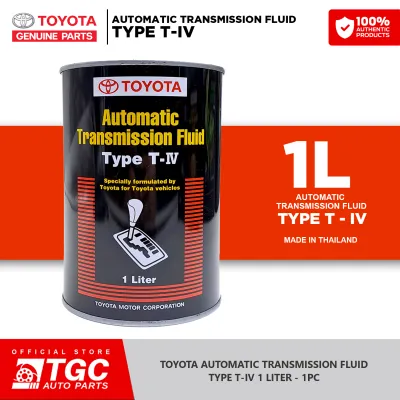
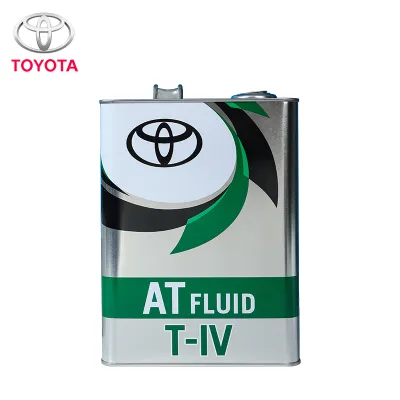
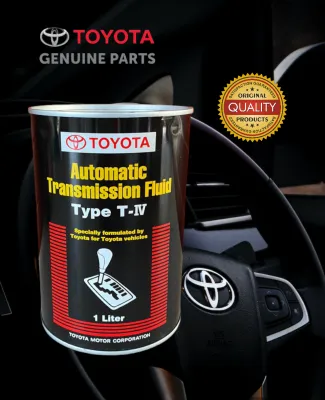
In the Philippine market, authentic Toyota transmission fluid is commonly distributed in either 1-liter/1-quart black plastic bottles or 4-liter silver-and-black metal cans.
- Label Alignment and Print Quality: Authentic labels are applied perfectly straight without air bubbles, creases, or peeling edges. The text must be razor-sharp, with high-contrast lettering and no bleeding ink.
- Toyota Logo: The Toyota logo should be perfectly proportioned. Counterfeits often feature slightly distorted logos, incorrect font weights, or off-center branding.
- Batch Codes and Manufacturing Dates: Authentic containers feature laser-etched or dot-matrix batch codes on the plastic body or metal surface. These codes are crisp, uniform, and cannot be easily scraped off with a fingernail or dissolved with a light wipe of rubbing alcohol.
- Cap and Seal Integrity: The cap of a genuine bottle or can should have a clean, unbroken tamper-evident ring. Metal cans typically feature a high-quality pull-tab or a precisely sealed metal cap that shows no signs of manual crimping or glue residue.
Fluid Characteristics
If you have already purchased the fluid, inspecting the liquid itself is a highly effective secondary check.
- Color: Genuine toyota atf t iv has a distinct, clear, and bright red or pinkish-red hue. It should look translucent when poured.
- Odor: The fluid has a mild, distinct chemical scent that is not overly offensive. It should never smell like burnt toast, heavy solvents, or sweet artificial perfume.
- Viscosity and Purity: When poured, the fluid should flow smoothly and consistently, matching the expected viscosity of a fresh automatic transmission fluid. There must be absolutely no cloudiness, suspended particles, or separation of liquids.
While physical traits are strong indicators, sophisticated counterfeiters can dye low-grade base oils to mimic the correct red color. Therefore, visual fluid checks must always be combined with packaging and source verification.
Common Red Flags in Counterfeit Toyota ATF T-IV
Identifying a counterfeit often comes down to spotting subtle manufacturing shortcuts and pricing anomalies. Counterfeiters prioritize high-volume production over precision, leaving behind distinct clues.
- Packaging Flaws: Look closely at the plastic bottle seams. Genuine bottles have clean, smooth seams, while counterfeits often feature rough, protruding plastic edges from cheap blow-molding machines. Labels on fake bottles may contain spelling mistakes, grammatical errors in the safety warnings, or blurred technical specifications.
- Suspicious Fluid Properties: If you pour the fluid and notice a dark brown or amber tint, or if it feels unusually thin or thick compared to standard transmission fluid, do not use it. A strong, pungent smell of burnt oil or harsh industrial chemicals is a major red flag indicating recycled or incorrect base oils.
- Pricing Anomalies: Price remains one of the most reliable indicators of a counterfeit product. A genuine 4-liter can of toyota atf t iv in the Philippines typically retails between ₱1,800 and ₱2,500 depending on the importer. If an online seller offers the same product for ₱600 to ₱900, it is highly likely to be a fake. Authentic automotive fluids cannot be manufactured, imported, and sold at such steep discounts.
Step-by-Step Verification Methods Before and After Purchase
To protect your vehicle’s transmission, follow a systematic verification process both before making a purchase and before pouring the fluid into your transmission.
- Step 1: Verify Vehicle Compatibility: Before purchasing, check your vehicle's owner's manual to ensure your transmission requires ATF T-IV. Never assume compatibility based on generic product titles. For example, newer Toyota models typically require Toyota ATF WS, and using T-IV in a WS-specified transmission can cause severe operational issues.
- Step 2: Inspect Seller Documentation and Photos: When buying online, avoid listings that use generic stock images. Request real-time photos of the actual container from the seller, focusing on the batch code and the bottom of the can or bottle.
- Step 3: Check QR Codes and Security Labels: Some genuine packaging features security labels with QR codes. Scan the QR code, but pay close attention to the URL of the landing page. Counterfeiters often print cloned QR codes that redirect to look-alike websites designed to mimic official Toyota verification portals. Ensure the domain is a legitimate, official Toyota website.
- Step 4: Conduct a Pre-Use Inspection: Once the product arrives, inspect the outer packaging before breaking the inner foil seal. Check that the foil seal is tightly bonded to the bottle neck without any signs of glue or manual re-sealing. Pour a small sample into a clean glass container to verify the color, clarity, and scent before adding it to your vehicle.
Where to Safely Buy Toyota ATF T-IV in the Philippines
The absolute safest way to purchase genuine toyota atf t iv is directly from authorized Toyota dealerships or official service centers across the Philippines. Buying from these authorized channels guarantees product authenticity and ensures you receive the correct formulation for your vehicle.
If you choose to buy from independent auto parts stores, select established, reputable shops with physical brick-and-mortar locations. Renowned automotive hubs, such as those in Banawe, Quezon City, or major provincial auto supply centers, often house trusted distributors who source directly from official importers.
When shopping on online marketplaces, exercise extreme caution. Only purchase from stores with official brand mall badges or those verified as preferred sellers with high positive ratings (ideally 95% or higher). Carefully read customer reviews, paying specific attention to feedback that includes detailed photos of the packaging, batch codes, and fluid color. Avoid third-party sellers with little to no transaction history, extremely low prices, or those shipping from unverified overseas locations.
What to Do If You Suspect You Bought Fake Transmission Fluid
If you suspect that the transmission fluid you purchased is counterfeit, do not pour it into your vehicle under any circumstances. Using unverified fluid can lead to catastrophic transmission damage, voiding any existing vehicle warranties and resulting in expensive repairs.
Immediately document your findings. Take high-resolution photos and videos of the packaging flaws, blurry labels, compromised seals, or unusual fluid characteristics. Contact the seller and the e-commerce platform’s customer support to initiate a return and refund dispute, citing counterfeit product concerns. Report the listing to help protect other consumers.
If you have already added the suspect fluid to your transmission and driven the vehicle, stop driving immediately and consult a qualified professional mechanic. You will need to have the transmission completely flushed—not just drained—to remove all traces of the contaminated fluid, followed by a refill with verified, genuine fluid.
Frequently Asked Questions (FAQ)
Can I mix genuine Toyota ATF T-IV with other brands?
Mixing different brands or specifications of transmission fluid is highly discouraged. Transmission fluids are formulated with specific chemical balances and friction modifiers designed for particular clutch materials. Mixing toyota atf t iv with other brands or different specifications (such as ATF WS or generic multi-vehicle fluids) can alter these friction characteristics, leading to transmission slippage, rough shifting, or accelerated wear. If you must switch brands, perform a complete system flush rather than a simple drain-and-fill.
Does a holographic sticker guarantee the fluid is authentic?
A holographic sticker alone does not guarantee authenticity. While manufacturers use security holograms to deter counterfeiters, sophisticated counterfeit operations can replicate these stickers or salvage genuine bottles and refill them with substandard oil. Treat a holographic sticker as just one component of your overall verification process, combining it with checks on print quality, batch codes, fluid physical properties, and the seller’s reputation.
Community discussion
Share your experience or ask a question. Comments are reviewed before publication.