
Riding a motorcycle through a sudden afternoon downpour in Manila or navigating flooded provincial roads during the monsoon season requires gear you can trust. If you are looking to purchase an nhk raincoat original model, verifying its authenticity before you ride out into the rain is a critical safety step. A genuine NHK raincoat is engineered specifically for high-speed riding, featuring robust water-repellent fabrics, fully taped seams, and reliable high-visibility reflective elements. Counterfeit versions, which have increasingly flooded online marketplaces, often look similar at a glance but fail catastrophically under real-world tropical conditions. You can distinguish an authentic NHK raincoat from a cheap replica by performing a physical inspection of its inner seam tape, checking the weight and texture of its waterproof membrane, testing the heavy-duty zippers, and scrutinizing the seller’s documentation and pricing.
Why Checking for an Original NHK Raincoat Matters
Motorcycle riders in the Philippines face some of the most demanding wet-weather conditions in Southeast Asia. When the southwest monsoon (Habagat) or a tropical depression hits, a standard commuter raincoat is rarely enough to keep you dry at highway speeds. A genuine NHK raincoat is designed as premium safety gear, not just a plastic sheet. It uses advanced multi-layer fabrics that block wind and water while allowing body heat to escape, reducing the clammy, humid feeling that leads to rider fatigue.
Furthermore, safety on Philippine roads during heavy downpours depends heavily on visibility. Authentic NHK rain gear incorporates high-grade reflective strips that bounce headlight beams back to other motorists, even in low-light, low-visibility conditions. Counterfeit raincoats almost always compromise on these critical safety features. They typically utilize cheap, non-reflective gray paint instead of actual retroreflective materials, leaving you virtually invisible to trucks and cars in a storm.
Products mentioned in this guide
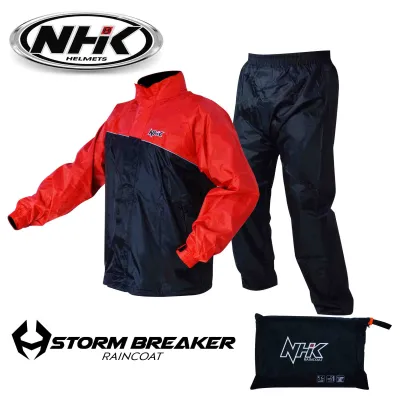
Prices are valid at publication and may change. Please refer to the product page for the latest price.
Durability is another major trade-off when dealing with replica gear. A fake raincoat might survive a light drizzle, but the high wind pressure experienced during motorcycle travel will quickly force water through poorly stitched seams and weak zippers. Within minutes of riding, water penetrates the fabric, soaking your clothes and lowering your core body temperature. This distraction can impair your reaction times and compromise your safety on slippery roads. Identifying these fakes requires looking at multiple physical and seller-related markers, as no single flaw guarantees a counterfeit.
Key Markers of an Authentic NHK Raincoat
Spotting a genuine NHK raincoat requires a hands-on inspection. Because counterfeiters have become more adept at copying the external look of popular riding gear, you must look closely at the fine details of construction, materials, and finishing. Authentic NHK gear maintains a high level of quality control across all components, from the outer shell to the smallest plastic snap.

When you receive a new raincoat or inspect one at a local physical shop, take your time to examine the product systematically. Do not rely on a single visual feature; instead, run through a complete checklist of physical, visual, and tactile details to confirm that the item came from an authorized factory.
Packaging, Labels, and Tags
The first line of defense against counterfeits is the packaging and accompanying documentation. Genuine NHK raincoats are delivered in professional, durable packaging, often featuring clean, high-resolution printing of the brand logo, model name, and specific sizing charts. The plastic bag or carrying pouch should feel thick and durable, designed to store the wet gear repeatedly without tearing.
Examine the paper hangtags attached to the garment. Authentic hangtags are printed on heavy cardstock with crisp, perfectly aligned text and exact logo proportions. Look closely for blurry fonts, pixelated edges on the NHK logo, or spelling mistakes, which are common hallmarks of low-budget replica operations.
Next, inspect the internal labels sewn into the collar and inner lining. A genuine NHK raincoat features a neatly stitched inner neck label and a dedicated wash care tag. The text on these tags should be completely legible, detailing the material composition, washing instructions, and country of manufacture. Counterfeits often use generic, poorly printed labels that may look faded, off-center, or contain grammatical errors in English.
Stitching, Seams, and Build Quality
The structural integrity of any waterproof riding gear lies in its construction. Authentic NHK raincoats are built to withstand the physical stress of wind resistance and active riding postures. Examine the stitching along the shoulders, underarms, and crotch area. The stitches on an original jacket and pants are uniform, tight, and free of loose threads or skipped needles.
The most critical area to inspect is the inside of the garment. Because needle holes naturally compromise waterproof fabrics, genuine NHK raincoats utilize advanced heat-sealed or taped inner seams. Turn the raincoat inside out and look at the seams. You should see a clear, smooth, and flexible polyurethane (PU) or PVC tape applied perfectly over every single stitched seam. This tape must be completely flat, with no bubbles, lifting edges, or peeling sections.
In contrast, replica manufacturers rarely invest in high-temperature seam-sealing machinery. If you notice exposed stitching on the inside without any protective tape, or if the tape is thin, brittle, and peeling off right out of the box, you are likely holding a counterfeit. Additionally, check the reinforcement patches at high-stress areas like the crotch and underarms; genuine gear always reinforces these spots to prevent tearing when mounting or dismounting your motorcycle.
Material Texture and Hardware
The touch and weight of the materials used can tell you a lot about a product’s authenticity. Genuine NHK raincoats are made from high-grade polyester or nylon fabrics treated with a durable water repellent (DWR) coating on the outside and a breathable polyurethane membrane on the inside. The outer shell should feel supple, lightweight, and durable, while the inner mesh lining should be soft, non-abrasive, and securely stitched to prevent it from snagging on your boots or riding jacket.
Hardware quality is another area where counterfeiters cut corners to save on production costs. Test the main front zipper of the jacket. On an authentic NHK raincoat, the zipper should glide smoothly without catching, sticking, or splitting. The zipper teeth will be perfectly aligned, and the slider itself is typically a heavy-duty, corrosion-resistant metal or high-grade polymer, often featuring the brand name or a premium manufacturer logo.
Additionally, evaluate the secondary fasteners. Check the snap buttons on the storm flap, the velcro wrist adjusters, and the elastic drawcords around the hood or waist. Authentic hardware snaps shut with a reassuring, firm click and holds tightly under tension. The velcro straps should have a strong, dense grip that does not easily fray or lose its adhesive properties after a few uses.
Common Red Flags in Replica NHK Raincoats
When shopping online or browsing third-party marketplaces, being aware of common red flags can save you from a costly mistake. Counterfeit NHK raincoats are mass-produced with cheap materials, and their flaws are often easy to spot if you know what to look for.
- Pungent Chemical Odor: A very common indicator of a replica is a strong, toxic chemical or plastic smell when you first open the package. This is caused by cheap, low-grade PVC coatings and toxic adhesives that have not been properly cured. Genuine NHK raincoats may have a mild "new fabric" smell, but they do not emit a pungent, headache-inducing chemical odor.
- Flimsy, Thin Fabrics: If the material feels incredibly thin, crinkly like a trash bag, or stiff and plastic-like, it is likely a fake. Authentic riding raincoats need a certain thickness and flexibility to resist flapping violently at high speeds, which can cause thin materials to tear along the seams.
- Poorly Aligned or Dull Reflective Strips: Inspect the safety strips on the back, chest, or arms. On a fake raincoat, these strips are often made of cheap gray paint that does not reflect light efficiently. You can test this in a dark room by taking a photo with your mobile phone's camera flash enabled. A genuine reflective strip will glow brilliantly white, while a replica strip will remain dull or reflect unevenly.
- Unfinished or Messy Inner Seams: If you turn the pants or jacket inside out and find untaped seams, loose threads hanging from the crotch, or messy glue residue along the edges, it is a clear sign of poor manufacturing standards.
- Misaligned Logos and Faded Colors: Look closely at the NHK branding. Counterfeiters often use cheap screen printing that may look faded, have fuzzy borders, or be positioned crookedly on the chest or back. On an original, all logos are crisp, sharp, and highly durable.
While a single minor cosmetic defect could occasionally occur as a factory second, a combination of several of these red flags strongly indicates that the product is a cheap replica.
How to Verify Authenticity and Seller Credibility
Before you hand over your hard-earned Philippine Pesos, there are several proactive steps you can take to verify both the product’s legitimacy and the seller’s credibility, especially when shopping on digital platforms.
First, check for official authentication markers. Some premium riding gear brands include holographic security stickers, unique scratch-off authenticity codes, or serial numbers on the product tags. If your NHK model includes these features, locate the code and enter it on the manufacturer’s official verification portal to confirm its origin.
Second, perform a deep dive into the seller’s profile. Do not just look at the overall star rating, which can sometimes be inflated by fake reviews or automated bots. Instead, filter the reviews to read the one-star and two-star ratings. Look specifically for keywords like “fake,” “replica,” “leaking,” “not original,” or “poor quality.” If multiple buyers complain that the raincoat leaked during its first use or that the logos peeled off immediately, treat it as a major warning sign.
Third, communicate directly with the seller before making a purchase. Ask them to send clear, unedited, and well-lit photos of the actual item they have in stock—specifically focusing on the inner neck tag, the heat-sealed seams on the inside of the jacket, and the zipper pulls. Genuine, authorized sellers who stock original inventory will usually be happy to provide these photos to secure a sale. If a seller refuses, uses stock photos, or gives vague answers about the product’s origin, it is best to walk away.
Where to Buy Genuine NHK Riding Gear Safely
The most reliable way to avoid counterfeits is to buy exclusively from authorized retail channels. In the Philippines, genuine NHK helmets and riding gear are distributed through established networks of physical motorcycle accessory shops and official online flagship stores.
- Authorized Physical Motorcycle Gear Shops: Visiting a physical store allows you to touch, feel, and try on the raincoat before buying. Look for well-known, reputable motorcycle gear boutiques and authorized dealers in major cities. These shops source their inventory directly from official distributors, ensuring 100% authenticity.
- Official Flagship Stores on Major Online Marketplaces: If you prefer shopping online, look for the official brand store or verified "Mall" status on major e-commerce platforms. These stores are vetted by the platforms and are authorized to sell genuine products.
- Avoid Deals That Seem Too Good to Be True: Original NHK raincoats are premium products priced to reflect their high-quality materials and construction. If you find a listing on social media marketplaces or unverified third-party stores priced at ₱500 or less, when the standard retail price is significantly higher, it is almost certainly a counterfeit. Deceptive sellers often use stolen official product images but ship cheap, plastic replicas.
- Check Official Distributor Lists: When in doubt, visit the official NHK brand website or their local social media pages to view a list of authorized dealers in the Philippines. This ensures your money goes toward genuine safety gear that will actually protect you on the road.
What to Do If You Receive a Suspected Fake
If you have already purchased a raincoat and suspect it is a counterfeit after performing your physical inspection, you must act quickly to protect your consumer rights and secure a refund.
First, document the evidence immediately. Take clear, well-lit photos and high-definition videos of the suspected areas. Focus on the blurry logos, messy or untaped inner seams, flimsy zippers, or any other physical defects that point to a fake. If possible, compare the item side-by-side with a known original or use official product images to highlight the discrepancies.
Second, do not use, wash, or alter the raincoat. Wearing it on a ride, getting it dirty, or throwing it in the washing machine will likely void the return and refund policies of most e-commerce platforms and retail shops. Keep all the original packaging, hangtags, and receipts intact.
Third, initiate a dispute or return process immediately. If you bought the item through an online marketplace, open a return request under the “Counterfeit” or “Item Not as Described” category. Upload your photo and video evidence and write a clear, factual explanation of why the product is a replica. Avoid emotional language; instead, focus on objective physical differences like the lack of seam-sealing tape or misaligned branding. If you purchased from a physical store, return to the shop with your receipt and politely ask to speak with a manager to resolve the issue.
Frequently Asked Questions (FAQ)
Can I rely solely on the price to spot a fake NHK raincoat?
While an unusually low price (such as ₱300 to ₱500) is a major red flag, you cannot rely solely on the price tag to determine authenticity. Deceptive sellers are well aware that smart shoppers avoid suspiciously cheap items. To bypass this, some sellers price high-quality replicas very close to the suggested retail price of an original NHK raincoat, making them appear legitimate. Therefore, you must always combine price evaluation with a thorough inspection of the physical markers, packaging, and seller reviews.
Do all original NHK raincoats come with a warranty card?
Whether an original NHK raincoat includes a physical warranty card depends on the specific model, production batch, and the policies of the authorized distributor in the Philippines. Some premium models may include a product registration card or a warranty leaflet inside the packaging, while others rely on the official purchase receipt from an authorized dealer for warranty claims. To be safe, always ask the authorized dealer about the specific warranty coverage and keep your official receipt as proof of purchase.

Community discussion
Share your experience or ask a question. Comments are reviewed before publication.