
To determine whether a failing ignition coil or a worn spark plug is causing your engine’s performance issues, you must analyze how the symptoms developed and perform a systematic diagnostic test. While both components are critical to the combustion process and share identical symptoms like misfires and rough idling, their failure patterns differ significantly. Ignition coils tend to fail abruptly, causing a sudden and severe loss of power in a specific cylinder, whereas spark plugs degrade gradually over time, leading to a slow, progressive decline in fuel economy and engine smoothness.
Quick Diagnosis: Ignition Coil vs. Spark Plug
Understanding the timeline of your vehicle’s performance decline is the fastest way to narrow down the culprit. Ignition coils are electrical transformers that convert low voltage into the thousands of volts needed to create a spark; when they fail, the electrical connection often breaks completely and suddenly. This results in an immediate, noticeable misfire that does not go away.
In contrast, spark plugs are mechanical wear items that experience constant thermal and chemical stress. Their electrodes slowly erode over tens of thousands of kilometers, widening the gap the spark must jump. This gradual wear manifests as a slow increase in starting times, subtle hesitations during acceleration, and a gentle dip in fuel efficiency long before a hard misfire occurs.
Products mentioned in this guide
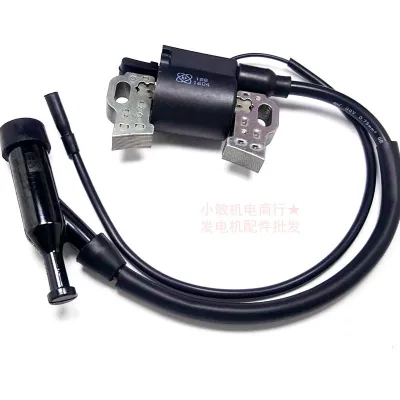
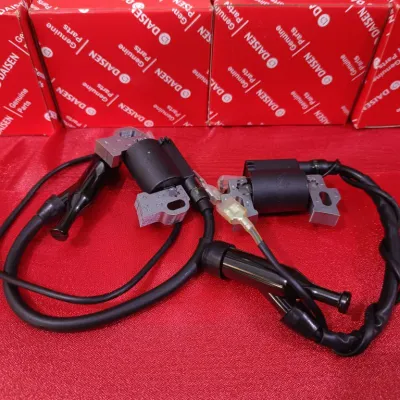
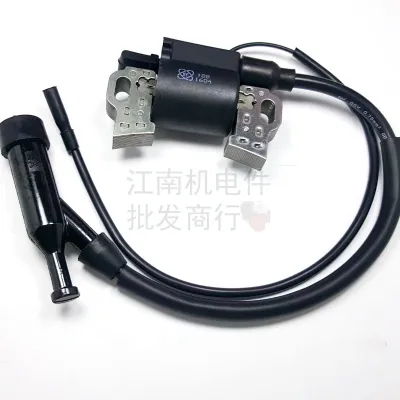
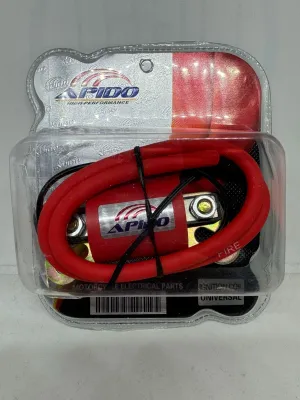
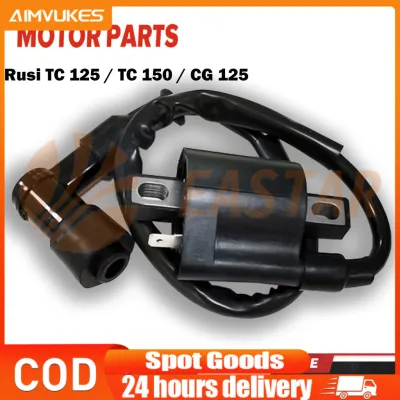
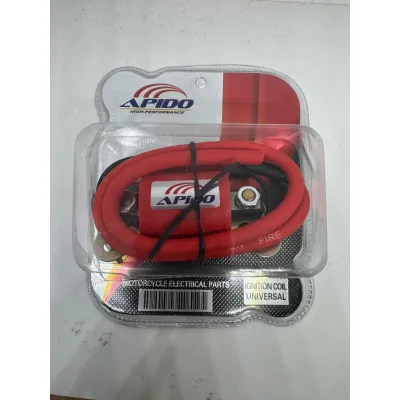
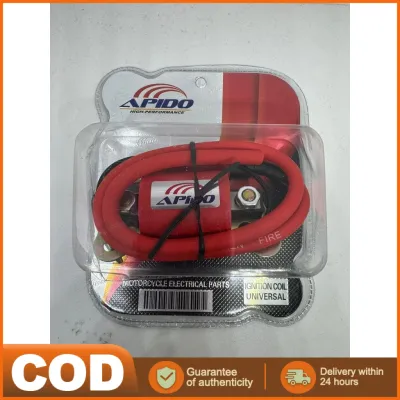
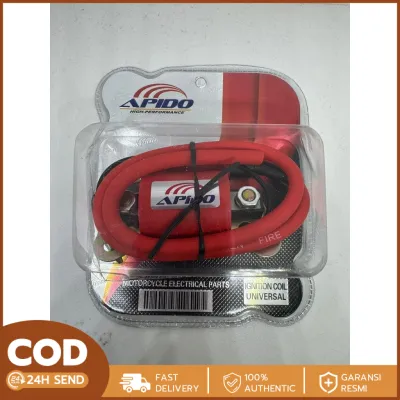
Prices are valid at publication and may change. Please refer to the product page for the latest price.
Your vehicle’s maintenance history is your primary guide here. If your spark plugs are past their recommended service interval—typically between 40,000 and 100,000 kilometers depending on whether you use standard nickel, platinum, or iridium plugs—they are the most logical starting point. If your plugs are relatively new, a sudden misfire strongly points toward a failing ignition coil.
Recognizing the Shared Symptoms of Ignition Failure
Because both components work in tandem to ignite the fuel-air mixture in your engine cylinders, a failure in either part disrupts combustion. This disruption produces several highly noticeable driving symptoms. You will likely experience engine misfires, which feel like a sudden jerk or hesitation when accelerating, as well as a rough, shaking idle when waiting at traffic lights.

Your vehicle’s onboard computer will detect these incomplete combustion cycles and illuminate the Check Engine Light on your dashboard. In severe cases, the light may flash continuously, indicating an active misfire that is dumping unburnt fuel into the exhaust system. This unburnt fuel can also cause a strong smell of gasoline or rotten eggs from the tailpipe, accompanied by dark exhaust smoke.
In the humid, tropical climate of the Philippines, these symptoms can become much more pronounced. High humidity and heavy seasonal rains introduce moisture into the engine bay, which can seep into hairline cracks in an ignition coil’s plastic housing or pool in the spark plug wells. This moisture provides an alternative path for electricity, causing the current to arc to the engine block rather than reaching the spark plug tip, resulting in severe starting difficulties on damp mornings.
Step-by-Step Diagnostic Tests to Isolate the Fault
Before performing any physical diagnostics on your ignition system, safety must be your absolute priority. Always park the vehicle on a level surface, engage the parking brake, allow the engine to cool completely to avoid severe burns, and disconnect the negative battery terminal. Ignition systems operate under extremely high voltage, so handling these components requires strict adherence to safety protocols and your vehicle’s original service manual.
Checking OBD2 Scanner Codes
An On-Board Diagnostics (OBD2) scanner is the most efficient non-invasive tool for pinpointing ignition faults. Plug the scanner into your vehicle’s OBD2 port—usually located under the driver-side dashboard—and read the stored diagnostic trouble codes (DTCs).
- Cylinder-Specific Misfire Codes (P0301 to P0308): These codes indicate that a misfire is occurring in a specific cylinder (for example, P0301 represents cylinder number one). This helps you narrow your physical inspection to a single area of the engine.
- Random/Multiple Misfire Codes (P0300): This code suggests that the misfire is moving across multiple cylinders, which is more commonly associated with worn-out spark plugs, fuel delivery issues, or a vacuum leak rather than a single bad ignition coil.
- Ignition Coil Circuit Codes (P0351 to P0358): These codes specifically indicate an electrical issue within the control circuit of a particular ignition coil, pointing directly to a coil failure or wiring harness damage.
Once you have recorded the codes, you can use them to guide your physical tests. After completing any repairs, use the scanner to clear the codes and drive the vehicle to verify that the issue has been resolved and the Check Engine Light remains off.
Performing the Visual and Swap Tests
If your OBD2 scanner reveals a cylinder-specific misfire code, you can perform a physical inspection and a swap test to confirm which component has failed. Begin by removing the ignition coil from the affected cylinder and inspecting it closely under bright light.
- Visual Inspection of the Coil: Look for physical cracks in the plastic housing, burn marks, discoloration, or a white powdery residue along the boot, which indicates electrical arcing. Check the electrical connector for corrosion or bent pins.
- Visual Inspection of the Spark Plug: Use a spark plug socket to remove the plug. Inspect the tip for worn-out electrodes, a widened gap, heavy carbon deposits, or wet fuel fouling. If the plug is covered in engine oil, it indicates a leaking spark plug tube seal rather than a primary plug failure.
- The Swap Test Method: If both components look acceptable visually, reinstall the spark plug in its original cylinder. Take the suspected ignition coil and swap it with a known good coil from an adjacent cylinder (for example, move the coil from cylinder 1 to cylinder 2). Reconnect the battery, start the engine, and read the OBD2 codes again. If the misfire code shifts to the new cylinder (changing from P0301 to P0302), the ignition coil is definitely faulty. If the misfire remains on the original cylinder, swap the spark plugs between those cylinders; if the code then moves, the spark plug is the culprit.
Always consult your vehicle’s service manual for the exact removal steps, as some modern engines require removing intake plenums to access the rear cylinders. When reinstalling components, use a torque wrench to tighten the spark plugs to the manufacturer’s exact torque specifications to prevent thread damage or compression leaks.
Deciding What to Replace Based on Your Findings
Once your diagnostics have identified the faulty component, you can make an informed, cost-effective decision. If the swap test confirms that a single ignition coil has failed, you only need to replace that specific coil. However, take the time to inspect the remaining coils for physical wear or hairline cracks, especially if they are the same age as the failed unit.
Spark plugs, on the other hand, should always be replaced as a complete set. Because they experience identical operating conditions, if one spark plug has worn down to the point of causing a misfire, the remaining plugs are likely near the end of their service life as well. Installing a single new spark plug can cause minor imbalances in engine combustion smoothness.
Avoid the temptation to replace parts blindly without performing these diagnostic steps. Throwing new parts at an undiagnosed engine issue often leads to wasted money and unresolved performance problems, as a misfire can also be caused by fuel injectors, vacuum leaks, or mechanical engine compression issues.
Safety Boundaries and When to See a Mechanic
Working on modern automotive ignition systems carries inherent risks due to the high-voltage currents generated to fire the spark plugs. Never touch, move, or disconnect ignition coils, spark plug wires, or electrical connectors while the engine is running or while the ignition switch is in the on position. Always wear insulated safety gloves and eye protection when handling electrical components.
Some diagnostic and replacement scenarios are best left to a qualified professional mechanic. If your vehicle has a transverse V6 or V8 engine, the rear bank of cylinders and ignition components may be positioned tightly against the firewall, requiring the removal of complex intake manifolds and vacuum lines to access. If you do not have the specialized tools or experience to perform these tasks safely, seek professional assistance.
Additionally, if your Check Engine Light is flashing continuously while you are driving, you must pull over safely and turn off the engine immediately. A flashing light indicates a severe misfire that is actively dumping unburnt fuel into your exhaust system. Continuing to drive under these conditions can cause the catalytic converter to overheat and melt internally, resulting in a repair bill costing tens of thousands of ₱.
Frequently Asked Questions (FAQ)
Can a bad ignition coil ruin a new spark plug?
Yes, a failing ignition coil can damage a newly installed spark plug. When an ignition coil is weak or failing, it cannot deliver the high voltage required to create a strong, clean spark. This results in incomplete combustion, leaving unburnt fuel inside the cylinder. This excess fuel coats the tip of the new spark plug, a condition known as fuel fouling. Over time, this wet fuel deposit creates a conductive path that short-circuits the plug, preventing it from firing properly even after you eventually replace the bad ignition coil.
Should I replace all ignition coils at the same time?
Unlike spark plugs, ignition coils do not wear out at a highly predictable, uniform rate, meaning you do not necessarily have to replace them all at once. If a single coil fails early in the vehicle’s life, replacing just that individual unit is perfectly acceptable. However, if your vehicle has high mileage and the coils are the original factory parts, the remaining units have experienced the same thermal cycles and vibration. In this scenario, replacing the entire set can prevent future breakdown inconveniences, or you can choose to keep a spare coil in your glovebox for quick roadside replacement.
Community discussion
Share your experience or ask a question. Comments are reviewed before publication.