
Using a digital battery tester analyzer is one of the most reliable ways to evaluate your vehicle’s electrical health before an unexpected breakdown leaves you stranded. Unlike basic voltmeters that only measure surface voltage, a dedicated battery analyzer assesses the battery’s internal resistance and its ability to deliver starting current under load. By connecting the analyzer’s clamps to the battery terminals, inputting the battery’s rated specifications, and running the diagnostic cycle, you can determine whether your battery simply needs a recharge or is nearing the end of its operational life.
In tropical environments like the Philippines, where high ambient temperatures and humidity accelerate chemical degradation and water loss inside battery cells, regular diagnostic checks are crucial. A battery that seems to start the car fine in the morning might actually be on the verge of sudden failure, as the warm climate masks weak cranking capacity until the internal plates degrade completely. Utilizing an analyzer allows you to catch these hidden vulnerabilities early, saving you from the hassle of a dead engine during a heavy downpour or in the middle of a busy highway, and avoiding unexpected towing fees that can easily exceed ₱2,000.
Preparation and Safety Before Testing
Before performing any electrical diagnostics, you must prepare the vehicle and the testing environment to ensure both personal safety and accurate readings. Park the vehicle on a flat, level surface, engage the parking brake, and turn off the engine completely. Remove the keys from the ignition and ensure all electrical accessories—such as the air conditioning, headlights, dashcams, and cabin lights—are switched off, as any active electrical draw will distort the test results.
Products mentioned in this guide
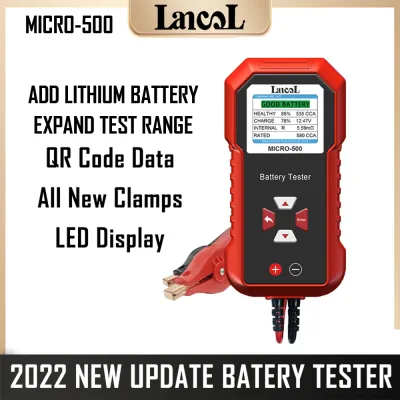
1,220 Lazada user ratings
Compact and portable design, Helps prolong battery life, Efficient diagnostic tool for car batteries, Easy to use and understand,
Fast and reliable battery analysis. Great value for money. Easy to use and understand. Convenient tool for car owners.
Convenient tool for car owners, Compact and portable design, Versatile compatibility with different battery types,
salamat 🤙 at dumating narin ng walang damage salamat din sa seller. 🙌👊🤙
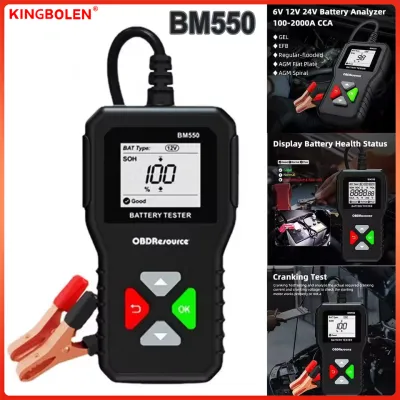
782 Lazada user ratings
The item is in exellent quality, very easy to use, accurate and looks heavy duty. I already tested the item and the results shows accurate a…Read full reviewShow less
The item is in exellent quality, very easy to use, accurate and looks heavy duty. I already tested the item and the results shows accurate and very useful for car owners. Highly recommended and it will helps car owners to determine the condition of the battery immediately once any form of fluctuation on its function. At first I was hesitant to buy this battery tester but one of my relatives advised me to purchase this kingbolen brand and thank you so much as it is worth buying it. Delivery duration is also okey. Again Thank you so much seller for selling items with great quality.
Convenient 6V/12V/24V compatibility, Easy to use and understand, Durable construction fors long-lasting use, Great tool for automotive profe…Read full reviewShow less
Convenient 6V/12V/24V compatibility, Easy to use and understand, Durable construction fors long-lasting use, Great tool for automotive professionals, Efficient cranking and charging circuit,
Received the product exactly as ordered. looks good and then try to measure the car battery and use. the delivery staff came to deliver poli…Read full reviewShow less
Received the product exactly as ordered. looks good and then try to measure the car battery and use. the delivery staff came to deliver polite products but didn't call in advance.
Great! It’s useful for preliminary checks. It’s a good idea to have one handy—just in case your car won’t start. The price is reasonable; I’…Read full reviewShow less
Great! It’s useful for preliminary checks. It’s a good idea to have one handy—just in case your car won’t start. The price is reasonable; I’d recommend it.
very usable product although not very accurate results displayed on the screen but still i considered it helpful
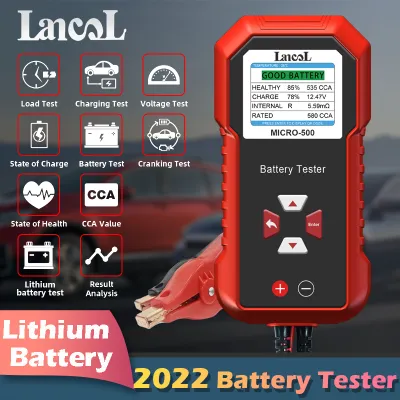
468 Lazada user ratings
Fast delivery, good camera included, good price, good quality. The CD is clear, has a Thai menu, the store responds quickly to chats, easy t…Read full reviewShow less
Fast delivery, good camera included, good price, good quality. The CD is clear, has a Thai menu, the store responds quickly to chats, easy to use with clear instructions, compact and portable design, QR code feature for data export, convenient-to-read LED display, accurate battery test results.
Great tool for checking battery health., Provides peace of mind for road trips., Easy to use and understand., LED display for clear readings…Read full reviewShow less
Great tool for checking battery health., Provides peace of mind for road trips., Easy to use and understand., LED display for clear readings., Compact and portable design. Already tried functionalities on my car units, all were found working in good order.
Helps to prolong battery life., Great tool for checking battery health., Compact and portable design., Provides peace of mind for road trips…Read full reviewShow less
Helps to prolong battery life., Great tool for checking battery health., Compact and portable design., Provides peace of mind for road trips., 👌Ease of Use:good 🔨Durability:good 📏Accuracy:good
Okay naman yung item. Correct and complete delivery. It's working naman. Tested it already in various motorcycle & car battery. It has a sel…Read full reviewShow less
Okay naman yung item. Correct and complete delivery. It's working naman. Tested it already in various motorcycle & car battery. It has a selection for lithium batteries..
Big LCD display for clear readings., Compact and portable designed, Accurate battery testing results.,
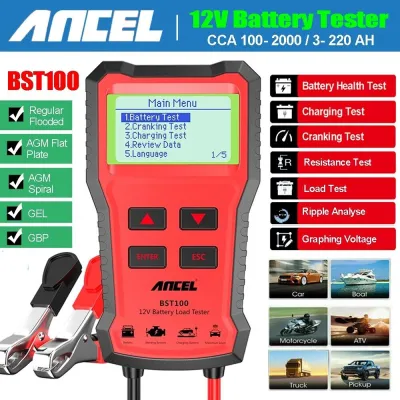
741 Lazada user ratings
I like this battery tester analyzer malalaman mo kung ano na kondisyon ng battery mukhang accurate yong mga reading ng tester ,very good par…Read full reviewShow less
I like this battery tester analyzer malalaman mo kung ano na kondisyon ng battery mukhang accurate yong mga reading ng tester ,very good para sa akin salamat sa Lazada na mabilis ang delivery
A must-have for vehicle maintenance., ok naman un item, gumagana sya. sana tumagal at matibay yung item. salamat po seller. Convenient tool …Read full reviewShow less
A must-have for vehicle maintenance., ok naman un item, gumagana sya. sana tumagal at matibay yung item. salamat po seller. Convenient tool for car and motorcycle owners., salamat seller.
Ayos na ayos! Mabilis ang delivery and gumagana sya ng maayos. Ok na ok din ang quality. Madali na imonitor ang health ang battery ng kotse …Read full reviewShow less
Ayos na ayos! Mabilis ang delivery and gumagana sya ng maayos. Ok na ok din ang quality. Madali na imonitor ang health ang battery ng kotse ko.
Quality:Good Appearance:Good Performance:Good The item is working as per functions described and specifications are correct.
The product arrived in good condition and well pack. Good quality product. And tested okay.
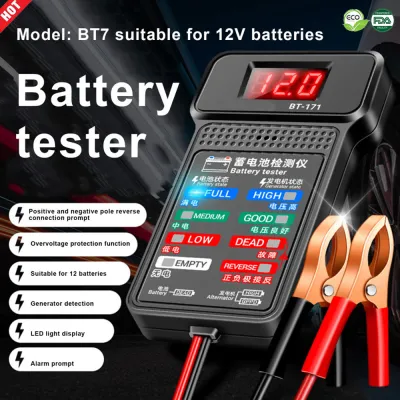
51 Lazada user ratings
tested my 2 batteries with it and it shows they may still have hope
Ideal for mechanics, Good quality material, Quick diagnostic tool,
The delivery staff is excellent, I would like to commend them.
🔨Durability:nagamit ko na ok na okPerfect for home use,
Accurate battery testing, Good quality material,
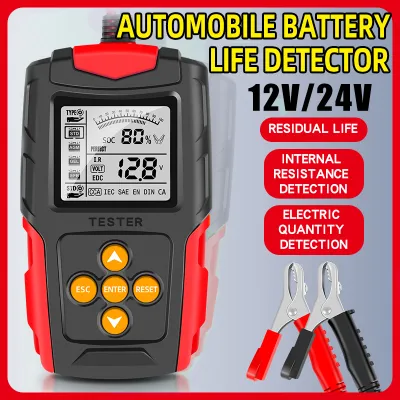
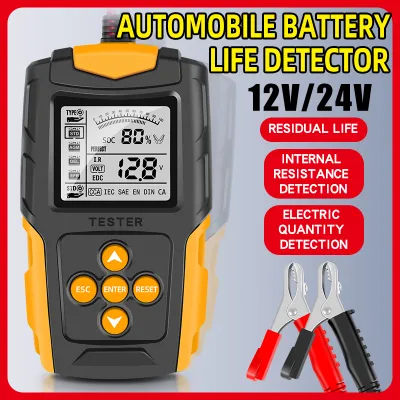
Prices are valid at publication and may change. Please refer to the product page for the latest price.
Locate your car battery, which is typically found in the engine bay, though some vehicle models place it in the trunk or under the rear passenger seats. Refer to your vehicle’s owner manual to confirm the exact battery location, mounting configuration, and any specific manufacturer instructions for accessing the terminals. Once located, inspect the physical condition of the battery casing; look closely for any signs of bulging, cracks, or wet patches that indicate leaking sulfuric acid. If you observe a compromised casing or active leaks, do not proceed with the test; instead, seek professional assistance for safe removal and replacement.
Working around automotive lead-acid batteries requires basic safety gear to protect against electrical sparks and corrosive acid. Wear safety glasses to shield your eyes from potential sparks or chemical mist, and put on heavy-duty, acid-resistant gloves. Keep open flames, lit cigarettes, and metal tools away from the top of the battery to prevent accidental short circuits. Finally, locate the battery label and identify the baseline specifications, such as the rated Cold Cranking Amps (CCA), Amp-hours (Ah), and nominal voltage (typically 12V), which you will need to input into the analyzer later.
Step-by-Step Guide to Connecting the Battery Tester Analyzer
To obtain an accurate diagnostic reading, you must establish a clean, secure physical connection between the battery tester analyzer and the battery terminals. Inspect the metal terminal posts for any signs of corrosion, which usually appears as a white, green, or blue powdery deposit. Corrosion acts as an electrical insulator, creating artificial resistance that will cause the analyzer to report inaccurate health metrics or fail to read the battery entirely.

If corrosion or dirt is present, clean the terminals using a dedicated terminal cleaning brush or a wire brush, following the manufacturer’s instructions for terminal care. Ensure the terminal clamps on the vehicle’s wiring harness are tight and secure; loose connections can also skew the test results. If you must disconnect the battery cables for a thorough cleaning, always disconnect the negative (black) cable first and reconnect it last to minimize the risk of short-circuiting the electrical system with your tools.
Once the terminals are clean and dry, connect the battery tester analyzer’s clamps directly to the lead terminal posts. Attach the red positive (+) clamp to the positive terminal post first, ensuring the metal teeth of the clamp grip the lead post firmly. Next, attach the black negative (-) clamp to the negative terminal post. Most modern digital analyzers do not have internal batteries; they draw their operating power directly from the vehicle’s battery and will automatically boot up and light up the display screen once a proper connection is established.
Running the Test and Interpreting the Results
With the analyzer powered on, navigate the on-screen menu using the device’s buttons to select the appropriate testing parameters. The device will first ask you to select the battery location, typically offering options for “In-Vehicle” or “Out-of-Vehicle” testing. Select the correct option based on your setup, then proceed to choose the specific battery technology. Common options include regular flooded (wet cell), AGM Flat Plate, AGM Spiral, Gel, or Enhanced Flooded Battery (EFB), which must match the battery type printed on your battery’s label.
Next, the analyzer will prompt you to select the rating standard and input the corresponding value. The most common standard used in automotive applications is CCA (Cold Cranking Amps), but other standards like EN, DIN, IEC, or JIS may be listed depending on your battery’s origin. Use the arrow keys on the analyzer to input the exact rated value printed on the battery label (for example, 550 CCA) and press the enter or test button to initiate the diagnostic cycle, which usually takes only a few seconds to complete.
Once the analysis is complete, the screen will display several critical metrics that reveal the true condition of your battery. The State of Health (SOH) is represented as a percentage, showing how much of the battery’s original cranking capacity remains relative to its brand-new rating. The State of Charge (SOC) indicates the current level of charge based on the open-circuit voltage. The analyzer will also display the measured voltage (a fully charged 12V battery should read around 12.6V or higher with the engine off) and the internal resistance measured in milliohms (mΩ).
To interpret these results, look at the overall status prompt provided by the analyzer, which typically ranges from “Good Battery” to “Replace.” Compare this digital diagnosis with the physical age of your battery; most automotive batteries in tropical climates have an operational lifespan of two to three years. If the analyzer indicates a low SOH percentage or high internal resistance, the internal lead plates have likely suffered from sulfation or grid corrosion, meaning the battery can no longer reliably hold or deliver the power required to start your engine.
Troubleshooting Common Testing Errors
If your battery tester analyzer displays an error message or fails to complete the test cycle, the issue is often related to the physical connection or the battery’s state of charge. A common error message is “Check Connection” or a reverse polarity warning. If you see a reverse polarity alert, immediately turn off or disconnect the device and verify that the red clamp is on the positive terminal and the black clamp is on the negative terminal; modern analyzers feature built-in protection to prevent damage from incorrect connections, but they cannot perform a test until corrected.
Another frequent issue is a “Low Voltage” or “Charge and Retest” message, which occurs when the battery’s charge is too low (often below 11.0V or 12.0V) for the analyzer to accurately measure its cranking capacity. When a battery is deeply discharged, the analyzer cannot distinguish between a healthy battery that simply needs a charge and a permanently damaged battery. In this scenario, you must fully recharge the battery using a compatible smart charger before running the test again to get an accurate assessment.
If the analyzer’s screen remains completely blank when connected, or if the device repeatedly freezes during the analysis cycle, the battery’s voltage may have dropped below the minimum threshold required to power the device (typically around 5V to 7V). In this case, stop testing, disconnect the clamps, and consult your vehicle’s owner manual or a qualified automotive technician. Attempting to force-test or jump-start a severely depleted or physically damaged battery can lead to electrical system damage or safety hazards.
Next Steps Based on Your Battery Health Results
Once you have a clear reading from your battery tester analyzer, you can make an informed decision regarding maintenance or replacement. If the analyzer returns a “Good Battery” result with a high SOH and SOC, your battery is in excellent condition. To maintain this health, ensure your driving habits include regular trips of at least 20 to 30 minutes to allow the alternator to fully replenish the energy lost during starting, or connect a compatible smart maintenance charger if the vehicle sits idle for extended periods.
If the analyzer indicates “Replace Battery” or if a “Charge and Retest” cycle still results in a poor SOH rating, you should plan for a replacement as soon as possible to avoid being stranded. When purchasing a new battery, verify the correct group size, terminal layout, and mounting style in your vehicle’s documentation to ensure perfect compatibility. In the Philippines, dispose of your old lead-acid battery responsibly by returning it to an authorized recycling center or an auto parts retailer that participates in trade-in programs, which often provide a discount on your new battery purchase while ensuring hazardous materials are processed safely.
If the analyzer confirms that your battery is in perfect health, but you are still experiencing slow cranking, dimming lights, or intermittent starting issues, the root cause lies elsewhere in the electrical system. You should inspect the alternator to ensure it is delivering the correct charging voltage (typically between 13.5V and 14.5V while the engine is running) or check the starter motor for mechanical wear. If you suspect a parasitic draw is draining the battery overnight, or if you are uncomfortable diagnosing complex electrical faults, consult a qualified professional mechanic to perform a comprehensive electrical system diagnostic.
Frequently Asked Questions (FAQ)
Can I test a car battery while it is still connected to the vehicle?
Yes, most modern digital battery tester analyzers are designed to perform accurate tests while the battery is still installed in the vehicle. However, you must ensure the engine is completely off, the keys are removed from the ignition, and all electrical accessories are shut down to prevent surface charge interference. If you are performing advanced diagnostic routines, such as a starter cranking test or an alternator charging system test, the analyzer will specifically prompt you to start the engine at the appropriate step in the process.
How often should I check my car battery's health?
It is highly recommended to test your car battery’s health at least twice a year, or every six months, as part of your routine vehicle maintenance. Because the hot and humid climate in the Philippines accelerates chemical degradation inside lead-acid batteries, their average lifespan is often shorter than in temperate regions. Regular testing allows you to monitor the gradual decline of the battery’s State of Health (SOH) and replace it proactively before it fails completely.
What if my battery tester shows a different CCA than the label?
It is entirely normal for your battery tester analyzer to display a measured CCA value that is lower than the rated CCA printed on the battery label. The rated CCA represents the battery’s capacity when it was brand new and fully charged under standardized laboratory conditions. As a battery ages and undergoes charge cycles, its internal plates naturally degrade, causing the maximum deliverable current to decrease. You should rely on the analyzer’s calculated State of Health (SOH) percentage and overall diagnostic recommendation rather than expecting a perfect match to the original label rating.
Community discussion
Share your experience or ask a question. Comments are reviewed before publication.