
Diagnosing an automotive electrical issue, such as a sluggish starter motor or a flickering dashboard light, often leaves vehicle owners in the Philippines struggling to pinpoint the exact source of the failure. Using a Sanwa tester—a highly regarded digital multimeter—allows you to systematically diagnose these issues by measuring voltage, resistance, and current, provided you follow correct safety protocols, select the appropriate dial settings, and position your test probes accurately for each specific test. Whether you are troubleshooting a 12-volt motorcycle battery degraded by tropical heat or verifying a household outlet, mastering this tool prevents unnecessary parts replacement and keeps your electrical systems running safely.
What safety checks and dial settings must you confirm before testing a circuit?
Before connecting your Sanwa tester to any electrical circuit, you must perform a thorough physical inspection of the tool and configure its settings to prevent equipment damage or personal injury. In humid environments like the Philippines, moisture and heat can accelerate the degradation of rubber insulation on test leads, leading to micro-cracks that expose live copper wires. Before inserting the leads into your multimeter, run your fingers along the entire length of both the red and black cables to feel for any stiffness, splits, or exposed metal. Examine the probe tips to ensure they are clean, straight, and firmly attached to their plastic handles, as corroded or loose tips can introduce resistance and skew your readings.
Next, check the category rating printed on the face of your multimeter to ensure it matches the electrical energy level of the circuit you are testing. For automotive work, which typically involves low-voltage DC systems, a CAT II rating is generally sufficient, but household electrical panels or main lines require CAT III or CAT IV protection to handle transient voltage spikes safely. Never use a meter rated only for low-voltage electronics on high-energy utility circuits, as this can result in catastrophic tool failure or severe personal injury.
Products mentioned in this guide
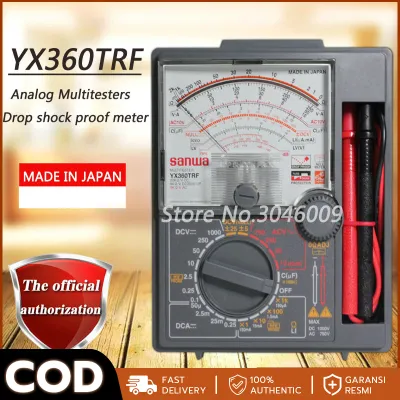
![[Fast Delivery] Sanwa YX360TRF Analog Multi-Tester Multi-Meter Made in JAPAN Analogue Multitester Multimeter DN](https://img.lazcdn.com/g/p/66f9ab4f884c715e99ee36d59c6e8d58.jpg_400x400q80.jpg_.webp)
69 Lazada user ratings
Ideal for weak current circuits, Compact and portable, Precise analog meter, Compact and portable, Drop-proof design, Low voltage high resis…Read full reviewShow less
Ideal for weak current circuits, Compact and portable, Precise analog meter, Compact and portable, Drop-proof design, Low voltage high resistance,
📏Accuracy: Precise voltage readings, Easy to use design,
SANWA DAW...salamat sanwai😀
Easy to use design,

51 Lazada user ratings
🛠️Durability:ok material use. 👌Ease of Use:verry easy to use. 🔨Durability:ok material use but not fixed at the right side.
Great value for the price, looks good and durable considering the cheap price..hope will last.
🛠️Durability:looks durable 👌Ease of Use:quiet handy 📏Accuracy:its accurate though
need ko po replacement ng same na item dont need a refund please thank you
My order is a SANWA multi tester but you me a Sanwai? What is that?
3 Lazada user ratings
Nagsayang kng nang pera ang makabili kung hindi sira ang unit di ma calibrate sa ohms settings mula x1 to x1k nasa gitna lang pag e calibrat…Read full reviewShow less
Nagsayang kng nang pera ang makabili kung hindi sira ang unit di ma calibrate sa ohms settings mula x1 to x1k nasa gitna lang pag e calibrate, pati voltage readings ang layu. Oo what you pay for less is what you get in short INFERIOR product. Sana naman ying pinadala tiniest nyu muna kahit 300 plus lng ang presyo, langhiya mapaaga agad ang tapon ng product nato sa basurahan. hitsura lng okey nilagay pa sanwa yun pala ang sa actual sanwai.
not working.battery installed.
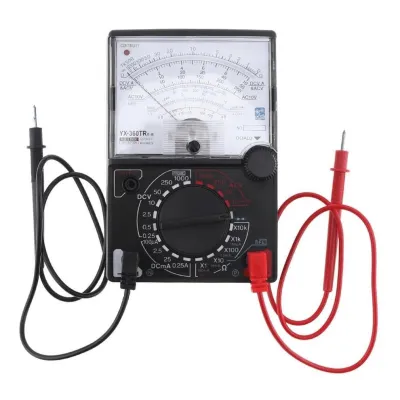
124 Lazada user ratings
Easy-to-read analog display, Compact and lightweight tool, Easy-to-read analog display, Multi-purpose electrical tester, Includes test pen p…Read full reviewShow less
Easy-to-read analog display, Compact and lightweight tool, Easy-to-read analog display, Multi-purpose electrical tester, Includes test pen pair,
need to check all electrical lines in our ancestral house especially since a lot of residential fires are happening everywhere.
Received the item in good shape but the meter does not return to the left. Maybe this has partial damage in the meter.
Portable and durable design, Precise voltage measurements, Compact and lightweight tool,
Built-in overload protection, Precise voltage measurements, Measures decibels for sound,

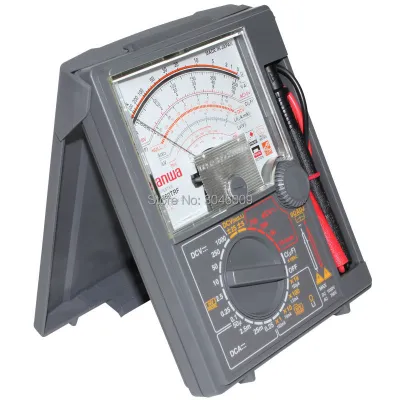
42 Lazada user ratings
🛠️Durability:9 👌Ease of Use:10 📏Accuracy:9 Packed properly and arrived in good condition. Fast delivery, Durable materials, Good packaging, E…Read full reviewShow less
🛠️Durability:9 👌Ease of Use:10 📏Accuracy:9 Packed properly and arrived in good condition. Fast delivery, Durable materials, Good packaging, Easy to use, The brand is good. Thank you Lazada.
Accurate measurements, Reliable brand, Good packaging, Easy to use, ayos na ayos thank you seller. thank you din ky kuya rider
The quality of the product is very poor, totally not working
Accurate measurements,
working naman maganda
Prices are valid at publication and may change. Please refer to the product page for the latest price.
Finally, if your specific Sanwa model is manual-ranging rather than auto-ranging, you must manually select the highest available range for the parameter you intend to measure. For instance, when testing a system of unknown voltage, starting at the highest voltage setting prevents the meter from being overloaded. Once you obtain an initial reading, you can safely dial down to a lower range to achieve a more precise decimal display.
How do you measure AC and DC voltage correctly using the test probes?
To measure voltage correctly, you must select the appropriate current type on your Sanwa tester and connect the probes in parallel across the component being tested. In automotive applications, you will almost exclusively measure DC voltage, which is represented on your Sanwa tester by a straight line over a dashed line next to the letter V. Household electrical systems in the Philippines, which operate on a nominal 220-volt AC standard, require the AC voltage setting, represented by a wavy line over the V.

To begin, insert the black test probe into the common port, labeled COM, which serves as the ground or negative reference point for all measurements. Insert the red test probe into the port marked with a V and the omega symbol (Ω), which is designated for voltage and resistance measurements. Ensure both plugs are pressed firmly into the jacks so that no metal portion of the banana plug remains exposed.
Voltage is measured in parallel, meaning you place the probe tips directly across the component or power source without disconnecting any wires. For a standard 12-volt automotive battery, touch the red probe to the positive terminal and the black probe to the negative terminal. Read the digital display; a healthy, fully charged battery should read approximately 12.6 volts or slightly higher when the engine is off. If you are testing household AC outlets, insert the probes carefully into the two main slots of the outlet, keeping your fingers behind the protective plastic guards on the probes at all times. If you are performing complex electrical modifications or working on high-voltage hybrid vehicle systems, always consult the original vehicle manufacturer’s service manual or seek qualified professional installation to avoid severe electrical shock.
How do you check resistance and continuity to find broken wires or bad grounds?
Checking resistance and continuity requires you to completely power down the circuit before touching the probes to any component to prevent damaging your Sanwa tester. Testing resistance on a live circuit will not only produce highly inaccurate readings due to stray current, but it can also blow the internal fuse of your multimeter or permanently damage its sensitive microchips. Turn off the vehicle ignition, disconnect the battery terminals, or unplug the household appliance entirely before touching the probes to the circuit.
To check for a broken wire or a bad ground connection—a common issue in tropical climates where humidity accelerates rust and corrosion on metal chassis ground points—turn the dial to the continuity setting, which is usually marked with a sound wave or diode symbol. Touch the red and black probes together to verify that the meter emits a clear, continuous beep, indicating a complete path with zero resistance. Next, place one probe on one end of the wire or ground strap and the other probe on the opposite end; a continuous beep confirms the wire is intact, while silence indicates an open circuit or a broken connection.
If you need a precise measurement of resistance, turn the dial to the resistance setting (Ω). Touch the probes to the component, such as an ignition coil or a sensor, and observe the numerical value on the screen. If the display shows “OL” (Over Limit or Open Loop), it indicates that the resistance is higher than the selected range or that there is a complete break in the internal winding of the component. Compare your observed resistance values with the specifications listed in your vehicle’s service manual to determine if the part requires replacement.
How do you measure electrical current without blowing the multimeter's internal fuse?
Measuring electrical current safely requires you to insert your Sanwa tester in series with the circuit and use the dedicated high-current or low-current input ports. To prepare for this test, you must move the red probe from the standard voltage port to one of the dedicated current ports, typically labeled mA (milliamperes) for low-current circuits or 10A/20A for high-current circuits. Leaving the red probe in the voltage port while attempting to measure current will create a direct short circuit, instantly blowing the meter’s internal fuse or damaging the vehicle’s wiring.
Unlike voltage, current must be measured in series, which means you must physically break the circuit and insert the multimeter into the gap so that the current flows through the meter. For example, to measure parasitic draw on a car battery, you must disconnect the negative battery cable and connect the red probe to the cable and the black probe to the negative battery terminal. This configuration allows the Sanwa tester to act as a bridge, measuring the exact amount of electrical current passing through the vehicle’s electrical system while it is asleep.
Always check the maximum current rating printed next to the input ports on your specific Sanwa model before initiating the test. Most standard multimeters have a dedicated high-current port fused at 10 amps, which should never be exceeded. If you suspect the circuit draws more than the rated capacity of your meter, do not attempt the measurement, as doing so will rupture the internal ceramic fuse; replacement fuses can typically be sourced from local electronics shops for around ₱150 to ₱300, but avoiding the overload altogether is always the safest approach.
What do error codes and unexpected readings on a Sanwa tester display mean?
When your Sanwa tester displays unexpected readings or error codes, you must immediately stop testing to evaluate the tool’s battery status or range settings. Encountering erratic or rapidly fluctuating numbers on the digital display often points to a low internal battery rather than a fault in the circuit you are testing. Most models feature a low battery icon on the screen; when this appears, stop your testing immediately, as a weak battery prevents the analog-to-digital converter from functioning accurately, leading to dangerously false low-voltage readings. In the high humidity of the Philippines, internal batteries can also leak or degrade faster, so it is wise to inspect the battery compartment periodically for signs of corrosion.
If the display shows “OL” during a voltage or current test, it signifies an overload condition where the measured value exceeds the current range setting of the meter. Immediately disconnect the probes from the circuit to prevent internal damage, and turn the dial to a higher range before retesting. If the reading remains unstable or continues to show unexpected symbols, consult the troubleshooting section of your Sanwa user manual to identify specific error codes.
When readings fluctuate wildly without settling, it may indicate a loose probe connection, high electromagnetic interference from nearby running engines, or a failing component that is intermittently shorting out. If you cannot obtain a stable, repeatable reading after verifying your probe connections and battery strength, stop testing and consult a qualified automotive electrician or professional technician to diagnose the system using specialized diagnostic equipment.

Community discussion
Share your experience or ask a question. Comments are reviewed before publication.