
Verifying the authenticity of Toyota coolant requires a systematic, multi-layered approach to protect your vehicle’s cooling system from catastrophic failure. Because counterfeiters have become increasingly sophisticated, relying on a single visual cue is no longer sufficient to guarantee that a product is genuine. To ensure your engine remains protected under intense tropical heat and heavy traffic conditions, you must combine a rigorous inspection of the bottle’s packaging, a careful evaluation of the physical fluid itself, and a highly selective approach to where you purchase your automotive consumables. Always consult your vehicle’s owner’s manual to verify the exact coolant specification required for your specific model and year before making a purchase.
The Risks of Using Counterfeit Engine Coolant
Using counterfeit engine coolant poses severe mechanical risks that can permanently damage your vehicle’s engine. Genuine formulations are engineered with specific chemical additives, including precise corrosion inhibitors and anti-foaming agents, tailored to match the metallurgy of your engine block, radiator, and water pump. Counterfeit products, which often consist of little more than colored water or cheap industrial chemicals, lack these vital protective compounds.
Without proper corrosion inhibitors, the internal metal surfaces of your cooling system will rapidly oxidize, leading to rust accumulation and scale buildup. This debris can clog the narrow passages of your radiator and heater core, severely restricting coolant flow. Additionally, the absence of anti-foaming agents allows air bubbles to form under pressure, causing cavitation that can erode the water pump impeller and degrade internal rubber seals, ultimately leading to sudden engine overheating and expensive head gasket failures.
Products mentioned in this guide
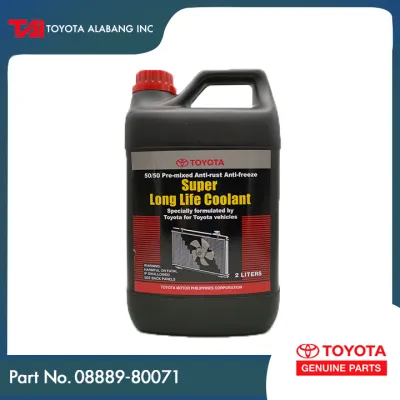
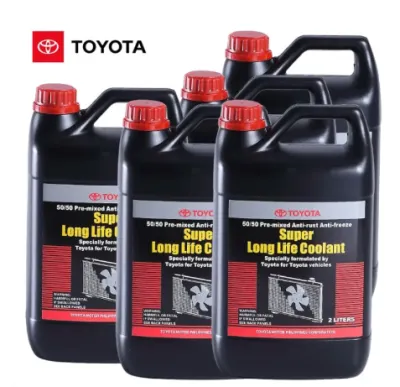
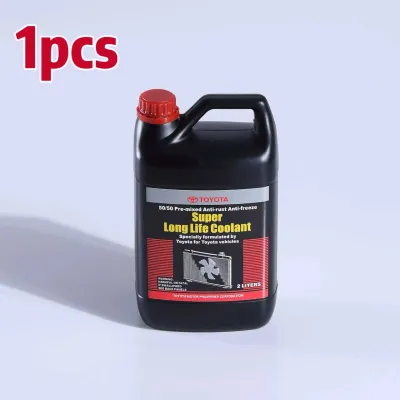
![Toyota Long Life Coolant 1 Liter (Pink) [Ready To Use]](https://img.lazcdn.com/g/p/5460d9af0d35e1556a975577b31c4835.png_400x400q80.png_.webp)
![[2L] Toyota Coolant [Long Life Coolant] - Toyota Auto Parts](https://img.lazcdn.com/g/p/1fbc8d57487932e2c8224981d80df5dc.jpg_400x400q80.jpg_.webp)
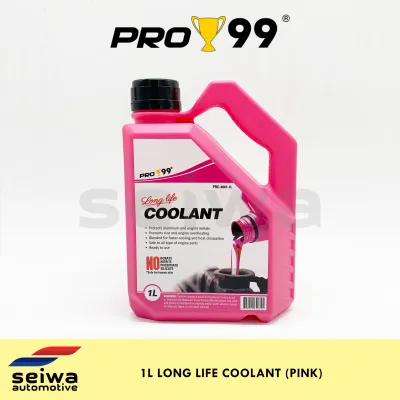
![1L PINK] Coolant for Toyota and Chevrolet - Pro99 Brand](https://img.lazcdn.com/g/p/c64659fadafe40fe81501d09479bef65.jpg_400x400q80.jpg_.webp)
Prices are valid at publication and may change. Please refer to the product page for the latest price.
How to Inspect the Bottle and Packaging Details
A thorough physical examination of the coolant container is your first line of defense against counterfeit products. Start by closely inspecting the security seal and the tamper-evident ring located directly beneath the cap. On a genuine bottle of Toyota coolant, this ring should be perfectly aligned, firmly attached, and show no signs of prior opening, stretching, or excessive glue residue. If the cap feels loose or if there are visible tool marks on the plastic, the bottle may have been refilled or tampered with.

Next, turn your attention to the label itself, which should feature high-resolution printing with crisp, sharp typography and vibrant colors. Counterfeit labels often suffer from low-quality printing processes, resulting in pixelated logos, blurry text, or slight color bleeding along the edges. Carefully read all the text on the front and back of the bottle; spelling mistakes, grammatical errors, or inconsistent font sizes are immediate red flags that indicate a fake product.
Genuine packaging always features clearly printed or laser-etched production details, including batch numbers, manufacturing dates, and barcodes. These markings should be sharp, uniform, and resistant to light smudging when rubbed. On counterfeit bottles, these details are frequently stamped using cheap ink that easily smears, or they may be missing entirely.
Finally, evaluate the physical construction of the plastic bottle. Genuine containers are manufactured using high-grade, durable plastics with clean molding seams and a consistent, textured finish on the cap. If the bottle feels unusually flimsy, has sharp or uneven plastic flashing along the seams, or features a cap with a smooth, cheap texture, it is highly likely to be a counterfeit.
Evaluating the Liquid: Color, Clarity, and Consistency
If you have already purchased the coolant, pouring a small sample into a clean, clear container allows you to evaluate its physical properties. Genuine Toyota coolant must be completely clear and free of any suspended particles, sediment, or cloudiness. Any visible debris, separation of liquids, or floating contaminants indicate a low-quality formulation that should never be introduced into your vehicle.
While color is a prominent feature of engine coolant, it is critical to understand that color alone does not guarantee authenticity. Toyota produces different coolant formulations, such as Long Life Coolant (typically red) and Super Long Life Coolant (typically pink), which are designed for different vehicle generations and service intervals. Always verify that the physical color of the fluid matches the exact specification printed on the bottle’s label, rather than assuming any red or pink liquid is automatically genuine.
You should also pay attention to the odor of the fluid, though you must exercise extreme caution. Never inhale deeply or place your nose directly over an open bottle of chemical fluids. Instead, gently waft the air above the container toward your nose; genuine coolant has a mild, slightly sweet chemical smell, whereas counterfeit mixtures may emit a harsh, solvent-like, or foul chemical odor. If the smell seems unusually pungent or chemical-heavy, do not use the product.
Choosing Trusted Sellers and Authorized Channels
The most effective way to avoid counterfeit automotive fluids is to control where you buy them. Prioritize purchasing your coolant directly from official Toyota dealerships, authorized service centers, or highly reputable physical auto parts stores with a long-standing presence in your local community. These established businesses source their inventory directly from official distribution networks, virtually eliminating the risk of stocking counterfeit goods.
When shopping on e-commerce platforms or online marketplaces, you must exercise a higher level of scrutiny. Look for sellers that carry official store badges, maintain exceptionally high customer satisfaction ratings, and feature numerous detailed reviews from verified buyers. Be sure to read the reviews carefully, looking for customer-uploaded photos of the actual packaging received to verify that it matches the characteristics of a genuine product.
Price is another critical indicator of authenticity that you should never ignore. While it is natural to look for a good deal, you should be highly skeptical of third-party online listings offering prices significantly below the average market rate in ₱. If a deal seems too good to be true, it almost certainly is; counterfeiters often use deep discounts to quickly liquidate substandard stock to unsuspecting vehicle owners.
Steps to Take If You Suspect a Fake Product
If you suspect that the bottle of coolant you purchased is counterfeit, you must take immediate action to protect your vehicle. Stop using the product immediately and do not, under any circumstances, pour it into your radiator or expansion tank. Once a substandard fluid enters your cooling system, it can begin causing chemical damage and corrosion almost immediately.
Keep the suspicious bottle intact, along with all original packaging, purchase receipts, and any digital transaction records. If you have already opened the bottle, seal it tightly and store it in a safe, upright position to preserve a sample of the liquid. This physical evidence will be crucial if you need to file a dispute or request a refund.
Contact the seller directly to report your concerns and request a return, or escalate the issue by reporting the listing to the e-commerce platform’s customer protection team. If you have already poured the suspect fluid into your vehicle, do not start the engine. Before performing any cooling system maintenance, always ensure the engine is completely cool; opening a hot radiator cap can cause severe burns from pressurized steam and boiling liquid. Consult a qualified mechanic to perform a thorough system flush and refill with verified, genuine coolant to prevent internal damage.
Frequently Asked Questions (FAQ)
Can I mix original Toyota coolant with other brands?
Mixing original Toyota coolant with other brands is highly discouraged due to the risk of chemical incompatibility. Different manufacturers use distinct chemical technologies, such as Organic Acid Technology (OAT) or Hybrid Organic Acid Technology (HOAT), which rely on specific additive packages to protect engine metals. When these different formulas are mixed, the additives can react negatively, leading to the formation of thick sludge, gel-like deposits, or scale that can clog your radiator passages and cause severe engine overheating. In an emergency where your coolant level is critically low, it is safer to top off the system with distilled water rather than an unknown brand, followed by a professional system flush and refill as soon as possible.
Does original Toyota coolant have an expiration date?
Unopened bottles of original Toyota coolant do not have a strict, rapid expiration date, but their shelf life depends heavily on proper storage. You can locate the manufacturing date or batch code printed on the bottle to determine when the fluid was packaged. To maximize shelf life, store the container in a cool, dry place away from direct sunlight, high humidity, and extreme temperature fluctuations, which are common in tropical climates. Once the coolant is introduced into your vehicle’s cooling system, its operational lifespan is no longer determined by the bottle’s shelf life; instead, you must strictly follow the replacement intervals specified in your vehicle owner’s manual to ensure continuous engine protection.
Community discussion
Share your experience or ask a question. Comments are reviewed before publication.