
Riding a motorcycle in the Philippines demands both vigilance on the road and strict adherence to local traffic laws. For owners of a KYT dual visor helmet, ensuring your gear is fully compliant with local safety standards is the only way to guarantee maximum head protection while avoiding costly penalties during Land Transportation Office (LTO) checkpoints. Under Philippine law, every protective motorcycle helmet must carry a valid verification mark issued by the Department of Trade and Industry (DTI). While KYT is a globally recognized brand engineered to meet rigorous international standards, an imported helmet must still bear a physical Import Commodity Clearance (ICC) sticker or a Philippine Standard (PS) mark to be legally road-worthy. Failing to verify these credentials before hitting the road can result in heavy fines, confiscation of your gear, and a compromised shield against severe road accidents.
Why PSB and ICC Certifications Matter for Philippine Riders
The legal foundation for helmet safety in the country is governed by Republic Act No. 10054, otherwise known as the Motorcycle Helmet Act of 2009. This legislation mandates that all motorcycle riders, including drivers and backriders, must wear standard protective motorcycle helmets while riding. The law specifically tasks the DTI Bureau of Philippine Standards (BPS) with testing and certifying which helmet models meet the necessary impact absorption, penetration resistance, and retention system strength. For imported helmets like those from KYT, the BPS issues an ICC sticker after verifying that the specific import batch complies with Philippine National Standards (PNS). For locally manufactured or distributed units, a PS mark (often referred to in safety circles as the PSB or PS certification) is required.
Beyond legal compliance, the physical demands of riding in a tropical climate make authentic certification even more critical. The high humidity, sudden heavy downpours, and intense heat characteristic of Philippine roads place unique stress on helmet materials. A genuine KYT dual visor helmet is engineered with high-grade polycarbonate or composite shells, impact-absorbing Expanded Polystyrene (EPS) liners, and durable visor mechanisms designed to withstand these environmental factors. The dual visor design—featuring an outer clear shield for debris protection and an inner retractable sun visor—requires precise mechanical engineering. If a helmet is counterfeit or uncertified, the plastics used in the shell and the dual visor mechanism may degrade rapidly under intense UV exposure, leading to structural failure during an impact or causing the visor to shatter into dangerous shards near the rider’s eyes.
Products mentioned in this guide
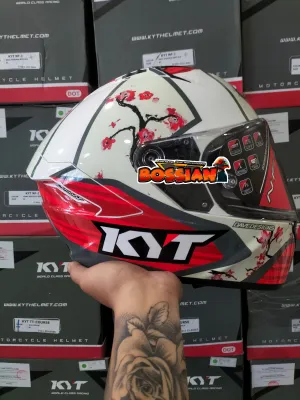
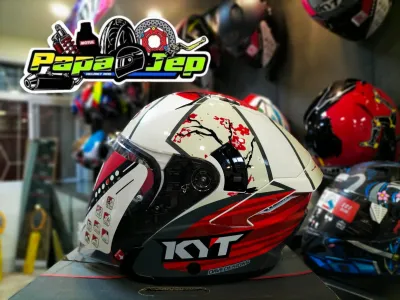
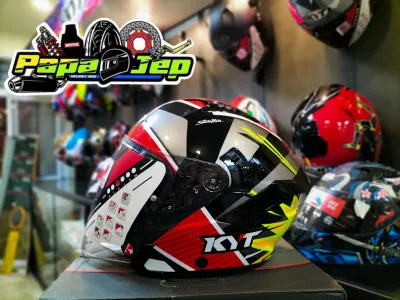
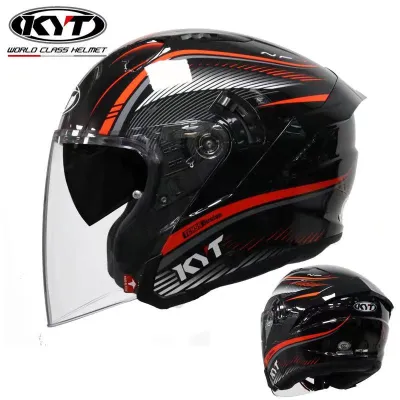
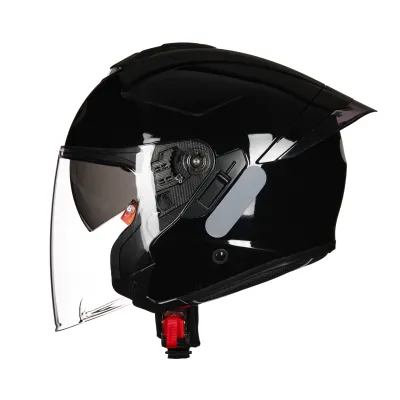
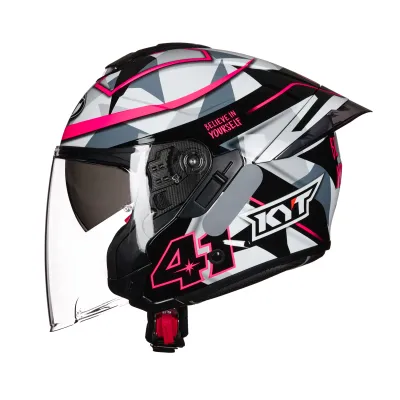
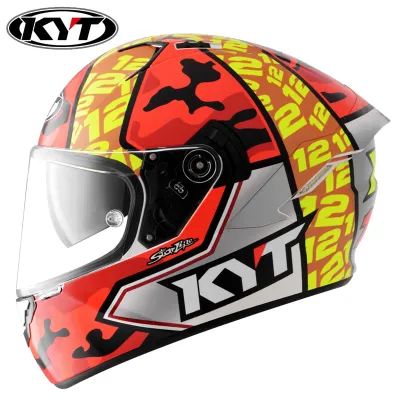
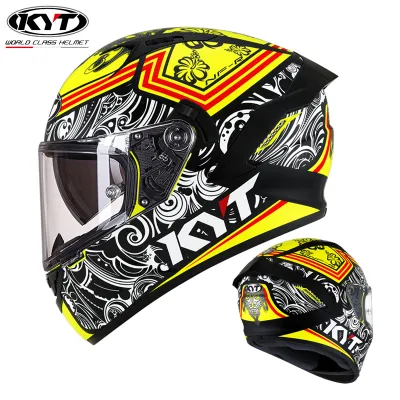
Prices are valid at publication and may change. Please refer to the product page for the latest price.
The consequences of ignoring these certification requirements are immediate and severe. LTO enforcers and local traffic officers actively conduct roadside inspections, specifically targeting riders with non-compliant headgear. Under current LTO guidelines, riding with an uncertified helmet or one lacking the official ICC or PS sticker carries a standard fine starting at ₱1,500 for the first offense, escalating to ₱3,000 for the second offense, ₱5,000 for the third, and up to ₱10,000 along with driver’s license confiscation for subsequent violations. More importantly, using an uncertified helmet deprives you of verified protection, significantly increasing the risk of traumatic brain injury during a collision.
Step-by-Step Guide to Verifying Authentic KYT Certifications
Inspecting the PSB and ICC Stickers
The first line of defense against counterfeit gear is a thorough visual inspection of the compliance sticker. On a genuine KYT dual visor helmet, the ICC or PS sticker is typically affixed to the rear or lower side of the outer helmet shell. This sticker is not a simple piece of printed paper; it is a highly secure, government-issued label designed with multiple anti-counterfeiting features. When examining the sticker, look closely at the holographic background. A genuine ICC sticker features a metallic, light-refracting hologram that shifts colors and displays distinct patterns when tilted under direct sunlight. The print quality must be exceptionally sharp, with no blurry edges, color bleeding, or misaligned text.

Every authentic sticker also features a unique serial number printed directly on the label. This serial number corresponds to the specific import shipment and batch tested by the DTI. If you observe a sticker that looks like standard matte paper, lacks reflective properties, or has a generic, repeated serial number across multiple helmets in a shop, it is a major warning sign of a counterfeit label. Furthermore, the adhesive used on genuine DTI stickers is designed to be permanent. If you attempt to peel the sticker, it should tear or leave a distinct tamper-evident residue on the helmet shell. A sticker that peels off cleanly, feels flimsy, or is placed over pre-existing scratches, dirt, or uneven surfaces indicates that it has been illegally transferred from another helmet or printed privately.
Checking the Helmet's Inner Labels and Batch Numbers
To fully verify your KYT dual visor helmet, you must look beyond the exterior shell and inspect the internal components. Start by gently pulling back the removable comfort liner and cheek pads to expose the inner EPS foam core. Sewn directly onto the chin strap or affixed as a permanent label inside the EPS lining, you should find the manufacturer’s production tag. This label contains vital information, including the helmet’s official model designation, the exact manufacturing date, the helmet size, and the production batch number.
Cross-reference the information on this internal label with the exterior ICC or PS sticker. The model name and production details should align perfectly with the certified batches authorized by the official Philippine KYT distributor. Additionally, inspect the dual visor mechanism itself. Authentic KYT helmets utilize a precisely engineered slider or switch, usually located on the side or bottom rim of the helmet, to deploy the inner sun visor. This mechanism should operate smoothly with a positive, tactile click at both ends of its travel. The inner sun visor must offer excellent optical clarity without distorting your vision. If the mechanism feels loose, squeaks excessively, or uses brittle, low-grade plastic components, it is highly likely that the helmet is a counterfeit or has been modified with unapproved aftermarket parts. Always check the manufacturer’s official sizing charts and documentation to verify that the shell dimensions and interior padding match the original specifications for your specific model year.
Red Flags: Identifying Fake or Non-Compliant KYT Helmets
One of the most reliable indicators of a non-compliant or counterfeit KYT helmet is an unusually low price. Genuine KYT dual visor helmets are premium safety products manufactured using high-quality materials and rigorous quality control standards. Consequently, they command a realistic price point, typically ranging from several thousand pesos depending on the model. If you encounter a seller on an online marketplace or an unauthorized physical shop offering a “brand new” KYT dual visor helmet for ₱1,000 to ₱1,500, you must exercise extreme caution. These low-cost replicas compromise on structural integrity, using cheap ABS plastic instead of impact-resistant polycarbonate blends, and lack any genuine safety certification.
Another critical red flag is the offer of “loose” or “unapplied” ICC or PS stickers. Some unscrupulous sellers will provide a separate sheet of stickers, telling the buyer to apply the sticker themselves after purchase. This is a highly illegal practice. The DTI strictly regulates the distribution of these stickers, issuing them directly to authorized importers who must apply them to verified helmet batches before they reach retail shelves. A seller possessing loose stickers is a clear indication of counterfeit printing operations.
You should also closely examine the physical build quality of the helmet. Genuine KYT helmets feature flawless paint finishes, robust ventilation ports, and high-quality rubber seals around the visor port to prevent water intrusion during heavy rain. Counterfeits often exhibit poor paint alignment, misaligned rubber seals, and flimsy visor hinges. The dual visor system on a fake helmet will often fail to seal properly, allowing wind noise, dust, and rain to penetrate the eye port, which poses a direct safety hazard while riding.
Finally, be skeptical of sellers who claim that international safety ratings like DOT (US Department of Transportation) or ECE 22.05/22.06 (Economic Commission for Europe) exempt the helmet from local certification. While these global standards are highly reputable and indicate excellent impact protection, the LTO does not recognize them as a substitute for local law. Under Republic Act 10054, a helmet must have the physical, local ICC or PS mark to be legally operated on Philippine public roads. If an enforcer stops you and your helmet only features a DOT or ECE graphic on the back without the local sticker, you are still liable for traffic apprehension and fines.
What to Do If Your Helmet Lacks Proper Certification
If you discover that your KYT dual visor helmet lacks a genuine ICC or PS certification, your first course of action must be to stop using it immediately for road riding. Continuing to wear an uncertified helmet not only exposes you to the risk of LTO apprehension and hefty fines but also leaves you vulnerable to catastrophic head injuries in the event of an accident. Your safety on the road should never be compromised for the sake of a purchase.
Next, gather all evidence related to your purchase. Take high-resolution photographs of the helmet, focusing on the areas where the certification stickers should be, the inner manufacturer labels, and any physical defects or red flags you identified. Locate your original transaction receipt, online order confirmation, or physical invoice. Contact the seller immediately to demand a full refund or a replacement with a fully certified, genuine unit, citing the lack of legal compliance and genuine safety markings as the primary reason for the return.
If the seller refuses to cooperate, is evasive, or operates an unauthorized shop, you should escalate the issue. File a formal complaint with the DTI Fair Trade Enforcement Bureau (FTEB) through their official mediation channels. If the purchase was made on an e-commerce platform or online marketplace, utilize the platform’s dispute resolution center to report the seller for distributing counterfeit and non-compliant safety gear. Reporting these sellers helps protect the wider riding community from purchasing dangerous, uncertified equipment. Under no circumstances should you attempt to purchase a loose sticker from online sources or forge a compliance mark, as falsifying government security labels is a serious criminal offense under Philippine law that carries severe legal penalties beyond standard traffic fines.
Frequently Asked Questions (FAQ)
Can I just buy a PSB sticker and attach it to my existing helmet?
No, purchasing and applying a standalone PS or ICC sticker to a helmet is strictly illegal. These stickers are government-controlled security labels issued exclusively to authorized manufacturers and importers for specific, tested batches of helmets. Applying a loose sticker bought online constitutes falsification of official documents. LTO enforcers and DTI inspectors are trained to cross-reference the serial numbers on the stickers with an official database. If the serial number does not match your helmet’s specific brand, model, and batch, or if the sticker shows signs of tampering, you will face severe legal consequences, including heavy fines, helmet confiscation, and potential criminal charges.
Does a DOT or ECE certification replace the PSB/ICC requirement in the Philippines?
No, international certifications such as DOT or ECE do not replace the legal requirement for a local PS or ICC mark in the Philippines. While DOT and ECE standards prove that the helmet has undergone rigorous safety testing in the United States or Europe, Philippine law under Republic Act 10054 strictly mandates that all helmets used on local roads must be certified by the DTI BPS. LTO enforcers look specifically for the physical, local ICC sticker or PS mark during roadside inspections. Riding with a helmet that only features foreign certification marks without the local sticker will still result in traffic apprehension and fines.
Community discussion
Share your experience or ask a question. Comments are reviewed before publication.