
To check if a Supremo top box bracket fits your motorcycle, you must match your bike’s exact make, model, and production year with the bracket’s specific part number, inspect your rear subframe’s mounting points, and verify that the installation preserves clearance for your exhaust, lights, and license plate. In the Philippines, where daily commutes face heavy monsoon rains, potholes, and bumpy roads, a secure bracket is essential for road safety. A loose or poorly fitted bracket poses a major hazard, potentially detaching at high speeds on busy highways or during sudden stops. Compatibility is highly specific, and a bracket made for one model or year will rarely fit another without introducing dangerous structural risks.
Assess Your Motorcycle's Current Rear Setup and Mounting Points
Visually inspect the rear subframe of your motorcycle to understand its structural layout. The subframe is the structural backbone of the rear of your bike, designed to support the weight of the rider, passenger, and factory-installed components. Depending on your motorcycle model, the designated mounting points for accessories might be hidden under plastic body panels, integrated into the passenger grab rails, or pre-drilled directly into the frame.
It is critical to distinguish between a passenger grab rail and a load-bearing rear carrier. Grab rails are engineered to help a passenger balance and hold on during rides; they are not designed to withstand the constant vertical leverage and dynamic vibrations of a loaded top box. Most model-specific brackets, such as those from Supremo, require direct attachment to the bare frame points or a heavy-duty, load-rated rear rack.
Products mentioned in this guide
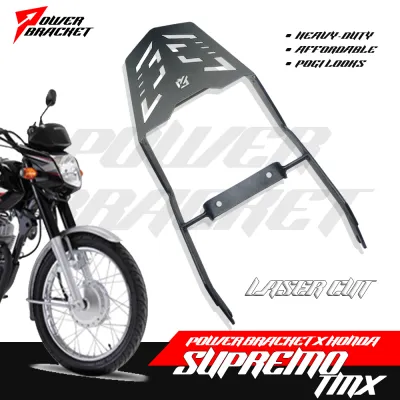
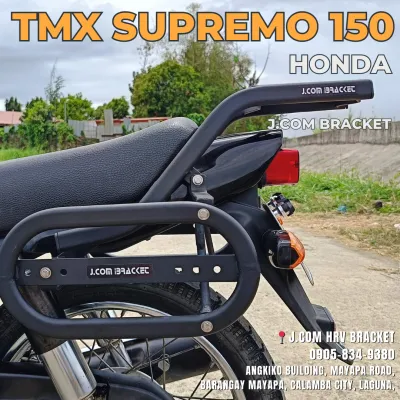
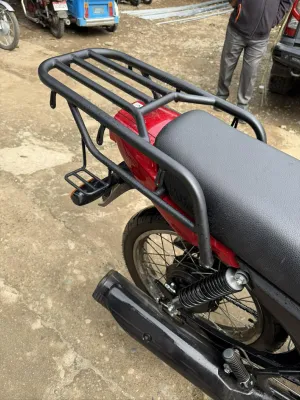
Prices are valid at publication and may change. Please refer to the product page for the latest price.
If your motorcycle has plastic fairings covering these areas, you must check if the bracket installation requires minor fairing modification or the complete removal of the grab rail. Always consult your motorcycle’s original manufacturer manual to identify the designated load-bearing points before attempting to bolt on any aftermarket accessories. Understanding these physical constraints beforehand prevents you from buying a bracket that cannot be safely anchored to your bike’s frame.
Match Your Exact Motorcycle Model to the Correct Supremo Bracket
Top box brackets are highly model-specific due to variations in frame geometries, exhaust routings, seat release mechanisms, and rear fender designs. These specifications vary significantly even between different model years of the same motorcycle model. For example, a bracket designed for an older model year of a popular underbone or scooter may not fit the updated version due to subtle changes in the subframe or plastic bodywork.

To ensure a proper fit, check the official Supremo compatibility charts or consult authorized local motorcycle accessory dealers. Verify the exact part number or model designation provided by the manufacturer rather than relying on visual assumptions. Never assume compatibility based solely on visual similarities or because another rider successfully modified a bracket to fit a different bike.
Relying on vague product descriptions on online marketplaces can lead to purchasing a bracket that puts undue stress on your motorcycle’s frame or fails under load. If you are unsure of your motorcycle’s exact production year or model variant, check your Certificate of Registration (CR) issued by the Land Transportation Office (LTO) before shopping. This ensures you match the bracket to the exact specifications of your vehicle.
Perform a Physical Fitment and Legal Clearance Check
Before finalizing your purchase or tightening any bolts, perform a comprehensive physical diagnostic check to ensure the bracket fits safely and legally. This involves checking mounting alignment, clearance from hot or moving parts, and compliance with local traffic laws.
Mounting Point Alignment
Begin by dry-fitting the bracket against your motorcycle’s designated mounting points to check for alignment. The mounting plate holes on the bracket must align perfectly with the frame tabs or pre-drilled holes on your motorcycle. You should not have to apply excessive force, bend the bracket arms, or use a hammer to make the bolt holes line up.
Forcing a misaligned bracket into place introduces constant structural tension, which can lead to stress fractures in the bracket or your motorcycle’s subframe over time. If the alignment is off by more than a couple of millimeters, double-check that you have the correct bracket model for your specific bike.
Exhaust, Taillight, and Turn Signal Clearance
Once the bracket is temporarily positioned, check the physical clearance around the rear components of your motorcycle. Ensure there is adequate space between the bracket, your intended top box, and the exhaust pipe to prevent heat damage or melting.
Verify that the bracket arms and the mounting plate do not obstruct the taillight, brake light, or rear turn signals from any viewing angle. In the Philippines, clear visibility of your rear lighting is crucial for safety during heavy downpours and night riding. If the bracket blocks your signal lights, you must address this before riding, as obscured lights can lead to accidents or traffic apprehensions.
License Plate Visibility and Traffic Compliance
The Land Transportation Office (LTO) enforces strict rules regarding license plate visibility and modifications. Ensure that neither the Supremo bracket nor the mounted top box blocks the view of your license plate or its dedicated light.
Measure the projected rear overhang to ensure it does not exceed local dimensions or create an unbalanced weight distribution that affects handling. A bracket that forces the license plate into an unreadable angle can result in heavy fines and temporary confiscation of your documents. Always prioritize road legality by keeping the entire license plate fully visible and illuminated.
Safe Alternatives If Your Motorcycle Is Not on the Compatibility List
If you find that Supremo does not manufacture a model-specific bracket for your exact motorcycle, do not attempt to force a fit. Avoid drilling new holes into your motorcycle’s frame, bending the bracket arms, or using makeshift spacers like stacked washers or non-automotive bolts. These modifications severely compromise the structural integrity of both the bracket and your motorcycle, increasing the risk of sudden failure on the road.
If your motorcycle already features a flat, sturdy, factory-installed rear carrier with a certified load rating, you may explore using a high-quality universal mounting plate. This allows you to secure a top box without modifying the bike’s frame. However, you must verify that the universal plate’s mounting hardware is compatible with your existing carrier.
For customized solutions, consult a professional, reputable motorcycle accessory shop that specializes in custom fabrication. Professional fabricators can engineer a safe, custom rack that distributes weight correctly without damaging your motorcycle’s frame. Remember that saving a small amount of money by forcing an incompatible bracket can lead to costly frame repairs or dangerous accidents.
Installation Safety Limits and Load Capacity Checks
Proper installation is just as critical as choosing the right bracket model. Always use high-grade, automotive-grade hardware, including thread-locking nuts (nyloc nuts) and heavy-duty washers designed to withstand engine and road vibrations. Apply a medium-strength thread-locking compound to the bolts to prevent them from backing out over time.
Check your motorcycle’s owner’s manual to find the maximum rear load capacity specified by the manufacturer. Keep in mind that this maximum weight limit includes the weight of the bracket itself, the empty top box, and all the cargo you plan to carry. Exceeding this limit can severely affect your motorcycle’s center of gravity, leading to dangerous front-wheel light-headedness and poor braking performance.
If the installation requires removing critical structural components, dealing with corroded or seized bolts, or if you do not own a calibrated torque wrench, seek the assistance of a qualified motorcycle mechanic. Professional installation ensures that all fasteners are torqued to the manufacturer’s specifications, maintaining the safety and structural integrity of your vehicle.
Frequently Asked Questions (FAQ)
Can I use a Supremo bracket designed for a different motorcycle model?
No, you should not use a bracket designed for a different model. Even if two motorcycles share the same engine size or brand, their rear subframe geometries, mounting point locations, and body panels are often completely different. Using an incorrect bracket can cause severe frame stress, vibration damage, or sudden structural failure while riding.
Do I need to remove the passenger grab rail to install the bracket?
This depends entirely on your specific motorcycle model and the design of the Supremo bracket. Some brackets are engineered to integrate seamlessly with the existing grab rail, while others require you to remove the grab rail completely and use the vacant mounting points. Always refer to the specific installation manual or consult an authorized dealer for your model.
Will installing a top box bracket void my motorcycle's warranty?
Bolting a model-specific bracket onto existing, factory-designed mounting points generally does not void your motorcycle’s warranty. However, if you drill new holes into the frame, modify the subframe, or splice into the electrical wiring to add top box lights, you risk voiding specific warranty claims. Always check with your authorized dealership’s service center to clarify their specific warranty policies before making modifications.
Community discussion
Share your experience or ask a question. Comments are reviewed before publication.