
When navigating the busy roads of the Philippines, your motorcycle helmet is your most critical line of defense against severe injury. For riders who trust the protective capabilities of a zeus helmet full face model, ensuring that your gear is genuine is a matter of life and death. Counterfeit helmets have increasingly slipped into physical and online marketplaces, mimicking the aesthetic of premium brands while offering virtually zero impact protection.
To verify that your Zeus helmet is genuine, you must inspect the physical Import Commodity Clearance (ICC) and Philippine Standard Bureau (PSB) certification marks, cross-check their serial numbers, and evaluate the physical build quality of the shell, visor, and inner liner. This guide provides a systematic verification process to help you distinguish a genuine protective helmet from a dangerous counterfeit.
Why PSB and ICC Marks Matter for Motorcycle Helmets
In the Philippines, the Land Transportation Office (LTO) strictly enforces the Motorcycle Helmet Act of 2009, also known as Republic Act No. 10054. This legislation mandates that all motorcycle riders wear standard protective helmets carrying the Import Commodity Clearance (ICC) sticker or the Philippine Standard (PS) mark. For imported brands like Zeus, the ICC sticker serves as the primary legal proof of compliance, showing that the product has passed rigorous safety evaluations before entering the local market.
Products mentioned in this guide
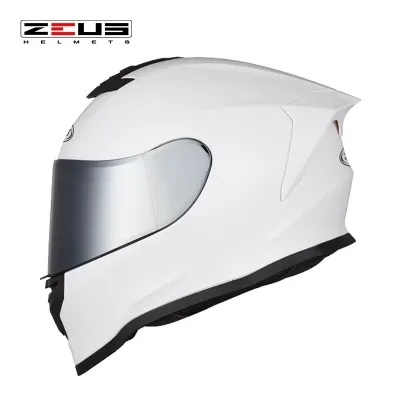
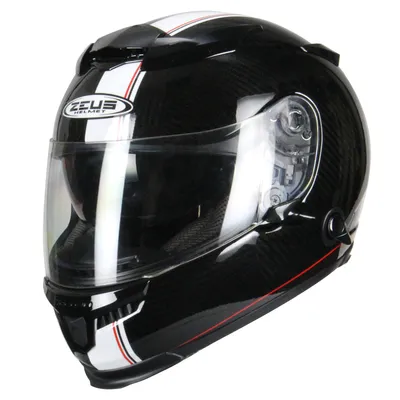
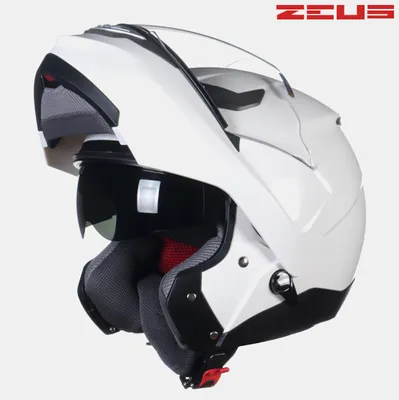
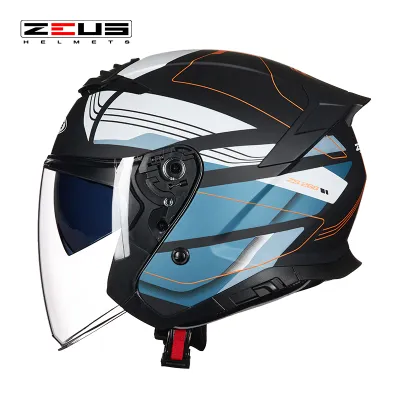
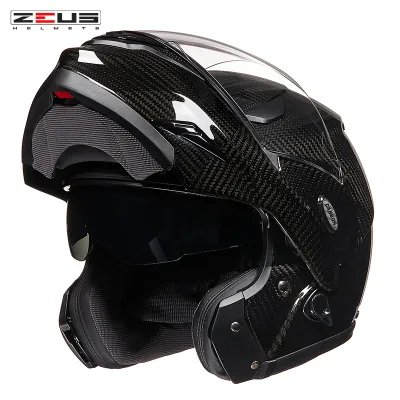
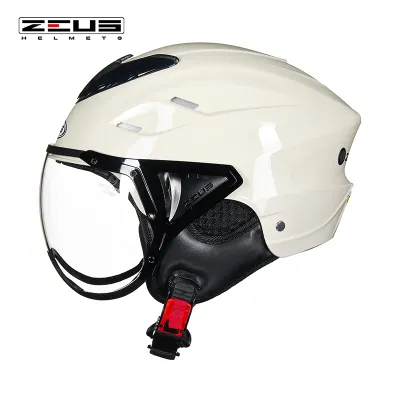
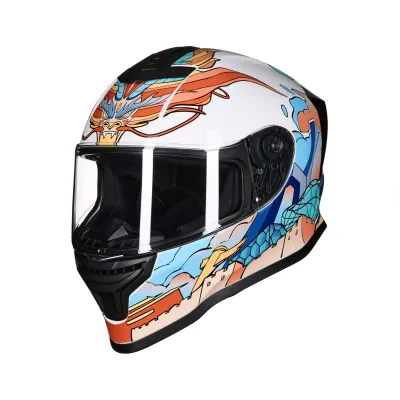
Prices are valid at publication and may change. Please refer to the product page for the latest price.
These certification marks are not mere bureaucratic labels; they signify that a helmet has undergone stringent laboratory testing. To earn these marks, a helmet must pass impact-absorption tests, penetration resistance checks, and retention system durability trials under extreme conditions. Riding with an uncertified or counterfeit helmet not only invites steep fines starting at ₱1,500 for a first offense, but it also leaves you highly vulnerable to catastrophic head trauma during an accident.
Because Zeus helmets are distributed across various Southeast Asian markets, you will often find regional safety marks alongside local stickers. The PSB mark, representing Singapore’s stringent product safety standards, is commonly found on genuine Zeus helmets imported through authorized regional channels. Verifying these marks is the most reliable first step before assessing any other physical characteristics of the gear.
How to Inspect PSB and ICC Marks on a Zeus Helmet
Locating the ICC Sticker and PSB Logo
To begin your physical inspection, look at the lower rear section of the helmet’s outer shell. This is the standard location where the Bureau of Philippine Standards (BPS) requires the ICC sticker to be placed. On a genuine Zeus helmet, the ICC sticker is a small, rectangular, silver-and-blue holographic decal that is firmly adhered to the shell, often positioned next to the helmet’s size or model label.

In addition to the shell sticker, genuine imported batches often feature a corresponding certification label on the original retail packaging. The PSB logo, which features a distinct circular or triangular certification layout, is typically printed directly onto the helmet’s rear graphic design or applied as a high-quality, factory-sealed decal. These marks should be perfectly aligned and lie completely flat against the surface.
If you notice that a sticker is placed haphazardly, has air bubbles underneath, or is peeling at the corners, this is an immediate warning sign. Genuine manufacturers use industrial-grade adhesives that make it incredibly difficult to peel the sticker off without tearing it or leaving a clear tamper-evident pattern behind.
Cross-Checking Mark Details and Security Features
A authentic ICC sticker contains several advanced security features designed to prevent duplication. When you tilt the helmet under direct sunlight or a bright flashlight, the holographic background should display a clear, sharp color shift. It should also reveal the official BPS logo and unique, micro-printed security patterns that are impossible to reproduce on standard home printers.
Every legitimate ICC sticker features a unique serial number printed in a crisp, high-resolution font. You can verify these serial numbers by cross-checking them with the Department of Trade and Industry (DTI) databases or official lists of certified helmet importers. If the text on the sticker appears blurry, pixelated, or lacks the characteristic holographic depth, the sticker is likely a cheap replica.
Furthermore, you should verify the importer and manufacturer details printed on the packaging against the official Zeus brand information. Authorized local distributors in the Philippines keep detailed records of certified batches. If a seller cannot provide the official importer details or if the sticker’s serial number does not match the helmet’s production batch, do not proceed with the purchase.
Beyond the Stickers: Other Signs of an Authentic Zeus Helmet
Inspecting the EPS Liner
The Expanded Polystyrene (EPS) liner is the shock-absorbing core of any zeus helmet full face model, designed to compress and dissipate impact energy. To inspect this critical safety component, gently pull back the comfort padding inside the helmet shell. A genuine Zeus helmet features a high-density, uniform EPS liner that is firmly bonded to the outer shell.
The EPS should feel solid and compressed, with molded ventilation channels that align perfectly with the helmet’s outer intake vents. In contrast, counterfeit helmets often use cheap, low-density white styrofoam that crumbles easily under light finger pressure. If the inner foam looks like common packaging material or feels soft and flaky, the helmet is a dangerous fake.
Testing the Visor Mechanism and Optical Clarity
The visor of an authentic Zeus helmet is engineered for optical clarity and impact resistance. When you raise or lower the shield, the ratchet mechanism should operate smoothly with distinct, positive clicks. There should be no excessive lateral play or loose, rattling parts when the visor is partially open.
Look through the closed visor to check for optical distortion. Genuine Zeus visors are made from high-grade polycarbonate that provides a clear, undistorted field of view, even at the curved edges of the shield. Many genuine models also feature stamped markings along the visor border indicating compliance with international standards like ECE or DOT, along with anti-scratch and UV-protection labels.
Evaluating Comfort Padding and Stitching
Zeus designs its interior padding specifically for the hot and humid tropical climate of the Philippines. Genuine helmets feature moisture-wicking, hypoallergenic, and fully removable comfort liners. The cheek pads should feel plush, dense, and hold their shape firmly when squeezed.
Examine the stitching along the edges of the padding and chin strap. Genuine helmets exhibit neat, tight, and uniform seams with no loose threads or fraying fabric. The snap buttons used to secure the liner to the shell should be heavy-duty and align perfectly, clicking into place with minimal effort.
Checking Shell Molding and Weight
An authentic Zeus full-face helmet is constructed from high-quality ABS or composite materials, giving it a solid, substantial feel. Depending on the specific model and shell size, a genuine full-face helmet typically weighs between 1,450 and 1,650 grams. This weight is evenly balanced to reduce neck fatigue during long rides.
If the helmet feels unusually light—like a toy—or if you can easily flex the chin bar inward by squeezing it with moderate hand pressure, the shell is likely made of cheap, recycled plastic. Genuine shells are rigid and designed to resist flexing to prevent the helmet from crushing your face during an impact.
Red Flags: How to Spot a Counterfeit Zeus Helmet Full Face
Visual Discrepancies
- Misspelled brand names on the shell, box, or manual (e.g., "Zues" or "Zeuse").
- Blurry, pixelated, or low-resolution graphics and logos.
- Clear-coat finishes that have trapped dust, air bubbles, or hair underneath.
Missing Accessories and Documentation
- Absence of a high-quality, branded retail box.
- No soft, branded helmet dust bag included in the packaging.
- Missing user manual printed on high-quality paper and lack of an official warranty card.
Deceptive Pricing and Terminology
- A retail price that is suspiciously low (e.g., ₱1,200 for a model that normally retails for ₱3,500 to ₱6,000).
- Sellers using terms like "OEM," "Class A," "1:1 Copy," "Factory Excess," or "Unbranded Export" to justify the lack of proper certification.
In the motorcycle safety industry, there is no such thing as an “OEM” copy or “factory second” that bypasses standard testing. These are simply deceptive marketing terms used by unscrupulous sellers to peddle illegal, uncertified counterfeits that put your life at risk.
Safe Purchasing Channels and What to Do If You Find a Fake
To guarantee that you are buying a genuine, certified product, always purchase your helmet from established, authorized physical motorcycle gear shops or official flagship stores on major online marketplaces. Authorized dealers are typically listed on the official Zeus Helmets website or their verified local social media channels. Buying from these channels ensures that your helmet has gone through legitimate import channels and carries a valid ICC sticker.
Always demand an official receipt or sales invoice upon purchase. This document is not only necessary for claiming warranty services but also serves as legal proof of purchase if you ever need to verify the helmet’s origin with local authorities.
If you realize after your purchase that you have bought a counterfeit helmet, stop using it immediately. A fake helmet will not protect your head in a crash and is illegal to use on public roads. Contact the seller immediately to demand a refund, and report the fraudulent listing to the e-commerce platform’s customer support. You should also file a formal complaint with the DTI to help take illegal sellers off the market and protect other riders.
Frequently Asked Questions (FAQ)
Can I use a helmet with a DOT or ECE mark instead of PSB/ICC in the Philippines?
While DOT (US Department of Transportation) and ECE (Economic Commission for Europe) are highly respected international safety standards, Philippine law strictly requires a physical ICC sticker or PS mark for a helmet to be legally used on public roads. If your imported helmet only has a DOT or ECE mark without the local ICC sticker, you can still be apprehended and fined by traffic enforcers. Imported helmets must go through the Bureau of Philippine Standards verification process to receive the physical ICC sticker before they are considered road-legal.
What if the ICC sticker is damaged or missing on a second-hand Zeus helmet?
If the ICC sticker is missing, heavily scratched, or damaged on a second-hand helmet, you should avoid purchasing it. Without a legible sticker and serial number, it is impossible to verify the helmet’s authenticity or prove its legal compliance to traffic authorities. Furthermore, purchasing second-hand helmets is highly discouraged because you cannot verify if the helmet has been involved in a previous accident, which can compromise its internal EPS liner without showing any visible damage on the outer shell.
Community discussion
Share your experience or ask a question. Comments are reviewed before publication.