
Determining whether your motorcycle needs F2R oil treatment depends entirely on your engine’s current condition, mileage, and maintenance history. Rather than being a mandatory upgrade for every rider, aftermarket additives serve specific supplementary roles. In the Philippines, motorcycles face harsh operating environments, including intense tropical heat, high humidity, and prolonged idling in heavy urban traffic. These factors accelerate oil degradation and increase thermal stress on engine components. While some riders look to additives to help manage these conditions, standard maintenance is often sufficient for a healthy engine. This guide helps you diagnose your engine’s actual needs, distinguish between symptoms that require mechanical repair versus maintenance adjustments, and decide if an oil treatment or a standard oil change is the right path forward.
What Engine Oil Additives Actually Do
Engine oil additives are chemical compounds formulated to supplement the existing properties of your motor oil. In general, these aftermarket treatments aim to enhance the oil’s film strength, reduce friction between moving parts, or provide extra protection under extreme thermal loads. For older engines, certain additives can help condition seals or provide a thicker protective barrier to minimize wear.
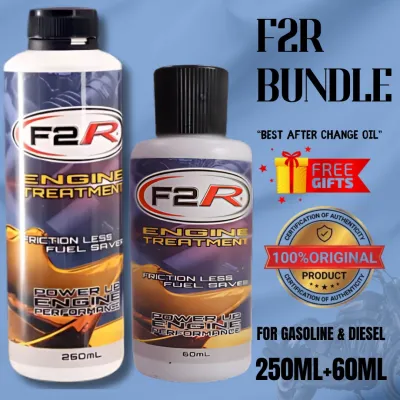
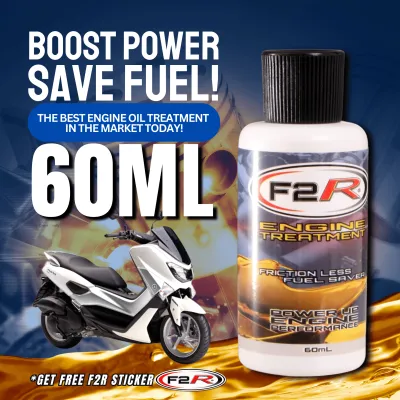
However, it is critical to read the specific F2R product label to understand its exact intended use, active ingredients, and limitations. Different formulations target different engine types or issues, and using a product outside its specified scope can lead to poor performance.
Products mentioned in this guide

Prices are valid at publication and may change. Please refer to the product page for the latest price.
Riders must also maintain realistic expectations regarding what chemical treatments can achieve. No liquid additive can repair physical mechanical damage, fix broken piston rings, or restore worn-out bearings. If your engine has suffered severe mechanical wear or has been subjected to neglected maintenance, physical repairs are the only effective solution.
Symptoms That Prompt Riders to Seek Oil Treatments
Many motorcyclists begin considering oil treatments when they notice changes in how their engine sounds or performs. A common trigger is an increase in engine noise, such as ticking or valvetrain clatter, which often becomes more pronounced during hot afternoon rides or after long periods of idling in traffic. When this noise persists even after a fresh, correct-grade oil change, riders often look for supplementary lubrication.

Noticeable oil consumption is another symptom that prompts interest in additives. If you find yourself constantly topping up your oil level between scheduled changes, or if you notice minor oil seepage around older gaskets, you might consider a treatment designed to condition seals or reduce oil consumption. This is particularly common in high-mileage underbone motorcycles and scooters used for daily commuting or delivery work.
A perceived loss of operational smoothness or a rougher idle can also lead riders to seek chemical solutions. Over time, carbon deposits and minor internal friction can make an older engine feel less responsive. Riders often hope an additive will restore some of the lost smoothness and improve throttle response.
However, a crucial safety boundary must be established: these symptoms can also indicate serious internal mechanical failures. Persistent heavy ticking, blue smoke from the exhaust, or rapid oil loss are signs of worn piston rings or valve seals. In these cases, relying on an additive instead of seeking a professional mechanical inspection can lead to catastrophic engine failure on the road.
When Standard Oil Changes Are All You Need
For many motorcycles, aftermarket additives are completely unnecessary. If you own a newer motorcycle that is still under the manufacturer’s warranty, introducing unapproved additives into your crankcase can risk voiding your coverage. Manufacturers design their engines to run on specific oil grades, and using unauthorized chemical treatments can give them grounds to deny warranty claims if an engine issue arises.
Engines that are running smoothly and receive regular, timely oil changes do not require supplementary treatments. If you follow the manufacturer’s recommended service intervals and use the exact viscosity and specification outlined in your owner’s manual, your engine is already well-protected.
Furthermore, high-quality modern motorcycle oils are already formulated with a comprehensive, factory-balanced additive package. These packages are carefully engineered to provide anti-wear protection, detergency, and shear stability. Introducing an aftermarket treatment can sometimes disrupt this delicate chemical balance, potentially reducing the overall effectiveness of the base oil rather than improving it.
How to Decide: A Pre-Purchase Engine Checklist
Before spending money on F2R oil treatment, you should systematically evaluate your motorcycle’s actual needs. This pre-purchase checklist will help you determine if an additive is a logical choice or if you should stick to standard maintenance.
First, check your owner’s manual. Look for any explicit manufacturer warnings or restrictions against using aftermarket oil additives. Some manufacturers clearly state that additives should not be used, while others provide specific guidelines on what types of fluids are permissible.
Second, inspect the current condition of your engine oil. Pull the dipstick or look through the sight glass to check the oil’s color, level, and smell. If the oil is pitch black, gritty, or smells strongly of fuel, your engine is overdue for a standard oil change. Adding a treatment to dirty, degraded oil is a waste of money and will not restore the oil’s protective properties.
Third, verify your motorcycle’s total mileage and overall mechanical health. A low-mileage engine in good condition will gain very little from an additive, as its internal tolerances are still tight and its factory lubrication is fully effective. Conversely, an older, high-mileage engine that shows minor signs of aging might be a viable candidate for a supplementary treatment, provided there is no severe mechanical damage.
Fourth, compare the financial cost of the treatment in ₱ against your other maintenance options. If a bottle of additive costs a significant portion of a premium oil change, you must decide if that money is better spent upgrading to a higher-quality, fully synthetic base oil. Often, switching to a premium oil that meets JASO MA2 standards provides better overall protection and value than adding a separate treatment to a lower-grade mineral oil.
Safety Limits and Wet Clutch Compatibility
If you decide to proceed with an oil treatment, you must respect several critical safety and operational boundaries to protect your engine and transmission.
The first safety limit involves calculating total fluid volume. Adding an oil treatment directly to an already full crankcase will cause overfilling. Overfilling leads to oil aeration, where the spinning crankshaft whips air into the oil, reducing its lubricating efficiency. It can also increase internal crankcase pressure, leading to blown gaskets and oil leaks. Always ensure that the combined volume of your engine oil and the additive does not exceed the maximum fill line on your dipstick.
The second critical factor is wet clutch compatibility. Unlike passenger cars, most manual motorcycles and underbones share a single oil supply for the engine, transmission, and clutch. If an oil treatment contains friction modifiers that are not compatible with wet clutches, it can cause the clutch plates to slip, leading to a loss of power and accelerated clutch wear. Always check the F2R label for explicit wet clutch compatibility or JASO MA/MA2 ratings before pouring it into a motorcycle with a shared sump.
Finally, you must recognize clear stop conditions. If you observe severe engine knocking, find metal flakes in your drained oil, or see an active engine warning light on your dashboard, do not attempt to fix the issue with an additive. These are clear indicators of severe mechanical distress. Stop riding immediately and consult a qualified mechanic to diagnose and repair the underlying physical damage.
Frequently Asked Questions (FAQ)
Will using F2R oil treatment void my motorcycle's warranty?
You should consult your specific motorcycle warranty booklet to verify their policy on aftermarket fluids. Many manufacturers explicitly state that the use of unauthorized chemical additives in the engine oil will void the warranty if an engine failure occurs. If your motorcycle is still within its warranty period, it is highly recommended to stick strictly to the manufacturer-approved oil specifications and avoid any aftermarket treatments.
Can I mix this oil treatment with synthetic motorcycle oil?
You must read the F2R product label for explicit mixing instructions and compatibility guidelines. While many modern oil treatments are designed to be compatible with both mineral and synthetic oils, mixing them can alter the carefully engineered viscosity grade of your base oil. If the product label warns against mixing with certain oil types, or if you are concerned about altering your oil’s viscosity, you should avoid combining them.
Community discussion
Share your experience or ask a question. Comments are reviewed before publication.