
Operating a vehicle in the intense heat of the Philippines presents a severe test for any engine cooling system. When navigating congested urban roads or climbing steep mountain passes under the midday sun, your engine relies heavily on its coolant to transfer heat away from critical components. Prestone Max is a widely available option in local auto supply shops, but determining its suitability for your specific vehicle requires looking past general marketing and examining the technical specifications on the bottle. Ultimately, whether this coolant is right for your car depends on how closely its chemical formulation matches your vehicle manufacturer’s explicit requirements.
Quick Evaluation: Matching Coolant to Tropical Conditions
Determining if Prestone Max is suitable for your vehicle begins with a careful review of your vehicle owner’s manual. Modern automotive manufacturers design engines with specific metallurgical compositions, utilizing various combinations of aluminum, cast iron, copper, and brass. Consequently, they mandate specific coolant chemistries—such as Organic Acid Technology (OAT), Hybrid Organic Acid Technology (HOAT), or Inorganic Additive Technology (IAT)—to prevent chemical reactions that can degrade these metals. You must match the technology type specified by your manufacturer with the corresponding Prestone Max formulation, as the brand offers multiple product lines tailored to different vehicle makes.
Tropical driving conditions in the Philippines, characterized by high ambient temperatures and prolonged idling in stop-and-go traffic, place an exceptional thermal load on your engine. When a vehicle sits stationary in traffic, the cooling system cannot rely on the natural airflow generated by forward motion to cool the radiator. Instead, it must depend entirely on the chemical efficiency of the coolant and the mechanical operation of the radiator fan. Using a fluid that does not meet the manufacturer’s specifications can lead to premature chemical breakdown, reducing the fluid’s ability to manage these extreme thermal cycles.
Products mentioned in this guide
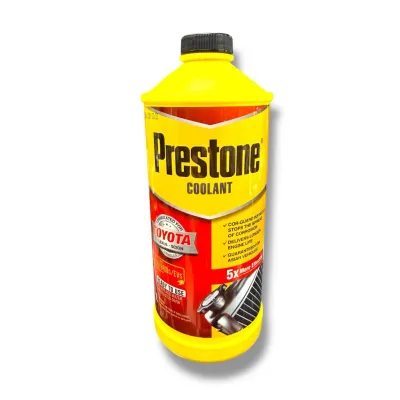
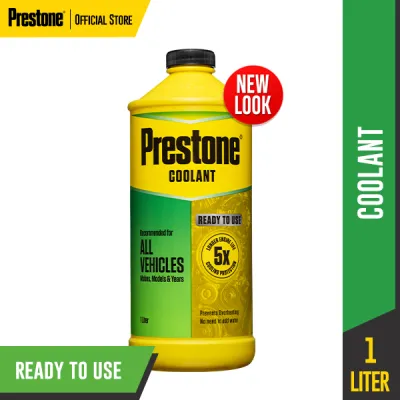
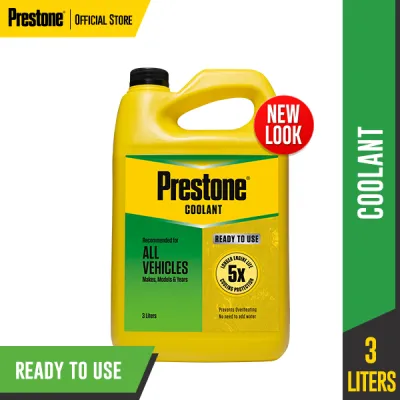
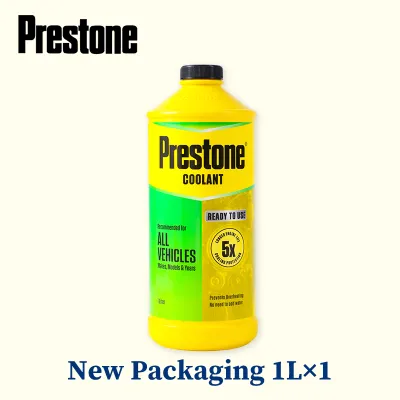
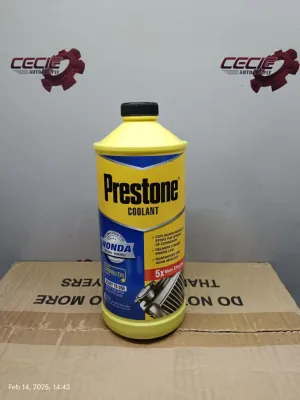
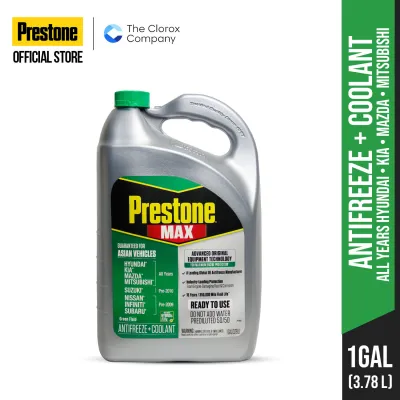
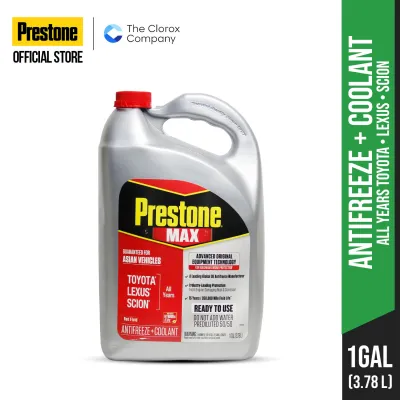
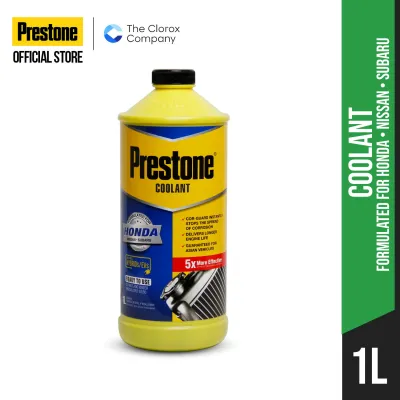
Prices are valid at publication and may change. Please refer to the product page for the latest price.
To ensure compatibility, always check the physical product label for explicit manufacturer approvals or industry standards rather than relying on broad compatibility claims. While a bottle may state it is compatible with “all makes and models,” your vehicle’s warranty or optimal operating parameters may require a fluid that meets a highly specific OEM (Original Equipment Manufacturer) standard. Verifying these codes on the back of the bottle is the most reliable way to safeguard your engine.
Cooling System Demands in High Heat and Heavy Traffic
High ambient temperatures directly reduce the temperature differential between the engine coolant and the surrounding air, making heat dissipation much more difficult. In a tropical climate, the air passing through your radiator is already warm, which means the cooling system must work significantly harder to transfer heat out of the engine block. When combined with the prolonged idling typical of urban traffic jams, the cooling system operates at its upper thermal limits for extended periods, accelerating the degradation of both the fluid and the cooling system components.

Under these high-stress conditions, a coolant’s pressurized boiling point is a critical safety margin. Engine cooling systems operate under pressure, which physically raises the boiling point of the water-glycol mixture. If the coolant boils, it turns into vapor pockets; because vapor cannot transfer heat effectively, localized hot spots will rapidly develop within the engine block, potentially leading to warped cylinder heads, blown head gaskets, or catastrophic engine failure. A high-quality coolant must maintain its liquid state under operating pressure to ensure continuous, efficient heat transfer.
Beyond heat dissipation, the coolant must provide robust corrosion protection under sustained high temperatures. Heat acts as a catalyst for chemical reactions, meaning that rust, scale buildup, and cavitation occur much faster in hot climates. Cavitation happens when vapor bubbles form and violently implode against metal surfaces, such as the water pump impeller, eroding the metal over time. Modern coolant formulations contain specific corrosion inhibitors that coat internal metal surfaces, protecting them from this mechanical and chemical wear.
How to Read and Verify Prestone Max Product Labels
When standing in an auto supply store, you must know how to decode the technical information printed on the Prestone Max packaging. The first step is to identify the specific coolant technology type. Prestone Max products are often segmented by vehicle origin—such as Asian, European, or North American vehicles—and are formulated with different inhibitor packages (such as phosphates, silicates, or sebacates) to match those regional engineering standards. Check the back label for a list of compatible vehicle brands and specific OEM specification numbers, and cross-reference these directly with your owner’s manual.
Next, verify whether the product is a “50/50 Prediluted” formula or a “Concentrate.” This distinction is vital for proper cooling system performance:
- 50/50 Prediluted: This version is pre-mixed with demineralized water and is ready to pour directly into your radiator or expansion tank. It ensures the perfect chemical balance and eliminates the risk of introducing contaminants from local water sources.
- Concentrate: This version consists of pure glycol and inhibitors, requiring you to mix it with water before installation. In tropical climates, a 50/50 mixing ratio is standard, but you must never pour pure concentrate directly into your engine, as pure glycol actually has a lower heat transfer capacity than a glycol-water mix.
Finally, look for industry standard certifications printed on the label to confirm baseline performance. Standards such as ASTM D3306 (for light-duty automotive engines) or ASTM D4985 (for heavy-duty applications) indicate that the fluid has undergone rigorous standardized testing. These certifications guarantee that the product meets industry-wide requirements for foaming resistance, metal corrosion protection, and compatibility with typical automotive seals and hoses.
Best Practices for Coolant Maintenance in Tropical Climates
If you purchase a concentrated version of Prestone Max, you must use distilled or deionized water for dilution. Never use tap water, well water, or bottled drinking water. Tap water contains dissolved minerals like calcium and magnesium; when subjected to the intense heat inside your engine, these minerals precipitate out of the solution and form scale deposits on the internal walls of your radiator and engine block. This scale acts as an insulator, severely restricting heat transfer and eventually clogging the narrow passages of your radiator, leading to chronic overheating.
Routine visual inspections are essential for maintaining cooling system health in hot environments. At least once a month, check the coolant level in your expansion tank. Always perform this check when the engine is completely cold; opening a hot cooling system can release pressurized steam and boiling liquid, causing severe burn injuries. Ensure the fluid level sits between the “Min” and “Max” markings on the translucent plastic tank.
During your inspection, observe the physical appearance of the fluid. The coolant should be clear and vibrant in its original color. If you notice a cloudy appearance, a rusty brown discoloration, or floating debris, the fluid has become contaminated or its chemical inhibitors have depleted. In such cases, a simple top-up is insufficient; you must perform a complete system flush and refill the system with fresh fluid to restore proper protection.
It is also important to recognize the physical limits of any engine coolant. While using the correct, manufacturer-approved Prestone Max formulation helps maximize heat transfer, it cannot compensate for mechanical failures within the cooling loop. If your vehicle is consistently running hot or overheating, the root cause may be a malfunctioning thermostat, a worn water pump impeller, a leaking radiator cap, or a failing electric cooling fan. If you experience persistent temperature spikes, consult a qualified professional mechanic to diagnose the mechanical components of your cooling system.
Frequently Asked Questions (FAQ)
Can I mix Prestone Max with the existing coolant in my radiator?
Mixing different coolant formulations is highly discouraged and can compromise your engine’s cooling efficiency. If you mix incompatible chemical technologies—such as an older Inorganic Additive Technology (IAT) with a modern Organic Acid Technology (OAT)—the different inhibitor packages can react chemically, causing them to precipitate out of the solution. This reaction often forms a thick, gel-like sludge that can clog your radiator core, heater core, and engine passages, leading to localized overheating. If you are unsure of the chemical type currently in your radiator, or if you are switching to a different Prestone Max formulation, you should perform a complete system flush with distilled water before adding the new coolant.
Does Prestone Max prevent overheating in severe traffic jams?
Using a properly formulated coolant like Prestone Max helps prevent overheating by raising the boiling point of the pressurized system and facilitating efficient heat transfer, which is crucial during prolonged idling in heavy traffic. However, a coolant can only perform its job if the mechanical components of the cooling system are functioning correctly. If your radiator fan fails to turn on, your water pump cannot circulate the fluid, or your radiator core is physically clogged with dirt and debris, the engine will overheat regardless of the quality of the coolant. Regular mechanical maintenance of the entire cooling system is just as critical as choosing the correct fluid.
Community discussion
Share your experience or ask a question. Comments are reviewed before publication.