
When navigating the intense midday heat of Manila or enduring hours of stop-and-go gridlock along EDSA, your vehicle’s engine relies entirely on its cooling system to prevent catastrophic thermal failure. If you are considering pro99 coolant pink for your vehicle, the direct answer is that it can be highly suitable for the Philippine tropical climate, provided its chemical formulation matches your vehicle manufacturer’s specific original equipment manufacturer (OEM) requirements. No single coolant is universally compatible with every car, meaning success depends on verifying the technical specifications on the label against your owner’s manual.
Operating a vehicle in a tropical environment presents unique challenges that standard automotive fluids must be formulated to handle. High humidity, elevated ambient temperatures, and prolonged idling in urban traffic jams place an extraordinary thermal load on the engine. Choosing the correct coolant is not merely about preventing freezing—which is not a concern in the Philippines—but about maximizing heat transfer, raising the boiling point, and preventing internal corrosion.
How Tropical Heat and Heavy Traffic Stress Your Cooling System
The physics of engine cooling rely heavily on the temperature difference between the hot coolant inside the radiator and the surrounding ambient air. When ambient temperatures in the Philippines regularly exceed 35°C (95°F) or even 40°C during the dry season, this temperature differential shrinks. Consequently, the radiator’s heat dissipation efficiency drops significantly, leaving a much smaller thermal safety margin before the engine begins to overheat.
Products mentioned in this guide
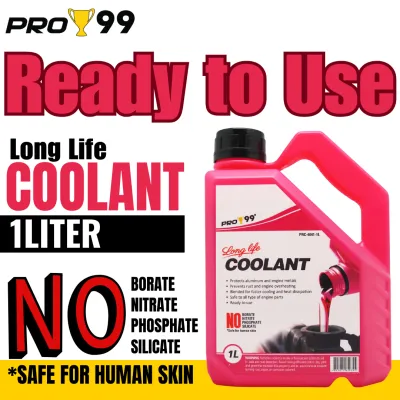
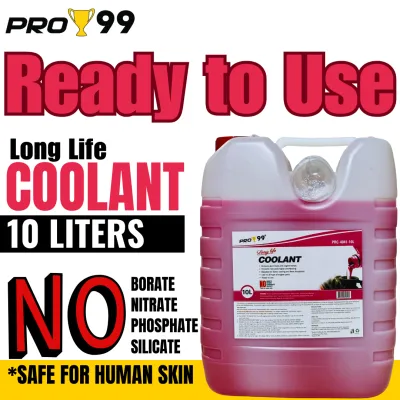
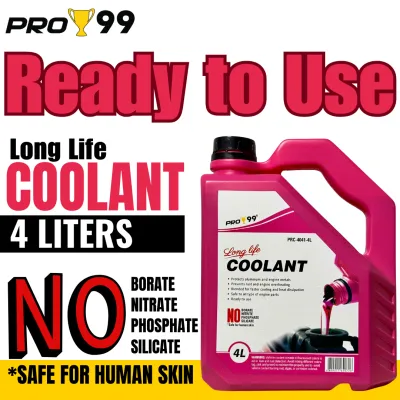
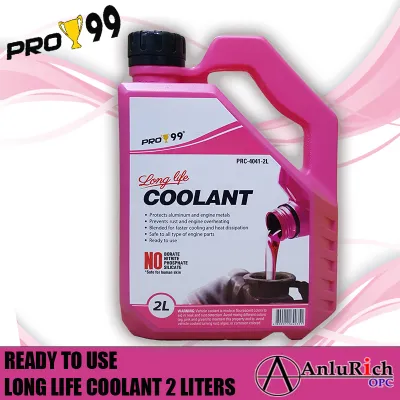
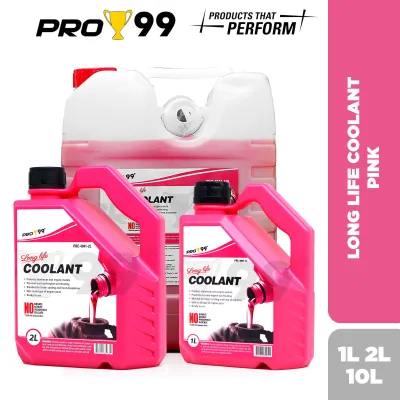
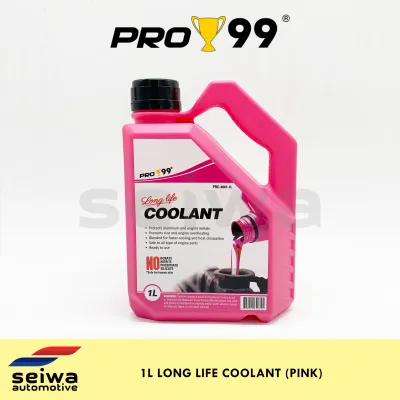
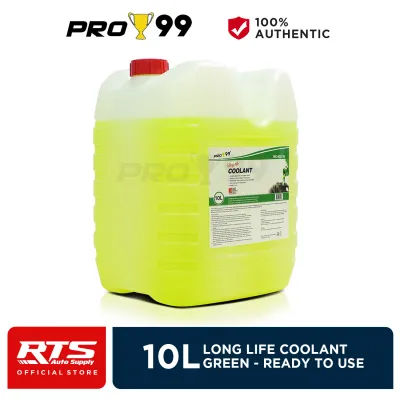
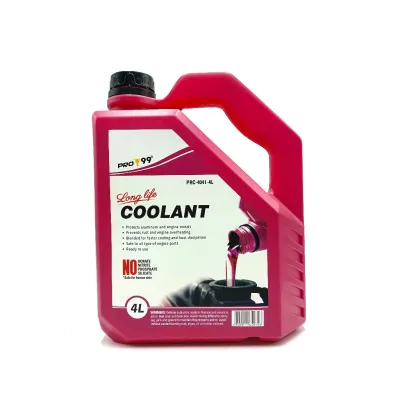
Prices are valid at publication and may change. Please refer to the product page for the latest price.
In moving traffic, ram air—the natural airflow forced through the radiator grille by the vehicle’s forward motion—helps cool the fluid. However, in heavy traffic conditions typical of major Philippine cities, your vehicle remains stationary or moves at a crawl for extended periods. Without ram air, the cooling system becomes entirely dependent on the mechanical or electric cooling fan to draw air through the radiator. This continuous idling generates substantial engine heat with minimal natural cooling, causing engine bay temperatures to climb rapidly.
Under these high-stress conditions, the coolant must fulfill several critical baseline requirements. First, it must possess an elevated boiling point under pressure to remain in a liquid state; if the coolant boils and turns to vapor, it loses its ability to transfer heat away from the engine block, leading to rapid overheating. Second, the fluid must feature robust anti-corrosion properties. High operating temperatures accelerate chemical reactions, including the oxidation of metal components within the engine block, cylinder head, water pump, and radiator. Without adequate corrosion inhibitors, rust, scale, and electrolysis will degrade these components, leading to leaks, blockages, and eventual system failure.
How to Verify Pro99 Coolant Pink Specs for High-Temperature Driving
To determine if pro99 coolant pink is the right choice for your specific vehicle, you must look past marketing claims and carefully verify the technical specifications printed on the product label. The first metric to examine is the stated boiling point. In a sealed, pressurized cooling system, the boiling point of the fluid is naturally elevated. However, the coolant itself must have a high baseline boiling point—typically well above 100°C (212°F)—to provide an adequate safety buffer when the engine is running hot under heavy loads or during prolonged idling in traffic.

Next, identify the specific coolant technology utilized in the formulation. Modern engine coolants generally fall into three categories: Inorganic Acid Technology (IAT), Organic Acid Technology (OAT), or Hybrid Organic Acid Technology (HOAT). OAT formulations are commonly dyed pink or red and are designed for extended service life, utilizing organic inhibitors that protect aluminum and non-ferrous metals without the use of silicates or phosphates. You must verify whether the Pro99 Pink Coolant bottle you are holding is a pre-mixed 50/50 formula or a concentrated solution. Pre-mixed formulas are ready to pour directly into the radiator, while concentrates require precise dilution with distilled water. Incorrectly diluting a concentrate—such as adding too much water or using mineral-rich tap water—will dangerously lower the boiling point, compromise corrosion protection, and introduce minerals that form scale inside the cooling passages.
It is vital to understand that the pink color of the coolant is merely a dye added by the manufacturer for safety, identification, and leak detection. Color is not a reliable indicator of chemical compatibility or technology, as different brands use different dye conventions. Instead of relying on the color, check the label for the actual chemical base, which is typically ethylene glycol, and examine the specific additive package. These products typically range in broad price bands of ₱250 to ₱500 per gallon on local online marketplaces, making them an accessible option if they align with your vehicle’s needs.
Finally, cross-reference the product’s stated industry standards and OEM approvals with your vehicle owner’s manual. Look for recognized standards such as ASTM D3306 (the standard specification for glycol-base engine coolants for light-duty vehicles) or Japanese Industrial Standards (JIS K2234). If your vehicle manufacturer specifies a particular OEM standard code, verify that this code is explicitly listed on the Pro99 packaging before introducing the fluid to your system.
Ensuring Chemical Compatibility and Avoiding Mixing Risks
One of the most critical aspects of cooling system maintenance is ensuring chemical compatibility. Mixing incompatible coolant chemistries is a leading cause of premature cooling system failure. For example, if your vehicle currently contains an older green IAT coolant and you top it up with an OAT-based pro99 coolant pink, the different additive packages can react chemically. This reaction often results in “gelling” or the formation of a thick, muddy precipitate that settles in the lowest parts of the cooling system. This sludge clogs the narrow tubes of the radiator, restricts flow through the heater core, and coats the inside of the engine block, severely reducing heat transfer efficiency and causing localized hot spots that can warp cylinder heads or blow head gaskets.
To avoid these risks, always consult your vehicle’s owner’s manual for the exact coolant specification required for your engine. Do not assume that because your current coolant is pink, any pink coolant on the shelf is a safe match. If you decide to switch your vehicle to Pro99 Pink Coolant, and the existing fluid is of an unknown type or a different chemistry, you must perform a complete cooling system flush. This procedure involves draining the old coolant safely, filling the system with distilled water, running the engine until it reaches operating temperature, and draining it again. This process should be repeated until the drained water runs completely clear, ensuring that no residual chemistry remains to react with the new fluid.
While performing a flush, take the opportunity to inspect the physical components of your cooling system. Check the condition of the rubber radiator hoses, heater hoses, bypass hoses, thermostat gaskets, and the water pump seals. Incompatible coolants or neglected, acidic fluids can cause rubber and elastomer components to swell, soften, crack, or degrade over time. If you notice any soft spots, bulging, or cracking in the hoses, or if there are signs of weeping around the water pump shaft, these components must be replaced by a qualified professional before refilling the system with new coolant.
Essential Cooling System Maintenance for Stop-and-Go Traffic
Even the highest-quality coolant cannot protect your engine from overheating if the physical components of the cooling system are failing. Regular maintenance is essential, especially when your daily commute involves stop-and-go traffic in high ambient temperatures. Start by inspecting the radiator pressure cap. The cap is not just a lid; it is a calibrated pressure valve. By maintaining a specific pressure within the system (usually around 0.9 to 1.1 bar), the cap raises the boiling point of the coolant. If the rubber seal on the cap is worn, cracked, or if the internal spring has weakened, the system will fail to hold pressure. This lowers the boiling point of the fluid, causing it to boil at a lower temperature and overflow into the expansion tank, eventually leading to a critical loss of coolant during a traffic jam.
Next, verify the proper operation of the radiator cooling fan. When your vehicle is stationary, this fan is the sole mechanism drawing air through the radiator fins to dissipate heat. Test the fan by starting the engine, turning on the air conditioning, and checking if the fan spins up immediately. If the fan motor is weak, if the relay is failing, or if the temperature sensor is sending inaccurate readings, the fan may fail to activate when the engine gets hot, leading to rapid overheating while idling.
Perform regular visual checks of the coolant level in the transparent overflow reservoir. The level should fluctuate between the “Min” and “Max” (or “Cold” and “Hot”) marks as the engine warms up and cools down. Take note of any sudden drops in level, which indicate a leak. Additionally, observe the color and clarity of the fluid. If the pink coolant appears cloudy, brown, or has an oily sheen, this indicates contamination or severe additive depletion, requiring an immediate diagnostic check and fluid replacement. Look for dried, crusty pink deposits around hose connections, radiator seams, and the water pump weep hole, as these are clear indicators of slow, pressurized leaks.
Finally, keep the exterior of the radiator and the air conditioning condenser clean. Over time, road debris, dust, leaves, and insects can accumulate in the delicate aluminum fins, restricting airflow. Carefully spray the radiator fins from the back with a low-pressure garden hose to dislodge debris. Avoid using high-pressure washers, as they can easily bend the fragile aluminum fins, permanently restricting airflow and exacerbating overheating issues in tropical conditions.
Frequently Asked Questions (FAQ)
Can I top up Pro99 Pink Coolant with distilled water in an emergency?
If you experience an emergency where your coolant level drops dangerously low and you risk engine seizure, topping up the system with distilled water is a viable temporary solution to get you to a safe location. However, adding water dilutes the carefully balanced ratio of ethylene glycol and corrosion inhibitors. This dilution lowers the overall boiling point of the mixture and reduces its ability to protect internal metal surfaces from rust and scale. Treat this strictly as a temporary emergency measure. Once you reach safety, have the cooling system inspected for leaks, drained, and refilled with the correct pre-mixed coolant ratio as recommended by your vehicle manufacturer.
Does the pink color guarantee it is the right coolant for my Asian-brand car?
No, the pink color does not guarantee compatibility. While many prominent Asian automotive manufacturers utilize pink or red organic acid technology (OAT) formulations as their factory fill, coolant color is not a globally standardized system. Different chemical manufacturers use various dyes, and a pink fluid from one brand may have a completely different additive package than a pink fluid from another. Always look beyond the color and verify that the specific OEM specification code or industry standard (such as ASTM or JIS specifications) listed on the Pro99 Pink Coolant bottle matches the exact requirements detailed in your vehicle’s owner’s manual.
Community discussion
Share your experience or ask a question. Comments are reviewed before publication.