
Yes, the RS8 center spring is compatible with the Yamaha Mio i 125, provided you select the specific variant engineered for this scooter’s transmission platform. The Mio i 125 utilizes a 125cc Blue Core engine (often designated under the 2PH/2SX platform) which requires a precise spring diameter, length, and tension. Installing a generic or incorrectly sized aftermarket spring can lead to severe transmission slip, poor acceleration, or physical damage to your clutch assembly.
While the physical dimensions of the RS8 spring may allow it to seat correctly inside your rear pulley, choosing the right stiffness rating is critical. Aftermarket springs are calibrated to alter how your continuously variable transmission (CVT) shifts. Understanding how this component interacts with your scooter’s power delivery is essential before making any modifications for your daily commute.
Understanding Your Mio i 125 CVT Spring Requirements
The center spring, also known as the torque spring, plays a vital role in your scooter’s automatic transmission. It sits inside the rear pulley assembly and exerts constant lateral pressure to keep the rear pulley sheaves squeezed together. This pressure forces the drive belt to ride high in the rear pulley, maintaining tension and establishing a low gear ratio for starting from a complete stop or climbing hills.
Products mentioned in this guide
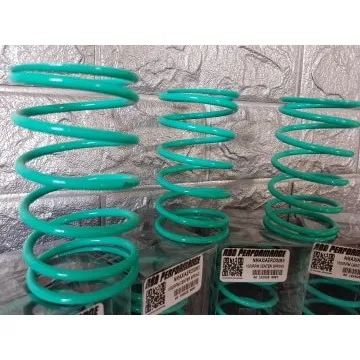
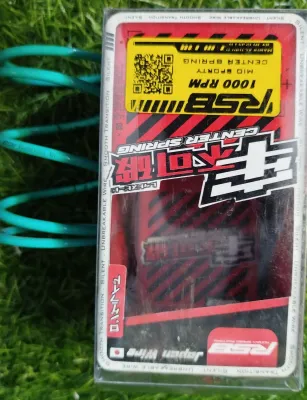
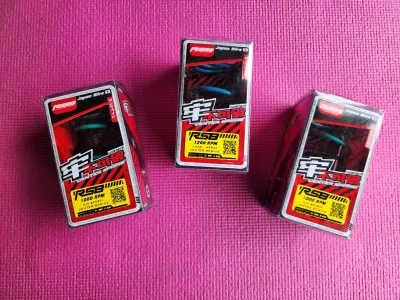
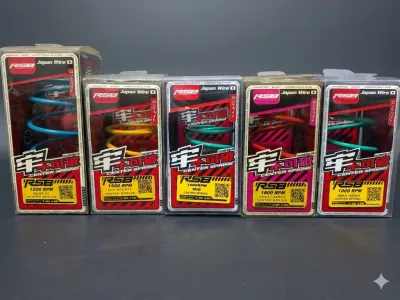
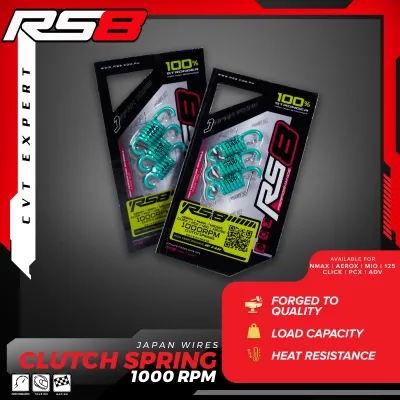
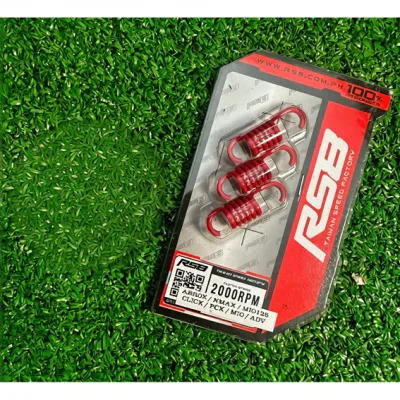
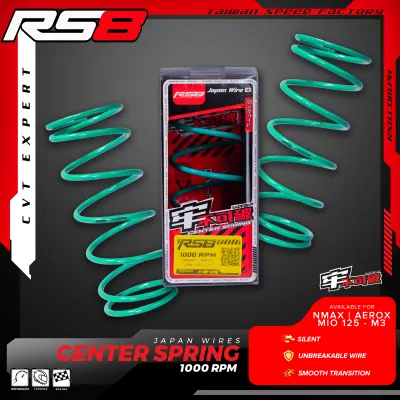
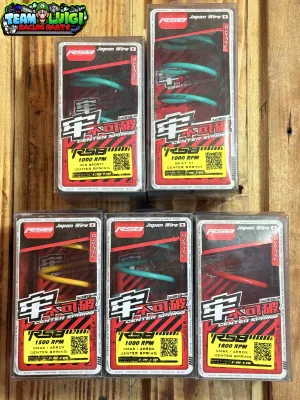
Prices are valid at publication and may change. Please refer to the product page for the latest price.
As your engine accelerates, the front pulley’s roller weights fling outward, forcing the front sheaves together and pulling the belt down into the rear pulley. The center spring must resist this movement just enough to keep the belt from slipping, while still allowing the transmission to upshift smoothly as engine speed increases. This delicate balance ensures that your Mio i 125 stays within its optimal power band.
Matching the center spring’s tension to the engine’s torque output is crucial for reliable daily riding, particularly in the demanding road conditions of the Philippines. Stop-and-go city traffic, heavy passenger loads, and high ambient temperatures place immense thermal and mechanical stress on the CVT. If your spring is too weak or too stiff for your specific engine output, your transmission will fail to shift efficiently, leading to excessive heat buildup and premature belt wear.
It is important to remember that physical fitment inside the clutch housing does not automatically guarantee proper CVT performance. A spring might slide onto the rear pulley shaft perfectly, but if its spring rate is mismatched with your roller weights and engine power, your scooter will suffer from sluggish performance or severe engine over-revving.
How to Verify RS8 Center Spring Fitment and Specs
Before purchasing an RS8 center spring, you must verify that the specific part number is rated for the Yamaha Mio i 125. RS8 packages its aftermarket components with clear labels indicating compatible scooter models. Look for designations such as “Mio i 125,” “M3,” or “Soul i 125” on the product packaging to ensure the physical diameter and free length match your stock equipment.

Do not assume that all Yamaha 125cc scooter springs are identical. Older carbureted models, such as the Mio Sporty or Mio Amore, use different rear pulley designs and spring dimensions. Attempting to force a spring designed for an older model onto your Mio i 125 can bind the rear pulley, preventing the transmission from shifting and potentially damaging the input shaft.
When comparing the RS8 spring to your original equipment manufacturer (OEM) spring, pay close attention to the stiffness rating, which is typically measured in RPM thresholds (such as 1000 RPM, 1200 RPM, or 1500 RPM). A 1000 RPM spring is generally designed as a direct OEM-equivalent replacement, offering stock-like shifting behavior. In contrast, 1200 RPM and 1500 RPM options are stiffer “upgraded” springs designed to delay upshifting for sportier performance.
To avoid purchasing counterfeit or incorrect parts, always buy from authorized RS8 dealers or reputable motorcycle shops. Ask the seller to cross-reference the RS8 manufacturer catalog with your scooter’s specific model year. If the packaging lacks clear compatibility labels, do not attempt to install the spring on a trial-and-error basis.
How Spring Stiffness Affects Your Scooter's Performance
Changing the stiffness of your center spring directly alters how your Mio i 125 accelerates and cruises. Installing a stiffer aftermarket spring, such as an RS8 1200 RPM or 1500 RPM variant, requires more force from the front pulley to open the rear sheaves. This keeps your transmission in a lower gear ratio longer, forcing the engine to run at a higher RPM before upshifting.
The benefit of a stiffer spring is highly noticeable during uphill climbs, such as traveling up steep flyovers or riding through mountainous regions like Antipolo. It provides immediate throttle response and prevents the engine from bogging down when carrying a pillion passenger. However, the trade-off is a lower top speed, increased engine noise, higher fuel consumption, and accelerated wear on your drive belt and roller weights due to constant high-tension friction.
Conversely, a center spring that is too soft or has become fatigued over time allows the rear pulley to open too quickly. This causes the transmission to upshift prematurely, dropping the engine out of its power band. You will experience sluggish acceleration, a noticeable lag when twisting the throttle at mid-range speeds, and a high risk of belt slippage, which generates extreme heat and causes clutch shudder during stop-and-go traffic.
To achieve a smooth and reliable ride, you must balance your center spring with the rest of your CVT components. If you install a stiffer RS8 center spring, you will likely need to adjust your front roller weights to prevent the engine from over-revving without gaining speed. Mixing mismatched CVT components without a cohesive tuning strategy will degrade your scooter’s rideability and fuel efficiency.
Installation Safety and Professional Tuning Boundaries
Replacing a CVT center spring involves working with highly compressed mechanical components. The center spring is held under significant tension behind the rear clutch assembly by a large clutch securing nut. Attempting to disassemble this assembly without the proper tools and safety precautions can result in severe personal injury or expensive damage to your motorcycle.
Never attempt to remove the clutch nut using improvised methods, such as stepping on the clutch assembly or using a hammer and chisel to loosen the nut. When the nut is fully unthreaded, the compressed spring will violently decompress, launching the clutch assembly outward. Always use a dedicated clutch spring compressor tool and a proper torque wrench to safely disassemble and reassemble the unit to the manufacturer’s specified torque limits.
Incorrect installation or using an incompatible spring rate can lead to catastrophic failures on the road. If the spring binds or is installed crookedly, it can cause the drive belt to snap unexpectedly, locking up your rear wheel while riding. Additionally, over-tightening the clutch nut can strip the threads on the secondary sliding sheave, requiring a costly replacement of the entire rear pulley assembly.
Because of these safety risks and the precision required for CVT tuning, it is highly recommended to have your RS8 center spring installed by a qualified motorcycle mechanic. A professional technician can inspect your belt, rollers, and clutch lining at the same time to ensure your entire transmission system is healthy. After installation, perform a low-speed road test in a controlled environment to verify smooth shifting and ensure there are no unusual vibrations before entering public roads.
Frequently Asked Questions (FAQ)
Can I use a center spring from other Yamaha 125cc models?
While some Yamaha 125cc scooters share similar engine platforms, their CVT calibrations are not always identical. The Mio Soul i 125 shares the same 2PH engine platform as the Mio i 125, meaning their center springs are generally interchangeable. However, other models like the Mio Gear, Gravis, or larger 155cc models like the NMAX and Aerox use different pulley dimensions, belt widths, and spring lengths. Always rely on exact model-specific fitment listings on the RS8 packaging rather than assuming compatibility based on engine displacement alone.
How do I know if my stock Mio i 125 center spring needs replacement?
Your stock center spring will naturally fatigue and lose its tension over thousands of kilometers of daily commuting. Common symptoms of a worn spring include sluggish acceleration from a stop, a noticeable loss of power when climbing hills, and a squealing noise from the CVT case under hard throttle, which indicates the drive belt is slipping. To verify its condition, a mechanic can measure the spring’s free length using a vernier caliper and compare it against the service limit specified in your Yamaha Mio i 125 service manual. If the spring has compressed below this limit, it must be replaced to restore proper transmission performance.
Community discussion
Share your experience or ask a question. Comments are reviewed before publication.