
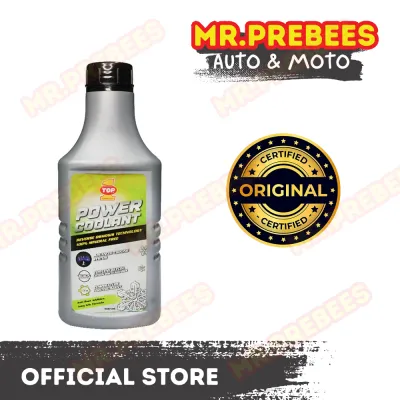
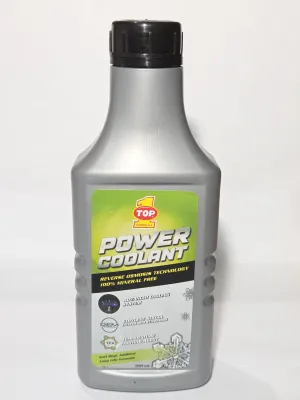
Operating a vehicle in the Philippines presents a unique set of challenges for any automotive cooling system. With ambient temperatures regularly climbing above 35°C and urban traffic congestion extending commute times, your engine is constantly subjected to extreme thermal stress. Under these harsh conditions, many car owners look for reliable consumables like Top One green coolant to safeguard their engines. This fluid can be highly effective at managing engine temperatures in a tropical climate, but its success depends entirely on whether its specific chemical formulation aligns with your vehicle manufacturer’s original equipment manufacturer (OEM) specifications and how well the overall system is maintained.
Choosing the right engine coolant is not simply a matter of picking a well-known brand or matching a color. In tropical environments, the fluid must possess excellent thermal conductivity, a high boiling point, and robust corrosion inhibitors that can withstand prolonged high-temperature operation. To determine if Top One green coolant is the right choice for your car, you must evaluate its chemical properties, understand your vehicle’s specific metallurgy, and commit to a disciplined maintenance schedule.
Why Tropical Climates Demand High-Performance Engine Coolant
The Philippine climate is characterized by high ambient heat and high relative humidity, which directly impacts how efficiently an engine can shed excess thermal energy. In cooler climates, the temperature differential between the hot radiator and the surrounding air is wide, allowing heat to dissipate rapidly. In the Philippines, this temperature differential is much narrower, meaning the radiator must work significantly harder to transfer heat away from the engine block.
Products mentioned in this guide
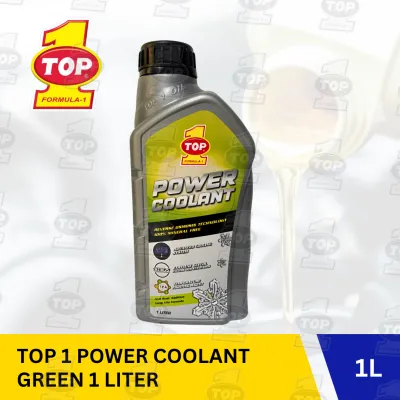
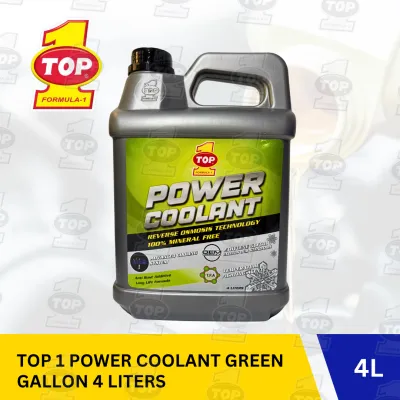
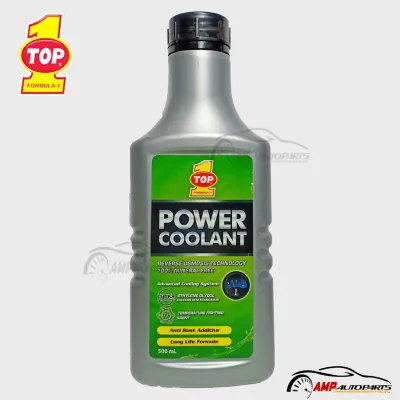
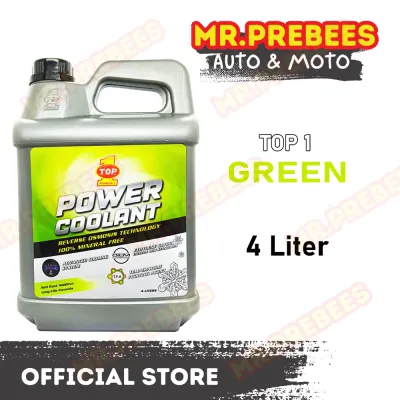
![[1L GREEN] Coolant for Mitsubishi Models 2015 and below - Pro99 Brand](https://img.lazcdn.com/g/p/331796a1b2283becdfb150cf3f5b304a.jpg_400x400q80.jpg_.webp)
![[4L GREEN] Coolant for Mitsubishi Models 2015 and below - Pro99 Brand](https://img.lazcdn.com/g/p/6b81afe3f6f5c3b11a281069c45ab490.jpg_400x400q80.jpg_.webp)
Prices are valid at publication and may change. Please refer to the product page for the latest price.
This thermal strain is severely compounded by stop-and-go urban traffic, which is a daily reality in major metropolitan areas like Metro Manila and Cebu. When a vehicle is idling or moving slowly in heavy traffic, there is minimal natural airflow passing through the radiator grille. The cooling system must rely almost entirely on the radiator fan to pull air through the fins, while the coolant itself must absorb and transport massive amounts of heat away from the combustion chambers.
Under these conditions, having a coolant with a high boiling point and superior thermal conductivity is critical. If the coolant’s boiling point is too low, localized boiling can occur within the engine block, particularly around the cylinder heads where temperatures are highest. When coolant boils, it forms vapor bubbles. These vapor pockets act as thermal insulators because gas transfers heat much less effectively than liquid. This phenomenon, known as localized boiling or vapor lock, can lead to rapid hot spots, warped cylinder heads, blown head gaskets, and eventual engine seizure.
To prevent this, modern automotive cooling systems are designed to operate under pressure. The radiator cap plays a vital role by sealing the system and allowing pressure to build as the coolant heats up and expands. This pressurization artificially elevates the boiling point of the water-glycol mixture. For example, while pure water boils at 100°C at sea level, a system pressurized to 1.1 bar (approximately 16 psi) containing a proper coolant mixture can raise that boiling point to over 125°C. This safety margin is what prevents your engine from boiling over during a grueling midday commute in the dry season.
Evaluating Top One Green Coolant for High-Temperature Protection
When assessing Top One green coolant for use in hot climates, your first step should always be to inspect the product label for its specific technical characteristics. Pay close attention to the stated boiling point and the concentration of ethylene glycol. Ethylene glycol is the primary active ingredient that raises the boiling point and lowers the freezing point of the fluid, while also providing critical lubrication for the water pump seal.

You must also verify whether the product is sold as a pre-mixed (ready-to-use) formula or as a concentrate. Pre-mixed coolants are formulated at the factory with demineralized or deionized water, typically in a 50/50 ratio. This ratio is highly optimized for both heat transfer and boil-over protection. If you purchase a concentrate, you must dilute it yourself. A critical mistake made by many car owners in the Philippines is diluting concentrate with ordinary tap water or mineral water. Tap water contains dissolved minerals such as calcium, magnesium, and silica. Under the high temperatures of your engine, these minerals precipitate out of the solution and form scale deposits on the internal walls of the radiator tubes and water jackets. This scale buildup acts as an insulator, drastically reducing the system’s heat dissipation efficiency, and can eventually clog the narrow passages entirely. Therefore, if you use a concentrate, always dilute it strictly with pure distilled water.
Traditional green coolants are generally formulated using Inorganic Additive Technology (IAT). This chemistry relies on inorganic inhibitors, such as silicates and phosphates, to provide immediate corrosion protection by forming a physical barrier over the metal surfaces inside the engine. While IAT fluids offer excellent initial protection for older engines containing iron, copper, and brass components, they have a relatively short service life. The inorganic inhibitors deplete rapidly under constant thermal cycling, meaning they typically require replacement every 2 years or 40,000 kilometers to maintain their protective qualities.
Additionally, you must verify that the coolant label indicates compliance with recognized industry standards. Look for specifications such as ASTM D3306 for light-duty automotive applications or ASTM D4985 for heavy-duty systems. These standards ensure that the fluid has undergone rigorous testing to prevent cavitation (the formation and collapse of vapor bubbles that can erode metal surfaces), foaming, and corrosion on modern aluminum components, which are highly sensitive to chemical degradation.
Matching Coolant Chemistry to Your Vehicle’s OEM Specifications
One of the most persistent and dangerous misconceptions in automotive maintenance is that coolant color is a universal indicator of chemical compatibility. Many drivers assume that any green fluid can be safely mixed with any other green fluid, or that green coolant is universally suitable for all cars. In reality, coolant color is simply a dye added by manufacturers for identification and leak detection. Modern coolant formulations span a wide spectrum of chemistries—including Organic Acid Technology (OAT) and Hybrid Organic Acid Technology (HOAT)—and these can be dyed green, blue, pink, yellow, or orange depending on the brand.
To ensure your engine remains safe, you must prioritize chemical compatibility over climate suitability. Your primary resource must always be the vehicle’s owner’s manual. Manufacturers design cooling systems with specific metals, plastics, and elastomer seals, and they specify the exact fluid standards required to protect these materials. Navigate to the maintenance or specifications section of your manual to identify the required fluid type.
Mixing incompatible coolant chemistries can have catastrophic consequences for your engine. For instance, if you mix a traditional IAT coolant (such as some green formulations) with an OAT coolant, the organic and inorganic inhibitors can react chemically. This reaction often causes the protective additives to fall out of the liquid suspension, forming a thick, gelatinous sludge. This sludge accumulates in the narrowest passages of your cooling system, such as the radiator core and the heater core, severely restricting coolant flow. In the intense heat of the Philippines, a restricted cooling system will rapidly lead to severe overheating, warped cylinder heads, and expensive engine damage.
Safety Warning and Verification Steps
Before purchasing or adding any coolant to your vehicle, follow these safety and compatibility checks:
- Check the Product Label: Carefully read the label on the Top One green coolant bottle to verify its compatible vehicle makes, chemical composition (IAT, OAT, or HOAT), and dilution instructions.
- Consult the Owner's Manual: Check your vehicle manufacturer's instructions for the required coolant specification (e.g., silicate-free, phosphate-free, or specific OEM part numbers).
- Verify Compatibility: Ensure the product's specifications explicitly match your vehicle's requirements. Do not infer compatibility from a broad category term or fluid color.
- Stop and Seek Professional Help: If your owner's manual is missing, the required fluid specification is unclear, or the product label instructions conflict with your vehicle's manual, do not add the fluid. Stop immediately and consult an authorized dealership or a qualified mechanic to prevent voiding your warranty or damaging your engine.
Essential Cooling System Maintenance for Tropical Driving
Maintaining your cooling system is just as important as choosing the right fluid, especially when driving in a harsh tropical environment. Regular preventative maintenance ensures that the coolant can perform its job effectively and prevents minor issues from escalating into major road emergencies.
Begin with routine visual inspections. At least once a month, check the coolant level in the translucent expansion reservoir when the engine is completely cold. The level should sit between the “Min” and “Max” marks. Observe the color and clarity of the fluid; if your green coolant has turned brown, cloudy, or contains visible floating debris, it is a clear sign that the corrosion inhibitors have broken down and rust or scale is forming inside the system. You should also inspect the engine bay for signs of leaks. Look for crusty white, green, or pink deposits around hose clamps, the radiator seams, and the water pump weep hole, which indicate slow, high-temperature leaks that evaporate before dripping onto the ground.
Another critical component to inspect is the radiator cap. The cap’s pressure relief valve must function perfectly to maintain the system’s operating pressure. If the rubber seal on the cap is cracked, swollen, or torn, or if the internal spring has weakened, the system will fail to hold pressure. This lowers the effective boiling point of your coolant, making your vehicle highly susceptible to overheating during heavy traffic or steep climbs. Have your radiator cap tested or replaced according to your vehicle’s maintenance schedule, ensuring the replacement cap matches the exact pressure rating (usually printed on the cap in bar or psi) specified by the OEM.
Because tropical driving conditions—such as high ambient heat and prolonged idling—are classified as “severe driving conditions” by automotive manufacturers, you should adjust your coolant flush intervals accordingly. For traditional green IAT coolants, a complete system flush and refill is typically recommended every 20,000 to 30,000 kilometers, or every 12 to 18 months. This preventative maintenance removes accumulated contaminants, scale, and degraded fluid, replacing them with fresh corrosion inhibitors and restoring optimal heat transfer. All cooling system repairs, flushes, and component replacements must be performed in accordance with the original-vehicle instructions. If you are uncomfortable performing these steps yourself, always seek qualified professional installation and service.
Critical Safety Boundary
Never attempt to open the radiator cap or the pressurized coolant reservoir while the engine is hot or warm. The cooling system operates under intense pressure and extreme temperatures. Opening the cap on a hot system will cause the pressurized, boiling liquid and steam to spray out violently, which can result in severe, life-altering burn injuries. Always allow the vehicle to sit undisturbed for several hours until the engine block and radiator are completely cool to the touch before attempting any inspections or maintenance on the pressurized sections of the system.
Frequently Asked Questions (FAQ)
Can I add distilled water to my green coolant during a tropical emergency?
Yes, adding pure distilled water is an acceptable temporary emergency measure if your coolant level is dangerously low and you must prevent immediate engine seizure. However, you must treat this only as a temporary fix. Diluting your coolant with water lowers the concentration of ethylene glycol and corrosion inhibitors, which significantly reduces the mixture’s boiling point and leaves internal metal surfaces vulnerable to rapid corrosion. As soon as you reach safety, you must have the cooling system inspected for leaks, thoroughly flushed, and refilled with the correct water-and-coolant ratio specified by your vehicle manufacturer.
Is green coolant specifically formulated for older Japanese vehicles?
Historically, many Japanese and other Asian vehicle manufacturers specified green-dyed Inorganic Additive Technology (IAT) coolants that were formulated to be silicate-free but contained phosphates to protect their specific engine metallurgies. However, modern Japanese vehicles have transitioned to advanced Hybrid Organic Acid Technology (HOAT) or OAT formulas, which are often dyed blue or pink. You should never assume a coolant is compatible based solely on its green color or your vehicle’s country of origin. Always verify the exact chemical specifications required by your specific vehicle model in your owner’s manual before adding any fluid.
Community discussion
Share your experience or ask a question. Comments are reviewed before publication.