
Riding a motorcycle during the Philippine wet season presents a unique challenge for daily commuters and long-distance tourers alike. When the southwest monsoon, locally known as habagat, or sudden afternoon tropical downpours strike, standard rainwear quickly proves inadequate. Finding a high-quality water proof rain coat that can withstand both heavy precipitation and the relentless wind pressure of highway speeds is critical for staying dry and safe on the road.
At 60 to 80 kilometers per hour, rain does not merely fall on you; it is driven against your gear with significant force. This dynamic pressure easily penetrates fabrics that are only rated as water-resistant. Understanding the engineering, material science, and riding-specific design elements of true wet-weather gear will help you make an informed decision and avoid the discomfort of a soaked ride.
Signs Your Current Raincoat Will Fail in Heavy Downpours
Many riders mistake water-resistant windbreakers or cheap utility ponchos for reliable motorcycle gear. While these basic garments might keep you dry during a brief walk, they almost always fail under the intense conditions of active riding. Recognizing the early warning signs of failing gear can save you from a miserable, cold, and potentially unsafe journey.
Products mentioned in this guide
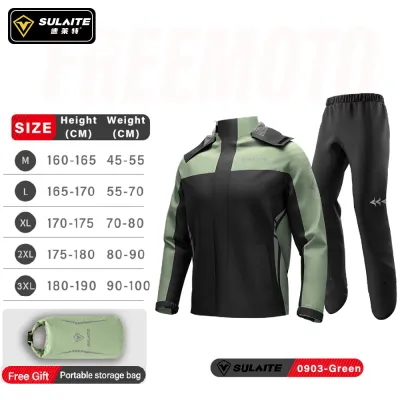
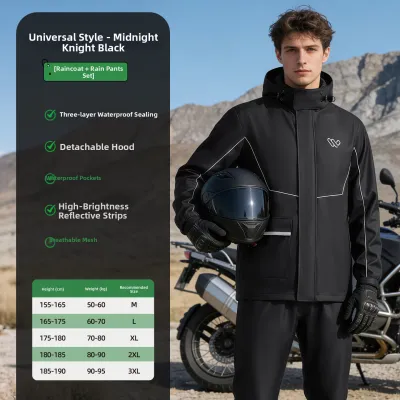
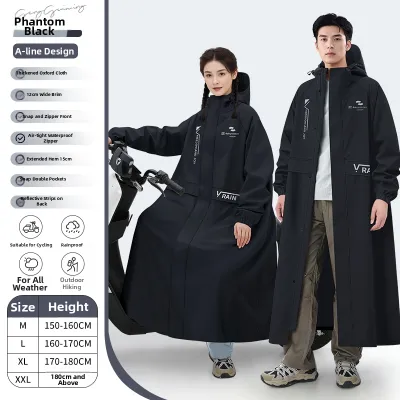
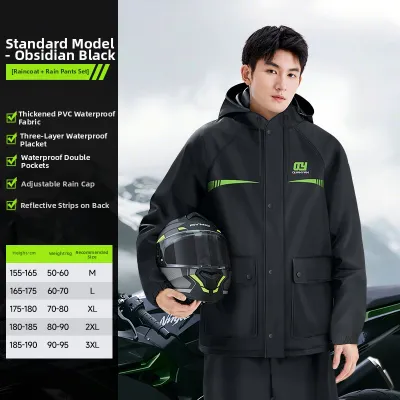
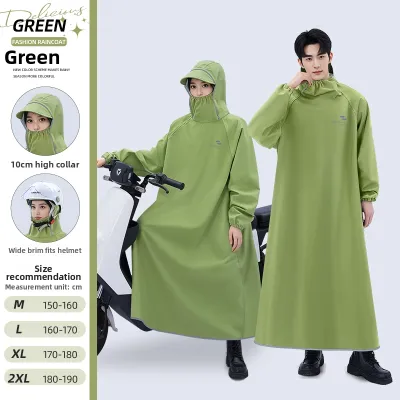
Prices are valid at publication and may change. Please refer to the product page for the latest price.
One of the most common indicators of failure is a slow, creeping dampness around your neck and collarbone. This usually happens because the collar design lacks a proper seal, allowing wind-driven rain to run down your neck. Another common issue is a cold, clammy sensation against your arms or chest, which indicates that the outer fabric has saturated and is transferring moisture directly to your inner clothing.
Water pooling in your lap or inside your boots is another definitive sign of design failure. When you sit on a motorcycle, water naturally collects in the crease of your hips and crotch. If the raincoat lacks a reinforced, seamless crotch design, the pooling water will eventually force its way through the zipper or seams. Similarly, if your pants do not properly overlap your footwear, water running down your legs will drain directly into your boots.
To determine if your current gear is ready for a heavy downpour, perform a simple visual and tactile inspection at home. Lay the raincoat flat under a bright light and inspect the inner lining for signs of peeling, cracking, or flaking. If the polyurethane or polyvinyl chloride coating on the inside of the fabric is deteriorating, the garment has lost its waterproof barrier and must be replaced.
Next, check the seams by gently pulling the fabric apart along the stitched lines. If you see light shining through the needle holes, or if the clear seam-sealing tape on the inside is lifting, bubbling, or brittle, water will inevitably leak through. Finally, pour a small cup of water onto the outer shell; if the water immediately soaks into the fabric and darkens it rather than forming tight, rolling beads, the outer water-repellent treatment has worn off.
Essential Construction Features for a True Water Proof Rain Coat
To block water penetration under the high wind pressure experienced on a motorcycle, a raincoat must be engineered with specific construction standards. The most critical of these is how the seams are joined. Standard sewing machines create thousands of tiny needle holes along every seam, which act as direct pathways for water when subjected to wind pressure.

A truly waterproof raincoat features fully taped or heat-welded seams. In taped construction, a specialized waterproof tape is applied under high heat and pressure to the inside of every stitched seam, sealing the needle holes completely. Welded seams go a step further by using radio frequency or ultrasonic energy to fuse the fabric panels together without any stitching, creating an unbroken, highly durable barrier.
The choice of fabric technology also plays a massive role in your comfort and dryness. Traditional rain gear often relies on thick, non-breathable PVC or heavy PU coatings. While these materials are highly effective at blocking external water, they trap all body heat and sweat inside. In the humid, tropical climate of the Philippines, this lack of breathability creates a greenhouse effect inside the suit, leaving you completely drenched in sweat—a phenomenon often mistaken for a leak.
Modern, high-performance riding gear utilizes breathable microporous membranes. These advanced membranes contain billions of microscopic pores that are thousands of times smaller than a drop of water, preventing rain from entering. At the same time, these pores are hundreds of times larger than a molecule of water vapor, allowing your body sweat to escape as you ride.
Zippers are another common point of failure that require specialized engineering. A standard zipper will let water pass through its teeth almost instantly. To prevent this, look for raincoats equipped with water-resistant zippers, often treated with a polyurethane coating to seal the teeth when closed. Additionally, the main zipper must be shielded by a double storm flap system—an overlapping fold of waterproof fabric that snaps or Velcros securely over the zipper track to redirect wind-blown water away from the opening.
Riding-Specific Design Elements That Keep Water Out
Standard rain jackets are designed for walking or hiking, where your body remains upright and moving at low speeds. Motorcycle riding requires a unique physical posture: your arms are extended forward, your knees are bent, and your torso is slightly leaned. This position exposes specific gaps in your gear that water will exploit if the raincoat is not tailored for riding.
The collar and cuff areas require tight, adjustable seals to prevent water from traveling up your sleeves or down your chest. Look for a raincoat with a high, ergonomically shaped collar that reaches up to your chin and can be adjusted with a soft strap. The cuffs should feature wide, durable Velcro adjustment tabs, or better yet, integrated inner neoprene wrist seals that fit snugly against your skin, allowing you to seal the sleeve over or under your riding gloves.
When you reach forward to grab your handlebars, a standard jacket will pull tight across your back and slide up your waist, exposing your lower back to the elements. To counter this, motorcycle-specific raincoats are designed with an extended back hem, often called a drop tail. This extra fabric ensures that even in a sporty, forward-leaning riding position, the jacket remains overlapping your pants to maintain a continuous waterproof shield.
Similarly, riding pants must accommodate your bent knees. Standard trousers will pull tight over the kneecaps when you mount your bike, which drags the bottom cuffs up your shins and exposes your ankles. Look for rain pants with pre-bent, articulated knees and a generous cut that prevents the fabric from riding up, ensuring your lower legs remain fully covered throughout your ride.
Finally, the connection between your pants and your boots is a prime target for water ingress. The leg openings of your rain pants should be wide enough to easily slip over bulky riding boots, but they must also feature heavy-duty gusseted zippers and adjustable snap or Velcro closures. This allows you to cinch the bottom of the pants tightly around your boots, creating a downward-facing shingle effect that sheds water onto the road rather than into your footwear.
Safety and Visibility Features for Wet Conditions
Staying dry is only half the battle when riding a motorcycle in heavy rain; staying visible to other motorists is equally critical for your safety. Heavy tropical downpours dramatically reduce visibility for car drivers, whose windshields are often fogged or covered in water sheets. In these low-light conditions, a dark-colored raincoat makes you virtually invisible on the road.
Your raincoat must feature high-visibility reflective elements strategically placed to maximize your silhouette. Look for retroreflective strips across the upper back, shoulders, chest, and the lower portion of the pants. These placements ensure that your outline is recognizable from all angles, even when you are leaned forward or when other vehicles approach you from side streets or intersections.
The physical interaction between your gear and the motorcycle also changes in wet conditions. A wet vinyl seat becomes incredibly slick, which can cause you to slide forward unexpectedly during braking or lose your balance while cornering. To prevent this, premium riding rain pants feature textured, anti-slip panels sewn into the seat area, providing the necessary friction to keep you securely planted on your saddle.
Additionally, high-impact zones such as the elbows, knees, and shoulders are highly vulnerable if you lose traction on a wet road. Look for rain gear that incorporates reinforced, abrasion-resistant panels in these areas. While a raincoat is primarily designed for weather protection, having this extra layer of durable material offers a basic level of defense against road rash in the event of a low-speed slide on slippery asphalt.
The hood design of your raincoat also requires careful consideration. A loose, bulky hood worn outside your helmet can catch the wind like a parachute, pulling your head back and causing dangerous neck strain at speed. Instead, look for a raincoat with a thin, stowable hood designed to be worn underneath your helmet, which seals the gap around your neck without blocking your peripheral vision or creating aerodynamic drag.
When to Re-waterproof, Repair, or Replace Your Gear
Even the highest-quality motorcycle rain gear will experience wear and tear over time due to exposure to UV rays, wind friction, road grime, and folding. Knowing how to maintain your gear—and when it is time to retire it—will ensure you are never caught unprepared in a storm. Always consult the manufacturer’s specific care instructions before applying any treatments or attempting repairs.
If your raincoat is structurally sound but water has stopped beading on the outer surface, the Durable Water Repellent (DWR) coating has likely worn off. You can restore this outer water-shedding performance by applying a specialized wash-in or spray-on DWR treatment designed for technical outerwear. Keep in mind that DWR only prevents the face fabric from absorbing water; it cannot fix a compromised internal waterproof membrane or leaking seams.
For minor damage, such as a small puncture from a key or a tiny tear from a footpeg, you can perform a temporary repair using specialized flexible gear repair tape or a polyurethane-based seam sealer. Apply the patch to the inside of the garment on a clean, dry surface, pressing firmly to ensure a complete bond. However, avoid DIY repairs on high-stress areas like the crotch gusset or underarm seams, as these patches rarely hold up under the mechanical strain of riding.
There are several clear indicators that your raincoat has reached the end of its functional life and must be replaced. If the inner waterproof lining is delaminating—evidenced by peeling, flaking, or a powdery residue—the fabric’s structural integrity is gone. Persistent leaks at critical seams that cannot be resolved with minor patching, or heavily faded reflective panels that no longer catch headlights, are also definitive signs that you need to invest in a new, reliable water proof rain coat.
Frequently Asked Questions (FAQ)
Can I use a standard hiking rain jacket for motorcycle riding?
Standard hiking rain jackets are designed for low-velocity movement and are not constructed to handle the extreme wind pressure of motorcycle riding. At highway speeds, wind-driven rain will easily force its way through hiking-grade zippers, lightweight fabrics, and basic collar seals. Furthermore, hiking jackets lack the aerodynamic, snug fit required to prevent flapping at high speeds, and they do not feature the abrasion-resistant panels or anti-slip seat grips essential for motorcycle safety.
How do I clean a waterproof motorcycle raincoat without ruining it?
To clean your raincoat safely, always refer to the manufacturer’s care label first to avoid damaging the waterproof barrier. Generally, you should hand wash or machine wash the garment on a gentle cycle using cold water and a specialized technical wash formulated for waterproof outerwear. Never use standard laundry detergents, fabric softeners, or bleach, as these harsh chemicals clog the pores of breathable membranes and strip away the outer DWR coating. Hang the gear to dry completely in a shaded, well-ventilated area, and avoid using a tumble dryer unless the care label explicitly permits it.
Is a two-piece rain suit better than a one-piece for heavy rain?
Both configurations have distinct advantages depending on your riding habits. A two-piece rain suit offers excellent versatility and convenience, allowing you to easily put on just the jacket during light drizzles and making it much simpler to slip into during a sudden roadside downpour. However, there is a minor risk of water ingress at the waist if the jacket rides up. A one-piece rain suit provides an absolute, seamless barrier against water with zero risk of waist leaks, making it the superior choice for long rides in sustained heavy rain, though it is significantly more difficult to put on and take off quickly.

Community discussion
Share your experience or ask a question. Comments are reviewed before publication.