
Finding the right shift knob for your Isuzu vehicle in the Philippines involves balancing mechanical compatibility, material durability, and personal comfort. Whether you drive a rugged Isuzu D-Max pickup, a family-oriented MU-X SUV, a hardworking Traviz utility van, or a heavy-duty Elf truck, your shift knob is one of the primary touchpoints in your daily drive. The market offers several distinct options, ranging from factory-original (OEM) replacements to highly customizable aftermarket upgrades. However, selecting the perfect match requires a clear understanding of your vehicle’s specific transmission type, thread specifications, and the harsh tropical climate conditions of the Philippines.
Understanding Shift Knob Fitment for Your Isuzu
Before purchasing any shift knob, you must determine the exact physical and mechanical specifications of your Isuzu’s shift lever. A common mistake among car owners is assuming that all shift knobs are universally interchangeable. In reality, the connection interface between the knob and the lever is highly specific, depending heavily on the vehicle’s model, year, and transmission type.
For manual transmissions, the shift knob is typically secured by internal threads that screw directly onto the threaded shaft of the shift lever. Japanese manufacturers, including Isuzu, frequently employ standard metric thread patterns such as M10 x 1.25 or M12 x 1.25. The letter “M” denotes a metric thread, the first number represents the outer diameter of the thread in millimeters, and the second number indicates the thread pitch (the distance between individual threads) in millimeters. Because even minor variations in these measurements will prevent a shift knob from screwing on securely—or worse, strip the threads of your shift lever—you must verify these dimensions before ordering.
Products mentioned in this guide
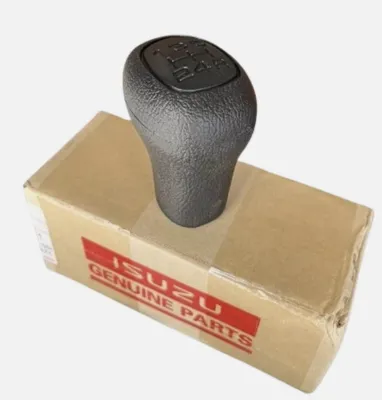
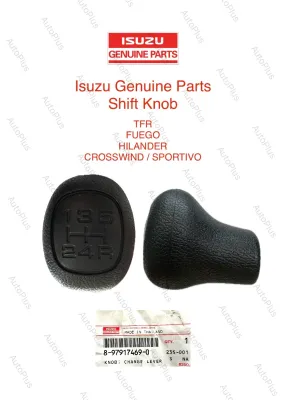
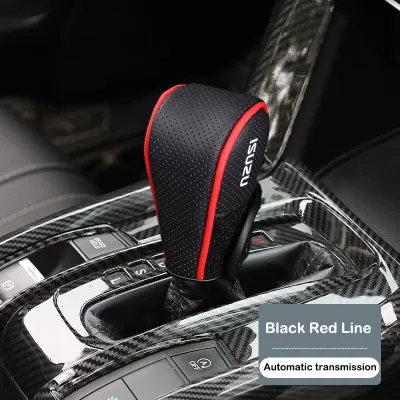
Prices are valid at publication and may change. Please refer to the product page for the latest price.
Automatic transmissions present a completely different set of engineering requirements. Many modern Isuzu automatic models, such as the MU-X or automatic variants of the D-Max, utilize a gated shifter or a straight-action shifter that incorporates an electronic or mechanical shift-lock release button. This button is a critical safety feature designed to prevent accidental shifts into Reverse or Park while the vehicle is in motion. Standard aftermarket manual shift knobs do not have the internal mechanisms required to actuate this release. If you own an automatic Isuzu, you must seek out specialized automatic shift knobs that are explicitly engineered to integrate with your vehicle’s safety lockout system, or opt for direct OEM replacements.
When exact original equipment manufacturer (OEM) matches are difficult to source, universal aftermarket shift knobs become a viable alternative. These products typically feature a larger, unthreaded opening and come packaged with a set of rubber or plastic adapter sleeves of varying inner diameters. To install them, you slide the appropriate sleeve over the bare metal shaft of your shift lever and secure the knob using small, recessed grub screws. While universal knobs offer excellent versatility, they require precise installation to prevent the knob from rotating or vibrating loose during gear changes.
To ensure a flawless fit, always consult your Isuzu owner’s manual or check the original part number of your existing knob. If you are planning to transition to an aftermarket option, the most reliable method of verification is to physically remove your current shift knob and measure the bare shift lever’s thread diameter and pitch using a digital caliper or a thread pitch gauge.
Shift Knob Types Available in the Philippine Market
When exploring the local market, you will encounter three primary categories of shift knobs. Each type caters to different driver preferences, budgets, and vehicle applications.

OEM and Direct-Fit Replacements
For drivers who prefer to maintain the clean, original aesthetic of their Isuzu’s cabin, OEM and direct-fit replacements are the ideal choice. These parts are manufactured to match the exact dimensions, weight, thread pattern, and material quality of the knob that came with your vehicle from the factory.
Choosing an OEM replacement ensures that you will not have to deal with loose adapters, rattling, or alignment issues. This is especially crucial for Isuzu commercial vehicles like the Traviz, Elf, or Forward trucks, where durability and straightforward functionality are paramount. Furthermore, for modern passenger vehicles with integrated electronic buttons or reverse lockout collars (which require you to pull up a ring on the shifter to engage reverse), an OEM-spec knob guarantees that these mechanisms continue to function smoothly without modification.
Universal and Adapter-Based Knobs
Universal shift knobs are highly popular in the Philippine aftermarket scene due to their wide availability and diverse design options. These knobs are designed to fit almost any vehicle by utilizing adaptive hardware, making them a flexible choice if you want to personalize your interior.
Most universal kits include a selection of threaded plastic or brass inserts, or rubber sleeves paired with metal set screws. When installing a universal knob on your Isuzu, you must carefully select the adapter that matches your shift lever’s outer diameter. A loose fitment can lead to frustrating rattles while driving and, more importantly, poses a safety hazard if the knob slips or detaches during an emergency gear shift. Opting for kits that utilize threaded metal inserts rather than soft plastic sleeves generally provides a more secure, long-lasting connection.
Custom and Performance Upgrades
Custom and performance shift knobs are designed for automotive enthusiasts who want to alter both the look of their cabin and the tactile feedback of their gear shifts. These upgrades are available in a vast array of shapes, including classic spheres, elongated teardrops, and cylindrical “pistol grip” designs.
A major subcategory within performance upgrades is the weighted shift knob. Typically constructed from dense metals like stainless steel, brass, or heavy billet aluminum, these knobs can weigh anywhere from 300 to over 500 grams. The added mass increases the kinetic momentum of your hand during gear changes, which can make shifting feel smoother, more positive, and less notch-y. However, you should be aware that heavily weighted knobs change the physical dynamics of your transmission linkage. They should be selected based on personal driving comfort rather than expected performance improvements, and you should ensure that the extra weight does not put unnecessary constant pressure on your transmission’s shift forks.
Choosing the Right Material for Tropical Climates
Operating a vehicle in the Philippines requires careful consideration of environmental factors, particularly the intense heat and high relative humidity that characterize the tropical climate. When a car is parked outdoors in cities like Manila, Quezon City, or Cebu under direct sunlight, interior cabin temperatures can easily soar past 50 degrees Celsius. This extreme heat directly impacts the usability and longevity of your shift knob.
Uncoated metal shift knobs, such as polished aluminum or chrome-plated steel, act as highly efficient heat sinks. If your Isuzu sits in an open parking lot for several hours, a solid metal knob can become painfully hot to the touch, making it nearly impossible to shift gears comfortably without wearing gloves or waiting for the air conditioning to cool the cabin. Conversely, during the rainy season, cheap, glossy plastics can become uncomfortably cold, slick, and prone to condensation.
To ensure year-round comfort and safety, it is highly recommended to choose shift knobs wrapped in high-quality, breathable materials. Perforated leather is an outstanding option for the Philippine climate; the tiny perforations allow air to circulate, preventing the buildup of sweat on your palms during long, stressful commutes in heavy traffic. Genuine Alcantara or high-grade synthetic suede also provides excellent, non-slip grip and does not retain extreme heat, though these materials require regular cleaning to prevent them from absorbing hand oils and becoming matted over time.
If you prefer a non-leather option, matte-finished composite materials, high-durability resins, or heavy-duty Delrin (a type of acetal homopolymer plastic) are excellent alternatives. Delrin is highly favored in performance driving because it possesses very low thermal conductivity, meaning it remains comfortable to touch even when exposed to extreme cabin heat or cold.
In addition to material choice, the physical shape of the knob plays a significant role in reducing driver fatigue. Ergonomically contoured grips or classic teardrop shapes allow for a more natural hand position, which is highly beneficial during long provincial drives across Luzon, Visayas, or Mindanao, as well as the stop-and-go congestion of major metropolitan areas.
Where to Buy and How to Verify Fitment
Sourcing a high-quality shift knob for your Isuzu in the Philippines requires a strategic approach to ensure you receive a genuine, compatible product rather than a low-quality counterfeit.
For those seeking guaranteed compatibility and original quality, the first point of contact should be an authorized Isuzu dealership. Purchasing directly from a dealership’s parts department ensures that you receive a genuine OEM component backed by a manufacturer warranty. This is particularly recommended for newer Isuzu models like the D-Max and MU-X, where interior trim matching and safety-lock mechanisms are highly sophisticated.
If you are looking for aftermarket or custom options, specialized physical automotive accessory shops—such as those located in well-known automotive hubs like Banawe in Quezon City or Evangelista in Makati—allow you to physically inspect the product before buying. This hands-on approach lets you feel the weight, inspect the thread quality, and assess the material texture in person.
Online marketplaces and e-commerce platforms offer an unparalleled variety of choices, but they also require the highest level of consumer vigilance. When shopping online, avoid listings that rely solely on generic “universal fit” claims without providing detailed physical measurements. Look for reputable sellers who specialize in Isuzu parts and provide explicit compatibility lists detailing model years and transmission types.
Always read customer reviews carefully, paying close attention to any feedback regarding fitment issues, thread stripping, or rapid material degradation. Prioritize sellers who offer clear return and refund policies specifically covering physical compatibility mismatches. If a listing uses generic stock photos, do not hesitate to message the seller directly to request actual photos of the product, including the internal threading or the included adapter kit.
Broad price bands for Isuzu shift knobs in the local market range from approximately ₱500 for basic aftermarket universal models to over ₱3,500 for genuine leather OEM replacements or high-end weighted performance knobs.
Basic Installation and Critical Safety Checks
Replacing a shift knob is generally a straightforward task that many Isuzu owners can perform at home, but it must be approached with caution to avoid damaging your vehicle’s shifting assembly.
To remove a standard threaded manual shift knob, grip the knob firmly and rotate it counterclockwise. Some models may have a locking nut or a plastic collar at the base of the knob that must be loosened first. If your vehicle uses a universal knob secured by grub screws, you will need to locate the small screws at the base of the knob and loosen them using an Allen wrench before pulling the knob straight up.
Before attempting any installation, establish clear safety boundaries:
- Read Vehicle Instructions: Always check your Isuzu’s owner manual and any documentation provided with the new shift knob before starting the process.
- Do Not Force Fitment: Never attempt to force a knob onto a thread that does not match. Forcing, cross-threading, filing down, or altering the original metal shift lever to fit an incompatible knob can permanently damage the shifter shaft, requiring an expensive replacement of the entire gear selector assembly.
- Check Mechanical Clearance: Once the new knob is installed, cycle through all gears with the engine off and the clutch fully depressed (for manual vehicles). Ensure that the shift knob, shift boot, or any adapter does not interfere with the center console, dashboard, emergency brake lever, or reverse lockout collar.
- Verify Safety Lockouts: For automatic Isuzu vehicles, the shift-lock safety mechanism must remain fully functional. If your new knob features an integrated electronic button, verify that the vehicle cannot be shifted out of Park without depressing the brake pedal, and that the key cannot be removed from the ignition unless the shifter is securely locked in Park.
If you encounter any resistance, if the instructions provided with the aftermarket part conflict with your vehicle’s manual, or if you are working on a complex automatic transmission system with integrated electronics, stop immediately. Consult an authorized Isuzu service center or a qualified automotive technician to complete the installation safely.
Frequently Asked Questions (FAQ)
Can I use a manual shift knob on an automatic Isuzu?
No, you should not use a standard manual shift knob on an automatic Isuzu unless the aftermarket knob is specifically engineered to accommodate your vehicle’s shift-lock release mechanism. Most automatic Isuzu models require a mechanical or electronic button to unlock the shifter from Park or Neutral. A manual shift knob lacks this capability, and installing one could either permanently disable this crucial safety feature or leave you unable to shift the vehicle out of Park. Always choose a knob designed specifically for your transmission type.
How do I measure my Isuzu shift lever for a universal knob?
To measure your Isuzu’s shift lever for a universal knob, first unscrew your existing knob to expose the bare metal shaft. Use a digital caliper to measure the outer diameter of the threaded portion or the smooth section of the shaft in millimeters. Next, use a thread pitch gauge to identify the distance between the threads (common metric pitches are 1.25mm or 1.50mm). Match these measurements to the specifications of the universal knob’s adapter sleeves to ensure a secure, slip-free, and rattle-free installation.
Community discussion
Share your experience or ask a question. Comments are reviewed before publication.