
Choosing between a JVT pulley set and other aftermarket CVT brands for your daily commute in the Philippines comes down to matching technical specifications with your specific route, scooter model, and riding habits. There is no single brand that universally outperforms all others for every rider. While aftermarket options like JVT can modify your scooter’s power delivery, achieving a reliable and efficient daily ride requires looking past marketing claims and evaluating physical design characteristics, material durability, and compatibility with your vehicle’s original specifications.
Understanding CVT Pulley Sets for Daily Commuting
The Continuously Variable Transmission (CVT) is the heart of a modern automatic scooter, translating engine power into smooth, gearless acceleration. At the center of this system is the pulley set, which consists of the variator (or movable drive face), the fixed drive face, and the ramp plate. As the engine spins, centrifugal force pushes the roller weights outward along the tracks of the ramp plate. This movement forces the movable drive face closer to the fixed face, squeezing the drive belt and forcing it to ride higher on the pulley. This continuous adjustment of the belt’s position dynamically changes the gear ratio, allowing the scooter to accelerate smoothly without manual gear shifts.
For daily commuters, the performance of this system directly impacts how the scooter handles different road conditions. In stop-and-go traffic, such as the congested streets of major metropolitan areas, low-end torque is essential. A transmission set up for low-end power allows the scooter to pull away from a complete stop quickly, navigate tight spaces at low speeds, and carry passengers or heavy cargo without straining the engine. On the other hand, top-end speed is more useful on open highways or bypass roads where the engine can run at sustained high speeds.
Products mentioned in this guide
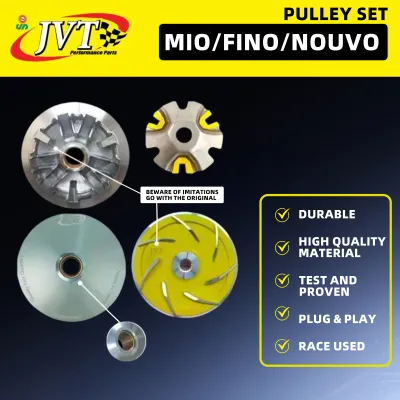
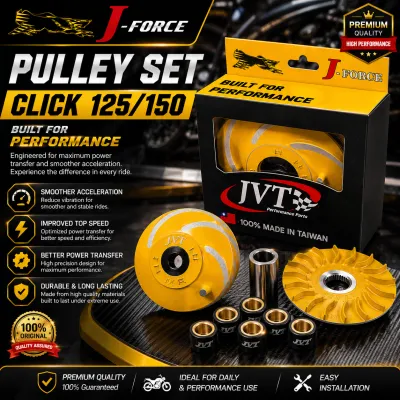
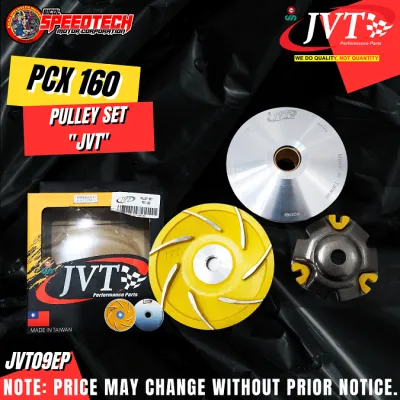
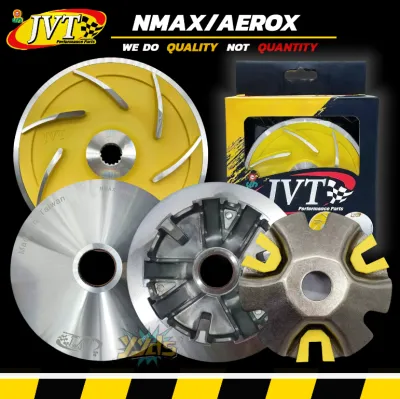
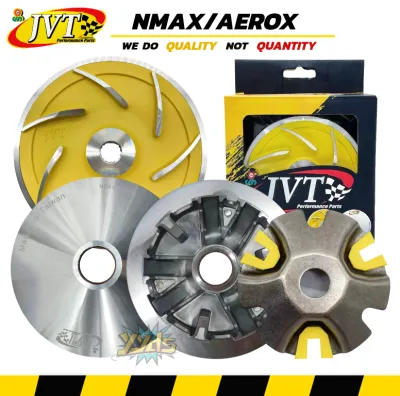
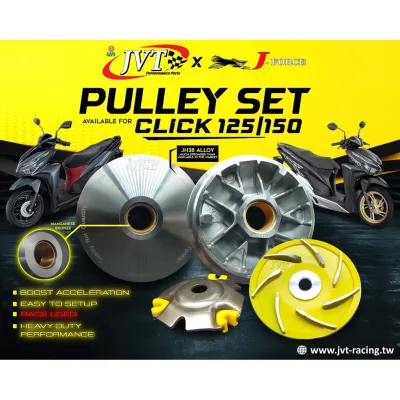
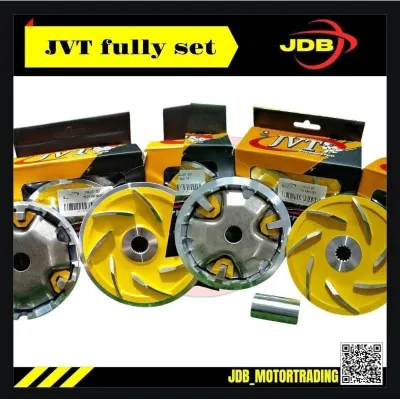
Prices are valid at publication and may change. Please refer to the product page for the latest price.
A typical daily commute requires a balanced CVT configuration that prioritizes smooth acceleration and fuel efficiency over extreme performance. While racing setups are designed to keep the engine at high RPMs for maximum speed, they often lead to high fuel consumption, excessive vibration, and rapid wear on transmission components. A well-balanced commuter setup ensures that the engine operates within its optimal power band, providing enough responsiveness to overtake safely while maintaining comfortable cruising speeds and preserving fuel.
Key Specifications to Compare Before Buying
When comparing a JVT pulley set against other aftermarket options, the ramp angle of the variator face is one of the most critical specifications to consider. The angle of the pulley face dictates how quickly the drive belt rises as the engine accelerates. A steeper ramp angle generally keeps the belt lower on the pulley for a longer period, keeping the engine in a higher RPM range to provide stronger initial acceleration. A shallower angle allows the belt to rise more quickly, lowering the engine RPMs at cruising speeds to improve fuel economy. Commuters should choose a ramp profile that matches their primary riding environment, whether that involves flat city streets or steep, hilly terrain.

Material composition and surface finish are equally important, especially in tropical climates where high humidity and ambient temperatures can cause CVT components to run hot. Look for manufacturer specifications that detail the forging process and surface treatments used on the pulley faces. High-quality aftermarket pulleys are often machined from durable aluminum alloys and treated with specialized coatings to reduce friction and improve heat dissipation. A pulley that manages heat effectively helps prevent the drive belt from overheating, reducing the risk of belt slippage and premature wear.
The design and finish of the roller tracks inside the variator also warrant close inspection. The tracks must be perfectly smooth and free of casting imperfections or rough edges. If the tracks are poorly machined, the roller weights will experience uneven friction, leading to flat spots that hinder the smooth movement of the variator. Smooth, high-precision roller tracks ensure consistent shifting behavior and extend the lifespan of both the rollers and the drive belt.
Finally, compatibility verification is non-negotiable before making a purchase. You must verify the exact physical dimensions of the pulley set, including the spline count on the crankshaft, the inner bore diameter of the pulley boss, and the overall outer diameter of the drive face. Never rely solely on a generic product title or compatibility list on an online marketplace. Always cross-reference the product specifications with your scooter’s official service manual to ensure a precise fit, as manufacturers frequently update engine casing designs and crankshaft dimensions between different model years.
JVT Pulley Sets vs. OEM and Aftermarket Alternatives
Original Equipment Manufacturer (OEM) pulleys are the baseline against which all aftermarket options should be measured. OEM components are engineered by the vehicle manufacturer to deliver a precise balance of reliability, fuel efficiency, and durability under standard operating conditions. They are designed to comply with strict factory warranties and undergo rigorous testing to ensure they perform consistently over thousands of kilometers. For riders who prioritize hassle-free maintenance and factory-standard performance, sticking with OEM parts is generally the most reliable choice.
Aftermarket pulley sets, such as those from JVT, are designed for riders who want to alter their scooter’s standard power delivery. These performance sets often feature modified ramp angles, lighter overall weights, and optimized roller tracks to change how the transmission shifts. By reducing the rotating mass of the variator, these sets can improve throttle response and allow the engine to reach its power band more quickly. This can be highly beneficial for commuters who regularly tackle steep inclines or carry heavy loads, provided the chosen specifications align with the rider’s specific goals.
Budget aftermarket brands are widely available on various ecommerce platforms, but they require a cautious approach. While these low-cost options may look similar to premium brands, they often suffer from inferior material quality and looser machining tolerances. A budget pulley made from low-grade alloy may warp under the high operating temperatures of stop-and-go traffic, leading to uneven belt wear or even catastrophic transmission failure. When evaluating budget options, inspect the physical finish of the pulley faces and tracks carefully to ensure they meet basic quality standards.
When assessing the overall value of a pulley upgrade, consider the total cost of ownership rather than just the upfront price of the pulley set in ₱. Installing a performance pulley set often requires complementary upgrades to achieve the desired performance. You may need to experiment with different roller weights, install a stiffer contra spring, or upgrade to a heavy-duty drive belt to handle the altered shifting characteristics. Factor the cost of these additional tuning parts and the potential for more frequent maintenance into your decision-making process.
Installation, Break-In, and Maintenance Requirements
Modifying your scooter’s transmission is a precise task that directly impacts road safety and vehicle reliability. Improper installation can lead to severe engine damage, including stripped crankshaft threads or a loose variator that can fail while riding. If you do not have the proper tools or mechanical experience, it is highly recommended to have the pulley set installed by a qualified professional at a reputable motorcycle service center.
If you choose to perform the installation yourself, always refer to your scooter’s official service manual for the correct torque specifications and assembly procedures. Use a dedicated variator holding tool to secure the pulley while tightening the nut, and always use a calibrated torque wrench. Avoid using pneumatic or electric impact wrenches to tighten the variator nut, as the uncontrolled torque can easily strip the crankshaft threads or damage the engine bearings. Additionally, check if the manufacturer recommends applying a thread-locking compound to the nut to prevent it from backing off under vibration.
Once the new pulley set is installed, a proper break-in period is essential to ensure long-term reliability. For the first 100 to 200 kilometers, ride the scooter moderately and avoid full-throttle acceleration or sustained high-speed cruising. This gentle riding allows the drive belt to seat properly against the new pulley faces and helps the roller weights settle into their tracks. During this period, pay close attention to how the transmission feels, listening for any unusual squealing or rattling noises and checking for abnormal vibrations.
Routine maintenance is crucial for keeping an aftermarket CVT system running smoothly. Because performance pulleys can increase the wear rate of transmission components, you should inspect the CVT system more frequently than the standard factory interval. Open the CVT cover regularly to check for flat spots on the roller weights, uneven wear patterns on the pulley faces, and signs of belt glazing or cracking. Clean out any accumulated belt dust and debris from the housing, as a clean environment is vital for the smooth operation of the variator and rollers.
Final Decision Framework: Which Pulley Set Fits Your Ride?
To make the right choice for your daily commute, evaluate your specific riding needs and maintenance preferences against the characteristics of each option.
Choose an OEM pulley set if your primary goals are maximum reliability, predictable fuel economy, and minimal maintenance. If your daily route consists of flat, straightforward city streets and you prefer a dependable setup that does not require constant monitoring or tuning, the original factory components are your best option.
Choose a JVT or similar aftermarket pulley set if you want to customize your scooter’s acceleration to better handle challenging riding conditions, such as steep hills or heavy stop-and-go traffic. This option is ideal if you are willing to invest the time and effort into selecting the correct roller weights, performing regular inspections, and potentially upgrading other CVT components to create a cohesive, high-performing system.
Before purchasing any new components, verify the overall health of your current CVT system. Sluggish performance, slipping, or poor acceleration can often be traced to a worn drive belt, worn clutch shoes, or a weakened contra spring rather than the pulley itself. Inspecting these wear-and-tear items first ensures you do not install a new pulley set on a failing transmission, which would negate any potential benefits and could lead to further damage.
Frequently Asked Questions (FAQ)
Do I need to change my rollers when installing a new JVT pulley set? (FAQ)
Yes, it is highly recommended to evaluate and likely change your roller weights when installing a new pulley set. Because aftermarket pulleys feature different ramp angles and track designs, your stock roller weights may not deliver the intended performance. Check the pulley manufacturer’s guidelines for recommended roller weights based on your scooter model and riding preferences, as mismatched rollers can cause sluggish shifting or excessive engine RPMs.
Will an aftermarket pulley set void my motorcycle's warranty? (FAQ)
Yes, installing an aftermarket pulley set will generally void the warranty on your motorcycle’s transmission and powertrain components. Vehicle manufacturers design their warranties around the use of original factory parts. Before making any modifications, consult your dealership or carefully read your official warranty booklet to understand how aftermarket changes will affect your coverage.

Community discussion
Share your experience or ask a question. Comments are reviewed before publication.