
Quick Answer: Which CVT Set Fits Your Honda Click Best?
Choosing the right Continuously Variable Transmission (CVT) set for your Honda Click depends entirely on your primary riding goals, budget, and willingness to perform regular maintenance. The market in the Philippines offers a wide range of options, from factory-standard replacements to performance-oriented tuning kits. There is no single absolute winner that suits every rider, as the optimal setup is always conditional on your specific daily usage.
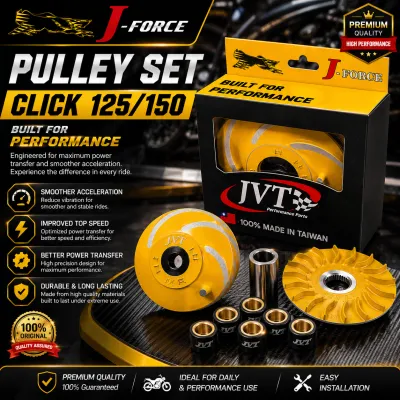
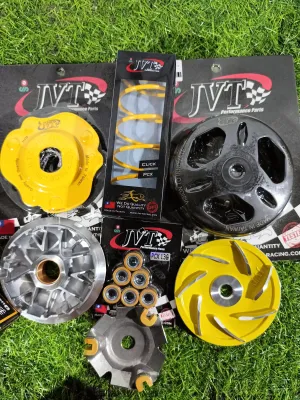
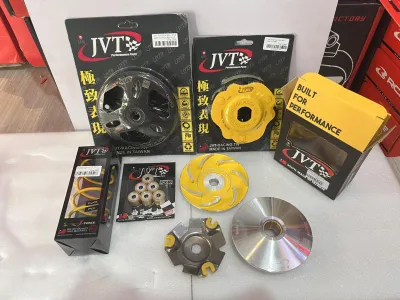
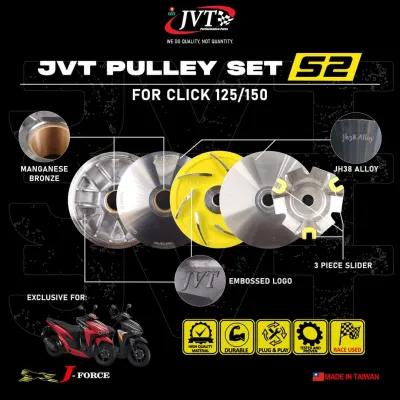
If your primary goal is cost-effective tuning, quicker throttle response, or experimenting with different roller weights, an aftermarket option like a JVT CVT set for honda click can be an appealing choice. These sets allow you to customize your acceleration profile to better handle stop-and-go city traffic or steep inclines. However, utilizing aftermarket components requires a willingness to monitor wear rates closely and verify compatibility with your exact scooter specifications.
Conversely, if your priority is maximum longevity, predictable fuel efficiency, and strict adherence to factory specifications, Genuine Honda OEM parts remain the safest choice. OEM components are engineered to withstand thousands of kilometers of daily commuting without requiring modification or frequent tuning. Any performance claims made by aftermarket manufacturers must be verified against physical product labels and exact part numbers, as marketing terms alone do not guarantee real-world durability or compatibility.
Products mentioned in this guide
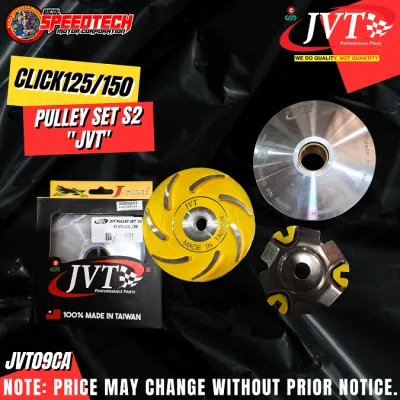
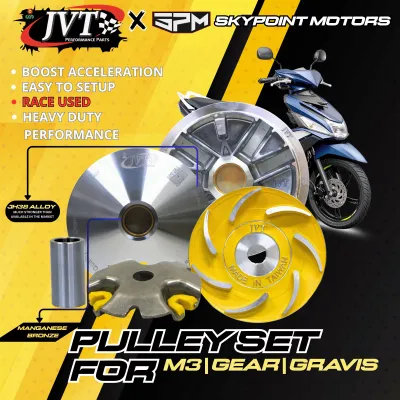
Prices are valid at publication and may change. Please refer to the product page for the latest price.
Baseline Specs: What Your Honda Click CVT Actually Needs
To make an informed decision, you must first understand how the CVT system operates on your Honda Click. The CVT consists of several critical components working in unison: the drive belt, the variator assembly (including the roller weights, ramp plate, and slide pieces), and the rear clutch assembly (including the clutch bell, clutch springs, and torque spring). As the engine speed increases, centrifugal force pushes the roller weights outward, forcing the variator pulley halves closer together and pushing the belt to a larger diameter, which continuously alters the gear ratio.

Because the Honda Click has evolved through multiple generations, identifying your exact model and year is critical before purchasing any transmission parts. The Honda Click 125i (across its various game-changer and version iterations) and the Honda Click 150i or Click 160 use different CVT configurations. Belt lengths, widths, cog angles, variator face angles, and stock roller weights differ significantly between a 125cc engine and a 150cc or 160cc engine. Installing a belt or variator designed for a different model year can lead to severe belt slippage, rapid wear, or catastrophic transmission failure.
Before purchasing any aftermarket alternative, always consult your motorcycle’s owner’s manual or official service guide. Note the factory-recommended roller weight (typically measured in grams) and the original equipment manufacturer (OEM) part numbers for the belt and pulley faces. Having these baseline specifications on hand allows you to make precise, objective comparisons when evaluating aftermarket options.
Evaluating JVT CVT Sets: Specs, Positioning, and What to Verify
JVT is a highly visible brand in the Philippine aftermarket motorcycle scene, positioned primarily as an accessible option for riders seeking entry-level performance tuning or budget-friendly replacement parts. Unlike premium European or high-end racing brands that command steep prices, JVT targets everyday commuters and enthusiasts who want to adjust their scooter’s power delivery without a massive financial investment.
When evaluating a JVT CVT set, you must physically inspect the product packaging and labels to verify the specifications. Check the belt dimensions carefully, looking specifically for the width in millimeters, the total length, and the wedge angle. These physical dimensions must align with your stock Honda Click requirements to ensure the belt sits correctly within the pulley sheaves. Additionally, inspect the material markings on the belt; look for indications of reinforced materials, such as Kevlar or aramid fibers, which are designed to handle higher operating temperatures.
Cross-referencing part numbers is another essential step. Do not rely solely on generic product titles like “JVT CVT Set for Click.” Instead, check the manufacturer’s catalog or packaging labels to confirm compatibility with your specific engine displacement (125cc vs. 150cc/160cc) and model year. If you are purchasing from online marketplaces, look closely at verified customer feedback. Focus on reviews from buyers who own the exact same Honda Click generation as yours, paying attention to their comments regarding initial fitment, belt alignment, and immediate riding feedback.
JVT vs. Genuine Honda and Other Aftermarket Brands
To help you visualize where JVT sits in the broader market, the following comparison matrix outlines the key differences between OEM parts, JVT aftermarket sets, and premium aftermarket brands available in the Philippines.
| Brand Category | Primary Focus | Spec Verification Required | Ideal Use Case |
|---|---|---|---|
| Genuine Honda OEM | Maximum reliability, standard fuel efficiency, and long-term durability. | None (when purchased via official part numbers). | Daily commuting, delivery services, and riders preferring a "set-and-forget" maintenance schedule. |
| JVT Aftermarket | Cost-effective tuning, adjustable roller weights, and improved low-to-mid acceleration. | High (must verify belt dimensions, roller weight grams, and model compatibility). | Budget-conscious riders, daily commuters looking for better throttle response, and hobbyists. |
| Premium Aftermarket | High-performance racing, advanced heat dissipation, and reinforced materials. | Very High (requires precise matching of variator angles and clutch spring tension). | Performance enthusiasts, modified engines, track use, or heavy-load touring. |
Genuine Honda OEM CVT sets offer a highly predictable lifespan and consistent performance. Because they are manufactured under strict quality control standards, they maintain factory-spec tolerances. However, this reliability often comes with a higher upfront price tag at authorized dealerships, and OEM sets do not offer options for tuning your acceleration or top-end speed.
In contrast, JVT and similar budget-friendly aftermarket brands offer lower upfront costs and include components like lighter roller weights to modify your scooter’s power delivery. While this allows for a more customized riding experience, these aftermarket components generally require more frequent inspection. The softer compounds often used in budget aftermarket rollers and slides can wear down faster than OEM equivalents, meaning you must monitor your CVT system more closely for signs of degradation.
Key Comparison Dimensions: How to Judge Performance and Value
Acceleration, Top Speed, and Roller Tuning
The physics of roller weights dictate how your Honda Click responds to throttle inputs. Lighter roller weights require higher engine RPMs to sling outward, keeping the transmission in a lower gear ratio longer. This results in quicker, more responsive acceleration from a complete stop, which is highly beneficial for navigating the congested, stop-and-go traffic typical of Philippine urban areas. Conversely, heavier roller weights slide outward at lower engine speeds, shifting the transmission into a higher gear ratio sooner, which can improve top-end cruising speed and overall fuel economy on open highways.
When comparing JVT with other aftermarket brands, verify whether the kit is sold with a fixed set of roller weights or if it allows you to select custom weights. Some riders prefer to “mix and match” roller weights (alternating weights in the variator) to find a balance between low-end torque and top-end speed. Ensure that any aftermarket variator pulley you choose has smooth, precisely machined ramp guides to prevent the rollers from flat-spotting prematurely.
Belt Durability and Heat Management
Heat is the primary enemy of any CVT system. The high ambient temperatures and humidity in the Philippines, combined with heavy passenger loads or steep climbs, cause significant heat buildup inside the sealed CVT casing. Under extreme heat, standard rubber belts can soften, stretch, and slip against the pulley faces, leading to a loss of power transfer and accelerated wear.
When evaluating a CVT belt, look beyond marketing terms like “heavy-duty” or “racing spec.” Instead, check the physical product label for technical specifications regarding material composition and heat resistance. Belts reinforced with aramid or Kevlar fibers offer superior tensile strength and resistance to thermal degradation compared to basic rubber compounds. However, stiffer reinforced belts can sometimes run slightly louder or cause faster wear on aluminum pulley faces, representing a clear trade-off between belt longevity and pulley wear.
Assessing the True Cost-to-Performance Ratio
Calculating the true value of a CVT set requires looking beyond the initial purchase price. A cheaper aftermarket set might save you money upfront, but if it requires replacement after only 5,000 kilometers, it will ultimately cost more in parts and labor than an OEM belt that lasts 20,000 kilometers.
To evaluate the true cost-to-performance ratio, use a simple framework: combine the upfront purchase price of the CVT set with the cost of installation labor, then divide that total by the manufacturer’s estimated service life or verified real-world mileage. Factor in your own time and the inconvenience of frequent maintenance garage visits. If a budget aftermarket set requires double the maintenance checks, the initial savings may be offset by ongoing labor fees.
Decision Framework: Choose the Right CVT for Your Riding Style
To finalize your purchase decision, align your choice with your specific riding habits, budget, and mechanical experience.
- Choose JVT or similar budget aftermarket sets if:
- You are working within a strict budget and need an affordable replacement or tuning option.
- You primarily use your Honda Click for short, light daily commutes in urban areas.
- You want to experiment with different roller weight configurations to customize your acceleration profile.
- You are comfortable performing regular CVT cleaning and inspection intervals.
- Choose Genuine Honda OEM if:
- You prioritize maximum long-term reliability and want a "set-and-forget" solution.
- You use your scooter daily for heavy commuting, long-distance touring, or commercial delivery work.
- You want guaranteed fitment without the need to measure belt widths or cross-reference aftermarket part numbers.
- You prefer to maintain your motorcycle strictly according to the factory service manual.
- Choose Premium Aftermarket brands if:
- You have a highly modified engine or frequently ride in demanding, high-heat environments.
- You require specialized, highly reinforced belt materials designed specifically for high-stress conditions.
- You have the budget to invest in premium components and professional tuning services.
- Verify first if:
- You are uncertain of your exact Honda Click model year or engine generation.
- You do not possess the necessary precision tools to measure your current CVT components.
- You are purchasing from an unverified online seller with limited customer feedback.
Installation, Safety, and Maintenance Boundaries
Replacing a CVT set is a mechanical task that directly affects your motorcycle’s operation and road safety. Proper installation requires specialized tools to prevent severe damage to your engine’s crankshaft. Never attempt to loosen or tighten the variator or clutch bell nuts using makeshift tools, chisels, or hammers. Doing so can easily bend the crankshaft, strip the delicate threads, or crack the aluminum pulley faces.
Always use a dedicated variator holder (commonly referred to as a Y-tool or flyman holder) or a properly calibrated impact wrench to secure the pulleys. Most importantly, use a calibrated torque wrench to tighten the variator and clutch nuts to the exact torque specifications specified in your Honda Click service manual. Over-tightening can strip the threads, while under-tightening can cause the nuts to back off while riding, resulting in a sudden, catastrophic transmission failure at high speeds.
If you lack the proper tools, mechanical experience, or a clean workspace, strongly consider having the CVT set installed by a qualified professional mechanic. Before installing any new belt or pulley components, clean the inside of the CVT casing thoroughly. Use an approved brake and parts cleaner to remove accumulated belt dust, oil residue, and road grime, ensuring the cleaner is used only on label-authorized metal surfaces. Inspect the clutch lining, pulley faces, and guide slides for any signs of grooving or uneven wear, as installing a new belt onto worn pulley faces will cause rapid, premature belt failure.
Community discussion
Share your experience or ask a question. Comments are reviewed before publication.