
When a young rider climbs onto a dirt bike, their feet and lower legs are highly vulnerable to impacts, heat, and extreme twisting forces. Standard footwear or generic athletic shoes offer virtually zero protection against the unique hazards of off-road riding. Finding the right motocross boots for kids is one of the most critical safety decisions a parent can make. High-quality youth riding boots act as structural armor, stabilizing the ankle, shielding the shin from flying debris, and keeping the foot securely anchored to the machine.
To ensure your child stays protected on the track or trail, you must look for a combination of rigid structural reinforcements, secure mechanical closure systems, and heat-resistant materials. The ideal boot balances robust impact protection with enough flexibility to allow precise control over the gear shifter and rear brake pedal. Let’s look at the essential safety features you should verify before purchasing your child’s next pair of riding boots.
Essential Structural Protections for Legs and Feet
The lower extremities of a child are still developing, making their bones, tendons, and ligaments highly susceptible to injury from sudden impacts or unnatural movements. A dedicated motocross boot is engineered to absorb and redirect these forces away from fragile joints.
Products mentioned in this guide
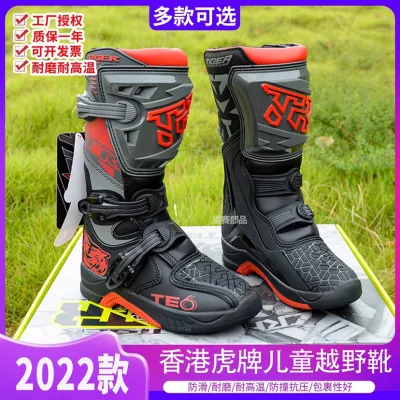
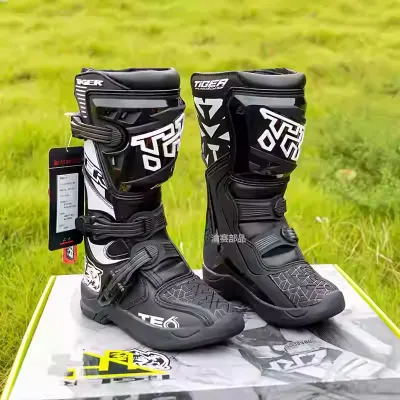
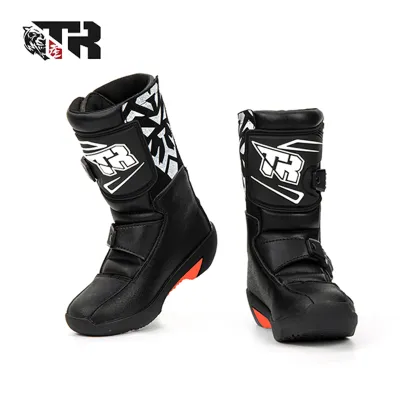
Prices are valid at publication and may change. Please refer to the product page for the latest price.
Ankle Support and Hinge Systems The ankle is the most vulnerable joint during a fall or a hard landing. Look for boots that feature rigid, injection-molded ankle cups that encase the joint to prevent lateral twisting (inversion and eversion). High-end youth boots often incorporate a mechanical hinge system. This hinge allows the ankle to flex forward and backward naturally for shifting and braking, but physically stops the joint before it can hyperextend or hyperflex. Without this rigid lateral support, a simple tip-over can result in severe sprains or fractures.
Shin Guards and Calf Protection As a child rides behind other bikes, the front wheel of the leading motorcycle kicks up roost—a high-velocity stream of dirt, rocks, and hard debris. Extended, impact-resistant shin plates made of heavy-duty polyurethane are essential to shield the lower leg from these flying hazards. These plates should extend high enough to overlap with the child’s knee guards or braces. Additionally, robust shin guards absorb the force of direct impacts if the child collides with low-hanging branches or another rider.
Sole Stiffness and Footpeg Grip A soft, flexible sole is a major safety hazard on a dirt bike. Motocross boots must feature a highly rigid, steel-shank-reinforced sole that resists bending when subjected to intense downward pressure. When riding over rough terrain, the child stands on narrow metal footpegs; a stiff sole distributes this concentrated pressure across the entire foot, preventing severe arch fatigue and bruising. Furthermore, the sole’s tread pattern must offer exceptional grip, particularly in muddy or wet conditions common during the tropical rainy season. A slipping foot can lead to a sudden loss of control or cause the leg to get caught under the rear wheel.
Toe Box Reinforcement The front of the boot is the first point of contact during forward collisions or low-side crashes. A crush-proof, reinforced toe box is critical to protect small toes from being crushed by obstacles like rocks, tree stumps, or the bike’s own controls. This area is typically reinforced with hard plastic or a metal toe cap. The reinforcement also provides a firm, consistent surface for operating the gear shift lever, preventing painful pressure on the top of the foot during repeated gear changes.
Closure Systems and Fit Security
Even the most protective boot is useless if it slips off or shifts out of position during a crash. The closure system is responsible for keeping the boot firmly locked onto the child’s foot and leg under extreme stress.

Buckle Systems vs. Alternative Closures Mechanical buckle systems are the gold standard for off-road safety. High-quality motocross boots for kids utilize three to four heavy-duty, adjustable buckles made of impact-resistant polyurethane or aluminum. These buckles provide a positive mechanical lock that will not come undone when scraped against dirt banks or bike frames. Avoid boots that rely solely on laces, zippers, or basic hook-and-loop fasteners for primary retention. Laces can easily snag on footpegs or chain drives, while hook-and-loop straps quickly lose their gripping strength when clogged with mud and water. Ensure that the buckles are easily replaceable, as they are designed to absorb impacts and may occasionally break.
Calf Adjustment Mechanisms Children have varying calf sizes, and many will wear thick socks, pants, and knee guards tucked inside their boots. To accommodate these differences, look for boots with adjustable calf panels or extended strap adjustment ranges. The top of the boot must wrap snugly around the upper calf, creating a flush seal. If there is a wide gap at the top, dirt, small rocks, and water will enter the boot, causing discomfort and distraction. A tight seal also prevents the boot from rotating on the leg during a slide.
The Risks of a Loose Fit A loose-fitting boot introduces several severe safety hazards. If the foot can slide around inside the boot, the child loses the precise tactile feedback needed to operate the rear brake and shifter safely. In a fall, a loose boot can allow the ankle to twist internally, defeating the purpose of the rigid outer shell. Additionally, if the boot shifts on the footpeg, it can easily catch on the motorcycle’s frame or swingarm, trapping the child’s leg during a crash and increasing the risk of severe fractures.
Heel Lockdown Verification To verify that a boot fits securely, perform a simple heel lockdown test. Once the boots are fully buckled, have your child stand up and try to lift their heel inside the boot while keeping the sole flat on the ground. You can also gently grasp the heel of the boot and lift it while they try to keep their foot planted. If the child’s heel lifts significantly within the inner pocket, the boot is either too large or the closure system is not providing adequate midfoot retention. The heel must remain firmly anchored to prevent blisters and ensure optimal control.
Shell Materials, Heat Shields, and Inner Linings
The materials used to construct a youth motocross boot determine its durability, comfort, and protective capabilities. Parents should look for a strategic blend of hard plastics and flexible synthetics.
Outer Shell Construction Modern youth boots utilize a combination of injection-molded plastics and high-grade synthetic materials. High-impact zones—such as the shin, ankle, heel, and toe—are covered with thick thermoplastic polyurethane (TPU) panels to deflect debris and absorb shock. The areas requiring movement, such as the instep and Achilles tendon, are typically constructed from synthetic leather or advanced microfiber. Microfiber offers excellent abrasion resistance, is lighter than natural leather, and does not degrade or stretch when repeatedly exposed to water and mud.
Heat Shields The inner side of the boot (the medial side) is constantly in close contact with the motorcycle’s engine and hot exhaust pipe. To prevent severe contact burns, safety-focused boots feature dedicated heat shields on the inner calf. These shields are made from high-temperature resistant rubber, leather, or specialized synthetic compounds. Beyond thermal protection, these panels provide a textured, high-friction surface that helps the child grip the bike’s frame with their legs, reducing upper-body fatigue and improving overall stability.
Inner Lining and Moisture Management Riding in hot and humid tropical climates can cause rapid heat buildup inside a heavy boot. To maintain comfort and prevent skin issues, look for boots equipped with breathable, moisture-wicking inner linings. These linings draw sweat away from the skin, reducing the risk of painful friction blisters and raw spots. Some boots also incorporate 3D mesh panels that facilitate airflow. Keeping the feet dry and comfortable is not just a matter of luxury; a child who is distracted by painful blisters or hot spots cannot focus fully on the track, which directly compromises their safety.
Verifying Manufacturer Specifications When shopping for motocross boots for kids, do not rely solely on online product titles or marketing descriptions, which can sometimes use misleading terms. Always consult the physical labels on the boots and the official manufacturer documentation. Look for recognized safety standards, such as the European CE certification (specifically EN 13634 for protective footwear for motorcycle riders). This standard verifies that the boots have undergone standardized laboratory testing for abrasion resistance, impact cut resistance, and transverse rigidity. In the Philippines, high-quality youth motocross boots typically range from ₱8,000 to over ₱20,000 depending on the level of hinge technology and materials. While budget-friendly options exist, parents should prioritize certified safety features over the lowest price tag.
Proper Sizing, Growth Considerations, and Replacement Signs
Because children grow quickly, parents are often tempted to buy riding gear that is one or two sizes too large. However, when it comes to protective footwear, this practice is highly dangerous.
The Danger of “Room to Grow” Buying oversized motocross boots is a recipe for injury. When a boot is too large, the built-in protective structures—such as the ankle cups and heel pocket—do not align with the child’s anatomy. If the ankle joint is not properly aligned with the boot’s hinge or supportive panels, the boot cannot prevent hyperextension or lateral twisting during a crash. Furthermore, excess space inside the toe box makes shifting gears incredibly difficult, as the child cannot accurately feel the shift lever, leading to missed gears and potential loss of control on jumps or steep hills.
Testing the Fit When trying on new boots, always have your child wear the exact gear they will use on the bike. This includes thick, over-the-calf motocross socks and any knee guards or knee braces they wear. Have the child put the boots on, buckle them securely, and walk around for a few minutes. Check that their toes do not press hard against the front of the toe box, but ensure there is no excessive sliding. Have them sit on their bike (if available) or mimic the riding position to confirm they can flex their ankles sufficiently to operate the foot controls without pain or pinching.
Visual Inspection for Wear Like all safety gear, motocross boots have a limited lifespan and must be inspected regularly. Before every ride, conduct a thorough visual check. Look for deep cracks or stress whitening in the plastic TPU panels, which indicate the material has been compromised and may shatter upon the next impact. Inspect the soles; if the tread is worn smooth or the sole is beginning to separate from the boot body, the boots must be repaired or replaced immediately. Check the buckle straps for fraying or cracking, and replace any damaged hardware before letting your child ride.
Post-Crash Assessment A severe crash can damage the structural integrity of a boot in ways that are not immediately visible. If your child experiences a high-speed fall or a hard landing where their foot was trapped or twisted, inspect the boots carefully. Check the mechanical hinges for cracks or binding. Squeeze the sides of the boot to ensure the internal steel shank or reinforced sole hasn’t snapped. If the boot feels soft, highly flexible, or structurally compromised in areas that were previously rigid, it has done its job and must be retired. Continuing to use structurally degraded boots leaves your child exposed to severe injury.
Frequently Asked Questions (FAQ)
Can kids use regular work boots or hiking boots for motocross?
No, regular work boots or hiking boots are not safe substitutes for dedicated motocross boots. Standard footwear lacks the rigid lateral ankle support, steel-shank reinforced soles, and heavy-duty impact plates required for off-road riding. A work boot’s sole can easily bend or wrap around the footpeg under the force of a hard landing, leading to severe arch injuries or broken bones. Additionally, hiking boots do not feature heat shields to protect against hot exhaust pipes, nor do they have the crush-proof toe boxes and shin plates necessary to deflect flying rocks and heavy impacts.
Do new motocross boots require a break-in period before riding?
Yes, new motocross boots are intentionally constructed from very stiff plastics and thick protective materials, meaning they require a break-in period to become comfortable and fully functional. When boots are brand new, they can feel extremely rigid, making it difficult for a child to feel the shift lever or rear brake pedal. To break them in safely, have your child wear them around the house or during light, supervised backyard practice sessions before riding on an aggressive track. This allows the inner liners to mold to their feet and the synthetic materials to soften slightly at the natural flex points, ensuring they can operate their motorcycle’s controls safely and confidently.
Community discussion
Share your experience or ask a question. Comments are reviewed before publication.