
Finding the correct air filter for your Kia Picanto is essential for maintaining engine health, fuel efficiency, and cabin air quality. Because this popular hatchback has been produced across multiple generations and engine configurations, there is no single filter that fits every model. To ensure a perfect fit, you must identify your vehicle’s specific generation, engine displacement, and model year before purchasing a replacement part.
In the Philippines, the tropical climate presents unique challenges for automotive filtration systems. High humidity, seasonal heavy rains, and intense urban traffic in metropolitan areas lead to a rapid accumulation of airborne dust, soot, and moisture. These environmental factors can quickly clog both your engine air filter and your cabin air filter, making regular inspection and precise compatibility matching critical to preventing premature engine wear and maintaining a functional air conditioning system.
Identify Your Kia Picanto Generation and Engine
To begin your search for a compatible air filter, you must first pinpoint the exact generation and engine configuration of your Kia Picanto. The Picanto has undergone several major redesigns since its global debut, and each generation utilizes distinct airbox designs and filter dimensions. Attempting to purchase a filter based solely on the vehicle name without verifying these details often results in buying a part that cannot be installed.
Products mentioned in this guide
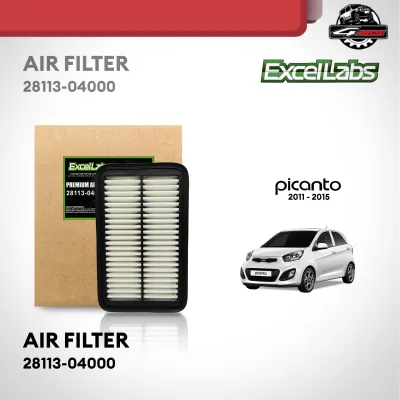
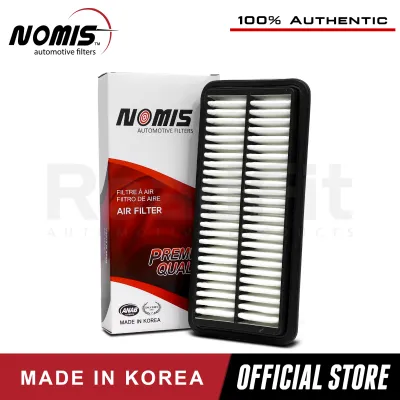
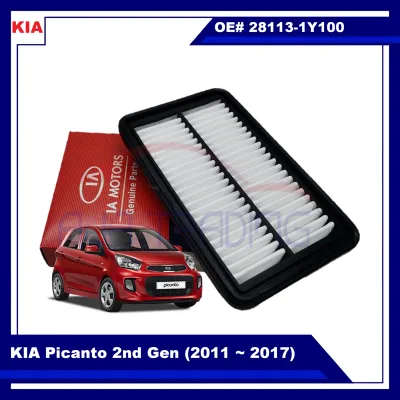
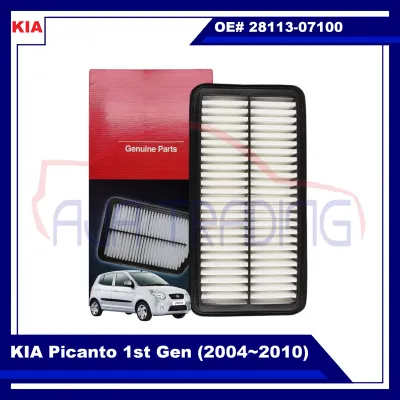
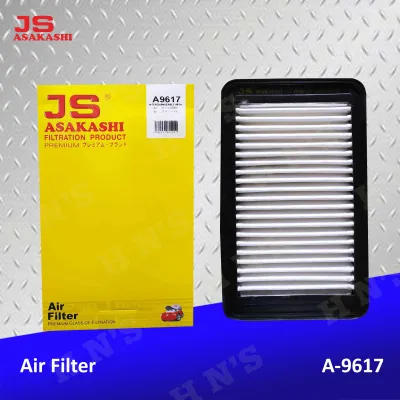
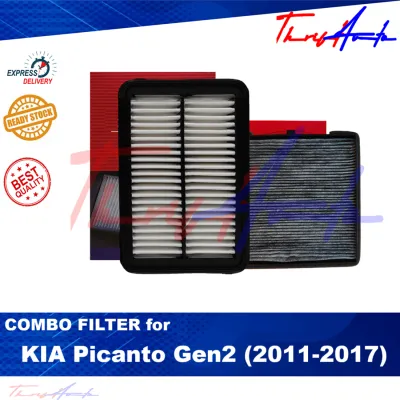
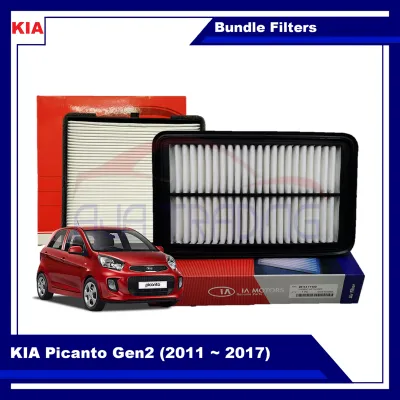
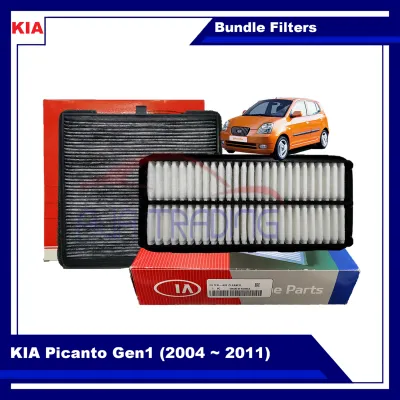
Prices are valid at publication and may change. Please refer to the product page for the latest price.
The first generation of the Kia Picanto, internally designated as the SA series, was produced roughly between 2004 and 2011. These early models are commonly equipped with smaller displacement engines, such as the 1.0-liter or 1.1-liter gasoline engines. The airboxes in these vehicles are relatively compact, and the corresponding engine air filters feature a specific rectangular footprint designed to fit the tight confines of the early engine bay layout.
The second generation, known as the TA series, spanned from approximately 2011 to 2017. This generation introduced the more modern Kappa engine family, featuring either a 1.0-liter three-cylinder engine or a 1.2-liter four-cylinder engine. Because the intake plumbing and airbox housings differ significantly between the three-cylinder and four-cylinder variants, you must know your exact engine displacement; a filter designed for the 1.0-liter TA model will not fit the airbox of a 1.2-liter TA model.
The third generation, designated as the JA series, was introduced around 2017 and continues through the current model years. The JA series utilizes updated versions of the 1.0-liter and 1.2-liter Kappa II engines, along with redesigned engine bays and air filtration housings. The physical dimensions, sealing gasket shapes, and mounting tab configurations of the JA filters are distinct from those of the TA and SA generations, meaning parts are generally not interchangeable across generations.
To locate your engine code and displacement, consult your vehicle’s Certificate of Registration issued by the Land Transportation Office. Alternatively, you can inspect the metal identification placard or sticker located inside the engine bay—typically mounted on the radiator core support, the strut tower, or the driver’s side door jamb. This placard lists the engine model code and displacement, providing the precise data needed to cross-reference aftermarket parts catalogs.
Engine Air Filter vs. Cabin Air Filter
It is common for car owners to confuse the engine air filter with the cabin air filter, but these two components serve entirely different functions and are located in separate areas of the vehicle. Purchasing the wrong type of filter is a frequent mistake when browsing online marketplaces or auto parts stores, so understanding their physical differences and purposes is essential.

The engine air filter is responsible for cleaning the air that enters the engine’s combustion chambers. It prevents road dust, sand, soot, and other abrasive debris from entering the cylinders, where they could cause severe internal scratching and premature engine wear. This filter is housed inside a black plastic airbox located directly in the engine bay, connected to the main air intake ducting.
In contrast, the cabin air filter—frequently referred to as the aircon filter in the Philippines—is designed to protect the vehicle’s interior environment and its occupants. It filters the air drawn into the heating, ventilation, and air conditioning system, trapping dust, pollen, mold spores, and exhaust soot before the air is blown through the dashboard vents. The cabin air filter is located inside the passenger cabin, typically positioned behind the glove compartment.
When shopping for these parts, you can easily distinguish them by their physical appearance and construction materials. Engine air filters are robust, thick, and heavy, featuring deep pleats made of dense paper or synthetic media surrounded by a thick, flexible rubber or polyurethane sealing gasket designed to withstand engine vacuum. Cabin air filters are much lighter, thinner, and rectangular, often constructed from a simple non-woven fabric or activated carbon media with a thin, semi-rigid frame and a prominent arrow indicating the required direction of airflow.
How to Verify Air Filter Compatibility
Verifying compatibility before finalizing your purchase is the most effective way to avoid the hassle of returning incorrect parts. Because minor design variations exist even within the same model year, relying on a step-by-step verification process ensures that the replacement filter will seal perfectly inside your Picanto’s housing.
The most reliable method of verification is to locate the Original Equipment Manufacturer part number. This number is typically printed or stamped onto the plastic frame or rubber border of the filter currently installed in your vehicle. You can also find this part number listed in the specifications section of your Kia Picanto owner’s manual. Having this exact number allows you to search for direct OEM replacements or cross-reference it with aftermarket brands that list compatible part numbers on their packaging.
Another highly accurate method is to use your vehicle’s 17-digit Vehicle Identification Number. The VIN is a unique identifier that can be found on your registration documents, the vehicle’s dashboard near the bottom of the windshield, or on the door pillar placard. Authorized Kia dealership parts departments or reputable online automotive parts portals can input this VIN into their databases to pull up the exact factory-installed part specifications for your specific build date.
If you are purchasing an aftermarket filter from a local auto parts shop or an online marketplace and do not have a direct part number match, you must manually verify the physical dimensions. Use a ruler or caliper to measure the length, width, and height of your old filter, and compare these measurements to the specifications provided by the aftermarket manufacturer. Additionally, count the number of pleats and inspect the shape of the corners; some Picanto filters feature one rounded corner or a specific notch that prevents the filter from being installed backward.
Choosing Between OEM and Aftermarket Filters
When selecting a replacement air filter for your Kia Picanto, you will generally choose between OEM parts and aftermarket alternatives. Both options have distinct characteristics, and evaluating them based on observable material quality and construction standards will help you make an informed decision.
OEM filters are manufactured by or directly for Kia, ensuring they meet the exact factory specifications for filtration efficiency, airflow restriction, and physical dimensions. The primary advantage of an OEM filter is a guaranteed fit and predictable performance, as the sealing gasket is designed to match the airbox perfectly. However, OEM parts are typically more expensive and are primarily available through authorized dealerships or specialized OEM parts distributors.
Aftermarket filters are produced by independent manufacturers and are widely available at various price points and material configurations. High-quality aftermarket filters from established automotive brands can offer comparable or sometimes enhanced filtration performance relative to OEM standards. These filters may utilize advanced synthetic media or multi-layer designs optimized for dusty environments, providing a viable alternative for budget-conscious vehicle owners.
To evaluate the quality of any filter before installation, inspect its physical construction and material indicators. Look for high pleat density, as a greater number of pleats increases the overall surface area of the filtration media, allowing the filter to trap more dust without restricting airflow. Examine the outer sealing gasket; it should be made of soft, highly flexible rubber or polyurethane that can compress easily to form an airtight seal inside the airbox, preventing unfiltered air from bypassing the media.
Be cautious of unbranded, suspiciously low-priced filters commonly found on online marketplaces. These low-grade alternatives often feature thin, inconsistent paper media that can easily tear under the vacuum pressure of the engine intake. Furthermore, their sealing gaskets are frequently made of hard, non-yielding plastic rather than flexible rubber, which fails to create a proper seal and allows unfiltered air, dust, and moisture to enter the engine, potentially causing severe internal damage over time.
When and How to Inspect Your Air Filter
Regular inspection of your Kia Picanto’s air filters is a fundamental aspect of preventative maintenance. By assessing the physical condition of your filters, you can determine whether they require immediate replacement or if they can continue to serve until the next scheduled maintenance interval.
To inspect the engine air filter, ensure the vehicle is parked on a level surface, the engine is turned off, and the ignition key is removed. Locate the black plastic airbox in the engine bay and carefully unclip the metal tension clips or unscrew the retaining fasteners securing the cover. Lift the cover, remove the filter, and hold it up to a bright light source, such as the sun or a flashlight. If light passes clearly through the pleats, the filter is still functional; if the pleats are dark gray, clogged with heavy debris, or saturated with oil or moisture, the filter must be replaced immediately.
While standard manufacturer guidelines often suggest replacing the engine and cabin air filters every 10,000 to 15,000 kilometers, the driving conditions in the Philippines often necessitate more frequent intervals. The combination of high ambient humidity, heavy urban traffic, and dusty provincial roads can cause filters to clog much faster. It is highly recommended to inspect both filters every 5,000 kilometers or during every routine oil change, replacing them sooner if you frequently drive in highly polluted or dusty areas.
Always observe safety boundaries when performing any DIY maintenance on your vehicle. If you notice that the plastic airbox housing is cracked, the intake hoses are torn, or the sealing surfaces are damaged, do not attempt to patch them; instead, consult a qualified automotive professional to replace the damaged components. Additionally, ensure the new filter is seated completely flat within the airbox channel before securing the cover; forcing a misaligned cover can break the plastic tabs or pinch the gasket, leading to unfiltered air bypass. If an engine warning light illuminates after you have replaced the filter, stop the vehicle and seek professional assistance to verify the intake system’s integrity.
Frequently Asked Questions (FAQ)
Can I wash and reuse my Kia Picanto engine air filter?
Standard OEM and budget-friendly aftermarket engine air filters for the Kia Picanto are constructed from cellulose paper or synthetic fiber media designed strictly for single-use. Attempting to wash these filters with water, soap, or household cleaners will permanently damage the delicate fibers, causing them to swell, lose their filtration efficiency, or tear under engine vacuum. If you have a standard paper filter, it must be replaced with a new one when dirty. The only exception is if you have installed a specialized, high-performance aftermarket filter explicitly labeled by the manufacturer as washable and reusable; these require specific cleaning solutions and re-oiling procedures detailed in their product instructions.
Will using an aftermarket air filter void my Kia warranty?
Using a compatible aftermarket air filter does not automatically void your Kia Picanto’s manufacturer warranty. Under general consumer protection principles in the Philippines, vehicle manufacturers cannot void a warranty simply because an aftermarket consumable part was installed, provided the part is fully compatible and meets or exceeds OEM specifications. However, if an aftermarket filter is poorly constructed, disintegrates, or is installed incorrectly, and this failure directly causes damage to the engine or intake system, the manufacturer can legally deny warranty coverage for those specific repairs. To protect your warranty, always purchase filters from reputable brands, retain all purchase receipts as proof of specification matching, and ensure the filter is installed correctly according to the vehicle’s service guidelines.
Community discussion
Share your experience or ask a question. Comments are reviewed before publication.