
Finding the correct K&N cabin filter for your Mitsubishi Montero depends entirely on identifying your vehicle’s specific production year and generation. Because the physical dimensions of the HVAC filter slot changed significantly across different Montero Sport generations, using a generic “one-size-fits-all” approach will result in an improper seal or physical damage to your climate control system. By cross-referencing your vehicle’s Original Equipment Manufacturer (OEM) part number with the official K&N application guide, you can confidently select the exact washable filter model designed for your SUV.
Upgrading to a premium reusable cabin filter is a highly practical decision for Montero owners who frequently encounter dusty provincial roads, heavy urban traffic, or high-humidity coastal environments. Unlike standard disposable paper filters that require frequent replacement, a washable alternative provides a long-term solution that maintains consistent airflow and filtration efficiency over the lifespan of your vehicle.
Why Choose a K&N Cabin Filter for Your Montero?
Standard disposable cabin air filters are typically made of thin paper or non-woven fleece. While these filters are functional when brand new, they quickly accumulate dust, pollen, soot, and organic debris, leading to a rapid decline in airflow. In tropical climates characterized by high humidity and intense seasonal rains, damp paper filters can also become breeding grounds for mold and mildew, which directly compromises the air quality inside your SUV’s cabin.
Products mentioned in this guide
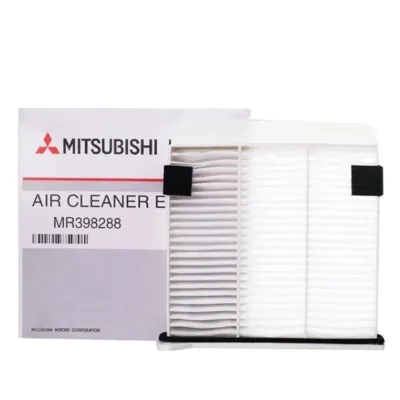
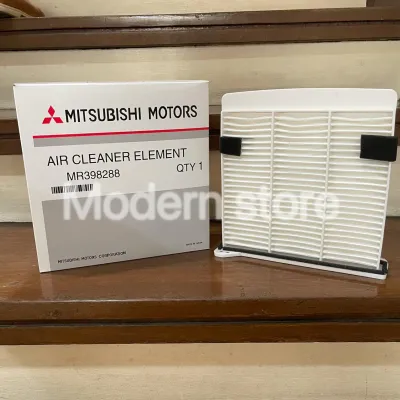
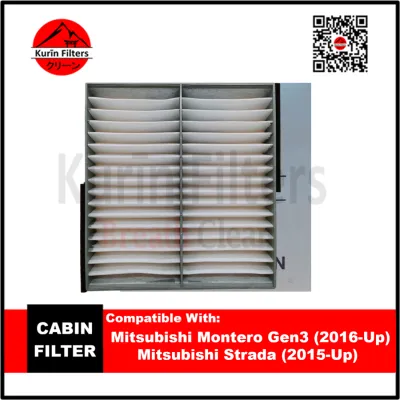
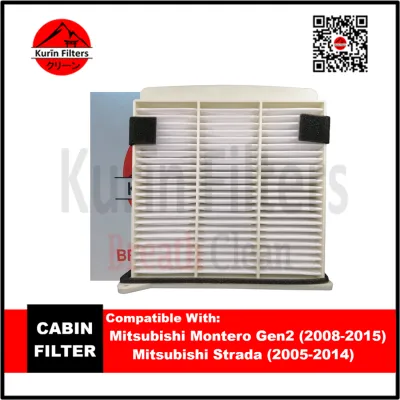
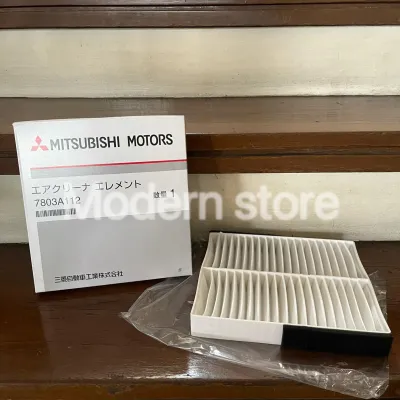
Prices are valid at publication and may change. Please refer to the product page for the latest price.
K&N cabin air filters utilize a specialized synthetic filtration media designed to be washed, dried, and reused repeatedly. Instead of discarding your cabin filter every 10,000 to 15,000 kilometers—which represents a recurring cost of roughly ₱500 to ₱1,500 per replacement—you can simply clean and re-install a single reusable filter. Over several years of ownership, this washable design translates into substantial cost savings and significantly reduces the volume of non-biodegradable waste sent to local landfills.
The advanced synthetic media is engineered to capture airborne contaminants electrostatically. This design allows the filter to trap fine dust particles, road grime, and common allergens while maintaining a low resistance to airflow. By keeping the air flowing freely, the filter minimizes the mechanical strain on your Montero’s HVAC blower motor, helping your air conditioning system cool the cabin rapidly during hot afternoon drives.
Identifying Your Mitsubishi Montero Generation
Before ordering any replacement parts, you must accurately identify the specific generation and model year of your Mitsubishi Montero Sport. Assuming that all Montero models share the same cabin filter dimensions is one of the most common purchasing mistakes. The HVAC housing assembly has undergone major structural redesigns with each generation, meaning a filter designed for an older model will not fit a newer variant.

To ensure absolute compatibility, locate your vehicle’s identification details before browsing parts catalogs. You can find your SUV’s exact model year, engine type, and chassis code on your official vehicle registration documents (the Certificate of Registration and Official Receipt) or on the manufacturer’s plate located on the passenger-side door jamb.
Montero Sport Generation Classifications
- First Generation (1996–2008): These early utility models feature a distinct, rugged body style. Many units from this era did not come equipped with a dedicated cabin filter slot from the factory, or they require a specific aftermarket retrofit kit to house a filter element.
- Second Generation (2008–2015): Known internally as the KG or KH series, this generation is powered primarily by the 2.5-liter 4D56 diesel engine or the 3.2-liter 4M41 engine. The cabin filter slot is located directly behind the glove box, utilizing a specific rectangular dimensions profile.
- Third Generation (2015–Present): Represented by the KR, KS, and QX series, these modern models feature the 2.4-liter 4N15 MIVEC clean diesel engine and an entirely redesigned dashboard and climate control system. The HVAC housing on these models requires a completely different filter shape and thickness compared to the second-generation models.
Never rely on visual estimates or body kit modifications to determine your vehicle’s model year. A late-registered second-generation Montero may share a registration year with an early third-generation model, yet their cabin filter slots are entirely incompatible. Always verify the chassis prefix to guarantee a perfect physical fit.
How to Find the Exact K&N Part Number
The most reliable method to find the correct K&N cabin filter is to use the official K&N vehicle search tool on the manufacturer’s website. By entering the exact year, make, model, and engine configuration of your Montero, the database will output the precise part number designed for your vehicle’s HVAC housing. Because the Montero is marketed as the “Montero Sport” in some regions and the “Pajero Sport” or “Challenger” in others, cross-referencing your specific chassis code is highly recommended.
Another foolproof approach is to extract your current cabin filter and inspect its plastic frame or paper pleats for an OEM part number. Mitsubishi OEM numbers typically follow a specific alphanumeric format, such as MZ600137 or similar variations depending on the production batch. You can input this OEM number directly into K&N’s online cross-reference tool to find the exact matching washable replacement.
Avoid buying filters based solely on generic online marketplace listings that claim compatibility with “All Montero Models.” Many third-party sellers use broad search tags to maximize visibility, which often leads to buyers receiving the wrong part. If you are purchasing from an online marketplace or local auto supply shop, always double-check that the printed K&N part number on the box matches the number generated by the official K&N catalog.
Choosing Between Standard and Antimicrobial Options
Once you have identified the correct part number for your Montero, you may have the option to choose between a standard washable cabin filter and a version treated with specialized antimicrobial properties. Both options provide excellent physical filtration, but they serve slightly different driving environments and user priorities.
Standard Washable Cabin Filters
- Primary Benefit: Exceptional lifetime durability and reliable dust retention.
- Best For: Drivers who primarily travel in rural areas, unpaved provincial roads, or regions with high dust concentrations but relatively low levels of industrial air pollution.
- Maintenance: Requires regular washing with standard cabin filter cleaner to maintain performance.
- Cost: Generally represents the baseline investment for premium reusable filters (typically ranging from ₱2,500 to ₱3,500 depending on the retailer).
Antimicrobial and Odor-Control Options
- Primary Benefit: Active resistance to mold, mildew, and bacterial growth on the filter media, combined with enhanced odor neutralization.
- Best For: Vehicles driven daily in heavy urban traffic, bumper-to-bumper city commutes, or regions with high ambient humidity where musty AC odors are a common issue.
- Maintenance: Requires the same washing procedure, but the specialized media helps prevent odor-causing microbes from colonizing the filter surface between cleanings.
- Cost: Slightly higher initial purchase price, but highly recommended for maintaining fresh cabin air in tropical climates.
If your daily commute involves navigating congested urban highways where diesel exhaust and soot are highly concentrated, investing in an odor-control or antimicrobial variant is highly beneficial. The specialized media helps neutralize unpleasant external smells before they enter your SUV’s cabin, ensuring a more comfortable environment for you and your passengers.
Replacing the Cabin Filter: General Montero Steps
Replacing the cabin filter in a Mitsubishi Montero is a straightforward maintenance task that does not require specialized mechanical tools. However, because you will be working with plastic interior trim and delicate HVAC components, you must proceed with care to avoid breaking brittle plastic clips.
Step-by-Step Installation Guide
- Preparation: Park your vehicle on a level surface, turn off the ignition, and ensure the air conditioning system is completely powered down.
- Access the Glove Compartment: Open the front passenger glove box. On most second- and third-generation Montero models, the glove box acts as the access panel for the cabin filter housing.
- Release the Dampener Arm: Locate the small plastic dampener arm on the outer right side of the glove box. Gently slide or unclip the arm from its mounting pin. Do not pull forcefully, as this plastic arm can easily snap.
- Disengage the Stop Pegs: Press the left and right side walls of the glove box inward to release the rubber stop pegs from the dashboard frame. This will allow the glove box to swing downward completely, exposing the HVAC blower assembly behind it.
- Remove the Filter Cover: Locate the rectangular plastic cover on the front of the blower housing. Squeeze the locking tabs on the sides of the cover and pull it straight off.
- Note the Airflow Direction: Before sliding the old filter out, look closely at the "Air Flow" arrow printed on its frame. You must install the new K&N filter with its airflow arrow pointing in the exact same direction (usually pointing downward toward the blower fan).
- Insert the New Filter: Slide the old filter out of the slot, clean any loose leaves or dust from the housing using a microfiber cloth, and slide the new K&N filter into place.
- Reassemble the Dashboard: Reattach the plastic housing cover, swing the glove box back up into its tracks, re-engage the side stop pegs, and secure the dampener arm.
Safety & Compliance Boundary: Always consult your vehicle’s official owner’s manual before starting this procedure, as minor clip designs and access steps can vary by model year. If you encounter any resistance, or if the plastic components feel excessively brittle due to age and cabin heat, stop immediately and consult a qualified automotive technician. Applying excessive force can crack the HVAC housing, leading to expensive repairs.
Cleaning and Maintaining Your Washable K&N Filter
To ensure your K&N cabin filter continues to deliver optimal filtration and unrestricted airflow, you must establish a regular inspection and cleaning routine. In highly polluted urban areas or exceptionally dusty provincial environments, the filter may accumulate debris faster than the standard manufacturer service intervals suggest.
When to Clean Your Filter
- Visual Accumulation: A thick layer of grey dust, soot, or organic debris is visible on the intake side of the filter pleats.
- Reduced Airflow: The volume of air coming out of your Montero's AC vents feels noticeably weaker, even when the fan speed is set to high.
- Musty Odors: A persistent, damp, or stale smell emanates from the vents when you first turn on the air conditioning system.
The Cleaning Process
- Apply Cleaner: Spray the official K&N cabin filter cleaner generously onto both sides of the dry filter. Allow the cleaning solution to sit for approximately 10 minutes to loosen trapped grime and soot. Do not use harsh household detergents, bleach, or petroleum-based solvents, as these will permanently degrade the synthetic filtration media.
- Rinse Gently: Rinse the filter thoroughly with low-pressure tap water. Always direct the water flow from the clean side of the filter to the dirty side (opposite to the normal direction of airflow) to flush the dirt out of the pleats rather than forcing it deeper into the media.
- Air Dry Completely: Shake off any excess water and place the filter in a clean, well-ventilated area to dry naturally. Do not use compressed air, hair dryers, or direct heat sources to speed up the drying process, as excessive heat can warp the synthetic media and ruin the physical dimensions of the filter frame.
Crucial Safety Warning: The filter must be 100% dry before you reinstall it into your Montero’s HVAC housing. Reinstalling a damp or wet filter in a tropical climate will rapidly lead to mold and mildew growth inside your air conditioning ducts, creating severe musty odors and potentially damaging the electrical components of your blower motor. Always allow ample time for natural air drying.
Frequently Asked Questions (FAQ)
Can I use a K&N cabin filter from a different SUV if it looks similar?
No, you should never install a cabin filter designed for a different vehicle model, even if the physical dimensions appear nearly identical. Cabin filters must fit perfectly within the HVAC housing slot to create an airtight seal along all four edges.
If a filter is even a few millimeters too small, unfiltered air will bypass the media entirely, carrying dust, pollen, and road grime directly into your blower motor and evaporator core. Conversely, forcing an oversized filter into the slot can warp the frame, causing air leaks and potentially restricting the movement of the HVAC blend doors.
Will using an aftermarket reusable cabin filter void my vehicle's warranty?
Under standard consumer protection principles and automotive dealership guidelines, installing a high-quality aftermarket cabin filter like a K&N washable filter will not void your vehicle’s overall manufacturer warranty. A cabin filter is classified as a consumable maintenance item, similar to windshield wiper blades or engine oil filters.
However, if an improperly installed or poorly maintained aftermarket filter directly causes mechanical damage—such as a burnt blower motor caused by a completely clogged filter or water damage from reinstalling a wet filter—the dealership may deny warranty coverage for that specific repair. To avoid any potential disputes during scheduled dealership servicing, you can keep your original OEM filter on hand or explicitly instruct the service advisors not to discard or replace your premium washable filter.
How do I know if my current cabin filter needs replacing or just cleaning?
If you are using a standard disposable paper filter, it cannot be cleaned; once it accumulates visible dirt, grey discoloration, or begins to smell musty, it must be discarded and replaced with a new unit. Attempting to blow out a paper filter with compressed air will tear the delicate microscopic fibers, destroying its filtration capability.
If you are using a washable K&N cabin filter, it is designed to be cleaned and reused for the lifetime of your vehicle. However, you should inspect the filter frame and media for signs of permanent physical damage during every cleaning cycle. If you observe deep tears in the synthetic media, a cracked or warped rubber frame, or heavily embedded grease that cannot be removed with the official cleaning kit, the filter has reached the end of its service life and must be replaced to protect your Montero’s HVAC system.
Community discussion
Share your experience or ask a question. Comments are reviewed before publication.