
Selecting the right motorcycle footwear requires balancing immediate comfort with high-level impact protection. For riders navigating the diverse road conditions of the Philippines, this decision often comes down to matching your gear with your primary riding environment. If your daily routine consists of stop-and-go city traffic, your footwear needs to prioritize flexibility, rapid ventilation, and walking comfort. Conversely, if you spend weekends or holidays covering hundreds of kilometers on open highways, your feet demand rigid structural support, comprehensive weatherproofing, and heavy-duty armor to withstand high-speed debris and prolonged vibration.
While some crossover models attempt to bridge this gap, choosing a boot optimized for your specific riding style ensures better safety outcomes and a more comfortable ride. Komine offers a diverse range of footwear designed to address these distinct scenarios. This guide breaks down the essential design elements, material choices, and protective features of urban commuting shoes versus dedicated long-distance touring boots to help you make an informed investment.
Daily Commuting: What to Look for in Urban Komine Boots
Urban commuting in major metropolitan areas involves a unique set of physical demands that differ significantly from highway riding. City riders frequently transition from the bike to the pavement, requiring footwear that behaves like a standard shoe while maintaining critical protective reinforcements.
Products mentioned in this guide
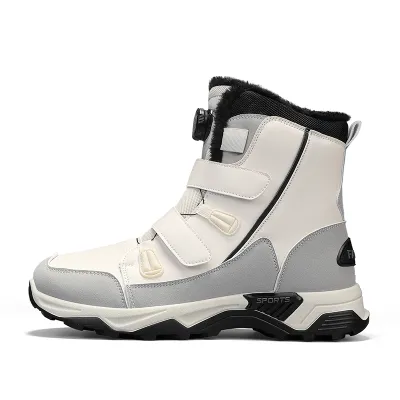
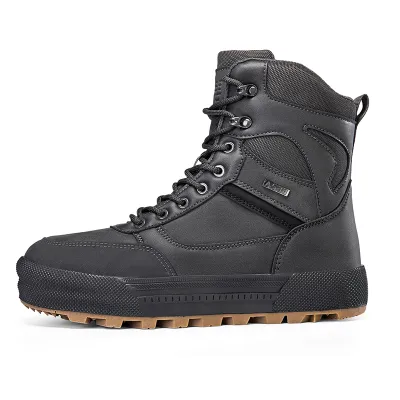
Prices are valid at publication and may change. Please refer to the product page for the latest price.
Walkability and Sole Flexibility
When commuting to an office, university, or commercial center, you need footwear that allows for a natural walking gait. Standard track or heavy touring boots utilize highly rigid soles that prevent foot flexion, which can cause rapid fatigue and discomfort when walking on concrete or tiled floors.
Commuter-focused riding shoes feature a more flexible sole construction, often utilizing a composite shank that provides structural rigidity on the footpegs while allowing the toe area to bend naturally during walking. This balance ensures you can walk through a shopping mall or office corridor without an awkward, stiff-legged stride, making your transition off the motorcycle seamless.
Convenience Features for Rapid Transitions
Time efficiency is a major factor in daily commuting. Fiddling with complex buckle systems or traditional laces can become tedious when you are rushing to start your workday or head home. Traditional laces also present a safety hazard if they untie and wrap around the bike’s footpegs, gear shifter, or drive chain.
To mitigate these risks, look for urban footwear equipped with quick-entry mechanisms. Side zippers with secure hook-and-loop cover flaps allow you to slip the boots on and off in seconds. Additionally, many modern commuter shoes feature dial-based wire lacing systems, such as BOA or proprietary micro-adjustable dials. These systems allow you to tighten or loosen the shoe with a simple turn of a knob, ensuring a secure, customized fit without any loose strings.
Ventilation and Climate Management in Tropical Traffic
Operating a motorcycle in hot, humid tropical climates presents a constant challenge for temperature regulation. In stop-and-go city traffic, the lack of continuous airflow combined with engine heat rising directly toward your feet can cause rapid sweat accumulation, leading to discomfort, skin irritation, and unpleasant odors.
Commuter boots address this by incorporating high-airflow materials. Look for models featuring extensive mesh paneling, perforated synthetic leather, or highly breathable 3D mesh linings. These materials facilitate continuous air exchange even at low city speeds, helping to keep your feet dry and cool during long waits at traffic lights.
Balanced Urban Protection
While urban speeds are generally lower than highway speeds, the risk of lateral impacts, ankle sprains, and abrasions remains high in crowded city lanes. Commuter footwear must provide robust protection without the excessive bulk of full-height boots.
To achieve this, urban riding shoes incorporate low-profile protective elements. These include molded ankle cups (malleolus protection) embedded within the lining, reinforced heel counters to absorb rear impacts, and stiffened toe boxes that prevent the foot from being crushed in a low-speed tip-over. These features are cleverly integrated into the shoe’s silhouette, maintaining a casual appearance that pairs naturally with riding jeans or casual trousers.
Long-Distance Touring: Essential Features for Highway Komine Boots
Long-distance touring shifts the priority from walkability to maximum structural integrity, weather isolation, and fatigue reduction. Spending six to ten hours on provincial highways means your feet are subjected to continuous wind pressure, engine vibration, and unpredictable weather patterns.

Ankle and Shin Support for Highway Speeds
At high speeds, the kinetic energy involved in a fall increases exponentially. To protect your lower extremities, touring boots feature a taller, mid-to-full-height design that extends up the calf. This height is critical for housing rigid shin guards made of high-impact thermoplastic polyurethane (TPU), which shield your legs from kicked-up road debris, gravel, and direct impacts.
Furthermore, touring boots utilize structured ankle support systems. These systems often include external or internal bracing that limits lateral twisting (hyper-torsion) while allowing the necessary forward and backward ankle movement required to operate the rear brake and gear shifter. This rigid structure also helps support your lower leg muscles, reducing the physical effort needed to maintain your riding posture over long distances.
Weather and Element Protection Against Sudden Monsoons
When touring across different provinces, you are highly likely to encounter sudden weather changes, from intense tropical heat to torrential downpours. Getting your feet wet early in a long ride is more than an inconvenience; wet feet lose heat rapidly, leading to numbness, reduced reaction times, and general discomfort.
High-quality touring boots utilize advanced waterproof and breathable membranes. These membranes feature microscopic pores that are small enough to block external water droplets from entering, yet large enough to allow sweat vapor to escape. This dual-action technology keeps your feet dry from both external rain and internal perspiration. When selecting a waterproof boot, ensure it features a high gusset behind the zipper or closure system to prevent water from seeping through the entry points.
All-Day Comfort and Ergonomics
Continuous riding exposes your feet to high-frequency engine vibrations transmitted through the footpegs, which can cause numbness and hot spots over several hours. Touring boots combat this by incorporating thick, cushioned insoles and shock-absorbing rubber outsoles designed to damp vibrations.
Ergonomic flex zones are another critical comfort feature. These accordion-style leather or fabric panels are positioned at the instep and the back of the ankle (Achilles area). They allow the boot to flex in harmony with your foot’s natural movement, preventing the stiff outer shell from pinching or digging into your skin when you shift weight or adjust your foot position on the pegs.
Heavy-Duty Reinforcements for High Mileage
Touring involves thousands of gear changes, which can quickly wear down standard footwear. To prevent premature wear, touring boots feature oversized, textured TPU shift pads sewn securely over the toe area. These pads protect the boot’s outer material from shifter friction and distribute the pressure of gear changes across a wider surface area, preventing toe soreness.
Additionally, look for boots with double or triple stitching along high-stress seams, reinforced heel cups, and oil-resistant, high-grip rubber soles. A high-grip sole is essential for maintaining secure footing when stopping on wet, oily highway asphalt or gravel-strewn roadside shoulders.
Hybrid Riding: Can One Komine Boot Handle Both Scenarios?
For many riders, owning two separate pairs of specialized boots may not be practical due to budget constraints, limited storage space, or the desire for simplicity. In these cases, a hybrid or “sport-touring” boot can serve as a versatile compromise.
Identifying Crossover Styles
Crossover boots typically feature a mid-cut height, extending just above the ankle bone. They combine the lightweight, semi-flexible sole of a commuter shoe with some of the advanced protective elements of a touring boot, such as a waterproof membrane and reinforced ankle bracing. These models are designed to look relatively discreet under riding pants while offering sufficient protection for highway speeds.
Trade-offs Between Agility and Protection
While highly versatile, hybrid boots require you to accept compromises on both ends of the riding spectrum:
- Ventilation vs. Waterproofing: A hybrid boot with a waterproof membrane will feel significantly warmer in heavy city traffic than a dedicated mesh commuter shoe, as the membrane inherently restricts maximum airflow.
- Flexibility vs. Rigid Protection: The sole of a hybrid boot is stiffer than a commuter shoe, making it less comfortable for extended walking. Conversely, its mid-cut design offers less shin and upper-calf protection than a full-height touring boot during a high-speed highway incident.
Decision Framework: One Pair or Two?
To determine if a single hybrid pair is right for you, evaluate your actual riding ratio. If your riding consists of 80% daily city commuting and 20% occasional weekend trips, a highly ventilated, mid-cut commuter boot with basic water resistance is often the most practical choice.
However, if you regularly embark on multi-day tours or ride in all weather conditions, investing in two dedicated pairs—a lightweight, breathable shoe for the daily grind and a robust, waterproof boot for long journeys—will maximize your safety, comfort, and the overall lifespan of your gear.
Fit, Sizing, and Safety Checks Before You Ride
No matter which style of boot you select, the protective capabilities of your footwear depend heavily on proper fit and correct usage. A boot that is too loose can slip off during a slide, while a boot that is too tight can restrict blood circulation and cause distracting pain.
Sizing for the Ride
When trying on riding boots, do not rely solely on your standard casual shoe size. Riding foot shapes vary, and motorcycle boots often have stiffer structures that do not stretch over time.
Always measure your feet while wearing the specific socks you plan to use on your rides. For long-distance touring, you may use thicker, moisture-wicking socks, which require a slightly roomier fit. Additionally, keep in mind that feet naturally swell during long rides in hot weather, so leaving a small amount of wiggle room for your toes is highly recommended.
Testing Flex and Posture
To accurately assess the fit, do not simply stand flat on the floor. Sit on your motorcycle (or simulate your riding position on a chair) and place your feet on the pegs.
Verify that the boot’s armor aligns correctly with your ankle bones and shins. Ensure that the shift pad sits directly under your motorcycle’s gear shifter and that you can operate the controls smoothly without the boot collar pinching your calf or shin. Walk around for at least ten to fifteen minutes to check for any pressure points, rubbing, or heel slippage.
Verifying Safety Labels and Certifications
To ensure your boots offer genuine impact and abrasion protection, look for official safety certification labels rather than relying on marketing claims alone. Look for the CE (Conformité Européenne) pictogram, typically found on a white tag sewn inside the tongue or shaft of the boot.
This label should reference the European standard EN 13634, which is the specific safety standard for protective footwear for motorcycle riders. The label will display a grid of numbers indicating the boot’s performance level across four critical tests: height, abrasion resistance, impact cut resistance, and transverse rigidity (resistance to crushing). Understanding these ratings allows you to verify the exact level of protection you are purchasing.
Safety Boundaries and Maintenance
Before your first ride, read the manufacturer’s care manual for specific break-in procedures and maintenance guidelines. Inspect your footwear regularly before setting out. Check the soles for signs of delamination, inspect the stitching for loose threads, and ensure all zippers, buckles, or dial systems function smoothly.
If your boots suffer a severe impact, a deep slide, or if the internal protective cups become cracked or deformed, stop using them immediately. Compromised gear cannot provide reliable protection in a subsequent incident and should be replaced to ensure your safety on the road.
Frequently Asked Questions (FAQ)
Are Komine riding boots generally true to size for wide feet?
Many Komine riding boots are designed with an Asian fit profile, which typically accommodates slightly wider feet than European brands. However, fit can vary significantly between models, especially those with rigid synthetic leather or external TPU sliders. It is highly recommended to consult the manufacturer’s specific sizing chart, check user feedback regarding width, and try the boots on with your riding socks before purchasing.
How should I clean and maintain waterproof touring boots?
To preserve the integrity of waterproof membranes, always refer to the care label inside your boots. Generally, you should wipe the exterior clean using a soft, damp cloth and mild soap if authorized by the manufacturer. Avoid harsh chemical detergents, solvents, or stiff brushes, which can degrade the outer material and puncture the delicate internal membrane. Always allow your boots to air-dry naturally in a well-ventilated, shaded area away from direct heat sources like hair dryers or radiators, which can crack leather and melt adhesives.
Do I need to replace my commuting boots after a minor drop or slide?
You must carefully inspect your boots after any drop or slide. Check for deep abrasions that expose the inner fabric, structural cracks in the plastic ankle or heel cups, and compromised or unraveled stitching along critical seams. If any of the protective inserts are crushed, cracked, or loose, or if the structural integrity of the boot is compromised, replace them immediately. When in doubt, consult the manufacturer or an authorized dealer to verify if the boots are still safe for road use.

Community discussion
Share your experience or ask a question. Comments are reviewed before publication.