
Maintaining vehicles and machinery in the Philippines presents unique challenges. High ambient humidity, dusty unpaved roads, and frequent heavy rains accelerate the wear on chassis joints, suspension components, and steering linkages. Regularly applying fresh grease to these points displaces moisture and contaminants, extending the lifespan of your vehicle. However, the tool you use to apply this lubricant—the grease gun—comes in several distinct configurations. Choosing between manual, pneumatic, and cordless grease guns is not a matter of finding a single universal winner, but rather matching the equipment to your specific garage setup, budget, and physical comfort.
How the Three Grease Gun Types Operate
To make an informed decision, you must first understand how each grease gun type generates the pressure required to force heavy lubricant through a narrow grease fitting (zerk).
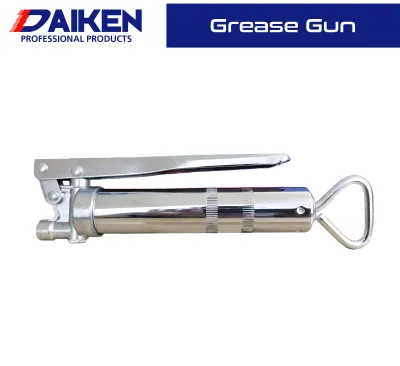
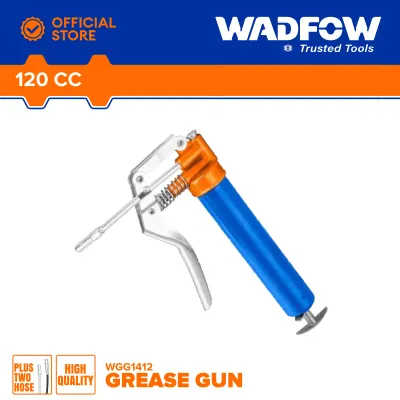
Manual grease guns are the most traditional and widely used option. They operate using physical hand force to drive a piston inside the tool’s barrel. These tools generally come in two designs: lever-action and pistol-grip. Lever-action models require two hands to operate—one to hold the nozzle on the fitting and the other to pump the long lever—but they generate high pressure with relatively low physical effort. Pistol-grip models allow for one-handed pumping, leaving your other hand free to guide the hose, though they require significant grip strength and deliver less grease per stroke.
Products mentioned in this guide
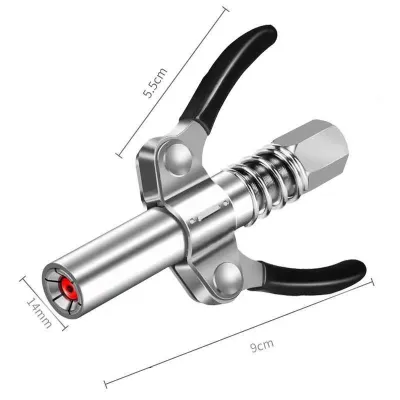
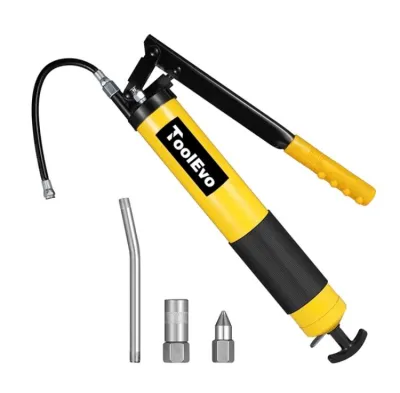
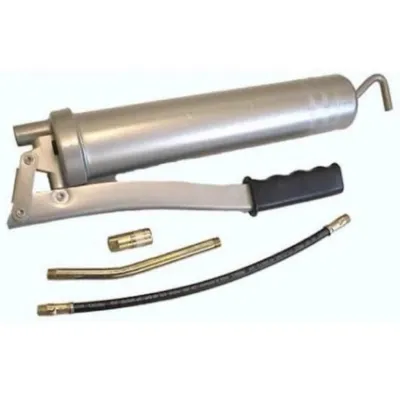
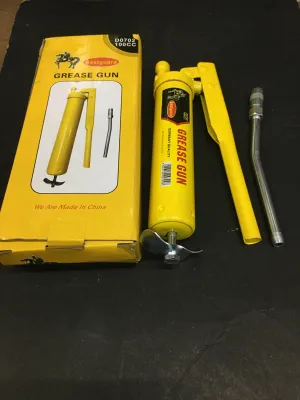
Prices are valid at publication and may change. Please refer to the product page for the latest price.
Pneumatic grease guns rely on compressed air to automate the pumping process. When you pull the trigger, an air piston inside the gun drives the grease plunger forward. This setup eliminates manual pumping entirely, providing a continuous or pulsed flow of grease as long as the trigger is depressed. However, this tool is entirely dependent on an external air compressor, meaning you must manage an air hose and maintain a regulated air supply in your workspace.
Cordless grease guns utilize a rechargeable battery pack and an electric motor to drive the internal piston. This design combines the effortless, high-pressure delivery of a pneumatic tool with the complete mobility of a manual gun. Pulling the trigger activates the electric motor, which pumps the grease automatically. While cordless models offer unmatched convenience and speed, they are the heaviest option due to the attached battery pack, and they require you to manage battery charge levels.
Comparing Performance, Ergonomics, and Setup Needs
Evaluating these tools requires looking closely at how they perform during actual maintenance tasks, how they feel in your hand, and what additional equipment they require to function.

Pressure consistency and flow control vary significantly across the three types. Manual guns offer the most precise control over the volume of grease delivered, as you can feel the resistance of the bearing or joint through the handle and stop pumping instantly. Pneumatic models deliver grease rapidly and consistently, making them highly efficient for large vehicles, but they require a delicate trigger finger to avoid over-filling. Cordless models often feature variable-speed triggers or flow-rate selectors, allowing you to balance speed with precision, though they lack the physical feedback of a manual lever.
Portability and workspace constraints are major deciding factors. A manual grease gun is completely self-contained and highly portable; you can toss it into a tool bag or under a truck seat for emergency roadside repairs. Cordless grease guns are also highly portable, allowing you to move freely around a large property, under a vehicle hoist, or out into a field without being tethered to a power source. Pneumatic grease guns, by contrast, are confined to the reach of your air compressor hose. Dragging a heavy, dirty air hose around a vehicle can be cumbersome, especially in tight garage spaces.
Physical fatigue and ergonomics play a critical role during extended maintenance sessions. If you only have to grease four or five fittings on a single passenger car, a manual gun is perfectly adequate. However, if you are servicing a fleet of delivery vans, agricultural tractors, or heavy trucks with dozens of grease points, manual pumping will quickly lead to hand and forearm fatigue. Cordless guns eliminate pumping fatigue but are physically heavy, often weighing between three to four kilograms with the battery attached. Pneumatic guns are relatively lightweight because the heavy power source (the compressor) sits on the floor, but the pulling force of the air hose can strain your wrist over time.
| Power Source | Ideal User Profile | Setup Requirements | Pressure Control Method |
|---|---|---|---|
| Manual | Occasional DIYers, budget-conscious owners | None (fully self-contained) | Manual lever or pistol-grip stroke |
| Pneumatic | High-volume workshops, professional mechanics | Air compressor, regulator, air hose | Trigger-controlled air valve |
| Cordless | Frequent users, mobile mechanics, fleet owners | Rechargeable battery and charger | Variable-speed electric trigger |
Choosing the Right Grease Gun for Your Routine
Selecting the right tool comes down to analyzing your specific maintenance routine, your physical limits, and the equipment you already own.
You should choose a manual grease gun if you perform occasional maintenance on one or two personal vehicles and are working with a limited budget. High-quality manual guns are highly affordable, often costing under ₱2,000, and require zero ongoing maintenance or supporting equipment. They are also the best choice if you need a reliable tool that can sit in a drawer for six months and still work perfectly the moment you pick it up, without worrying about dead batteries or compressor setups.
A pneumatic grease gun is the logical choice if you run a busy home workshop or a professional garage where an air compressor is already running constantly. If you already have a piped air system, a pneumatic gun offers a highly cost-effective way to achieve effortless, high-volume greasing without the high price tag of a cordless battery system. It is ideal for stationary workspaces where vehicles are serviced on a lift or over a pit.
A cordless grease gun is highly recommended if you value speed, mobility, and physical comfort above all else. If you regularly maintain multiple vehicles, heavy equipment, or agricultural machinery spread across a large property, the ability to walk from machine to machine without dragging a hose is invaluable. It is also an excellent investment for older DIYers or those with arthritis, as it completely eliminates the hand strain associated with manual pumping.
Before making a purchase, always verify your existing infrastructure. If you are leaning toward a pneumatic model, check if your air compressor can supply the required volume and pressure. If you are considering a cordless model, check if the tool is available as a “bare tool” that matches a battery ecosystem you already own (such as your existing cordless drills or impact wrenches), which can save you thousands of pesos on batteries and chargers.
Critical Features and Specifications to Verify
Regardless of the power type you choose, several secondary features will determine how easy and clean the tool is to use in your garage.
First, examine the coupler type and hose configuration. Standard four-jaw couplers are common but can be difficult to release from a zerk fitting, sometimes leading to broken fittings or spilled grease. Upgrading to a lever-activated lock-on coupler ensures a leak-free connection and easy hands-free operation. For hose length, a rigid steel pipe is stable but useless in tight spaces. A flexible whip hose, preferably 45 to 90 centimeters in length, is essential for reaching recessed suspension joints, steering columns, and drive shafts.
Next, consider the cartridge capacity and loading options. Most standard grease guns accept a 14-ounce (approximately 400-gram) grease cartridge, which is widely available at local auto parts stores. Ensure the gun supports multiple loading methods, including cartridge loading, suction loading from a bulk tub, and bulk loading via a filler pump. A clear barrel option is also highly useful, as it allows you to visually verify the type and amount of grease remaining inside the tool.
Finally, check the maximum pressure rating and safety features. High-pressure capability is necessary to clear clogged or frozen zerk fittings, but it also carries the risk of damaging delicate seals. Look for a grease gun equipped with a built-in pressure relief valve. This safety feature automatically vents excess grease if the system over-pressurizes, protecting both the tool’s internal seals and the component you are lubricating from catastrophic failure.
Safe Operation and Maintenance Practices
Using a grease gun safely requires understanding the limits of the machinery you are servicing and maintaining the tool itself to prevent leaks and failures.
The most common mistake in grease gun operation is over-pressurizing sealed components. While some suspension joints have relief ports, many modern ball joints, tie rod ends, and U-joints use sealed rubber dust boots. Applying too much pressure or pumping too quickly can easily rupture these rubber boots, allowing dirt and water to enter and ruin the joint. Always consult your vehicle’s service manual to locate the exact grease points, identify the correct grease specification, and determine the recommended number of pumps or volume of grease required.
Properly purging air from the grease gun is essential for consistent operation. Whenever you load a new grease cartridge, air pockets can become trapped between the plunger and the grease. This trapped air prevents the tool from building pressure. To resolve this, use the tool’s air bleed valve to vent the trapped air while gently pushing the plunger rod forward, or pump the trigger repeatedly until a steady, bubble-free stream of grease flows from the coupler.
Proper storage is critical to maintaining tool longevity, especially in hot and humid tropical climates. For cordless models, store lithium-ion batteries in a cool, dry place out of direct sunlight, as extreme heat degrades battery life. For pneumatic models, always use an inline moisture trap or water separator on your air line; excess moisture in the compressed air can rust the internal air motor of the gun. If your grease gun develops a persistent leak from the main barrel threads or fails to build pressure even after thorough purging, stop using it immediately and inspect the internal rubber plunger or consult the manufacturer’s documentation for replacement seals.
Frequently Asked Questions (FAQ)
Can I convert a manual grease gun to pneumatic or cordless?
No, you cannot safely convert a manual grease gun into a pneumatic or cordless model. The power delivery mechanisms, internal pistons, and structural casings are engineered specifically for their designated power sources. Attempting to modify a manual gun by attaching external air lines or motorized drivers can compromise the tool’s structural integrity, leading to seal failures, high-pressure grease leaks, or physical injury. If your needs change, it is best to purchase a dedicated tool designed for that specific power source.
How do I know if my air compressor is strong enough for a pneumatic grease gun?
To determine compatibility, check the pneumatic grease gun’s product manual for its required air volume, measured in Cubic Feet per Minute (CFM), and operating pressure, measured in Pounds per Square Inch (PSI). Most pneumatic grease guns operate efficiently at relatively low air volumes but require a stable pressure range, typically between 90 and 120 PSI. Ensure your compressor can meet these specifications, and always use a dedicated pressure regulator and moisture filter to deliver clean, dry air to the tool.
Why is my grease gun not building pressure after loading a new cartridge?
The most common cause of a grease gun failing to build pressure is trapped air inside the barrel, which creates an air lock. To fix this, loosen the barrel assembly by one or two turns to allow the trapped air to escape, then depress the air bleed valve if your model has one. Push the plunger rod fully into the barrel to compress the grease, tighten the barrel back down, and pump the handle or trigger until the air pocket clears and grease flows smoothly.
Community discussion
Share your experience or ask a question. Comments are reviewed before publication.