
Selecting the correct mercedes benz engine oil requires looking beyond eye-catching brand logos and generic “fully synthetic” marketing claims. To safeguard your engine’s internal components, you must prioritize the manufacturer’s proprietary engineering standards. Using an incorrect lubricant can compromise engine safety, accelerate wear, and void your vehicle warranty.
Always refer to your vehicle’s original owner’s manual or consult an authorized service professional before performing an oil change or topping off fluids. Your engine’s model year, fuel type, and specific displacement dictate the exact oil specification required. Understanding how to decode these requirements is the most critical step in maintaining your vehicle’s performance.
Decoding MB-Approval Specifications: What the Numbers Mean
Mercedes-Benz does not rely solely on general industry classifications like API (American Petroleum Institute) or ACEA (European Automobile Manufacturers’ Association). Instead, the manufacturer subjects lubricants to rigorous in-house testing to establish its own proprietary standards. These are designated by numerical codes, most commonly starting with “MB-Approval” followed by a decimal number.
Products mentioned in this guide
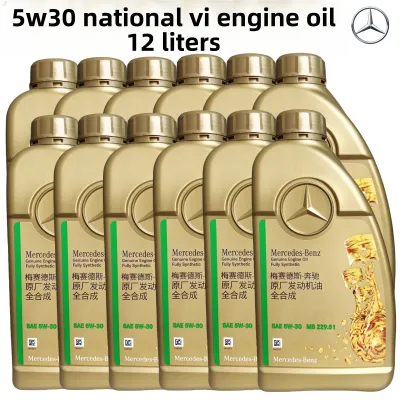
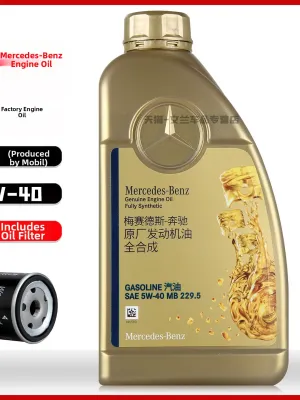
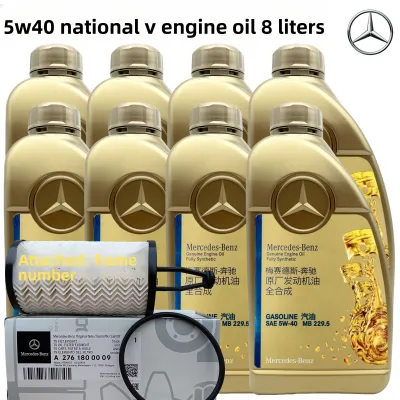
Prices are valid at publication and may change. Please refer to the product page for the latest price.
Understanding these numbers is vital for long-term engine health. For instance, MB-Approval 229.5 is a standard-SAPS formulation designed for high-performance gasoline engines without advanced exhaust aftertreatment. It features a robust additive package engineered to resist thermal breakdown over extended service intervals.
In contrast, specifications like MB-Approval 229.51 and 229.52 are low-SAPS (Sulfate Ash, Phosphorus, and Sulfur) formulations. These are engineered specifically for modern diesel engines equipped with Diesel Particulate Filters (DPF) or newer gasoline engines with Gasoline Particulate Filters (GPF). Using a standard high-SAPS oil in these vehicles will cause ash to accumulate in the filters, leading to permanent blockages and costly exhaust system failures.
Newer Mercedes-Benz engines often require ultra-low viscosity specifications, such as MB-Approval 229.71 or 229.72. These specifications are designed for highly efficient powerplants that utilize 0W-20 oils to reduce internal friction and optimize fuel economy. They maintain a strong protective film even in incredibly tight internal clearances.
A common mistake is assuming that a higher specification number is automatically better or backward-compatible. This is not true. An older engine designed for MB-Approval 229.5 clearances may experience severe wear if filled with an ultra-thin MB-Approval 229.71 oil. You must use the precise specification designated for your engine code.
Choosing the Right Mercedes Benz Engine Oil Viscosity for Tropical Climates
Viscosity measures an oil’s resistance to flow, designated by the SAE rating on the bottle, such as 5W-30 or 0W-40. The number preceding the “W” (which stands for Winter) indicates how easily the oil flows at freezing temperatures. The second number represents its thickness at normal engine operating temperatures of 100°C.

In the tropical climate of the Philippines, where daily ambient temperatures regularly exceed 30°C and winter freezing is non-existent, the cold-start “W” rating is less critical for preventing freezing. However, starting an engine still causes the most wear, so a lower winter rating like 0W or 5W remains beneficial for rapid oil circulation upon startup.
More importantly, the second number (the operating viscosity) must perfectly align with Mercedes-Benz specifications. In heavy, stop-and-go traffic across Metro Manila or during long highway climbs up to Baguio, your engine operates under high thermal stress. The oil must maintain its protective film without shearing or thinning out excessively.
There is a persistent myth among some local car owners that older engines or cars running in hot climates require highly viscous oils, such as 10W-50 or 20W-50. Applying this logic to a modern Mercedes-Benz is highly dangerous. Modern Mercedes-Benz engines are engineered with incredibly tight tolerances, variable valve timing (VVT) systems, and precision turbocharger bearings.
Using an unapproved, overly thick oil prevents the lubricant from reaching these tight clearances quickly enough. This results in localized oil starvation, increased friction, hydraulic lifter noise, and eventual turbocharger failure. Stick strictly to the viscosity range authorized by the manufacturer for your specific engine.
How to Verify and Select the Right Oil
To ensure you are purchasing the correct product, follow a systematic verification process before any oil service.
First, locate your engine’s requirements. Look in your owner’s manual, the vehicle’s service booklet, or on the specification placard located under the hood. This will tell you the exact MB-Approval number (e.g., MB-Approval 229.5) and approved viscosities.
Second, examine the physical oil container. Turn the bottle over and read the back label carefully. Look for the exact wording “MB-Approval 229.5” (or your required spec). Avoid products that use ambiguous marketing language such as “meets the requirements of,” “recommended for,” or “suitable for” Mercedes-Benz engines. These phrases mean the oil manufacturer claims compatibility, but the product has not undergone the expensive and rigorous testing required for official Mercedes-Benz certification.
Third, consult the official online database. Mercedes-Benz maintains an active online portal for operating fluids. You can search this database by your required specification to see a real-time list of every brand and product that holds an active, official approval.
Fourth, seek professional assistance. If your manual is missing or you are uncertain about your engine code, do not guess. Visit an authorized Mercedes-Benz service center or consult a qualified European vehicle specialist who can run your Vehicle Identification Number (VIN) to confirm the correct fluid.
In the Philippine market, expect to pay anywhere from ₱600 to ₱1,200 per liter for fully certified, high-quality synthetic oils from reputable global brands. While unapproved oils might be cheaper, the potential cost of replacing a damaged catalytic converter, DPF, or engine block far outweighs any minor savings.
Frequently Asked Questions (FAQ)
Can I mix different MB-approved engine oils?
If you find your oil level is low while driving and need to top it off immediately, mixing two different oils is acceptable as long as both carry the exact same MB-Approval specification and viscosity grade. However, this should only be done as a temporary measure in an emergency. Different lubricant manufacturers use proprietary additive packages that may not interact optimally over long periods. For scheduled maintenance, always perform a complete oil and filter change using a single, consistent product.
What happens if I use oil without the correct MB-Approval?
Using non-approved oil can have severe consequences for your vehicle. Without the correct chemical additives and shear stability, the oil can break down rapidly under high heat, leading to heavy sludge accumulation, blocked oil passages, and accelerated wear on critical engine components. Furthermore, using a high-SAPS oil in an engine that requires a low-SAPS formula will quickly poison and clog exhaust aftertreatment devices like diesel particulate filters, leading to engine warning lights, loss of power, and expensive replacement costs. It can also instantly void any active powertrain warranties.
Community discussion
Share your experience or ask a question. Comments are reviewed before publication.