
Mercon LV is a high-performance automatic transmission fluid (ATF) specification developed by Ford for modern, high-efficiency transmissions. The “LV” stands for Low Viscosity, representing a shift toward thinner fluids designed to reduce internal drag and improve fuel economy. If your vehicle specifies mercon lv, using any other fluid can lead to severe transmission damage or poor shifting. Understanding this standard is essential for keeping your transmission running smoothly under demanding driving conditions, such as high ambient temperatures and heavy stop-and-go traffic.
What Mercon LV Means and Why Low Viscosity Matters
Mercon LV is a specific automatic transmission fluid standard originally developed for Ford vehicles, where “LV” stands for Low Viscosity. This specification represents a significant technological shift from older, thicker fluids. In practical terms, lower viscosity means the fluid is thinner and flows more easily through the intricate hydraulic passages of a modern transmission. By reducing internal resistance and fluid drag, the transmission operates with greater mechanical efficiency, which directly translates to improved fuel economy.
In tropical climates like the Philippines, where vehicles frequently face intense heat and prolonged idling in traffic, fluid flow is critical. A lower-viscosity fluid like mercon lv ensures rapid lubrication during cold starts, even though “cold” in a tropical context still means ambient temperatures around 30°C. The fluid’s ability to flow immediately upon engine startup protects sensitive internal components from friction wear before the transmission reaches its optimal operating temperature.
Products mentioned in this guide
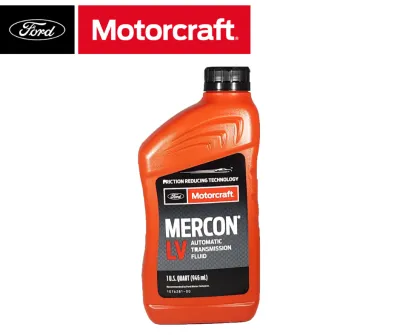
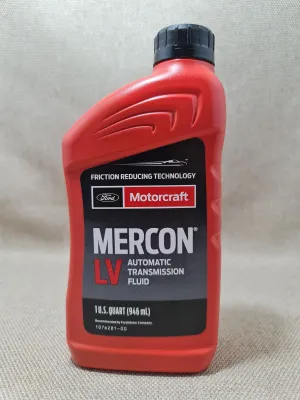
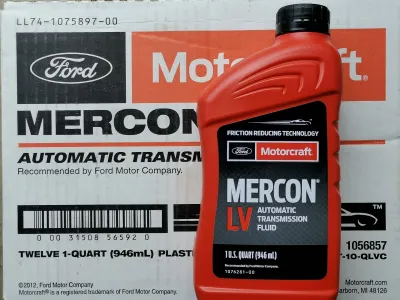
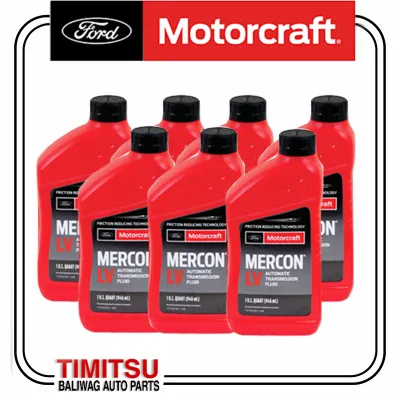
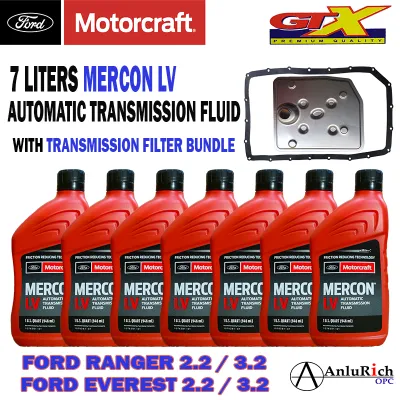
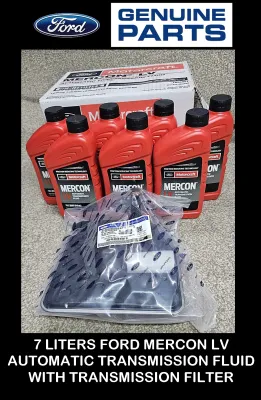
Prices are valid at publication and may change. Please refer to the product page for the latest price.
Modern multi-speed automatic transmissions—such as 6-speed, 8-speed, or 10-speed units—are engineered with incredibly tight tolerances. These sophisticated gearboxes rely on precise hydraulic pressure to control clutch engagement and gear shifts. The thin profile of Mercon LV is designed specifically to match these narrow clearances, ensuring that the hydraulic control body can actuate gear changes quickly and smoothly without lag or shudder.
However, lower viscosity is not a universal upgrade for every vehicle. A thinner fluid is not inherently “better” than a thicker one; rather, it is a precise engineering requirement. Older transmissions designed for high-viscosity fluids rely on thicker oil films to maintain hydraulic pressure and protect wider gear clearances. Introducing a low-viscosity fluid like Mercon LV into an older system can cause internal pressure drops, slipping clutches, and accelerated mechanical wear.
Mercon LV vs. Mercon V and Dexron: Why They Are Not Interchangeable
A common point of confusion among vehicle owners is the relationship between different ATF specifications, particularly Mercon LV and Mercon V. Despite their similar names, these two fluids are fundamentally different and are not interchangeable. Mercon V is a higher-viscosity fluid formulated with different friction modifiers and chemical additives. Mercon LV is not backward-compatible with older transmissions that require Mercon V, and mixing them can cause immediate shifting issues, severe clutch slippage, or long-term transmission failure.

Similarly, comparing Mercon LV to General Motors’ Dexron standards, such as Dexron VI, highlights the danger of assuming all low-viscosity fluids are identical. While both Mercon LV and Dexron VI are modern, low-viscosity synthetic fluids, they are engineered for different transmission architectures and clutch material compositions. The specific additive packages in Mercon LV are tailored to the friction characteristics required by Ford-designed gearboxes, whereas Dexron fluids are optimized for GM systems.
Many aftermarket fluid manufacturers sell products labeled as “Multi-Vehicle” or “Universal” ATF. While these products can be tempting, especially when shopping on online marketplaces, they pose a significant risk. You must never rely solely on a generic “Multi-Vehicle” label on the front of a bottle. Instead, turn the bottle over and verify that the back label explicitly states that the fluid meets or exceeds the Ford Mercon LV certification.
Ultimately, the golden rule of transmission maintenance is that viscosity and friction profiles must match the transmission’s design parameters exactly. A fluid that is too thin or lacks the correct friction modifiers will fail to protect the clutch plates, leading to heat buildup and eventual transmission slip. Always prioritize the manufacturer’s exact specification over generic product marketing or generalized advice.
How to Verify if Your Vehicle Requires Mercon LV
Before purchasing any transmission fluid, you must perform a fail-safe verification to confirm your vehicle’s exact requirements. The most reliable source of truth is always your vehicle’s owner’s manual. Navigate to the “Capacities and Specifications” or “Fluids and Lubricants” section in the index. Here, look for the specific Ford specification code, such as WSS-M2C938-A, which corresponds directly to the Mercon LV standard.
If the owner’s manual is not readily available, you can often find physical labels under the hood of your vehicle. Inspect the transmission dipstick handle or the transmission fluid filler cap. Manufacturers frequently stamp or print the required fluid type directly onto these components to prevent servicing errors. Be sure to clean any dirt or grime off the dipstick handle before reading to ensure you do not misinterpret the lettering.
For vehicles where the manual is missing, or if you suspect the transmission has been rebuilt, swapped, or modified, verifying by physical labels might not be enough. In these scenarios, the safest approach is to use your Vehicle Identification Number (VIN). Contact an authorized dealership service center and provide them with your VIN; their database can pull up the exact factory specifications and any technical service bulletins regarding fluid updates for your specific model year.
Guessing your transmission fluid type based on forum anecdotes, general online search results, or the vehicle’s model year is extremely risky. If you cannot definitively verify that your vehicle requires Mercon LV, do not proceed with a fluid top-up or exchange. Halt the process immediately and consult a qualified professional mechanic who can run diagnostic checks and identify the correct fluid specification.
Safe Practices for Checking and Topping Up Transmission Fluid
Checking and maintaining your transmission fluid is a straightforward process, but it requires strict adherence to safety protocols and manufacturer guidelines. Unlike engine oil, checking the automatic transmission fluid level usually requires specific operating conditions. For most vehicles, the engine must be running, the transmission must be at normal operating temperature, and the vehicle must be parked on a level surface. Always consult your vehicle’s manual first, as some manufacturers require the vehicle to be in Park, while others specify Neutral.
Once the vehicle is safely secured, locate the transmission dipstick and pull it out to perform a visual and olfactory inspection. Healthy Mercon LV fluid should exhibit a clear, bright red color and a relatively sweet or neutral scent. If the fluid appears dark brown, black, or cloudy, or if it emits a distinct burnt smell, it indicates that the fluid has degraded or that internal clutch wear has occurred. In such cases, simply topping up the fluid will not resolve the underlying issue.
When topping up your transmission fluid, cleanliness is paramount. Use a clean, dedicated funnel to prevent dirt, dust, or moisture from entering the transmission fill tube. Add the Mercon LV fluid in small increments, checking the dipstick level frequently. Overfilling a transmission is just as dangerous as underfilling; excess fluid can cause foaming, leading to aeration, fluid starvation, high operating temperatures, and eventual gear slippage.
It is vital to recognize the boundaries of do-it-yourself maintenance. If you observe that the fluid is milky (indicating coolant contamination), contains visible metal flakes, or if you find yourself constantly topping up the fluid due to a persistent leak, stop immediately. Do not attempt a full transmission flush or a transmission pan drop at home unless you possess professional-grade tools, a clean workspace, and the exact manufacturer torque specifications for the pan bolts. For complex procedures, always seek professional assistance at a reputable service center.
Frequently Asked Questions (FAQ)
Can I mix Mercon LV with Mercon V in an emergency?
No, you should never mix Mercon LV with Mercon V, even in an emergency situation. These fluids have entirely different viscosity profiles and chemical additive packages. Mixing them alters the friction characteristics of the fluid, which can lead to immediate shifting issues, clutch shudder, or severe transmission slippage. If your fluid is low and you do not have access to the correct Mercon LV specification, it is far safer to park the vehicle and wait to obtain the proper fluid or have the vehicle towed to a professional service center.
Is Mercon LV the same as Dexron VI?
No, Mercon LV and Dexron VI are not the same, despite both being modern, low-viscosity synthetic transmission fluids. They are formulated to meet the distinct engineering standards of different manufacturers—Ford for Mercon LV and General Motors for Dexron VI. The friction modifiers and chemical additives in each fluid are tailored to the specific clutch materials and hydraulic designs of their respective transmissions. Always use a fluid that explicitly states compliance with the Mercon LV standard on its packaging rather than assuming cross-compatibility.
Community discussion
Share your experience or ask a question. Comments are reviewed before publication.