
Selecting the correct engine oil is one of the most critical maintenance decisions you can make to ensure the longevity, performance, and fuel efficiency of your vehicle. For Mitsubishi owners, the choice often comes down to sticking with the manufacturer’s own branded lubricant or opting for a well-established aftermarket alternative. Viscosity grades like 5W-30 have become the standard for modern passenger vehicles and light commercial trucks, offering a balanced performance profile that suits both precision-engineered gasoline engines and high-torque common-rail diesel systems.
The ideal 5W-30 engine oil for your Mitsubishi is not a one-size-fits-all solution; rather, it depends on your vehicle’s current warranty status, your typical driving conditions, and your maintenance budget. Mitsubishi Genuine Oil serves as the safest choice for owners prioritizing strict warranty compliance and guaranteed original equipment manufacturer (OEM) compatibility. On the other hand, premium aftermarket brands such as Shell, Castrol, and Motul offer highly specialized additive packages designed to address specific operational challenges, such as extreme urban stop-and-go traffic, high-temperature thermal stress, or advanced wear protection. Before purchasing or applying any lubricant, you must verify the requirements in your specific Mitsubishi owner’s manual and cross-reference them with the specifications printed on the product label.
Understanding the Contenders: OEM vs. Aftermarket Formulations
To make an informed decision, it is essential to understand how these four brands position their products and what engineering philosophies guide their formulations. Mitsubishi Genuine Oil is developed in partnership with major lubricant manufacturers to meet the precise engineering tolerances of Mitsubishi engines. This OEM standard is formulated to provide a baseline of reliable protection, optimal fuel economy, and seal compatibility specifically for powerplants like the MIVEC gasoline engines found in the Mirage and Xpander, or the Di-D common-rail diesel engines in the Montero Sport and Triton. Because it is the factory-fill standard, it eliminates any compatibility guesswork.
Products mentioned in this guide
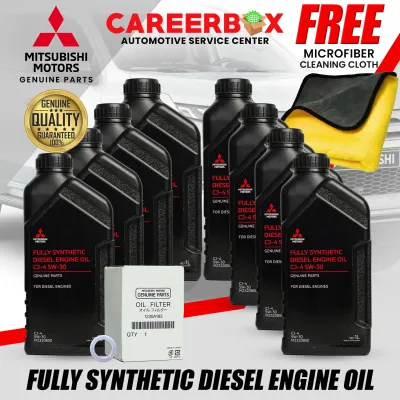
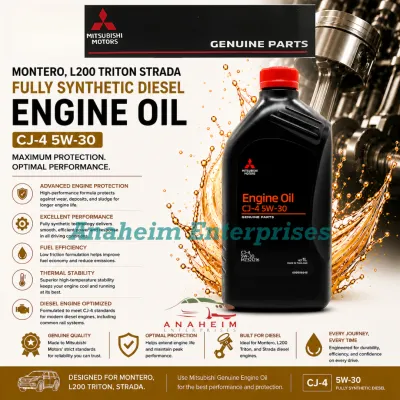
Prices are valid at publication and may change. Please refer to the product page for the latest price.
Shell approach to engine lubrication heavily emphasizes cleanliness and active engine protection. Shell aftermarket 5W-30 formulations often leverage proprietary base oils derived from natural gas, which are designed to resist breakdown and keep internal engine components free from performance-robbing deposits. Their engineering focus is highly directed toward preventing the accumulation of sludge and lacquer, making their oils a strong choice for vehicles operating in environments where fuel quality varies or where prolonged idling is common.
Castrol focuses its engineering resources on fluid strength and wear reduction under high-stress conditions. Their 5W-30 formulations are designed to physically adapt their behavior under extreme pressure, doubling the oil’s film strength to prevent the protective barrier from shearing or collapsing. This emphasis on surface-level wear protection is particularly beneficial during cold starts and high-load operations, where metal-on-metal contact is most likely to occur.
Motul occupies a premium tier in the lubricant market, with a strong heritage rooted in motorsport and high-performance engineering. Motul 5W-30 oils, particularly their fully synthetic lines, are formulated with high-quality synthetic base stocks that offer exceptional thermal stability and resistance to oxidation. Their products are engineered to maintain a stable viscosity film even under extreme operating temperatures, making them highly favored by enthusiasts, drivers of turbocharged vehicles, and those who subject their engines to demanding driving cycles.
Key Comparison Dimensions for 5W-30 Engine Oil
When comparing mitsubishi engine oil 5w30 against aftermarket alternatives, you must look beyond the brand name on the front of the bottle. Evaluating technical certifications, additive chemistry, and how the oil performs under specific operating conditions will help you choose the formulation that best matches your vehicle’s mechanical needs.

OEM Certification and Warranty Compliance
Before purchasing any aftermarket oil, your first step must always be to consult your Mitsubishi owner’s manual to identify the exact industry standards required for your specific engine model and year. These requirements are typically defined by international bodies, such as the American Petroleum Institute (API) and the International Lubricant Standardization and Approval Committee (ILSAC). For modern gasoline engines, you will commonly see requirements for API SP, API SN Plus, or ILSAC GF-6 ratings. Diesel engines, conversely, will require specific API CK-4, CJ-4, or European Automobile Manufacturers’ Association (ACEA) standards like ACEA C3.
Mitsubishi Genuine Oil provides immediate peace of mind because the packaging explicitly guarantees compliance with these factory standards. Using the OEM fluid ensures that you remain fully compliant with the terms of your vehicle’s manufacturer warranty, leaving no room for disputes with dealership service centers in the event of an engine-related warranty claim.
If you choose to transition to an aftermarket brand like Shell, Castrol, or Motul, you must physically inspect the back label of the specific oil bottle or review the manufacturer’s official Technical Data Sheet (TDS). Never assume that every 5W-30 oil from a brand is identical; aftermarket manufacturers produce multiple product lines under the same viscosity grade, some of which may be tailored for European diesel engines, while others are designed for American or Asian gasoline engines. You must verify that the specific bottle you purchase carries the exact API, ILSAC, or ACEA rating specified in your Mitsubishi manual.
Additive Technology and Real-World Protection
Engine oils consist of base oils combined with highly specialized additive packages that determine how the lubricant behaves under real-world operating conditions. The primary differences among Mitsubishi Genuine, Shell, Castrol, and Motul lie in how these additive packages are balanced:
- Detergents and Dispersants: These chemicals keep the engine clean by suspending soot and preventing the formation of high-temperature deposits. Shell formulations typically prioritize these cleaning agents, which is highly advantageous if your driving consists of short, low-speed trips where the engine rarely reaches its optimal operating temperature, a scenario that accelerates deposit formation.
- Anti-Wear Agents: These additives, such as Zinc Dialkyldithiophosphate (ZDDP), form a sacrificial microscopic layer on metal surfaces to protect components like camshafts and lifters. Castrol places a heavy emphasis on these protective barriers, making their formulations highly effective at mitigating wear during the critical seconds after a cold start when the oil has not yet fully circulated.
- Viscosity Index Improvers and Thermal Stabilizers: These polymers help the oil maintain its physical structure across a wide temperature range. Motul advanced synthetic base oils and thermal stabilizers are engineered to resist thinning out under high-heat scenarios, ensuring that the oil film remains robust enough to protect high-load components during long-distance highway driving or when towing.
To select the best additive balance, analyze your daily driving habits. If your vehicle is primarily a daily commuter navigating congested urban corridors, prioritizing detergent and anti-wear technologies is highly sensible. If your vehicle is frequently driven on long-distance provincial trips or used for hauling heavy cargo, prioritizing thermal stability and shear resistance is the more appropriate path.
Drain Intervals and Longevity
It is a common misconception that premium aftermarket oils allow you to safely extend your vehicle’s oil drain intervals beyond the recommendations of the vehicle manufacturer. In reality, the safe operating limit of any engine oil is determined by a combination of the vehicle manufacturer’s engineering guidelines and your specific operating conditions.
Mitsubishi manuals typically define two distinct service schedules: “Normal” and “Severe” driving conditions. In tropical, highly humid environments with dense urban traffic, most vehicles actually operate under the “Severe” category. This classification includes:
- Frequent short trips where the engine does not reach full operating temperature.
- Prolonged idling, such as sitting in heavy city traffic.
- Driving in dusty environments or on unpaved roads.
- Sustained high-speed driving in high ambient temperatures.
Under severe operating conditions, Mitsubishi generally recommends halving the standard oil change interval—often reducing it from 10,000 kilometers down to 5,000 kilometers or six months, whichever comes first. Even if an aftermarket brand like Motul or Castrol advertises an “extended life” or “long-drain” formulation on their packaging, you must strictly adhere to the intervals dictated by your Mitsubishi owner’s manual to preserve your warranty and protect your engine from premature wear. The chemical degradation of oil is accelerated by local fuel quality and environmental moisture, making conservative maintenance intervals the safest approach to vehicle longevity.
Evaluating Price and Value in the Philippine Market
To properly evaluate the cost-effectiveness of these oil brands, you must calculate the total cost of an oil change rather than simply comparing the retail price of a single one-liter bottle. The total cost is determined by multiplying the price per liter by the exact oil capacity of your specific engine, plus the cost of a high-quality replacement oil filter and professional labor.
Engine oil capacities vary significantly across the Mitsubishi vehicle lineup. For example, a compact gasoline vehicle like the Mitsubishi Mirage (equipped with the 1.2-liter 3A92 engine) typically requires approximately 3.0 liters of oil for a standard change. A mid-sized utility vehicle like the Mitsubishi Xpander (1.5-liter 4A91 engine) requires roughly 4.0 liters. Meanwhile, larger diesel utility vehicles like the Montero Sport or Triton (equipped with the 2.4-liter 4N15 or 4N16 clean diesel engines) require a much larger volume, often between 7.5 and 8.0 liters of oil.
When planning your maintenance budget, consider the broad pricing tiers available in the local market:
- OEM Standard Tier: Mitsubishi Genuine 5W-30, when purchased directly from an authorized dealership service department, sits in a mid-to-high price bracket. While the per-liter cost may carry a dealership premium, this cost often includes the assurance of direct warranty coverage and professional installation by factory-trained technicians.
- Aftermarket Mid-Range Tier: Mainstream fully synthetic and synthetic-blend offerings from Shell and Castrol are widely available at local auto supply shops and independent service centers. These options generally offer a competitive price-to-performance ratio, making them highly cost-effective for out-of-warranty vehicles requiring frequent oil changes.
- Aftermarket Premium Tier: High-end synthetic lines from Motul represent a premium price tier. While the initial investment per liter is higher, this cost is offset for owners of high-performance, turbocharged, or heavily worked vehicles who require the maximum thermal protection and shear stability that these specialized formulations provide.
When sourcing aftermarket lubricants, you must exercise extreme caution regarding counterfeit products, which are prevalent in online marketplaces and unauthorized physical retail outlets. Using counterfeit oil can lead to rapid engine degradation, severe sludge formation, and catastrophic mechanical failure. Always purchase your lubricants from authorized brand flagship stores, reputable auto supply hubs, or established service networks to guarantee product authenticity.
Decision Framework: How to Choose the Right Brand
To finalize your choice, apply this structured decision framework based on your vehicle’s current status and your specific driving environment:
Choose Mitsubishi Genuine if:
- Your vehicle is still under active factory warranty: Using OEM fluids and having them applied at authorized service centers is the most secure way to maintain your warranty coverage without any administrative friction.
- You prefer zero-guesswork maintenance: If you do not want to spend time researching API ratings, ILSAC standards, or technical data sheets, sticking with the OEM-branded fluid guarantees that the oil matches your engine's design specifications perfectly.
- You value dealership service history: Maintaining a consistent service record at an authorized dealership using genuine parts can enhance the resale value of your vehicle.
Choose Shell if:
- Your daily drive consists of dense, stop-and-go city traffic: If you spend a significant amount of time idling in urban congestion, the active detergent packages in Shell oils will help prevent the accumulation of carbon deposits and fuel-related sludge.
- You seek widely available aftermarket options: Shell products are highly accessible across a vast network of branded fuel stations and independent service centers, making routine maintenance highly convenient.
Choose Castrol if:
- Your primary concern is long-term wear protection: If you want a dependable aftermarket oil that focuses heavily on maintaining a robust physical barrier between moving metal parts, especially during cold starts and daily commuting.
- You operate an older or high-mileage Mitsubishi: Castrol's focus on oil film strength can help provide consistent lubrication for engines with slightly wider clearances due to normal wear over time.
Choose Motul if:
- You drive a turbocharged or high-performance Mitsubishi: Engines that operate under high thermal stress benefit significantly from the superior base oils and high-temperature stability that Motul formulations provide.
- You frequently drive under high-load conditions: If you regularly tow heavy trailers, carry maximum payloads, or drive long distances on steep, mountainous provincial roads where the engine is subjected to sustained high operating temperatures.
Verify first if:
- You are uncertain of your engine's exact specifications: Always check your owner's manual or consult an authorized service professional before switching brands or viscosity grades.
- You are purchasing from an unverified source: If the price of a premium aftermarket oil seems unusually low, verify the seller's credentials to protect your engine from the severe risks associated with counterfeit lubricants.
Frequently Asked Questions (FAQ)
Can I mix Mitsubishi genuine oil with Shell, Castrol, or Motul?
You should strongly avoid mixing different brands or formulations of engine oil, even if they share the exact same 5W-30 viscosity rating. While different engine oils are generally miscible in emergency situations to prevent running dry, they are formulated with distinct, proprietary additive packages. Mixing them can disrupt the chemical balance of the additives, potentially causing them to fall out of suspension, reduce their overall protective capabilities, or accelerate the breakdown of the oil film. If you decide to switch from Mitsubishi Genuine to an aftermarket brand, or vice versa, the safest practice is to perform a complete oil drain and replace the oil filter rather than topping up your existing oil with a different brand.
Does using aftermarket 5W-30 oil void my Mitsubishi warranty?
Using an aftermarket 5W-30 engine oil does not automatically void your Mitsubishi vehicle warranty, provided that the oil you select meets or exceeds the exact technical specifications (such as the API, ILSAC, or ACEA ratings) detailed in your vehicle’s owner’s manual. However, to protect your warranty rights, you must maintain meticulous records of your maintenance history. This includes retaining dated purchase receipts for the oil and filter, keeping records of the service mileage, and ensuring that the specific product labels demonstrating specification compliance are documented. If an engine issue arises and the manufacturer suspects lubricant failure, the burden of proof may rest on you to show that the aftermarket oil used met all required factory standards.
Community discussion
Share your experience or ask a question. Comments are reviewed before publication.