
Determining whether a specific engine coolant is suitable for the hot and humid conditions of the Philippines requires looking beyond the product’s color or brand name. While Mitsubishi blue coolant is formulated to meet the manufacturer’s baseline engineering standards, its actual effectiveness in a tropical climate depends on verifying its specific boiling point, chemical technology, and concentration against your vehicle’s operational demands. In the Philippines, where daily driving involves intense tropical heat, high humidity, and prolonged stop-and-go traffic in urban areas like Metro Manila, the cooling system is under constant stress. Rather than relying on the blue color as a universal guarantee of performance, vehicle owners must verify the coolant’s specific boiling point, chemical technology, and dilution ratio to ensure it can effectively transfer heat away from the engine and prevent boiling under extreme operating conditions.
This guide helps you evaluate the product’s specifications, recognize early signs of heat-related degradation, and maintain your cooling system safely without relying on unverified performance claims. By understanding the unique demands of tropical driving and adhering to manufacturer-recommended maintenance practices, you can protect your engine from costly heat-related damage.
Understanding Coolant Requirements in Tropical Climates
In temperate regions, coolant is often referred to as antifreeze because its primary job during winter is to prevent the engine block from cracking due to frozen fluid. In the tropical climate of the Philippines, however, the priorities shift entirely toward heat transfer and anti-boil performance. Ambient temperatures frequently exceed 30°C, and when combined with high relative humidity and heavy traffic congestion, the engine bay becomes an incredibly harsh environment.
Products mentioned in this guide
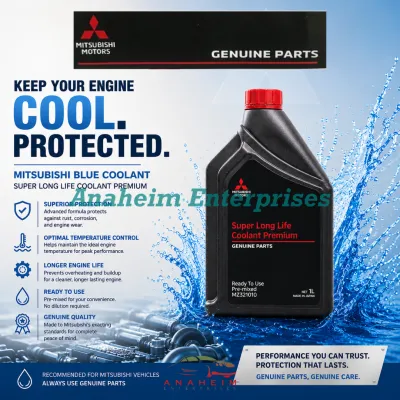
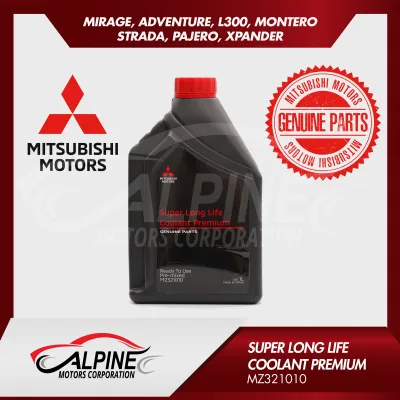
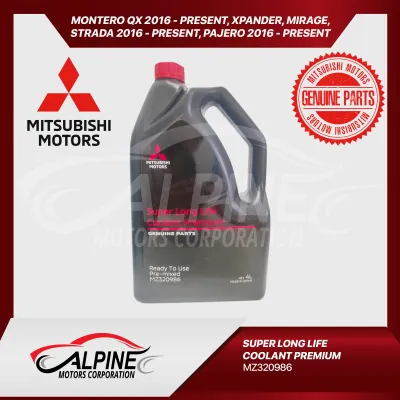
![[1 LITER] Mitsubishi Coolant BLUE - Genuine Mitsubishi Auto Parts](https://img.lazcdn.com/g/p/0c0a02cb3c402746e4b2561dd1b95c44.jpg_400x400q80.jpg_.webp)
![[1L BLUE] Mitsubishi Coolant - Genuine Mitsubishi Auto Parts](https://img.lazcdn.com/g/p/d2f5ef88ec40771e2704ccef9334beec.jpg_400x400q80.jpg_.webp)
![[4L BLUE] Coolant for Mitsubishi Models 2016 and Up - Pro99 Brand](https://img.lazcdn.com/g/p/b7f12e9aad77f000345679bd20962dbf.jpg_400x400q80.jpg_.webp)
Prices are valid at publication and may change. Please refer to the product page for the latest price.
Under these conditions, the coolant must absorb heat from the engine block and cylinder head and release it efficiently through the radiator. If the coolant’s boiling point is too low, the fluid can vaporize within the cooling passages. Steam pockets do not transfer heat effectively, leading to localized hot spots, warped cylinder heads, blown head gaskets, and catastrophic engine failure. A high-quality coolant formulated for tropical climates raises the boiling point of the liquid, allowing the system to remain pressurized and liquid even under extreme thermal loads.
Furthermore, high-temperature operation accelerates chemical reactions, including oxidation and corrosion. Modern engines utilize a mix of metals, including aluminum, cast iron, copper, and brass, alongside rubber hoses and plastic fittings. Without robust corrosion inhibitors, the hot coolant mixture would rapidly degrade these materials, leading to pinhole leaks, radiator clogging, and water pump seal failure. Therefore, a tropical coolant must feature stable chemical inhibitors that do not break down under continuous high-heat cycles.
Evaluating Mitsubishi Blue Coolant Specifications
When purchasing Mitsubishi blue coolant, you must look beyond the color of the fluid and carefully examine the product label and your vehicle’s documentation. The blue dye is simply an aesthetic identifier used by the manufacturer and does not inherently guarantee compatibility or a specific performance level. To verify suitability, start by checking the owner’s manual for your specific vehicle model and year to identify the required coolant specification.

Coolants are formulated using different chemical technologies, such as Inorganic Additive Technology (IAT), Organic Acid Technology (OAT), or Hybrid Organic Acid Technology (HOAT). Mitsubishi vehicles typically require specific formulations—often a phosphate-based HOAT or OAT—designed to protect the specific alloys used in their engines and radiators. Mixing incompatible technologies can trigger a chemical reaction that forms a thick gel, severely restricting coolant flow and causing rapid engine overheating. Always verify that the product label explicitly states compatibility with your vehicle’s model year and engine type.
You must also verify whether the product is sold as a pre-mixed solution or as a concentrated formula. Pre-mixed coolants are highly convenient because they are already diluted with demineralized or distilled water to the optimal ratio, ensuring immediate tropical performance and corrosion protection. If you purchase a concentrated formula, you must dilute it according to the manufacturer’s instructions—typically a 50:50 or 60:40 coolant-to-water ratio for high-heat environments. Never dilute concentrate with ordinary tap water or mineral water, as the dissolved minerals will deposit scale inside the radiator tubes, reducing heat transfer efficiency and eventually blocking the system.
Signs of Coolant Degradation in Hot Conditions
The intense heat of tropical driving accelerates the degradation of even high-quality coolants. Regular visual and physical inspections are essential to catch failing coolant before it leads to engine damage. Start by inspecting the coolant overflow reservoir when the engine is completely cold. Healthy Mitsubishi blue coolant should retain its clear, vibrant blue color. If the fluid appears faded, cloudy, brown, or contains floating dark particles, the corrosion inhibitors have likely depleted, and rust or scale is beginning to form inside the system.
Physical symptoms around the engine bay can also signal trouble. Look for a sweet, pungent odor when the engine is warm, which often indicates a slow coolant leak vaporizing on hot engine components. Check for crusty, white, or blue-green crystalline residues around the radiator cap, hose connections, and the water pump weep hole. These deposits are left behind when leaking coolant evaporates, pointing to weak seals or loose clamps that require immediate attention.
On the dashboard, pay close attention to the temperature gauge or warning lights. While a modern cooling system is designed to keep the needle stable, any unusual fluctuations—especially during prolonged idling in traffic or when climbing steep inclines—suggest that the coolant is struggling to transfer heat efficiently. If you notice the cabin air conditioning performance dropping or the engine cooling fan running continuously at high speed, these are operational cues that your cooling system needs a thorough inspection.
Best Practices for Cooling System Maintenance
Maintaining your vehicle’s cooling system in a tropical climate requires a disciplined approach to preventative maintenance. Always consult your vehicle’s owner’s manual to determine the exact mileage or time-based intervals for flushing and replacing the coolant. Do not rely on generic advice, as different vehicle models and coolant formulations have distinct lifespans. A complete system flush is highly recommended during replacement to remove old, degraded fluid, loose scale, and contaminants from the engine block and heater core.
A critical rule of cooling system maintenance is to never mix different coolant colors or chemical formulations. If your vehicle currently uses a green or pink coolant, do not add Mitsubishi blue coolant to top it off. The mixing of different additive packages can cause the inhibitors to drop out of solution, forming a sludge that clogs the radiator’s narrow passages and water jackets. If you are switching to a different coolant type, the entire system must be thoroughly flushed with distilled water multiple times before refilling with the new product.
Safety must always be your top priority when performing DIY cooling system checks. Never, under any circumstances, attempt to open the radiator cap or the pressurized overflow reservoir while the engine is hot or even warm. The cooling system operates under high pressure, and opening it can cause boiling liquid and steam to spray out violently, resulting in severe burns. Always wait until the engine has sat idle for several hours and the upper radiator hose feels cool and soft to the touch. For complex tasks like system pressure testing, thermostat replacement, or diagnosing persistent leaks, always consult a qualified professional mechanic to ensure the work is performed safely and correctly.
Frequently Asked Questions (FAQ)
Can I top up Mitsubishi blue coolant with distilled water in an emergency?
Yes, in an emergency situation where the coolant level is dangerously low and you risk immediate engine overheating, topping up with distilled water is an acceptable temporary solution. Distilled water is free of minerals and will not introduce harmful scale into the system. However, adding water dilutes the coolant mixture, lowering its boiling point and reducing the concentration of vital corrosion inhibitors. This dilution leaves your engine more vulnerable to overheating and internal corrosion under tropical driving conditions. You should have the cooling system inspected for leaks, tested for proper concentration, and corrected with the appropriate pre-mixed coolant by a professional as soon as possible.
Does the blue color guarantee it is the correct coolant for my Mitsubishi?
No, the blue color alone does not guarantee that a coolant is compatible with or correct for your Mitsubishi vehicle. Coolant manufacturers use various dyes—including blue, green, pink, red, and yellow—primarily for identification and leak detection, but these colors are not standardized across the automotive industry. A blue coolant from one brand may use an entirely different chemical technology than Mitsubishi’s proprietary blue formulation. Always verify the chemical specifications, such as the presence of organic acids or phosphates, and ensure they match the requirements listed in your vehicle’s owner’s manual before adding any fluid to your cooling system.
Community discussion
Share your experience or ask a question. Comments are reviewed before publication.