
Selecting the correct transmission fluid for your Mitsubishi Mirage is one of the most critical maintenance decisions you will make. The Mirage, whether in its hatchback form or the G4 sedan variant, utilizes a Continuously Variable Transmission (CVT) that relies on highly specific fluid properties to function. To ensure the longevity of this system, the transmission strictly requires fluid that meets the Mitsubishi DiaQueen CVTF-J4 specification. Using an incorrect or substandard fluid can lead to immediate mechanical issues, including belt slippage, severe shuddering, and eventual transmission failure.
Unlike traditional automatic transmissions that use gears to change ratios, a CVT operates using a high-strength steel belt tensioned between two variable-diameter pulleys. This design requires a fluid that performs two seemingly contradictory roles: it must lubricate the internal bearings to reduce friction, while simultaneously providing a high level of steel-on-steel friction between the belt and the pulleys to prevent slipping. Because of these unique physical demands, standard automatic transmission fluids are entirely unsuitable and will quickly destroy a CVT.
In tropical climates like the Philippines, transmission maintenance demands even closer attention. The combination of intense ambient heat, high relative humidity, and prolonged stop-and-go traffic in congested urban areas places immense thermal stress on the transmission fluid. Under these severe operating conditions, the fluid degrades much faster than it would in temperate climates. Understanding how to identify, verify, and maintain the correct CVT fluid is essential for keeping your Mirage running smoothly and avoiding costly workshop visits.
Products mentioned in this guide
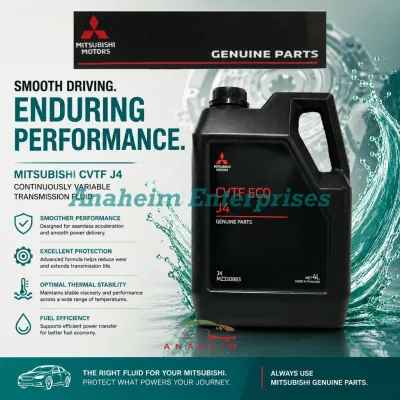
![[4L] Mitsubishi Mirage CVTF J4 (Continously Variable Transmission Fluid) G4/Hatchback](https://img.lazcdn.com/g/p/d504ac8575cc6650ad259a8f61e3153d.jpg_400x400q80.jpg_.webp)
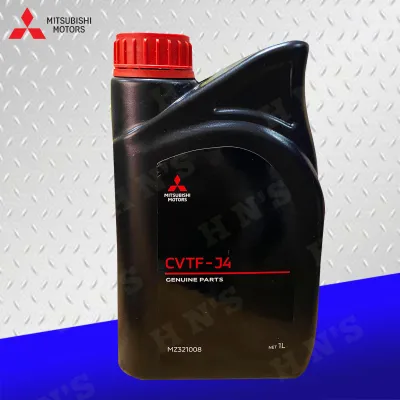
![[1 LITER] Mitsubishi Mirage CVT J4 (Continously Variable Transmission Fluid CVTF) - Mitsubishi Genuine Lubricants - [G4 / Hatchback]](https://img.lazcdn.com/g/p/0a953af30feec10807b559371384bae3.jpg_400x400q80.jpg_.webp)
![[4 LITERS] Mitsubishi Mirage CVT J4 (Continously Variable Transmission Fluid CVTF) - Mitsubishi Genuine Lubricants - [G4 / Hatchback]](https://img.lazcdn.com/g/p/3d8ff7230f3a650157492ab1cd4e2749.jpg_400x400q80.jpg_.webp)
Prices are valid at publication and may change. Please refer to the product page for the latest price.
Understanding Your Mitsubishi Mirage's CVT Fluid Specifications
To determine the exact fluid your vehicle requires, your first point of reference must always be the owner’s manual. Mitsubishi specifies the exact fluid standard required for each model year within the technical specifications or maintenance section of the manual. For the vast majority of modern Mitsubishi Mirage models, the required standard is Mitsubishi DiaQueen CVTF-J4. Some early model years may reference the older CVTF-J1 specification, but CVTF-J4 is fully backward-compatible, offering improved shear stability and thermal protection that makes it the preferred choice for all model years.
The chemical formulation of CVTF-J4 is engineered specifically to match the operating parameters of the JATCO CVT7 transmission utilized in the Mirage. This transmission features a sub-planetary gear structure alongside the traditional belt-and-pulley system, adding another layer of mechanical complexity. The fluid must maintain a precise viscosity profile across a wide temperature range to ensure that the hydraulic control valves operate smoothly and the belt maintains constant, slip-free contact with the pulleys.
Using a fluid that deviates even slightly from the CVTF-J4 specification can have severe consequences for the transmission’s internal components. If the fluid’s friction coefficient is too low, the steel belt will slip against the smooth surfaces of the pulleys, scoring the metal and generating fine metallic debris that clogs the internal filters and valve body. Conversely, if the fluid is too viscous, hydraulic pressure within the transmission may drop, leading to delayed engagement, sluggish acceleration, and increased fuel consumption.
Before purchasing any fluid, you must identify your vehicle’s exact model year and transmission code. This information is typically located on the vehicle identification plate, which can be found on the engine firewall or inside the driver’s side door jamb. Verifying these details ensures that you do not accidentally purchase fluid intended for traditional geared automatics or different CVT designs, which carry entirely different chemical properties.
OEM vs. Aftermarket CVT Fluids: Evaluating Your Options
When shopping for replacement fluid, you will generally choose between Original Equipment Manufacturer (OEM) fluids and aftermarket alternatives. Genuine Mitsubishi DiaQueen CVTF-J4 is the fluid filled at the factory and is available through authorized dealership parts departments. Opting for the OEM fluid provides absolute peace of mind, as it is guaranteed to meet every performance and safety parameter required by your transmission. Furthermore, using genuine fluid eliminates any potential disputes regarding transmission warranty coverage should a mechanical issue arise during the warranty period.

Aftermarket fluids, produced by major independent lubricant manufacturers, present an alternative that is often more accessible and cost-effective. Many reputable global brands formulate high-quality CVT fluids designed to meet or exceed the CVTF-J4 standard. When evaluating these options, you must look for explicit statements on the product packaging indicating that the fluid is approved for use in applications requiring Mitsubishi DiaQueen CVTF-J4. Do not rely on vague marketing terms such as “recommended for Japanese vehicles” or “suitable for most CVTs.”
You should exercise extreme caution when considering “universal” or “multi-vehicle” CVT fluids. While some of these products are formulated by reputable companies with advanced additive packages that genuinely cover multiple specifications, others use compromised formulations to appeal to a broader market. A fluid that attempts to cover too many different manufacturer specifications may not provide the precise friction characteristics required by the JATCO transmission in your Mirage. If the product label or technical data sheet does not explicitly list the CVTF-J4 specification, it is safest to avoid it.
While aftermarket fluids can offer savings, you must weigh these initial savings against the long-term risks. In the local market, a liter of genuine Mitsubishi CVTF-J4 may cost more than an aftermarket equivalent, but a complete transmission replacement can cost tens of thousands of pesos. If you choose an aftermarket fluid, ensure it comes from a highly reputable brand with clear, verifiable compatibility documentation to protect your investment.
How to Verify CVT Fluid Compatibility Before Purchasing
Verifying compatibility before you finalize your purchase is the most effective way to prevent costly maintenance mistakes. Whether you are purchasing from a local auto parts store or browsing an online marketplace, you should follow a strict verification checklist. Begin by examining the physical product label on the bottle. The label must clearly state that the fluid meets or exceeds the “Mitsubishi CVTF-J4” or “DiaQueen CVTF-J4” specification. If the label only lists general terms, treat it as a red flag.
For absolute certainty, you should cross-reference the fluid’s Technical Data Sheet (TDS). The TDS is a detailed document published by the lubricant manufacturer, usually available for download on their official website. This sheet lists the precise physical properties of the fluid, along with a comprehensive list of OEM specifications that the fluid is certified to meet. If you cannot find the CVTF-J4 specification listed on the official TDS, the fluid should not be used in your Mirage, regardless of what a retail seller or online listing might claim.
If you encounter conflicting information or if the product labeling is ambiguous, you should consult with an authorized parts dealer or a qualified automotive technician. You can contact a local Mitsubishi dealership parts department with your vehicle’s Chassis Number or Vehicle Identification Number (VIN) to confirm the exact fluid part number required. Professional mechanics who specialize in automatic and CVT transmissions can also provide valuable guidance on which aftermarket brands have a proven track record of compatibility and performance in your specific vehicle.
When purchasing fluid online, you must also be vigilant against counterfeit products. Counterfeit lubricants packaged in bottles resembling genuine OEM fluids are a significant risk in online marketplaces. To protect your vehicle, only purchase from official brand stores, authorized distributors, or highly rated sellers with verifiable customer feedback. If a price seems unusually low compared to market averages, it is highly likely to be a counterfeit fluid that could cause catastrophic transmission damage within a few kilometers of driving.
Best Practices for Checking and Maintaining Your CVT Fluid
Before performing any maintenance or inspection on your vehicle’s transmission, you must establish a safe working environment. Working near a hot engine bay carries risks of severe burns from hot fluids, exhaust components, and moving belts. Always park the vehicle on a level surface, engage the parking brake fully, and allow the engine to cool if it has been running. If you are unfamiliar with basic automotive maintenance or lack the necessary tools, you should always have these procedures performed by a qualified automotive technician.
Locating the CVT fluid dipstick or check plug on the Mitsubishi Mirage requires consulting your owner’s manual, as the layout can vary slightly depending on the model year. Many modern Mirage models feature a dipstick tube located near the front of the engine bay, often secured with a locking tab to prevent dirt and moisture from entering the system. Some newer or modified versions of these transmissions may be sealed systems that do not feature a traditional dipstick, instead relying on a fluid level check plug located on the side or bottom of the transmission casing, which requires raising the vehicle safely on jack stands to access.
When inspecting the fluid, you should evaluate three key visual and sensory criteria:
- Color: Fresh Mitsubishi CVTF-J4 fluid typically exhibits a distinct light green or clear-amber hue. As the fluid ages and undergoes thermal stress, it will gradually darken to a light brown and eventually a dark brown. If the fluid appears dark brown or black, it has lost its protective properties and must be replaced.
- Smell: Healthy CVT fluid has a distinct, slightly sweet chemical odor. If the fluid emits a strong, pungent burnt smell, it indicates that the transmission has overheated, causing the fluid to oxidize and lose its lubricating capabilities.
- Debris: Wipe the dipstick on a clean, white lint-free cloth or paper towel. Inspect the residue closely under bright light. The presence of any metallic glitter, dark flakes, or sludge indicates severe internal wear of the belt or pulleys, requiring immediate professional diagnostic attention.
You must know when to stop DIY troubleshooting and seek professional assistance. If you observe fluid leaks around the transmission oil pan, axle seals, or cooler lines, do not attempt to simply top up the fluid, as the leak must be repaired to prevent low-pressure damage. Additionally, if your vehicle’s dashboard displays a transmission warning light or if you experience symptoms such as slipping, delayed engagement, or unusual whining noises, take the vehicle to a professional workshop equipped with specialized diagnostic scanners and fluid exchange machines.
Frequently Asked Questions (FAQ)
Can I mix different brands of CVT fluid in my Mitsubishi Mirage? (FAQ)
Mixing different brands of CVT fluid is highly discouraged and should be avoided. Even if two different brands both claim compatibility with the Mitsubishi CVTF-J4 specification, they may utilize entirely different chemical additive packages, base oils, and friction modifiers. Mixing these distinct formulations can cause a chemical reaction that alters the fluid’s overall viscosity, reduces its thermal stability, and compromises the precise friction coefficient required for the steel belt and pulleys. If you must top up your transmission in an emergency and cannot find the exact brand currently in your vehicle, use only a fluid that explicitly meets the CVTF-J4 standard, and schedule a complete professional fluid drain and refill as soon as possible to restore chemical uniformity.
How often should the CVT fluid be changed in a Mitsubishi Mirage? (FAQ)
There is no single universal mileage interval for changing the CVT fluid, as the ideal schedule depends heavily on your driving conditions and environment. You should consult the maintenance schedule in your owner’s manual for the most accurate guidance. Under normal driving conditions, the manufacturer may recommend a longer service interval, such as every 80,000 to 100,000 kilometers. However, if you operate your vehicle under severe driving conditions—which include the high ambient temperatures, high humidity, and constant stop-and-go traffic typical of urban areas in the Philippines—the manual recommends significantly shorter intervals, often between 40,000 and 50,000 kilometers. Regular visual inspections every 10,000 to 20,000 kilometers are highly recommended to monitor the fluid’s condition and catch degradation early.
What happens if I accidentally use standard ATF instead of CVT fluid? (FAQ)
Accidentally introducing standard Automatic Transmission Fluid (ATF) into a CVT will result in severe and rapid mechanical damage. Standard ATF is formulated for traditional geared automatic transmissions, which rely on wet clutch packs and planetary gears that require entirely different friction characteristics than a CVT. If you run a CVT with standard ATF, the steel belt will immediately begin to slip against the pulleys due to the lack of specialized friction modifiers. This slippage generates extreme heat, scores the metal surfaces of the pulleys, and can snap the steel belt, leading to complete transmission failure. If you realize that ATF has been added to your CVT, do not start the engine or drive the vehicle. You must have the vehicle towed to a professional automotive repair shop to have the transmission thoroughly flushed, cleaned, and refilled with the correct CVTF-J4 fluid.
Community discussion
Share your experience or ask a question. Comments are reviewed before publication.