
Choosing the best motocross boots for long-distance trail riding requires balancing the impact protection of a track boot with the flexibility, walking traction, and thermal comfort needed for hours in the saddle. While traditional track boots excel at shielding your feet from high-speed crashes on groomed dirt, they often prove too rigid and exhausting for all-day trail expeditions. The ideal solution is a trail-adapted motocross boot featuring mechanical ankle hinges, a dual-density sole with deep tread, and adjustable calf clearances that accommodate protective knee braces.
In the tropical climate of the Philippines, where trail riders frequently navigate muddy single-tracks, river crossings, and intense humidity, the choice of boot also dictates how well your feet manage moisture and heat. A boot that locks your ankle in a completely rigid cast will quickly cause muscle fatigue and cramping on long ascents. Conversely, a boot that is too soft exposes you to severe injury from hidden rocks, tree stumps, or a falling motorcycle. Finding the perfect middle ground ensures you can ride from dawn to dusk without compromising safety or comfort.
Why Pure Motocross Boots Cause Fatigue on Long Trails
Pure motocross boots are engineered specifically for closed-course track racing, where sessions rarely exceed thirty minutes of intense, focused riding. In this environment, the design priority is absolute structural rigidity to protect against high-impact landings, deep ruts, and collisions with other motorcycles. To achieve this, manufacturers wrap the foot and lower leg in thick, unyielding layers of molded polyurethane and hard plastics. While this design is highly effective at preventing fractures on a motocross track, it becomes a major liability during a multi-hour trail ride through rugged terrain.
Products mentioned in this guide
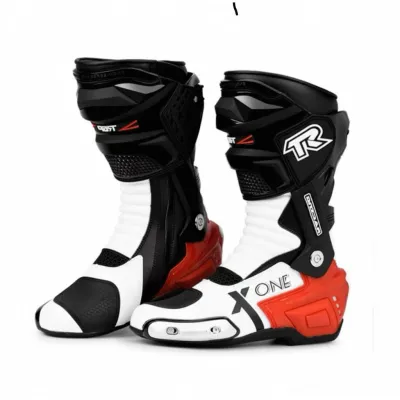
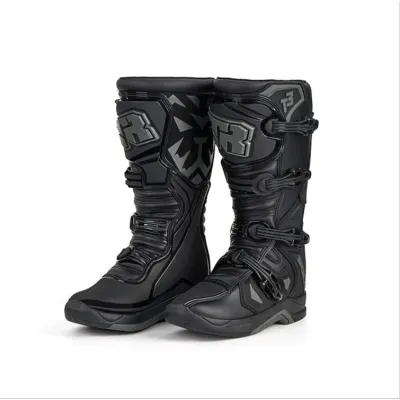
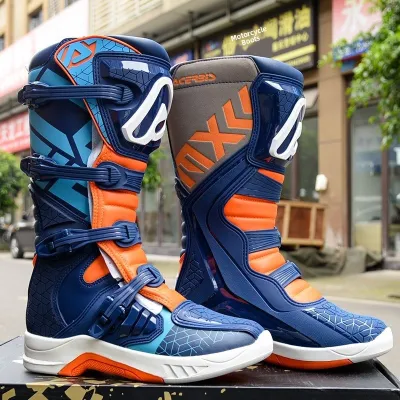
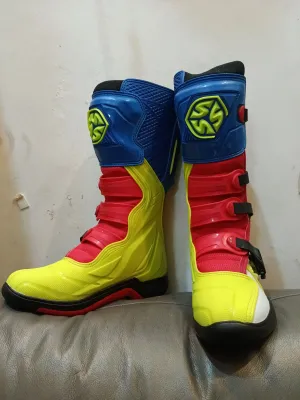
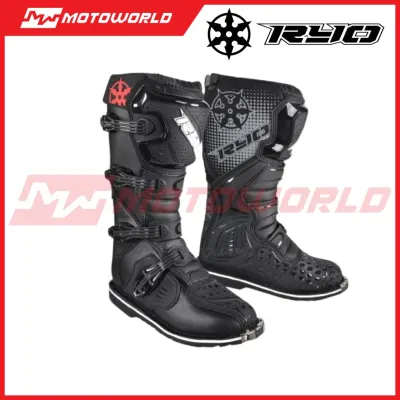
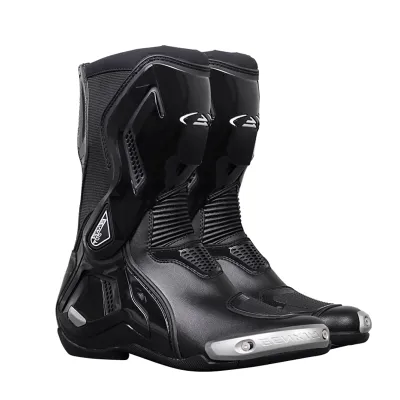
Prices are valid at publication and may change. Please refer to the product page for the latest price.
When you stand on your footpegs for hours at a time, a completely rigid boot transfers every vibration from the engine and the trail directly up into your ankles, calves, and knees. Without any mechanical flex in the sole or ankle joint, your lower leg muscles must work constantly to maintain balance and absorb micro-shocks. This continuous isometric strain accelerates muscle fatigue, leading to painful cramps long before your ride is over.
Furthermore, trail riding is rarely a purely on-bike activity. Whether you need to dismount to scout a washed-out path, clear a fallen branch, or push your motorcycle up a slick, muddy incline, you will inevitably have to walk. Walking in pure motocross boots is notoriously difficult, often resembling a stiff-legged march. The smooth, hard soles offer virtually no traction on wet rocks or loose clay, increasing your risk of slipping and injuring yourself while off the motorcycle.
Thermal discomfort is another critical issue, particularly in warm, humid regions. Traditional track boots prioritize sealing out track debris over airflow, utilizing heavy synthetic materials and dense internal padding that trap heat. During a long day of trail riding in tropical conditions, this lack of ventilation causes your feet to sweat excessively, leading to painful chafing, blisters, and an overall miserable riding experience.
Essential Features for Trail-Friendly Motocross Boots
To overcome the limitations of traditional track gear, manufacturers have developed trail-adapted motocross boots. These hybrid designs retain the robust impact protection of a motocross boot—such as hard shin plates and reinforced toe boxes—while integrating features that enhance comfort over extended periods. Evaluating these boots requires looking closely at specific mechanical and material details that directly affect your daily riding comfort.

Sole Flexibility and Peg Grip
The foundation of any trail-friendly boot is its sole construction. Unlike the flat, ultra-stiff soles found on track boots, trail-oriented options often utilize a dual-density rubber compound. This design provides a rigid shank under the arch to support your weight while standing on the pegs, combined with a slightly more flexible rubber at the toe and heel to make walking natural.
Traction is equally vital when you are navigating unpredictable terrain. A deep, lugged tread pattern is essential for maintaining a secure grip on wet, muddy metal footpegs, as well as providing traction when you must push your bike up a slippery slope. Additionally, look for a boot with a low-profile, streamlined toe box. A bulky toe area can make it difficult to slip your foot cleanly under the gear shifter or find the rear brake pedal, which can lead to missed shifts or delayed braking during technical trail maneuvers.
Ankle Articulation and Hinge Systems
Perhaps the most significant advancement in modern riding gear is the mechanical ankle hinge. High-quality trail boots incorporate a pivot system that allows natural forward and backward movement of the ankle joint. This articulation makes shifting and braking effortless, eliminating the need to “fight” the stiffness of the boot with every control input.
While these hinges facilitate smooth longitudinal movement, they are engineered with hard physical stops to prevent lateral twisting, ankle roll, and hyperextension. This mechanical limit ensures that if your foot catches a rock or gets trapped under the bike, the boot absorbs the twisting forces rather than your ankle joint. When trying on boots, stand in your natural riding stance and flex forward; the hinge should align perfectly with your ankle’s natural pivot point without pinching.
Calf Clearance and Buckle Adjustability
Long-distance trail riders often wear substantial protective gear, including thick off-road socks, padded riding pants, and mechanical knee braces. This extra bulk requires a boot with generous calf clearance and highly adjustable closure systems. Look for boots equipped with micro-adjustable, replaceable buckles that allow you to customize the tension at each point of your leg.
A secure top closure, such as a flexible elastic gaiter paired with a heavy-duty hook-and-loop strap, is crucial for sealing out trail debris, mud, and water. However, care must be taken during setup. Overtightening the upper buckles in an attempt to secure the boot can restrict local blood flow, leading to calf cramps, cold toes, and numbness during long descents or periods of sitting. Adjust the buckles so they are snug but do not pinch or leave deep indentations on your skin.
Motocross vs. Enduro Boots: Which Fits Your Trail Style?
When shopping for long-distance footwear, you will inevitably encounter the choice between dedicated motocross boots and enduro (or adventure) boots. Understanding the distinct design philosophies behind these two categories is key to selecting the right gear for your specific riding style.
Motocross boots feature an aggressive, heavily armored chassis designed to withstand high-velocity impacts, flying rocks, and severe crush forces. They utilize stiff plastics throughout the entire upper section, offering maximum protection at the cost of weight and walking flexibility. Enduro boots, on the other hand, prioritize versatility. They typically feature a slightly lower profile, more flexible synthetic or leather uppers, and highly lugged soles designed specifically for walking and scrambling over obstacles.
To decide between the two, analyze the composition of your typical rides:
- Aggressive Technical Trails: If your routes consist of highly technical, aggressive single-track trails—where the risk of dropping the bike on your leg, hitting hidden tree stumps, or clipping rocks is high—a trail-adapted motocross boot with a mechanical hinge is the safer choice. The superior lateral support and heavy-duty shin armor are indispensable when navigating high-risk off-road environments.
- Fire Roads and Scenic Routes: If your long-distance rides consist of wide fire roads, gravel tracks, and scenic adventure routes that involve frequent stops, sightseeing, or walking around camp, a dedicated enduro or adventure boot is likely more appropriate. These boots offer greater comfort, lighter weight, and better flexibility for walking, though they sacrifice some of the extreme crush resistance and lateral ankle bracing of a full motocross boot.
Before making a compromise, honestly assess your personal crash history, physical fitness, and the technical difficulty of your local trails. If you frequently ride alone or in remote areas where an ankle injury could leave you stranded, prioritizing the robust protection of a hinged motocross boot is always the wiser decision.
How to Fit and Break In Boots for All-Day Riding
Even the most advanced trail boot will cause pain and blisters if it is not fitted correctly or broken in before a major ride. Achieving an all-day fit requires a systematic approach that begins in your living room and progresses gradually to the trail.
When trying on new boots, always wear the exact combination of gear you plan to use on the trail. This includes your thickest riding socks and your knee braces or shin guards. Put the boots on, buckle them securely, and stand up. Your toes should have enough room to wiggle slightly, and they should not press hard against the front of the toe box when you lean forward into a riding stance. Your heel should remain locked in place; excessive lifting or slipping inside the boot is a primary cause of severe blisters.
Once you have verified the fit, begin a gradual break-in process. Start by wearing the boots around your house for an hour or two at a time. This initial wear allows your body heat to soften the internal padding and thermoplastic materials, helping them begin to conform to the unique contours of your feet. Next, take the boots on a few short, low-intensity local rides to get accustomed to the feel of the controls before committing to a multi-hour trail expedition.
It is critical to avoid shortcuts during this process. Never use heat guns, household ovens, or boiling water to force the plastics to soften. Uncontrolled heat can easily warp the boot’s structural chassis, degrade the specialized adhesives holding the sole to the upper, and permanently compromise the protective integrity of the materials. Using these methods will also void the manufacturer’s warranty. Rely instead on natural movement, body heat, and patience to break in your boots safely.
Maintenance Tips to Protect Hinges and Materials
Long-distance trail riding exposes your gear to harsh environmental elements, including abrasive volcanic ash, thick mud, dust, and water. Without proper post-ride maintenance, these materials can quickly degrade your boots, seizing mechanical hinges and causing synthetic or leather panels to crack.
After every ride, clean your boots thoroughly using low-pressure water and a soft-bristled brush. Pay close attention to the mechanical pivot points, hinge channels, and buckle assemblies. Flush these areas completely to wash away trapped grit and sand, which act as abrasives that can wear down the hinge mechanism over time. Avoid using high-pressure power washers directly on the boots, as the intense water pressure can force dirt deeper into the pivot joints and degrade internal stitching or waterproof seals.
Once clean, allow the boots to dry naturally in a well-ventilated indoor space or a shaded outdoor area. Never place your boots near direct heat sources, such as campfires, radiators, or under direct, intense midday sunlight. Excessive heat can warp the plastic panels, dry out leather sections, and weaken the glue holding the soles in place.
Regularly inspect the buckle hardware, strap ladders, and hinge screws for any signs of wear, micro-tears, or loosening. Replace any damaged parts immediately; most premium manufacturers offer replacement buckle kits that are easy to install. Finally, apply a manufacturer-recommended conditioner to any leather or synthetic leather panels. This treatment keeps the materials supple, prevents cracking, and helps maintain the boot’s water resistance over years of rugged trail service.
Frequently Asked Questions (FAQ)
Can I use my existing track motocross boots for trail riding?
Yes, you can physically wear track-focused motocross boots on the trail, but you should expect increased physical fatigue and limited mobility. Because track boots lack mechanical hinges and flexible soles, your lower legs will tire much faster, and walking over trail obstacles will be difficult. If you must use track boots, consider adding high-quality, shock-absorbing aftermarket insoles to help damp engine and trail vibrations, provided there is enough internal volume. Planning more frequent rest stops to stretch your calves and ankles will also help manage fatigue on longer rides.
Do I need waterproof boots for long-distance trail riding?
The choice between waterproof and non-waterproof boots depends heavily on your local climate and riding conditions. Waterproof membranes are excellent for keeping out light rain, shallow puddles, and mud, but they also trap heat and perspiration inside the boot. In the hot, humid tropical climate of the Philippines, waterproof boots can cause your feet to sweat excessively, leading to damp socks and skin irritation. If you frequently navigate deep river crossings where water will inevitably spill over the top of the boot anyway, non-waterproof boots are often superior because they drain and dry much faster once you are back on the move.

Community discussion
Share your experience or ask a question. Comments are reviewed before publication.