
Riding a liquid-cooled motorcycle in the Philippines means constantly battling extreme ambient temperatures and intense urban traffic. To keep your engine running within its optimal thermal range, choosing the correct motorcycle coolant formulation is essential. The best choice for this year-round hot climate is a high-quality, pre-mixed Ethylene Glycol-based coolant featuring Organic Acid Technology (OAT) or Hybrid Organic Acid Technology (HOAT), specifically formulated to match your manufacturer’s requirements. This setup provides the elevated boiling point and robust corrosion protection needed to survive daily tropical commutes.
Why Tropical Heat Changes Your Coolant Requirements
Liquid-cooled motorcycles operating in the Philippines face unique thermal challenges. When you are stuck in heavy traffic along major thoroughfares like EDSA or Commonwealth Avenue under the midday sun, ambient temperatures can easily exceed 35°C, with asphalt temperatures climbing much higher. In these conditions, there is very little natural airflow passing through your motorcycle’s radiator. The engine must rely almost entirely on the radiator fan and the thermal capacity of the coolant to shed heat.
The primary role of coolant in a high-temperature environment is to raise the boiling point of the liquid inside the cooling system. While pure water boils at 100°C at sea level, a pressurized cooling system filled with a proper glycol-water mixture can withstand temperatures well above 120°C before boiling. This elevation is critical because localized hot spots inside the engine block can cause water to flash into steam. When steam pockets or vapor locks form, they act as thermal barriers, preventing the liquid from absorbing heat and rapidly leading to catastrophic engine overheating.
Products mentioned in this guide
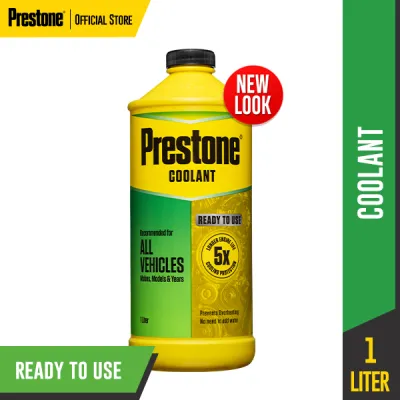
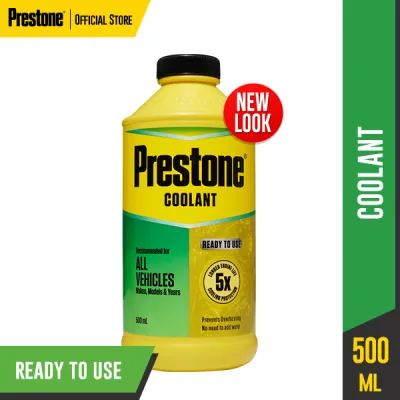
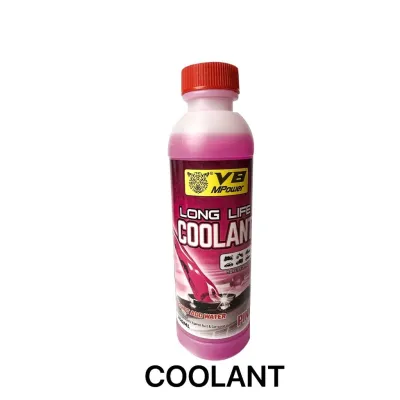
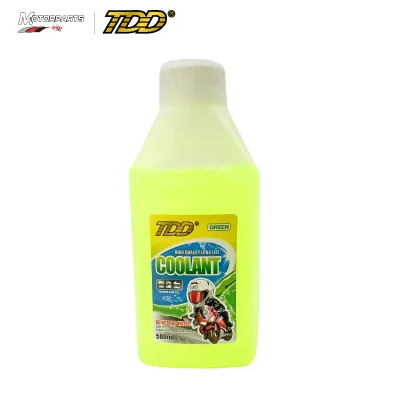
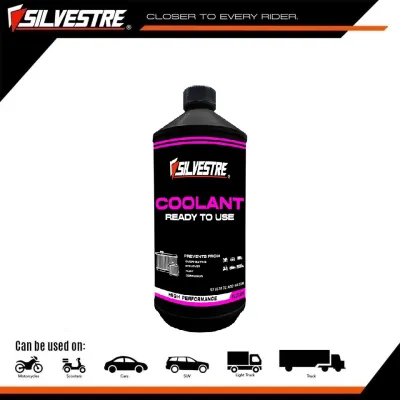
Prices are valid at publication and may change. Please refer to the product page for the latest price.
Additionally, high ambient temperatures significantly reduce the radiator’s ability to transfer heat to the surrounding air. When the temperature difference between the radiator core and the outside air shrinks, heat exchange efficiency drops. To compensate, your coolant formulation must maintain absolute chemical stability under continuous high-heat stress. If the coolant degrades or lacks the proper chemical balance, it can break down, lose its protective properties, and fail to protect internal engine components from thermal damage.
Key Coolant Formulations for High-Temperature Riding
Selecting the right coolant requires looking beyond the color of the liquid in the bottle. You must understand the chemical base and the additive package to ensure the fluid can withstand tropical heat without breaking down or damaging your engine.

Base Fluids: Ethylene Glycol vs. Propylene Glycol
Most modern motorcycle coolants use either ethylene glycol or propylene glycol as their primary base fluid. Ethylene glycol remains the industry standard for high-performance heat transfer because it has excellent thermal conductivity and efficiently moves heat away from the engine block. However, propylene glycol is sometimes selected by riders or manufacturers because it is significantly less toxic to humans and pets if a leak occurs.
While both base fluids can prevent freezing and raise the boiling point, they have different physical properties and should not be mixed. You must check your motorcycle’s owner’s manual and the product label to verify which base is required for your specific model. Never assume one base is universally superior; the best choice is always the one that aligns with your original equipment manufacturer (OEM) specifications to maintain optimal heat transfer and seal compatibility.
Additive Technologies: IAT, OAT, and HOAT
Coolants are further categorized by their corrosion inhibitor packages, which protect the metals inside your engine. Inorganic Additive Technology (IAT) is an older formulation that uses silicates and phosphates to provide rapid protection, but it degrades quickly and typically requires replacement every two years. Organic Acid Technology (OAT) and Hybrid Organic Acid Technology (HOAT) use organic acids to offer much longer service life and superior high-temperature stability, often lasting up to five years.
For motorcycles operating in hot climates, OAT and HOAT are generally preferred because they do not break down as easily under continuous thermal load. However, you must ensure the additive technology matches your motorcycle’s factory fill. Introducing the wrong additive package can lead to chemical incompatibility, causing silicates to drop out of the solution. This dropout forms a thick gel or sludge that can easily clog the narrow passages of a motorcycle radiator, completely blocking coolant flow and causing rapid overheating.
Pre-Mixed vs. Concentrate and Water Quality
When purchasing coolant, you will find both pre-mixed 50/50 solutions and concentrated formulas. Pre-mixed coolants are highly recommended for most riders because they are ready to pour and guarantee the correct water-to-glycol ratio. They are blended at the factory using high-purity demineralized or deionized water, which eliminates the risk of introducing harmful contaminants into your cooling system.
If you choose to purchase a concentrated coolant, you must mix it yourself, and water quality becomes absolutely critical. Never use tap water, well water, or bottled mineral water to dilute coolant concentrate. These water sources contain minerals like calcium and magnesium that will precipitate out under high engine heat, forming hard scale deposits inside the radiator tubes and water jackets. This scale acts as an insulator, trapping heat inside the engine and causing severe overheating. Always dilute concentrate with strictly distilled or deionized water, maintaining a precise 50/50 ratio. Avoid the temptation to add more concentrate to “increase cooling,” as an over-concentrated mixture actually reduces heat transfer efficiency and lowers the boiling point.
How to Verify Boiling Point and OEM Specifications
To ensure a coolant can handle the demanding tropical climate of the Philippines, you must carefully read the product label. Look for the stated boiling point, which is typically listed for both unpressurized and pressurized states. Keep in mind that the maximum boiling point rating (often around 125°C to 135°C) is only achieved when the cooling system is fully pressurized. This pressure is maintained by a properly functioning radiator cap, so the coolant alone cannot prevent boiling if the system has a pressure leak.
Before buying any product, cross-reference the specifications on the bottle with your motorcycle’s owner’s manual. Look for required industry standards such as Japanese Industrial Standards (JIS K 2234) or American Society for Testing and Materials (ASTM D3306). Many manufacturers, such as Honda, Yamaha, Kawasaki, and Suzuki, have specific OEM approvals or require silicate-free formulations to protect their water pump seals. Using a coolant that meets these exact standards ensures that the fluid will not degrade the specific alloys and gaskets used in your engine.
You should also avoid the common mistake of choosing a coolant based solely on its color. Coolant colors (such as green, blue, pink, or yellow) are simply dyes added by manufacturers and do not represent a universal standard for chemical composition. Mixing different coolant colors or incompatible chemistries can cause a chemical reaction that creates corrosive acids or a thick sludge. This sludge will coat the interior of your cooling system, reducing heat transfer and eventually clogging the water pump and radiator.
Finally, always verify that the product is explicitly labeled for motorcycle use. While some automotive coolants may seem identical, motorcycles operate at higher RPMs and higher temperatures per cubic centimeter than typical cars. Motorcycle-specific coolants are formulated to handle these intense operating conditions and are designed to be compatible with the specific aluminum alloys and magnesium components commonly found in modern motorcycle engines.
Hot-Weather Cooling System Maintenance and Safety
Regular maintenance of your motorcycle’s cooling system is vital to surviving the year-round heat of the Philippines. Start by performing regular visual checks of the coolant level in the translucent reservoir tank. Ensure the fluid level sits between the “Upper” (or Full) and “Lower” (or Low) marks when the motorcycle is parked on level ground. If the level is consistently low, it indicates a potential leak that must be diagnosed and repaired immediately.
The radiator cap plays a critical role in your cooling system by maintaining pressure, which raises the boiling point of the coolant. Over time, the rubber seals and spring inside the radiator cap can degrade due to constant exposure to high heat and pressure. A failing cap will fail to hold pressure, allowing the coolant to boil at a much lower temperature and escape into the reservoir tank or overflow hose. Inspect the radiator cap periodically and replace it if you notice any cracking, stiffness, or signs of rust.
When performing any maintenance on your cooling system, safety must be your top priority. Never, under any circumstances, open the radiator cap when the engine is hot or warm. The cooling system is highly pressurized, and opening the cap on a hot engine will cause boiling coolant and steam to spray out violently, resulting in severe burns. Always allow the engine to cool down completely—typically for at least one to two hours—before removing the radiator cap or adding fluid.
Lastly, inspect the coolant hoses and connections for signs of wear. The constant high-heat cycles of tropical riding accelerate the aging of rubber components. Squeeze the hoses to check for excessive softness, swelling, or cracking, especially near the hose clamps. If a hose feels brittle or mushy, replace it immediately to prevent a sudden blowout while riding.
Frequently Asked Questions (FAQ)
Can I use automotive coolant in my motorcycle?
While it may be tempting to use leftover automotive coolant, doing so can damage your motorcycle. Many car coolants contain silicates or phosphates as corrosion inhibitors, which can be abrasive. These abrasive particles can quickly wear down the delicate mechanical seals of a motorcycle’s high-speed water pump, leading to coolant leaks into the engine oil or onto the ground. Additionally, some motorcycles feature a shared oil system where the engine oil also lubricates the wet clutch. If an incompatible automotive coolant with friction modifiers leaks into the crankcase, it can cause wet clutch slippage. Always use motorcycle-specific coolants or universal coolants that are explicitly certified as silicate-free and safe for motorcycle water pumps.
What should I do if my motorcycle overheats and I have no coolant?
If your motorcycle overheats on the road and you have no coolant on hand, adding clean water is a temporary emergency measure to help you reach a safe location or a repair shop. If possible, use distilled water, but in an absolute emergency, clean tap water can be used to prevent engine seizure. However, you must understand that pure water has a lower boiling point than a proper coolant mixture and offers absolutely no corrosion protection or water pump lubrication. Once you reach safety, do not continue to ride the motorcycle hard. You must have the cooling system completely flushed and refilled with the correct pre-mixed motorcycle coolant as soon as possible to prevent long-term damage and corrosion.
Community discussion
Share your experience or ask a question. Comments are reviewed before publication.