
Selecting the right motorcycle raincoat is one of the most critical decisions you will make for your daily comfort and on-road safety. The ideal choice depends entirely on your riding environment, travel distance, and average speeds. While a quick-deploy option might rescue you from a sudden city shower, it can quickly become a safety hazard on a high-speed highway.
To make an informed choice, you must balance waterproofing capabilities, wind resistance, ease of use, and breathability. This guide breaks down how different raincoat styles perform under real-world riding conditions so you can select the gear that matches your specific riding pattern.
Quick Decision Guide: Raincoat Styles by Riding Pattern
Choosing the right rain gear requires understanding the trade-offs of each design. The table below summarizes how the three primary motorcycle raincoat styles compare across key performance dimensions.
Products mentioned in this guide
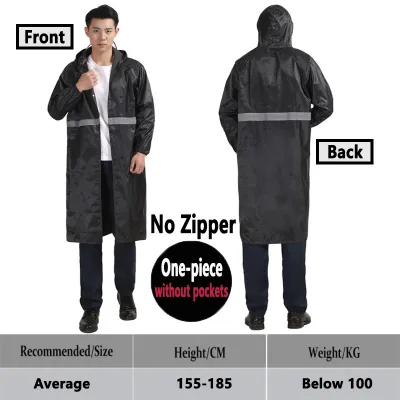
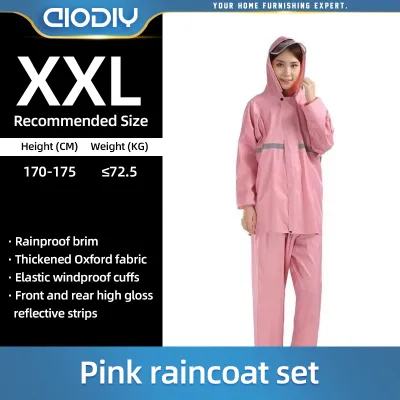
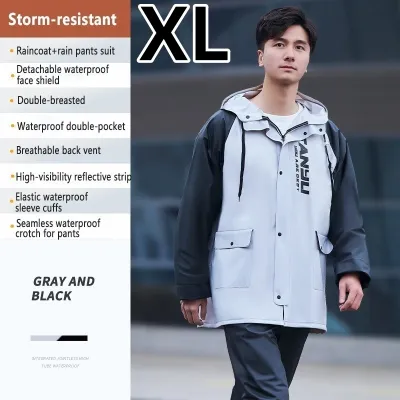
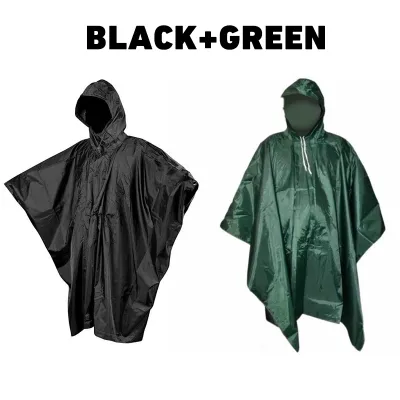
Prices are valid at publication and may change. Please refer to the product page for the latest price.
| Raincoat Style | Best Riding Scenario | Key Advantage | Primary Limitation |
|---|---|---|---|
| Poncho | Short, low-speed urban commutes | Extremely fast to put on; fits easily over backpacks | Dangerous at high speeds; prone to violent wind flapping |
| Two-Piece Suit | Long-distance trips and highway riding | Exceptional wind resistance and full-body water protection | Bulky to pack; takes longer to put on and take off |
| Rain Jacket & Overpants | Versatile, mixed city and weekend riding | Modular design; jacket can be worn separately in light drizzle | Potential for water leakage at the waist seam if not fitted correctly |
When selecting your gear, consider how often you encounter sudden rain and how fast you typically ride. A mismatch between your gear style and your riding speed can compromise your safety and leave you completely soaked.
Assessing Your Ride: City Commute vs. Highway Touring
To determine the best raincoat style, you must first analyze your typical riding profile. A daily city commute is characterized by frequent stop-and-go traffic, lower average speeds, and the constant need to adapt to sudden weather changes. In dense urban areas, a rider needs gear that can be deployed in under a minute when a sudden downpour strikes, and then packed away quickly without taking up excessive storage space.

In contrast, long-distance highway touring demands gear that can withstand sustained wind pressure and prolonged exposure to heavy rain. At highway speeds, rain is driven against your body with significant force, finding even the smallest gaps in zippers, cuffs, and collars. Furthermore, riding for hours in wet conditions requires gear that remains aerodynamically stable to prevent rider fatigue.
Local environmental factors also play a massive role in your decision. In tropical climates like the Philippines, the wet season brings intense downpours accompanied by high ambient temperatures and stifling humidity. Wearing a completely sealed, non-breathable plastic suit under these conditions creates a greenhouse effect inside your gear. Within minutes, you can become just as wet from your own sweat as you would have been from the rain. Therefore, balancing external water resistance with internal moisture management is essential for tropical riding.
Ponchos: Quick Coverage for Stop-and-Go Commutes
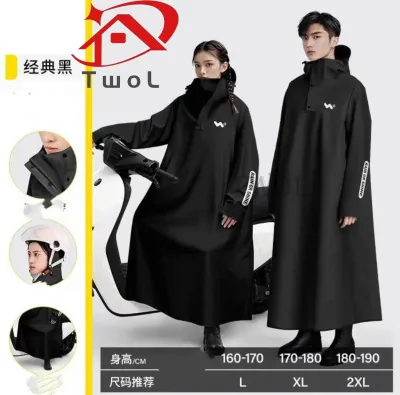
Motorcycle ponchos are a common sight on city streets due to their unmatched convenience. When a sudden afternoon shower hits, a poncho can be pulled over your head in seconds without requiring you to remove your helmet, boots, or heavy riding jacket. Their loose, flowing cut easily accommodates bulky backpacks or messenger bags, keeping your personal belongings dry without requiring a separate waterproof cover.
For riders of scooters and underbone motorcycles, a poncho offers the unique benefit of draping over the front apron. This design helps shield your lap, thighs, and the motorcycle seat from direct rain while you are stopped at traffic lights. Because city speeds rarely exceed 40 kilometers per hour in heavy traffic, the aerodynamic drawbacks of a poncho are minimized, making them a highly practical choice for short, low-speed trips.
However, ponchos have severe safety boundaries and must never be used for highway or long-distance riding. At speeds above 50 kilometers per hour, the loose fabric of a poncho catches the wind like a sail. This violent flapping creates immense aerodynamic drag, which rapidly fatigues your neck and shoulders. More critically, the loose fabric can obscure your side mirrors, block your peripheral vision, or even wrap around your handlebars. In worst-case scenarios, loose hems can get caught in your motorcycle’s rear wheel, chain, or passing vehicles, leading to a catastrophic loss of control.
If you choose a poncho for low-speed city commutes, look for models specifically designed with motorcycle safety features. High-quality motorcycle ponchos include integrated leg straps to secure the fabric around your thighs, thumb loops to keep the sleeves from riding up, and heavy-duty tie-downs that secure the front hem to your motorcycle’s chassis. These features help minimize wind flap and keep the fabric pinned flat against your body during your ride.
Two-Piece Rain Suits: Highway Protection for Long Trips
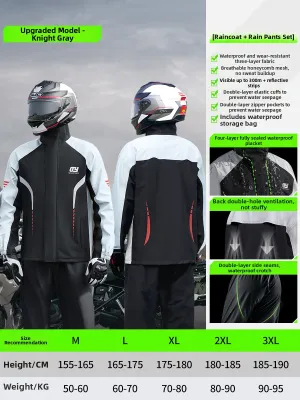
For long-distance touring, provincial trips, and highway riding, a dedicated two-piece rain suit consisting of a separate jacket and pants is the safest and most reliable option. Because these suits are tailored to fit close to the body, they offer excellent aerodynamic stability. The snug fit prevents the fabric from catching the wind, eliminating the tiring buffeting effect experienced with loose ponchos and allowing you to maintain focus on the road ahead.
Two-piece suits excel at keeping water out during hours of continuous exposure to heavy rain. They feature heavy-duty front zippers protected by double storm flaps, adjustable hook-and-loop cuffs at the wrists, and elasticized ankle closures that seal tightly around your riding boots. This comprehensive coverage ensures that water driven by high-speed winds cannot penetrate your outer layer, keeping you dry from chest to ankle.
Despite their superior protection, two-piece suits require some practical trade-offs. They are significantly bulkier than ponchos and require dedicated storage space in a top box, saddlebag, or backpack. Putting them on is also a multi-step process that requires you to find a safe, sheltered spot to pull over, remove your shoes or struggle to slide the rain pants over muddy boots, and carefully zip and secure multiple closures.
When purchasing a two-piece suit, never rely solely on generic marketing claims. Always check the manufacturer’s product label to verify the specific waterproof rating, which should ideally be 10,000mm or higher for highway riding. Additionally, verify that the suit features fully taped or heat-welded seams on the interior, as standard stitched seams will inevitably leak under the pressure of highway-speed wind and rain.
Rain Jackets and Overpants: A Flexible Middle Ground
For riders who mix daily city commutes with occasional weekend road trips, a modular setup consisting of a separate rain jacket and overpants offers a highly flexible solution. This approach allows you to adapt your gear to changing weather conditions on the fly. If you encounter a light drizzle or a sudden drop in temperature on a mountain road, you can wear just the rain jacket to stay warm and dry without the hassle of putting on the pants.
This modularity is particularly useful during transitional weather when rain is intermittent. A dedicated rain jacket can double as a windbreaker or a casual outer layer when you are off the bike, reducing the amount of extra clothing you need to pack. If the weather deteriorates into a heavy tropical downpour, you can quickly pull over and add the matching overpants for complete lower-body protection.
However, a modular setup has potential weaknesses compared to a unified two-piece suit. Because the jacket and pants are separate pieces, wind can force water upward under the jacket’s hem at higher speeds, leading to water accumulation around your waist and crotch. To prevent this, ensure that the rain jacket has an adjustable waist drawcord or elastic hem that can be cinched tightly.
When buying these pieces separately, always verify their compatibility and fit while seated on your motorcycle. The rain jacket must have sufficient length to overlap your overpants by several inches when you are in your active riding position. If the jacket is too short, it will ride up, exposing your waist to wind-driven water and road spray.
Essential Gear Features for Heavy Rain and High Humidity
Before purchasing any motorcycle rain gear, you must look past basic product descriptions and verify specific design elements on the product label. High-quality construction is what separates a reliable piece of safety gear from a cheap plastic suit that tears on its first use.
- Seam Construction: Standard stitched seams contain thousands of tiny needle holes that will leak under pressure. Ensure the product documentation or label explicitly states that the garment has "fully taped seams" or "heat-welded seams." These manufacturing processes apply a waterproof tape or weld over the stitched areas, ensuring no water can seep through the needle holes.
- Visibility: Heavy rain and tropical storms drastically reduce visibility for all road users. To ensure you remain visible to car and truck drivers, choose rain gear in high-visibility colors such as neon yellow, bright orange, or high-contrast green. Additionally, check that the gear features wide retroreflective strips across the back, shoulders, and outer legs to catch headlight beams in low-light conditions.
- Ventilation and Condensation: To combat high tropical humidity, look for rainwear that incorporates strategic ventilation. Features such as mesh inner linings, zippered underarm vents, and covered back cape vents allow body heat and sweat vapor to escape while keeping liquid water out. This air circulation is critical to prevent interior condensation from soaking your clothes from the inside.
- Closures and Collars: The main zipper is a primary entry point for water. Look for raincoats with double storm flaps—a system where a wide strip of waterproof fabric folds over the zipper and secures with snaps or hook-and-loop fasteners. The collar should be high, lined with a soft fabric like fleece to prevent neck chafing, and fully adjustable to seal tightly against your neck, preventing water from running down your chest.
Frequently Asked Questions (FAQ)
Can I use a regular walking raincoat for riding a motorcycle?
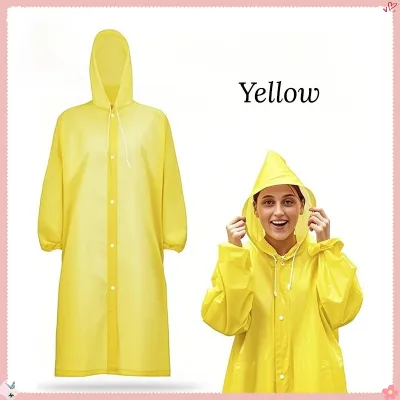
No, you should not use a standard walking raincoat for motorcycle riding. Walking raincoats are constructed from lightweight materials that cannot withstand the intense wind pressure experienced while riding. At speed, the fabric will flap violently, which can cause the seams to tear apart and create a severe distraction. Furthermore, walking raincoats lack the specialized cuts, adjustable cuffs, and secure closures needed to prevent water from forcing its way inside while you are in a seated riding position.
How do I prevent my motorcycle raincoat from smelling musty?
To prevent musty odors and mold growth, you must never fold or store a damp raincoat inside a closed top box, under-seat compartment, or plastic bag. After every wet ride, hang your raincoat on a wide, sturdy hanger in a shaded, well-ventilated indoor area and allow it to air dry completely before packing it away. Always refer to the manufacturer’s care label for specific cleaning instructions; avoid exposing the gear to direct sunlight for extended periods, as ultraviolet rays can degrade the waterproof coatings and dry out seam tapes over time.

Community discussion
Share your experience or ask a question. Comments are reviewed before publication.