
Riding a motorcycle in the Philippines during the wet season is a true test of endurance for both rider and gear. When the skies open up during a sudden afternoon downpour or a prolonged monsoon, keeping your personal belongings dry becomes a major challenge. The Motowolf waterproof saddle bag has emerged as a popular choice among local commuters and long-distance tourers looking for a budget-friendly luggage solution.
However, before you trust your expensive electronics, change of clothes, or daily essentials to any piece of gear, it is vital to evaluate whether its waterproof claims can actually withstand the harsh reality of tropical monsoons. This guide provides a practical framework to inspect, test, and maintain your motorcycle luggage to ensure your gear stays dry throughout the rainy season.
Quick Answer: Evaluating Monsoon Reliability Before You Buy
To determine if a saddle bag is truly ready for the Philippine rainy season, you must look beyond the marketing labels and inspect its physical construction. A truly reliable waterproof bag relies on heavy-duty materials, seamless construction, and secure closure systems rather than simple water-resistant zippers. For the Motowolf saddle bag, its reliability hinges on whether you choose a model featuring high-frequency welded seams and a roll-top closure system, which are inherently superior to stitched seams and standard zippers.
Products mentioned in this guide
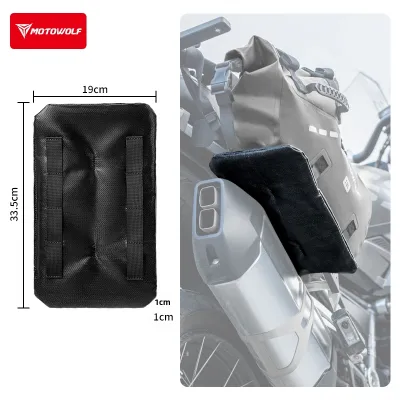
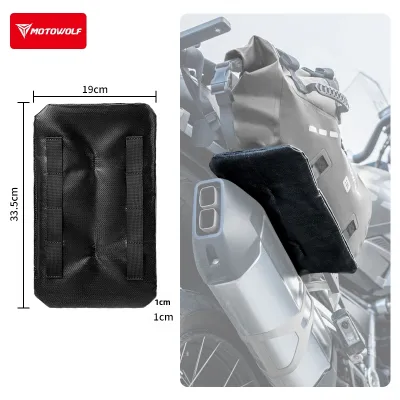
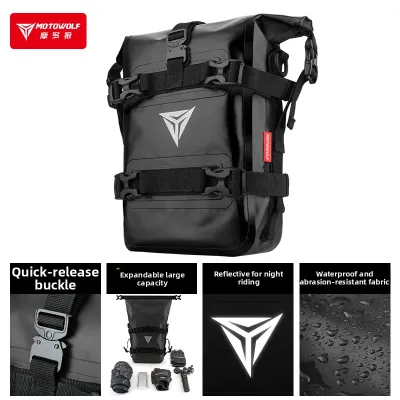
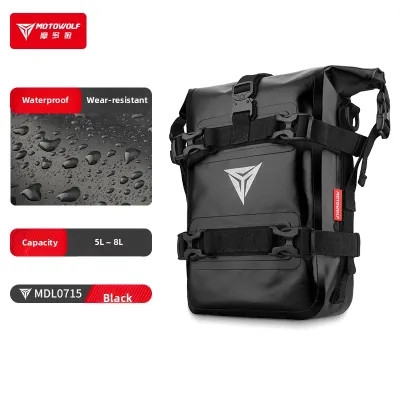
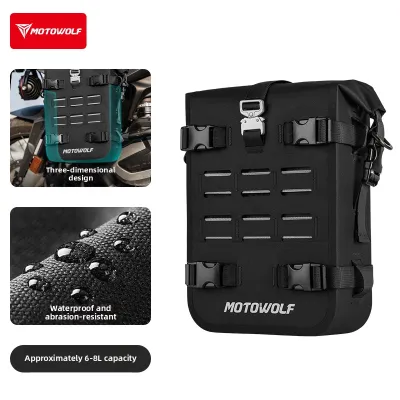
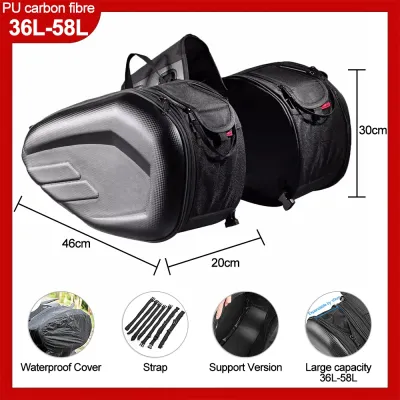
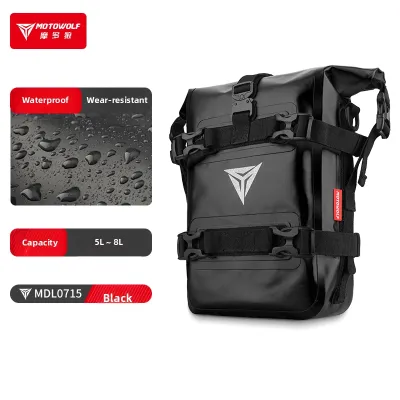
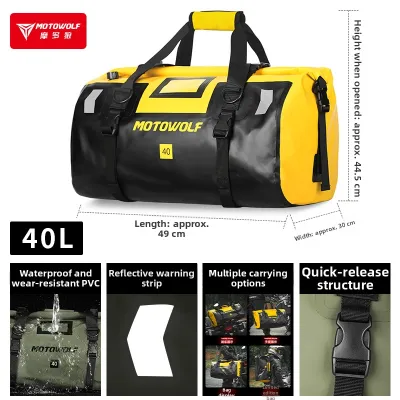
Prices are valid at publication and may change. Please refer to the product page for the latest price.
For riders investing in motorcycle luggage within the ₱2,000 to ₱5,000 range, verifying these features is essential before making a purchase. While these bags offer excellent primary protection against heavy downpours, real-world monsoon reliability is never absolute. Your gear’s safety ultimately depends on proper mounting to prevent water pooling, correct packing techniques, and the use of secondary internal dry bags for highly sensitive electronics.
Before committing to a purchase, riders should evaluate their specific daily route, the intensity of the rains they encounter, and their willingness to perform routine maintenance to preserve the bag’s protective coatings. Understanding these factors helps you make an informed decision and avoid unexpected water damage on the road.
Decoding Waterproof Claims for Tropical Monsoons
In the motorcycle accessory market, terms like “water-resistant” and “waterproof” are often used interchangeably, but they represent vastly different levels of protection. Water-resistant gear is designed to repel light showers or brief exposure to moisture, allowing water to bead off the surface temporarily. However, under the relentless pressure of a tropical monsoon, water-resistant materials will eventually saturate, allowing moisture to seep through the fabric and seams.

True waterproofing means the bag can withstand prolonged exposure to heavy, driving rain and high-velocity road spray without letting a single drop inside. The Philippine rainy season presents unique environmental challenges that go far beyond a simple rain shower. Riders frequently face prolonged downpours that can last for hours, high ambient humidity that prevents damp gear from drying, and heavy road splashes from passing vehicles.
Additionally, riding at highway speeds forces rainwater against the bag’s surface with significant pressure, easily penetrating weak points. To combat these forces, a reliable saddle bag must utilize thick, non-porous materials such as heavy-duty polyvinyl chloride (PVC) or thermoplastic polyurethane (TPU). These materials do not absorb water and can withstand the physical abuse of daily riding.
Equally important is how the panels of the bag are joined. Standard stitched seams create thousands of tiny needle holes that act as pathways for water under pressure. For true monsoon reliability, look for bags that utilize high-frequency heat welding, which fuses the material panels together to create a single, continuous, and completely seamless barrier against water ingress.
Physical Inspection Checklist for the Motowolf Bag
Before purchasing or installing any saddle bag on your motorcycle, you must perform a thorough physical inspection to verify its build quality and ensure it is safe for road use.
Safety and Mounting Boundaries Before inspecting the bag’s individual components, consult your motorcycle’s original owner’s manual to verify the maximum weight capacity of your rear subframe or luggage rack. Incorrectly mounted saddle bags pose a severe safety hazard. You must ensure that the bag, when fully loaded, maintains a safe clearance from all moving parts, including the rear wheel, swingarm, and suspension components. Furthermore, keep the bag well clear of the exhaust pipe; the extreme heat can easily melt PVC or TPU materials, destroying your gear and potentially causing a fire. If you are unsure about proper mounting or clearance, seek assistance from a qualified motorcycle technician before riding.
Seams and Stitching Examine the joints where the fabric panels meet. Look closely for any signs of needle punctures or traditional thread stitching along the main body of the bag. For a bag to be considered waterproof, these main seams must be heat-welded or taped on the inside. Run your fingers along the interior seams to verify that the sealing tape is perfectly flat, smooth, and free of air bubbles or peeling edges that could allow water to bypass the barrier.
Zippers and Closures Zippers are the most common failure points in wet-weather gear. Inspect the zippers on the Motowolf bag to see if they are standard coil zippers or rubber-coated, water-resistant zippers. Even water-resistant zippers can leak under heavy, wind-driven rain. For maximum security, models utilizing a roll-top closure system are highly recommended. A roll-top design requires you to fold the opening down at least three times and secure it with buckles, creating a physical labyrinth that water cannot easily penetrate.
Material and Coatings Check the manufacturer’s tags or product specifications for official waterproof ratings, such as an IPX6 rating, which indicates resistance to high-pressure water streams. Feel the thickness of the material; it should feel substantial, rubbery, and flexible. Inspect the interior lining to ensure there are no exposed fabric edges that could wick moisture from the outside.
Mounting Points and Straps Inspect the areas where the mounting straps attach to the bag’s body. Because these points experience constant tension and vibration while riding, they are prone to tearing. Ensure that these attachment patches are heavily reinforced, double-stitched, or welded onto a secondary backing plate. If water can seep through the strap attachment points, the interior of your bag will quickly become damp.
Safe Testing and Monsoon Maintenance Protocols
To ensure your saddle bag performs reliably when you need it most, you should conduct a controlled test and establish a regular maintenance routine.
Controlled Water Test Never trust your expensive laptop, tablet, or spare clothes to a brand-new, untested bag. Before your first ride in the rain, perform a controlled simulation at home. Pack the bag with dry, crumpled newspaper or cardboard, which will easily show any signs of moisture. Close the bag securely, ensuring a proper roll-top fold or zipper seal. Using a standard garden hose, spray the bag from various angles for five to ten minutes to simulate a heavy tropical downpour. Do not use a high-pressure washer, as the extreme pressure can force water past seals and damage the material coatings. Open the bag and inspect the paper inside; any damp spots will pinpoint exactly where a leak might occur.
Drying Protocols The high humidity of the Philippine climate makes gear highly susceptible to mold, mildew, and unpleasant odors. After riding through a storm, never leave your saddle bag closed or stored in a dark, unventilated space. Empty the bag completely, wipe down the interior with a clean towel, and hang it open in a well-ventilated, shaded indoor area. Avoid leaving the bag in direct, intense sunlight for extended periods, as prolonged ultraviolet (UV) exposure can degrade the PVC material and weaken the welded seams over time.
Cleaning Guidelines Road grime, mud, and oil splashes from wet roads can degrade the bag’s protective surface. Clean your saddle bag using only mild soap, lukewarm water, and a soft microfiber cloth or sponge. Avoid harsh chemical detergents, bleach, or abrasive scrubbing pads, which can strip away the waterproof coatings and damage the outer finish. Gently wipe down the zippers and buckles to remove any trapped grit that could prevent a tight seal.
When to Stop Using Over time, all motorcycle gear experiences wear and tear. Regularly inspect your bag for signs of aging. If you notice the inner waterproof coating beginning to peel, flake, or delaminate from the outer fabric, the bag’s integrity is compromised. Persistent musty odors that do not go away after cleaning often indicate deep-seated mold within the seams. If you observe any separation along the welded seams or tears near the mounting points, it is time to replace the bag to prevent sudden failure on the road.
Backup Protection for Extreme Downpours
Even the highest-quality waterproof saddle bags can benefit from a multi-layered defense system, especially when navigating severe tropical depressions or typhoons. Relying solely on a single outer barrier leaves your most valuable items vulnerable to unexpected user error, such as an improperly rolled top or a slightly open zipper.
Internal Dry Bags and Liners The most effective way to guarantee your gear stays dry is to use heavy-duty waterproof liners or individual dry bags inside your saddle bag. Place your electronics, documents, and spare clothing inside lightweight roll-top dry bags before packing them into the main saddle bag. This double-bagging technique ensures that even if the outer bag suffers a minor leak or seam failure, your critical items remain completely dry.
External Rain Covers For bags that rely on zippers or have external pockets that are not fully waterproof, adding a high-visibility external rain cover is an excellent safeguard. These elasticized covers slip over the entire saddle bag, deflecting the bulk of the rain and road spray before it ever reaches the bag’s surface. As an added benefit, these covers often feature bright neon colors and reflective strips, significantly improving your visibility to other motorists during low-visibility downpours.
Strategic Packing Techniques How you pack your saddle bag plays a major role in its weather resistance. Avoid packing sharp or hard objects directly against the sides of the bag, as road vibrations can cause these items to rub against the material, leading to internal punctures or wear. Always place your most water-sensitive items, like electronics and chargers, in the very center of the bag, surrounded by soft items like clothing or towels. This positioning keeps your valuables far away from the seams, zippers, and bottom panels where water is most likely to collect or seep through.
Frequently Asked Questions (FAQ)
Can I wash the Motowolf saddle bag in a washing machine?
No, you should never wash a waterproof saddle bag in a washing machine. The aggressive spinning, agitation, and heat of a washing machine can easily delaminate the waterproof PVC or TPU coatings, tear the high-frequency welded seams, and damage the heavy-duty mounting buckles. Instead, always hand-wash the bag using a soft cloth, mild soap, and lukewarm water, then allow it to air-dry completely in a shaded, well-ventilated area.
Does the bag's waterproof coating wear off over time?
Yes, the protective coatings and materials on any motorcycle bag will gradually degrade over time due to environmental exposure. Constant UV radiation from the tropical sun, friction from mounting straps, and repeated folding of roll-top closures can cause the waterproof barrier to wear down, stiffen, or crack. To prolong its lifespan, store the bag indoors when not in use, avoid harsh chemical cleaners, and periodically inspect the material for signs of peeling or stiffness.
Is it safe to leave the saddle bag on the motorcycle overnight during the rainy season?
It is highly discouraged to leave your saddle bag mounted on your motorcycle overnight during the rainy season. Prolonged exposure to overnight rain and high humidity prevents the bag from drying properly, creating an ideal environment for mold, mildew, and rust on metal hardware. Additionally, leaving valuable gear unattended outdoors increases the risk of theft. Always bring your saddle bag indoors, empty its contents, and let it dry in a well-ventilated space.
Community discussion
Share your experience or ask a question. Comments are reviewed before publication.