
If you are driving a standard daily commuter through the congested streets of Metro Manila or along provincial highways, upgrading to MSD ignition coils is generally not necessary or cost-effective. For completely stock engines, standard original equipment manufacturer (OEM) coils are highly reliable, perfectly calibrated to your vehicle’s factory computer, and significantly more affordable. The factory ignition system is already fully capable of burning the air-fuel mixture efficiently under normal operating conditions, meaning a high-output aftermarket coil will not yield noticeable performance gains or restore lost fuel efficiency unless your existing coils are already failing.
However, the investment in MSD ignition coils becomes highly justifiable if your vehicle has undergone significant engine modifications. If you have installed a turbocharger or supercharger, upgraded to high-compression pistons, run an aggressive aftermarket ECU tune, or set up your vehicle for track use, the demands on your ignition system change dramatically. High cylinder pressures can literally blow out the spark from a standard coil, leading to misfires, hesitation, and lost power. Under these high-load scenarios, MSD coils provide the higher voltage and rapid spark recovery required to maintain consistent combustion, prevent spark blowout, and unlock your engine’s true performance potential.
Understanding the Role of Ignition Coils in Your Engine
To make an informed decision, it helps to understand how an ignition coil functions within your vehicle’s electrical ecosystem. Your car’s battery typically operates at a modest 12 volts, which is far too low to jump the gap of a spark plug under the intense pressure of a combustion chamber. The ignition coil acts as a compact, highly efficient step-up transformer. It utilizes two internal wire windings—a primary winding with fewer turns of thick wire and a secondary winding with thousands of turns of fine wire—to convert the low battery voltage into a massive electrical surge, often ranging from 20,000 to over 40,000 volts.
Products mentioned in this guide
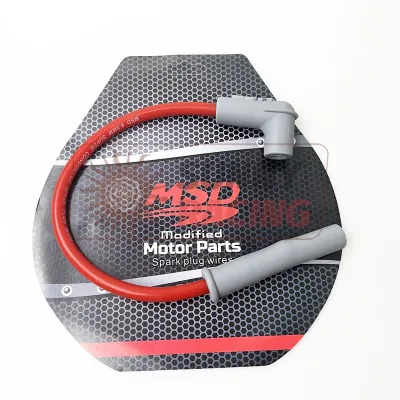
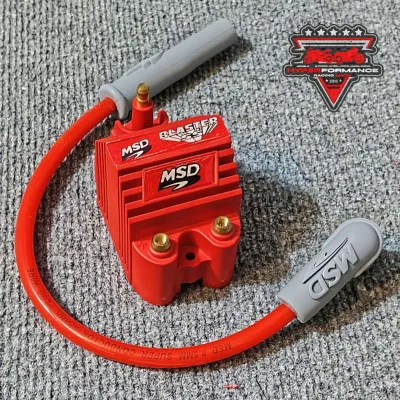
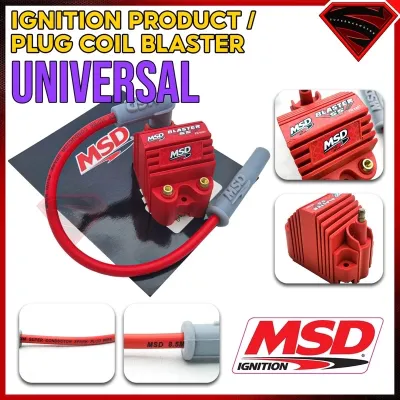
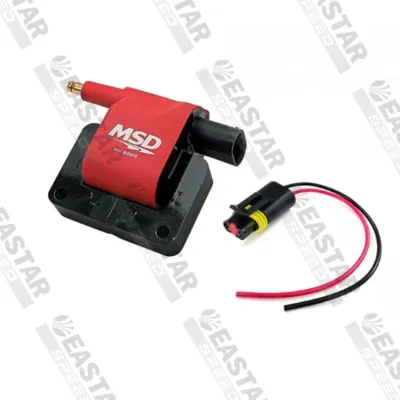
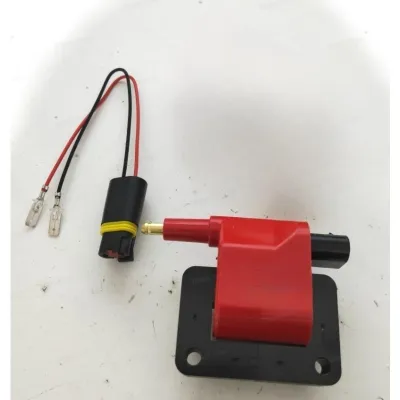
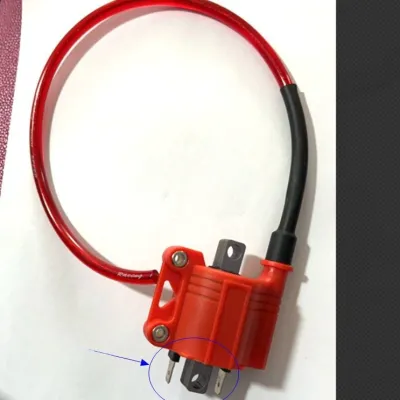
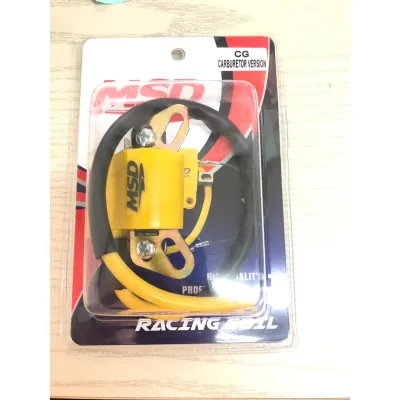
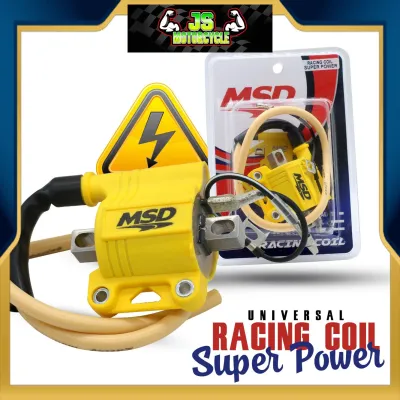
Prices are valid at publication and may change. Please refer to the product page for the latest price.
This high-voltage charge is sent directly to the spark plug, creating an electrical arc that ignites the compressed air-fuel mixture in the cylinder. Over the decades, ignition systems have evolved significantly. Older vehicles rely on a single traditional distributor system that routes spark to each cylinder via spark plug wires. Modern vehicles almost exclusively use Coil-on-Plug (COP) or Coil-near-Plug systems, where an individual coil sits directly atop each spark plug. This design eliminates the energy loss associated with long plug wires and allows the engine control unit (ECU) to manage ignition timing with microsecond precision.
Because ignition coils are highly integrated into the vehicle’s electronic management system, physical compatibility and electrical requirements are exceptionally strict. An ignition coil must match the exact mounting dimensions, connector pin configuration, and electrical resistance specifications designated by your vehicle’s manufacturer. Installing a coil with incorrect resistance values can damage the ignition driver inside your ECU, leading to expensive repairs. Therefore, verifying the exact engine code and parts compatibility is an essential first step before any replacement or upgrade.
MSD vs. Stock Ignition Coils: Core Performance Differences
When comparing MSD ignition coils to standard stock replacements, the differences lie primarily in their internal engineering, electrical output characteristics, and thermal resilience. While both components perform the same basic task, they are designed with entirely different operating environments in mind.

Spark Energy and Throttle Response
MSD ignition coils are engineered to deliver a substantially higher primary and secondary voltage compared to standard OEM units. This increased voltage translates directly into higher spark energy at the spark plug electrode. In high-performance applications, a stronger spark ensures that the air-fuel mixture ignites completely and rapidly, even when subjected to extreme turbulence and high cylinder pressures. At lower engine speeds, MSD’s signature multiple spark discharge technology can fire the spark plug multiple times per combustion stroke, which helps clean up idle quality and improves low-end throttle response.
On a completely stock, naturally aspirated engine, however, the combustion chamber pressures remain well within the limits of what a standard OEM coil can handle. Because the factory coil already provides enough voltage to ensure complete combustion, adding more spark energy does not create additional power. You might notice a slightly smoother idle or marginally crisper throttle response if your old stock coils were already worn out or failing, but the upgrade itself will not transform the performance of an unmodified daily driver. The benefits of this increased spark energy only truly manifest when the engine demands more than the stock system can physically provide. Therefore, evaluating your current engine setup is crucial before expecting any noticeable performance improvements.
Durability and Heat Resistance
The operating environment inside an engine bay in the Philippines is notoriously harsh. Stop-and-go traffic in intense tropical heat, combined with high ambient humidity, subjects ignition coils to extreme thermal cycling. Over time, this heat causes the internal copper windings of an ignition coil to expand and contract, which can eventually crack the protective epoxy insulation and lead to internal electrical shorts.
Stock replacement coils are manufactured to meet standard factory lifecycle expectations under normal driving conditions. They utilize standard potting epoxies and plastic housings that perform reliably for years in a typical commuter vehicle. MSD coils, by contrast, are specifically constructed to withstand the elevated temperatures and severe vibrations of high-performance and motorsport environments. They often feature high-temperature potting compounds, specialized winding materials, and heavy-duty housings designed to dissipate heat more effectively. While this robust construction makes MSD coils highly resilient under extreme conditions, their real-world longevity still depends heavily on proper installation, clean electrical grounds, and protecting the engine bay from excessive, unmanaged heat soak. Regular inspection of the coil boots and clean contact points will also help prevent premature failure in highly humid environments.
Cost and Value Proposition
The financial difference between these two options is substantial, particularly when you are replacing a full set of coils on a multi-cylinder engine. Standard stock replacement coils are highly budget-friendly and widely available across the Philippines. Depending on your vehicle’s make and model, a single quality OEM-spec replacement coil typically costs between ₱1,500 and ₱4,000. Replacing a full set of four coils on a standard commuter car usually ranges from ₱6,000 to ₱16,000.
In contrast, MSD ignition coils carry a premium price tag reflecting their performance engineering. A single MSD Coil-on-Plug unit can range from ₱5,000 to over ₱12,000, while a complete high-performance coil pack set for a V6 or V8 engine can easily exceed ₱25,000 to ₱50,000. For a daily driver, spending this premium is difficult to justify because it provides little to no return on investment. However, for a modified vehicle where a stock coil would fail prematurely or cause performance-limiting misfires, the cost of MSD coils is a necessary and highly valuable investment to ensure engine reliability and peak power delivery. Balancing these costs against your performance requirements is key to making a sound financial decision.
Decision Framework: Which Coil is Right for Your Vehicle?
Choosing between an MSD upgrade and a stock replacement requires a realistic assessment of your vehicle’s current state, your driving habits, and your long-term performance goals.
Choose Stock (OEM) Coils if:
- You drive a daily commuter: If your primary vehicle is a standard sedan, hatchback, or SUV used for daily travel, commuting, or family duties, stock coils are the logical choice.
- Your engine is completely stock: If you have not modified your engine's intake, exhaust, fuel system, or computer tuning, your vehicle will run perfectly on OEM coils.
- You prioritize budget and factory reliability: Stock coils are engineered to run seamlessly with your factory ECU without requiring any modifications, software changes, or supporting upgrades.
- You are replacing a single failed coil: If only one coil has failed on an otherwise healthy, unmodified engine, replacing it with a single OEM-equivalent unit is the most sensible and cost-effective repair.
Choose MSD Ignition Coils if:
- You have added forced induction: If you have installed an aftermarket turbocharger or supercharger kit, or if you have significantly increased the boost pressure on a factory turbocharged engine, the higher cylinder pressures require the superior spark energy of MSD coils to prevent spark blowout.
- You run an aggressive ECU tune: Custom engine tunes that alter ignition timing, air-fuel ratios, or fuel types (such as high-octane racing fuel or E85 blends) benefit greatly from the faster dwell times and consistent voltage of performance coils.
- Your engine has high-compression internals: Built engines with increased compression ratios present a more challenging environment for a spark to jump, making a high-output coil highly beneficial.
- You frequently participate in track days or motorsport: If your engine spends prolonged periods at high RPMs under extreme thermal stress, the heavy-duty construction and superior heat dissipation of MSD coils provide crucial reliability.
Verify First if:
- Your ECU can manage aftermarket coils: Before purchasing, verify whether your vehicle's factory computer can handle the electrical demands of high-output coils without triggering error codes or requiring custom tuning.
- Physical clearance is an issue: Some aftermarket coils feature slightly larger housings or different boot angles that may interfere with engine covers, strut tower braces, or housing clearances. Always verify the exact physical dimensions and fitment guides before buying.
Installation, Compatibility, and Warranty Considerations
Upgrading your ignition system involves working directly with high-voltage electrical components, which requires strict adherence to safety protocols and precise installation steps. Before beginning any work, always disconnect the vehicle’s negative battery terminal to eliminate the risk of electrical shock or short circuits. Additionally, consult your vehicle’s original service manual for specific disassembly steps, torque specifications, and safety warnings.
Physical fitment is the first critical boundary you must verify. Even within the same vehicle model year, different engine options or regional trim levels may use completely different ignition coil interfaces, connector styles, and mounting configurations. Never attempt to force a coil into place if the mounting bolt holes do not align perfectly or if the electrical connector does not click securely into position. A loose electrical connection or a poorly seated coil boot can lead to moisture intrusion, tracking, and severe engine misfires.
If your vehicle is relatively new and still covered by a manufacturer’s warranty, installing aftermarket electrical components like MSD ignition coils can have legal and financial implications. In many cases, dealerships may deny warranty coverage for electrical or powertrain issues if they determine that an aftermarket component caused or contributed to the failure. If preserving your factory warranty is a priority, sticking with genuine OEM replacement parts is highly recommended.
Finally, you must consider the relationship between your ignition coils and your engine’s computer. Upgrading to high-performance coils on a highly modified vehicle often requires a professional tuner to adjust the ECU’s dwell time—the amount of time the coil is charged before firing. If the dwell time is set too high for the new coils, they can quickly overheat and fail; if it is set too low, you will not experience the full performance benefits of the upgrade. If you are unsure about these parameters, always seek the assistance of a qualified automotive technician or professional tuner before operating your vehicle.
Frequently Asked Questions (FAQ)
Will MSD ignition coils improve my fuel economy?
On a well-maintained, completely stock engine, upgrading to MSD ignition coils will not provide a measurable improvement in fuel economy. While a stronger spark does promote complete combustion, a healthy stock ignition system is already highly efficient at burning the fuel mixture. Any minor efficiency gains would be too small to offset the premium purchase price of the performance coils.
Can I mix MSD coils with stock coils?
It is strongly recommended that you do not mix different brands, models, or ages of ignition coils across your engine’s cylinders. Different coils have varying primary and secondary resistance values, dwell time requirements, and voltage outputs. Mixing them can cause uneven combustion, rough idling, unbalanced cylinder power, and may trigger persistent misfire codes or confuse your engine’s computer.
Do I need to change my spark plugs when upgrading to MSD coils?
When upgrading to MSD ignition coils, you should always inspect your spark plugs. Because these coils deliver higher spark energy, you may need to adjust your spark plug gap or switch to a colder heat range plug, especially on forced-induction or heavily tuned engines. Consult your engine builder or a professional tuner to determine the optimal spark plug specifications for your specific setup.
Community discussion
Share your experience or ask a question. Comments are reviewed before publication.