
When purchasing a motorcycle helmet in the Philippines, safety and legal compliance are the two most critical factors to consider. For riders eyeing an MT helmet—a highly popular brand known for balancing performance and affordability—understanding local certification marks is essential. These certifications are not merely administrative stickers; they are proof that your protective gear has undergone rigorous testing to shield your head during an impact. Navigating these standards helps ensure that your investment protects your life on the road while keeping you compliant with local traffic laws.
What Are the PS and ICC Marks on MT Helmets?
The regulatory landscape for motorcycle helmets in the Philippines is governed by the Bureau of Philippine Standards (BPS), an agency under the Department of Trade and Industry (DTI). The BPS is tasked with ensuring that all protective headgear sold in the country meets strict safety protocols. To verify this compliance, the government utilizes two primary safety marks: the Philippine Standard (PS) quality certification mark and the Import Commodity Clearance (ICC) sticker.
The PS mark is issued to local manufacturers whose production facilities and products consistently meet the Philippine National Standards (PNS). In contrast, the ICC mark is designed for imported goods. Because MT Helmets is a brand designed and primarily manufactured in Spain, its products enter the local market as imports. Consequently, the ICC sticker is the specific and mandatory certification mark you must look for when purchasing an MT helmet in the Philippines.
Products mentioned in this guide
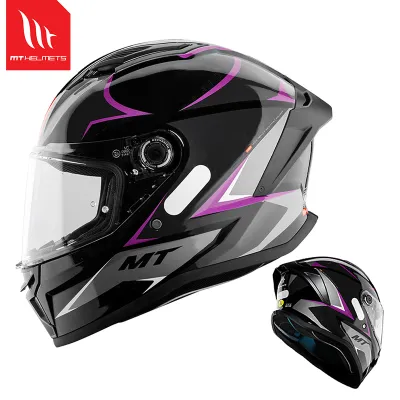
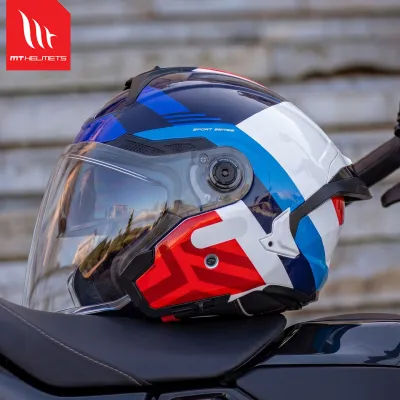
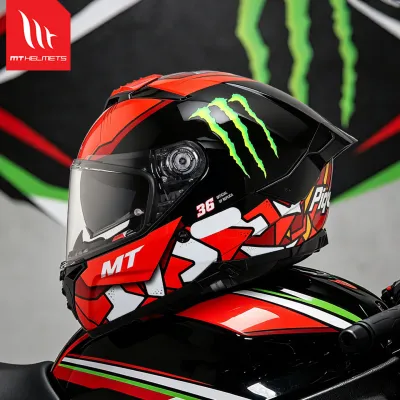
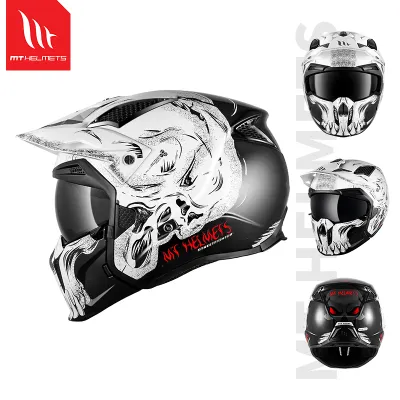
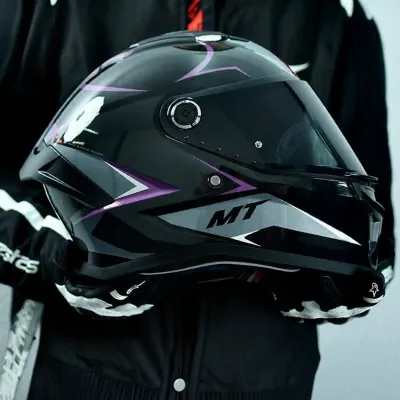
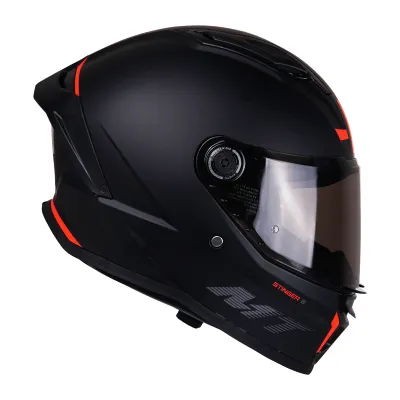
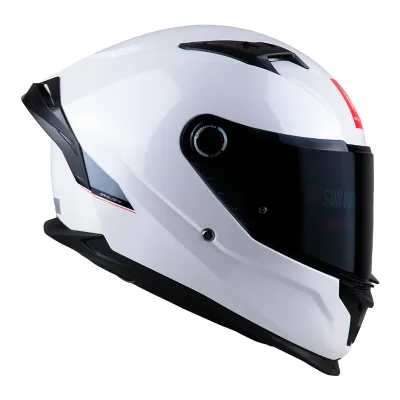
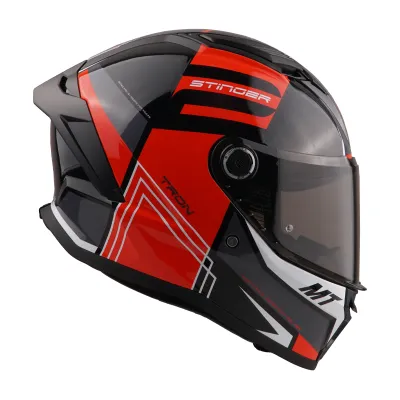
Prices are valid at publication and may change. Please refer to the product page for the latest price.
Both the PS and ICC marks signify that a helmet model has successfully passed the rigorous PNS UNECE 22.05 or the updated PNS UNECE 22.06 testing standards. These evaluations are comprehensive, measuring several key metrics:
- Impact Absorption: Testing how well the inner Expanded Polystyrene (EPS) liner and outer shell cushion the head during a collision.
- Penetration Resistance: Ensuring sharp objects cannot easily pierce the helmet shell.
- Retention System Strength: Checking that the chin strap and buckle remain securely fastened under extreme tension.
- Visor Integrity: Confirming the visor does not shatter into dangerous shards upon impact.
Why These Certifications Matter for MT Helmet Buyers
Acquiring a certified helmet is both a legal obligation and a fundamental safety decision. Under Republic Act No. 10054, also known as the “Motorcycle Helmet Act of 2009,” all motorcycle riders and passengers on Philippine roads must wear standard protective motorcycle helmets. The Land Transportation Office (LTO) and local traffic enforcement units strictly enforce this law. Riding with a non-compliant helmet, or one lacking the official ICC or PS mark, can result in heavy fines, confiscation of your driver’s license, and temporary impoundment of your motorcycle.

Beyond avoiding costly penalties, these certifications offer vital safety assurance. High-speed travel on local highways exposes riders to unpredictable road hazards, unpredictable traffic behavior, and varied weather conditions. An uncertified helmet may look identical to a premium model, but it often lacks the high-density EPS foam or structural shell integrity required to absorb energy during a crash. A genuine, certified MT helmet is engineered to distribute impact forces away from your skull, dramatically reducing the risk of traumatic brain injuries.
Additionally, looking for legitimate certification marks is your first line of defense against counterfeit products. Because MT helmets are highly sought after by local riders, substandard imitation helmets bearing fake brand logos frequently enter the market. These knockoffs are typically made of cheap, brittle plastics that split open upon minor impacts. Verifying the authenticity of the ICC sticker helps you confirm that you are purchasing a genuine MT product designed to protect your life rather than a dangerous counterfeit.
How to Verify Authentic PS and ICC Marks on Your MT Helmet
Ensuring your helmet is legally compliant and safe requires a careful physical inspection before you complete your purchase. Authentic ICC stickers are not generic decals that can be easily peeled off and transferred between helmets.
To verify a genuine mark on an MT helmet, look at the lower rear portion of the outer shell. The ICC sticker should be firmly adhered to this area, often placed under a protective clear coat by authorized distributors, or featuring a distinct holographic pattern that shifts color when tilted under light. A genuine ICC sticker also displays a unique serial number and the specific standard reference code.
Be vigilant for common red flags that indicate a fake certification mark. Substandard or counterfeit helmets often feature poorly printed stickers with misspelled words, blurry logos, or off-center text. If the sticker peels off effortlessly with a fingernail or leaves no tamper-evident residue, it is highly likely a counterfeit. Furthermore, if a seller offers a helmet with a loose sticker provided in a plastic bag for you to apply yourself, decline the purchase immediately, as this is a common tactic used by distributors of uncertified gray-market goods.
If you have doubts about a specific helmet’s legitimacy, you can perform a documentation check. Authorized retailers in the Philippines should be able to present a copy of the BPS Import Commodity Clearance certificate for their specific shipment batch. You can also cross-reference the serial number printed on the ICC sticker with the official online database maintained by the Bureau of Philippine Standards to verify that the certification corresponds to an authorized MT helmet import.
Choosing the Right MT Helmet: Beyond the Certification Marks
While the local ICC sticker is the legal baseline required for riding on public roads, it is not the only metric you should use when selecting your protective gear. Genuine MT helmets are designed for the global market and carry international safety certifications that often exceed local requirements.
Most modern MT models are certified under the European standard ECE 22.06, which involves much stricter rotational impact testing and multi-directional angle drops than older standards. When you buy an authorized MT helmet, you are getting a product that satisfies both the local LTO regulations and some of the most advanced safety benchmarks in the world.
When choosing your specific MT model, consider your daily riding environment and the tropical climate of the Philippines. Full-face helmets, such as the MT Targo or MT Revenge series, offer the highest level of facial and chin protection, making them ideal for highway commuting and long-distance rides. If you primarily navigate congested city traffic at lower speeds, an open-face or modular model might offer better airflow. However, ensure that the ventilation ports are adjustable and that the inner comfort liner is fully removable and washable to manage sweat and humidity. Always refer to the manufacturer’s official sizing chart and fitment instructions, as a helmet that is too loose will not protect you effectively, regardless of its certifications.
To guarantee your safety, always purchase your gear through authorized physical dealers or official brand stores on reputable online marketplaces. Buying from authorized channels ensures that your MT helmet has undergone official customs and safety clearance, carries a valid ICC sticker, and is backed by a legitimate manufacturer warranty. Avoiding gray-market imports—which might be genuine products but lack the required local ICC certification—saves you from legal complications during roadside LTO inspections.
Frequently Asked Questions (FAQ)
Can I use an MT helmet with only an ECE or DOT mark in the Philippines?
No, you cannot legally use a helmet with only ECE or DOT markings on public roads in the Philippines. While ECE (European) and DOT (US) standards indicate excellent safety engineering, the Land Transportation Office (LTO) specifically mandates the presence of a local ICC or PS certification mark. To remain compliant with local laws and avoid fines, your imported MT helmet must display the official ICC sticker.
Are all MT helmets sold online in the Philippines ICC certified?
No, not all MT helmets sold online carry the necessary local certification. Unauthorized online sellers frequently list gray-market imports or counterfeit helmets that bypass official BPS inspection channels, leaving them without the mandatory ICC sticker. To protect yourself from legal penalties and ensure your safety, always verify the seller’s authorized status and confirm that the physical helmet comes with a verified, authentic ICC mark before buying.
Community discussion
Share your experience or ask a question. Comments are reviewed before publication.