
Finding the correct Mutakin fuel hose size for your Honda Click or Yamaha Mio is not as simple as buying a one-size-fits-all part. Because these highly popular scooters span multiple generations, engine displacements, and fuel delivery systems—ranging from classic carbureted engines to modern electronic fuel injection (EFI) systems—the required inner diameter and hose length vary significantly. To ensure a secure, leak-free fit that can withstand daily commuting under tropical conditions, you must verify your scooter’s original equipment manufacturer (OEM) specifications, measure your existing fuel line with precision tools, and select a matching Mutakin hose variant designed for your specific setup.
Understanding Scooter Fuel Hose Specifications
Identifying the critical physical and material dimensions of a fuel hose is the first step toward a successful replacement. The most important dimension is the inner diameter (ID), which must match the outer diameter of the fuel pump, carburetor, or fuel injector nipple. A hose with an inner diameter that is too large will fail to seal properly, even with tight clamps, leading to dangerous fuel leaks. Conversely, a hose with an inner diameter that is too small will be extremely difficult to install, and forcing it over a fitting can stretch, weaken, or tear the inner lining, restricting fuel flow and causing engine starvation.
The outer diameter (OD) determines the overall thickness of the hose wall. A thicker wall generally offers better pressure resistance and durability against external wear, but it also affects the hose’s flexibility and how it fits into tight routing clips along the scooter’s frame. When routing a hose through the compact chassis of a modern scooter, balancing flexibility with wall thickness is essential to prevent kinking.
Products mentioned in this guide
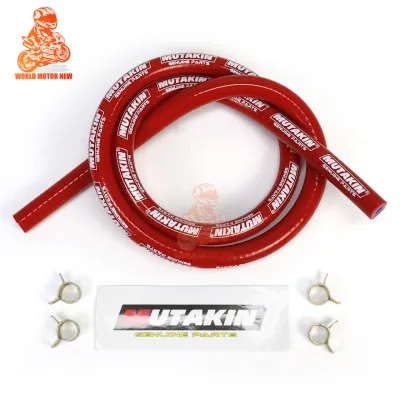
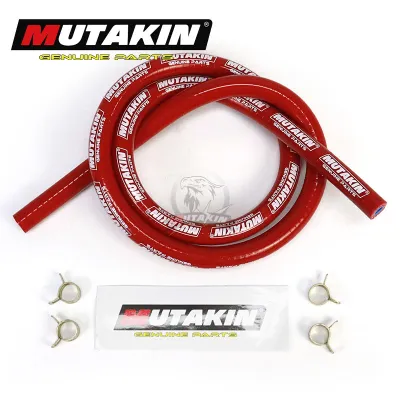
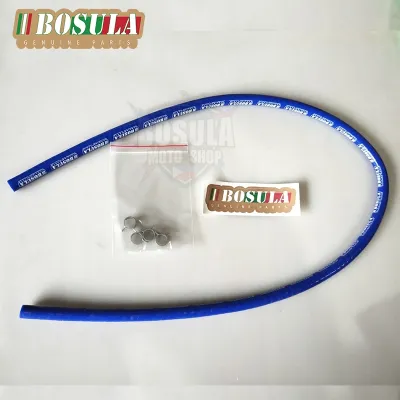
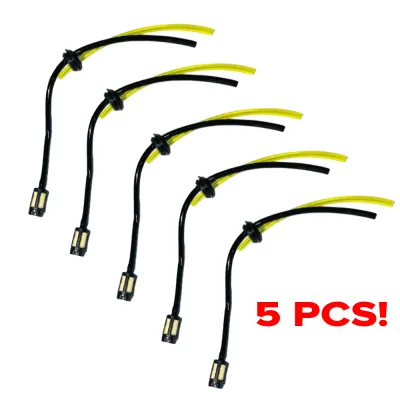
Prices are valid at publication and may change. Please refer to the product page for the latest price.
Length must be calculated carefully to avoid tension or excess slack. A fuel line that is too short will be under constant tension, especially as the scooter’s engine swings on its rubber mounts during acceleration and over bumps. A line that is too long can kink, pinch under the seat bucket, or rub against hot engine components like the cylinder head.
Material composition is equally vital for longevity. In tropical climates like the Philippines, where fuel often contains up to 10% ethanol (E10), standard rubber hoses can degrade rapidly. Ethanol is highly corrosive to certain elastomers, causing them to swell, harden, crack, or dissolve from the inside out. When selecting a replacement hose, it is essential to verify that the material is rated for fuel contact and ethanol resistance, such as high-grade nitrile rubber (NBR) or fluoroelastomer (FKM) compounds, which maintain their structural integrity over years of exposure to heat and fuel.
Determining the Correct Size for Your Honda Click
The Honda Click series, including the Click 125i, Click 150i, and Click 160, utilizes high-pressure electronic fuel injection systems. Because these systems operate under significant pressure from an electric fuel pump housed inside the fuel tank, the fuel hose must be rated to handle this pressure without expanding or bursting.

To find the exact fuel hose requirements for your specific Honda Click model, your first step should be consulting the official Honda owner’s manual or service manual. These documents contain detailed schematics of the fuel system, often listing the exact inner diameter of the fuel feed hose. Because different generations of the Click may feature slight variations in fuel pump nipple designs or routing paths, relying on the manual for your specific model year is the safest approach.
If you do not have access to the manual, or if the documentation does not explicitly state the hose dimensions, you must measure the existing stock hose. Before attempting any work on a fuel-injected scooter like the Honda Click, you must depressurize the fuel system to prevent fuel from spraying under pressure. This is typically done by disconnecting the fuel pump electrical connector, starting the engine, and letting it run until it stalls from lack of fuel. Once the system is depressurized, disconnect the negative battery terminal to eliminate any potential ignition sources.
Carefully remove the stock fuel hose and use a digital caliper to measure the outer diameter of the metal or plastic fuel nipples on the fuel pump and the injector body. The inner diameter of your new Mutakin fuel hose must match this nipple diameter closely to create a snug, interference fit. Additionally, measure the total length of the stock hose along its outer curve, noting any pre-formed bends that help the hose clear the engine shroud and frame.
Determining the Correct Size for Your Yamaha Mio
The Yamaha Mio family is incredibly diverse, encompassing older carbureted models like the Mio Sporty, Mio Soul, and Mio Amore, as well as modern fuel-injected variants like the Mio i 125 (M3), Mio Soul i 125, and Mio Gear. This diversity means that fuel hose requirements differ drastically across the Mio lineup, making a generic purchase highly risky.
Carbureted Mio models operate on a gravity-fed or vacuum-petcock system, which runs at very low pressure. These systems typically use softer, unreinforced fuel lines that are relatively easy to slip onto the carburetor inlet. Fuel-injected Mio models, on the other hand, require reinforced hoses capable of handling the high pressure generated by the fuel pump, meaning you cannot safely use a low-pressure carburetor hose on an EFI Mio.
To determine the correct size for your Mio, start by checking the Yamaha OEM parts catalog or service manual for your specific model year and engine type. Yamaha parts diagrams often list the fuel pipe assembly with its dimensions or a specific part number that can be cross-referenced. This is particularly useful for identifying the correct length, as routing paths can vary between the compact Mio Sporty and the larger Mio Soul i.
If you need to measure the hose manually, inspect the exterior of the stock hose first. Manufacturers sometimes print the inner diameter (often in millimeters, such as 5mm or 6mm) directly onto the outer jacket of the hose. If no markings are visible, use a digital caliper to measure the inner diameter of the hose ends or the outer diameter of the carburetor or fuel pump fittings. Because carbureted and fuel-injected Mio models route their fuel lines differently—often threading them through tight spaces near the rear shock absorber and under-seat storage—be sure to measure the exact routing path to determine the necessary hose length, keeping in mind that the engine moves independently of the frame.
Selecting the Right Mutakin Fuel Hose Variant
Once you have verified the required inner diameter and length for your Honda Click or Yamaha Mio, you can begin shopping for a compatible Mutakin fuel hose. Mutakin offers various fuel hose options, typically categorized by their inner diameter (such as 5mm, 6mm, or 8mm) and sold either by the meter or in pre-cut lengths.
Compare your measured nipple or hose inner diameter against the specifications listed on the Mutakin product packaging or seller description. Do not guess or round up; a 1mm difference can be the difference between a perfect seal and a persistent leak. If your measurement falls between sizes, consult with a professional mechanic or the seller to determine which size provides the safest fit for your specific fittings.
When calculating the length of the hose to purchase, always add a small margin of safety—typically 2 to 3 centimeters—to your measured stock length. This extra length ensures that the hose can accommodate the natural flexing and pivoting of the scooter’s engine swingarm without pulling tight at the connections. It also allows you to trim the ends cleanly if you make a mistake during installation or need to refresh the connection in the future.
When browsing online marketplaces or local motorcycle parts shops in the Philippines, look for authorized Mutakin dealers to ensure you are purchasing genuine products. Read the product descriptions carefully to verify the hose’s pressure rating and material compatibility, ensuring it is explicitly rated for gasoline and ethanol blends. If the listing lacks detailed specifications, send a direct message to the seller asking for the exact inner and outer diameters before placing your order.
Safe Installation and Leak Prevention
Working with a motorcycle’s fuel system carries inherent risks, making safety the absolute priority during installation. Always work in a well-ventilated outdoor area, far away from open flames, pilot lights, or electrical tools that could generate sparks. Keep a rated fire extinguisher nearby and wear appropriate personal protective equipment, including fuel-resistant gloves and safety glasses.
When installing your new Mutakin fuel hose, selecting the correct clamps is just as important as choosing the hose itself. Avoid using standard worm-gear clamps with slotted bands, as the metal slots can pinch and cut into the soft rubber of the hose under tension, leading to premature failure. Instead, opt for spring-tension clamps or solid-band fuel line clamps designed specifically for small-diameter hoses. These clamps apply even, radial pressure around the entire circumference of the hose without damaging the outer jacket.
Route the new hose carefully along the original OEM path. Ensure the hose does not contact hot engine parts, such as the cylinder head or exhaust manifold, which can quickly melt or degrade the rubber. Keep the hose clear of sharp metal edges on the frame and moving parts like the rear suspension linkage. Use zip ties or frame clips to secure the hose, but do not overtighten them, as this can pinch the line and restrict fuel flow.
After securing the hose and clamps, perform a thorough visual inspection. Reconnect the battery and, for fuel-injected models, turn the ignition key to the “ON” position without starting the engine. This will prime the fuel pump and pressurize the system. Inspect all connection points closely for any signs of weeping, dampness, or dripping fuel. If no leaks are detected, start the engine and let it idle for several minutes while continuing to monitor the connections. Never ride the scooter if you detect even a faint smell of raw gasoline or see any moisture around the fuel line.
Frequently Asked Questions (FAQ)
Can I use a slightly larger inner diameter hose if the exact size is unavailable?
No, you should never use a fuel hose with a larger inner diameter than what is specified for your scooter. Even if you attempt to tighten a larger hose using heavy-duty clamps, the hose material will bunch up, creating tiny channels that allow fuel to leak under pressure. This is especially dangerous on fuel-injected models like the Honda Click or newer Yamaha Mio variants, where the fuel system operates under high pressure. An exact match is required to maintain system pressure and prevent hazardous fuel leaks.
How often should I replace the fuel hose on my scooter?
As a general guideline, you should inspect your scooter’s fuel hose during every routine maintenance interval, or at least once a year. Look for visual signs of degradation, such as cracking, dry rot, swelling, hardening, or discoloration. In the hot and humid climate of the Philippines, rubber components can age more rapidly. If the hose feels stiff and brittle, or if it has lost its flexibility, it should be replaced immediately, even if no active leaks are visible.
Do I need special tools to measure the fuel hose inner diameter?
Yes, using a digital caliper is highly recommended for measuring the inner diameter of a fuel hose or the outer diameter of fuel nipples. Standard rulers or tape measures lack the precision required for these small measurements, where a fraction of a millimeter determines a proper fit. A digital caliper allows you to measure both the inside and outside dimensions accurately, ensuring you purchase the correct Mutakin hose variant without relying on guesswork.
Community discussion
Share your experience or ask a question. Comments are reviewed before publication.