
The Short Answer: Which Boot Wins for Extended Highway and Provincial Rides?
When planning an extended journey across the scenic highways and unpredictable provincial roads of the Philippines, selecting the correct riding footwear is one of the most critical decisions you will make. For pure long-distance highway and provincial rides, dedicated touring boots are generally the superior choice. They offer the necessary all-day comfort, walking flexibility, and weather protection required to handle hours in the saddle and quick stops along the way.
Conversely, motocross boots—commonly referred to as mx boots—excel in extreme impact protection and technical off-road segments. However, they significantly compromise on highway fatigue, weight, and walking comfort. The ultimate deciding factor comes down to the terrain ratio of your route: if your journey consists of 80% paved roads and 20% light gravel, touring boots are your best bet. If you are actively seeking out deep mud, river crossings, and technical mountain trails where dropping a heavy adventure bike is a constant risk, the uncompromising armor of mx boots becomes necessary.
Protection and Safety: Off-Road Armor in MX Boots vs Highway Impact Resistance
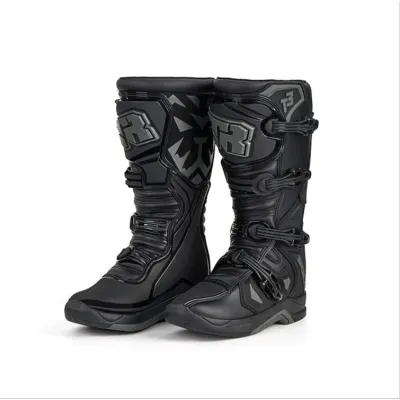
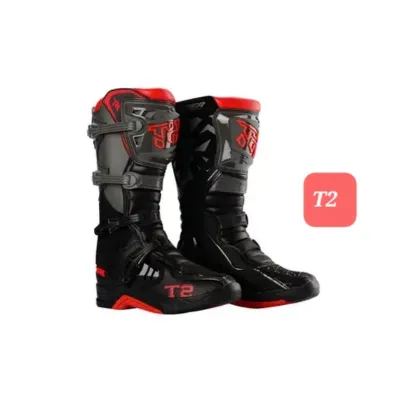
To understand which boot fits your long-distance ride, you must first examine the protective design philosophies behind them. Motocross boots are built like armored shells, prioritizing rigid defense against heavy impacts, crushing forces, and extreme torsional twisting. They feature thick, molded Thermoplastic Polyurethane (TPU) plates covering the shin, calf, ankle, and toe box, paired with an internal steel or nylon shank in the sole to prevent the foot from wrapping around the footpeg during hard landings.
Products mentioned in this guide
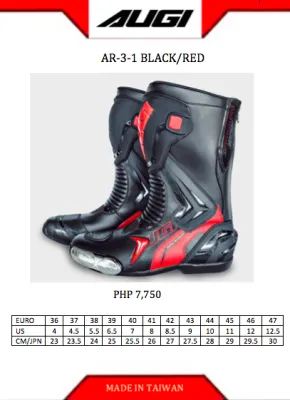
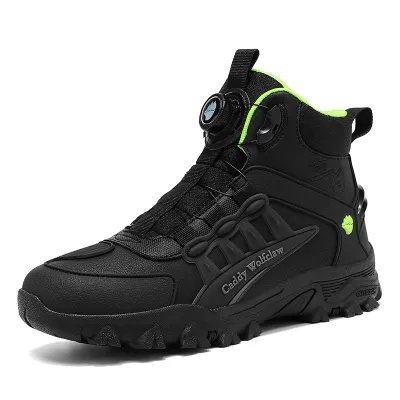
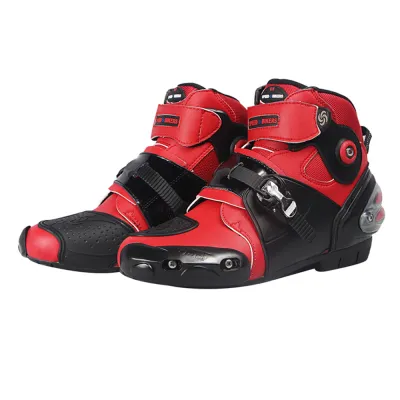
Prices are valid at publication and may change. Please refer to the product page for the latest price.

This extreme level of armor is vital when navigating technical off-road trails where you might drop a 200-kilogram adventure motorcycle on your leg, or strike a hidden rock or tree stump. Many premium mx boots also incorporate a mechanical ankle hinge system. This hinge allows controlled forward and backward movement for shifting and braking, but locks out completely during lateral impacts to prevent severe ankle sprains, dislocations, or fractures.
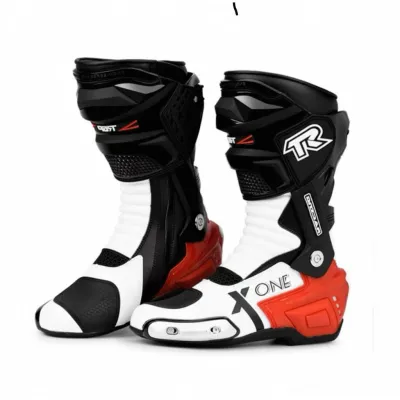
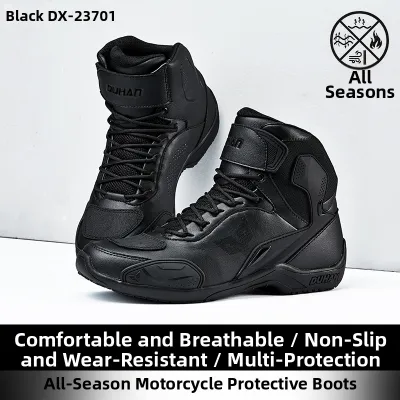
Touring boots, on the other hand, focus on a different safety profile tailored for paved roads and high-speed highway travel. Instead of rigid plastic armor designed to deflect flying debris, touring boots emphasize high-speed abrasion resistance and localized impact protection. They are typically constructed from heavy-duty full-grain leather or advanced synthetic microfibers that can withstand prolonged friction against asphalt in the event of a highway slide.
Rather than an external plastic skeleton, touring boots utilize internal ankle cups, reinforced heel counters, and subtle shin guards made of impact-absorbing materials like D3O or SAS-TEC. These materials remain soft and flexible during normal riding but instantly harden upon impact. While this design offers excellent protection on paved provincial roads, it lack the lateral crush resistance of mx boots, making them less suitable for technical off-road environments where heavy bike drops are common.
Comfort and Fatigue: Weight, Flexibility, and All-Day Wear
Over a multi-day tour spanning hundreds of kilometers, the weight and flexibility of your footwear directly impact your physical stamina. A typical pair of mx boots can weigh between 2.0 and 2.5 kilograms per boot due to their heavy plastic plating, thick rubber soles, and steel shanks. This substantial weight places continuous strain on your hip flexors and calves, especially during long highway stretches where your legs remain relatively static on the footpegs.
Furthermore, the stiff construction of mx boots severely limits ankle articulation. This rigidity makes simple tasks like operating the rear brake pedal and gear shifter a challenge, often requiring you to lift your entire leg rather than pivoting your ankle. Over hours of riding, this repetitive motion leads to premature muscle fatigue and joint stiffness, reducing your overall control and reaction times.
Touring boots are engineered specifically to combat rider fatigue during long hours of continuous wear. Weighing significantly less—usually between 1.0 and 1.5 kilograms per boot—they reduce the physical effort required to control your motorcycle. Their flexible leather or synthetic chassis allows for natural ankle movement, enabling precise, effortless shifting and braking without straining your joints.
This flexibility also translates to superior walking comfort. When you stop at a gas station, a local restaurant, or a tourist spot along your route, touring boots allow you to walk naturally without the stiff, robotic gait associated with mx boots. Walking a short distance in mx boots can be exhausting and painful, as the rigid soles do not flex, and the heavy buckles can pinch your shins.
Another critical factor is vibration damping. Long-distance highway cruising often transmits high-frequency engine and road vibrations through the footpegs, which can cause numbness and tingling in your feet. Touring boots typically feature multi-density EVA foam midsoles and cushioned footbeds designed to absorb these vibrations. MX boots prioritize a stiff, unyielding connection to the footpegs for off-road control, which transmits road buzz directly to your soles, accelerating foot fatigue.
Weather, Ventilation, and Provincial Road Versatility
When riding through the diverse microclimates of the Philippines, your gear must adapt to sudden weather shifts. A sunny morning on the expressway can quickly transition into a torrential afternoon downpour in the provinces. Touring boots excel in these unpredictable conditions because many models feature integrated waterproof and breathable membranes, such as Gore-Tex or proprietary laminates.
These membranes prevent water from penetrating the boot during heavy monsoon rains while allowing sweat vapor to escape, keeping your feet dry and comfortable in high humidity. For dry-season riding, touring boots are also available in highly ventilated or perforated leather versions that promote continuous airflow, preventing heat buildup and sweat accumulation that can lead to painful blisters.
MX boots are generally not designed for wet-weather road riding. Because they are built for closed-course motocross tracks where water resistance is secondary to drainage, they often feature open buckle systems, stitched seams, and non-waterproof materials. If you encounter a sudden provincial downpour or ride through a deep puddle, water will easily seep into the boots.
Once wet, the thick internal foam padding of an mx boot acts like a sponge, retaining moisture and taking days to dry completely in humid tropical environments. Riding in wet, heavy boots for the remainder of a multi-day trip is not only uncomfortable but also increases the risk of skin infections and unpleasant odors.
Additionally, mx boots are strictly riding gear. Their bulk and rigidity mean you cannot comfortably wear them off the bike for extended periods. If you choose to ride in mx boots, you must allocate valuable luggage space to pack a separate pair of shoes for walking around your destination or relaxing at your hotel. Touring boots offer the versatility to serve as your primary footwear both on and off the motorcycle, streamlining your packing list.
Head-to-Head Feature Comparison
To help you visualize how these two boot styles compare across key performance areas, refer to the table below:
| Feature | MX Boots | Touring Boots |
|---|---|---|
| Primary Use Case | Closed-course motocross, technical off-road trails | Paved highways, provincial roads, light gravel |
| Ankle & Shin Protection | Extreme (rigid TPU armor, lateral lockout hinges) | Moderate (internal impact cups, abrasion-resistant leather) |
| Walking Comfort | Very low (stiff, heavy, ski-boot-like gait) | High (flexible soles, ergonomic ankle movement) |
| Weather Resistance | Low (prone to water entry, slow to dry) | High (available waterproof and breathable membranes) |
| Weight & Fatigue | Heavy (causes calf and hip strain over long hours) | Lightweight (designed for reduced muscle fatigue) |
| Vibration Damping | Minimal (rigid sole transmits high-frequency buzz) | Excellent (cushioned footbeds absorb engine vibration) |
How to Choose: Decision Framework for Your Riding Style
Selecting the right boot requires an honest assessment of your typical riding routes, your motorcycle type, and your personal comfort priorities.
Choose Touring Boots if:
- Your routes are mostly paved: Your long-distance journeys consist primarily of paved expressways, national highways, and well-maintained provincial roads.
- You value off-bike mobility: You enjoy stopping to explore local towns, walking to scenic viewpoints, or checking into accommodations without needing to immediately change your shoes.
- You ride in all weather conditions: You need reliable, built-in protection against sudden tropical rainstorms and high humidity.
- You want to minimize fatigue: You prefer a lightweight, cushioned boot that reduces joint stiffness and muscle strain over a 500-kilometer riding day.
Choose MX Boots if:
- Your route includes technical off-road terrain: Your definition of a long-distance ride involves navigating unpaved mountain passes, deep mud, sandy tracks, or river crossings.
- You ride a heavy dual-sport or adventure bike off-road: You require maximum crush protection to safeguard your feet and ankles in the event of a low-speed drop on uneven, rocky terrain.
- Safety overrides all comfort concerns: You are willing to accept the trade-offs of heavy weight, stiff walking, and poor weather resistance in exchange for the absolute highest level of ankle and shin armor available.
Verify First if considering Hybrid ADV Boots:
If you feel torn between these two categories, you might consider a hybrid Adventure (ADV) boot. Before purchasing, check the boot’s sole stiffness, ankle articulation, and manufacturer specifications. Hybrid boots attempt to bridge the gap by combining a touring-style waterproof membrane with a moderately stiff off-road sole and basic ankle support. However, keep in mind that they are a compromise: they will not offer the same level of extreme impact protection as a dedicated mx boot, nor will they match the featherweight comfort of a dedicated touring boot. Always ensure the specific model aligns with your primary riding environment before making an investment.
Frequently Asked Questions (FAQ)
Can I wear MX boots for daily city commuting?
Wearing mx boots for daily city commuting is highly impractical and not recommended. The stop-and-go traffic characteristic of urban areas requires frequent gear shifting, rear-brake modulation, and constant foot-planting at intersections. The extreme stiffness and bulk of mx boots make these actions exhausting and reduce your tactile feedback, making it difficult to feel your controls. Additionally, the lack of ventilation in heavy off-road boots leads to excessive heat buildup in slow-moving traffic, and their rigid construction makes walking into an office, store, or restaurant highly uncomfortable.
Are touring boots safe enough for light off-road trails?
Yes, touring boots provide adequate protection for light off-road scenarios, such as flat gravel roads, hard-packed dirt paths, and well-graded provincial trails. Their abrasion-resistant construction and basic ankle reinforcement are sufficient to handle minor slips and small flying pebbles. However, if your route transitions into technical single-track trails, deep ruts, loose rocks, or muddy terrain, touring boots are not safe enough. For these environments, you should switch to dedicated off-road or mx boots, which offer the necessary lateral rigidity and crush protection to prevent severe injuries if your leg becomes pinned under the motorcycle.
Community discussion
Share your experience or ask a question. Comments are reviewed before publication.