
Quick Answer: Which National Brake Fluid Should You Use?
Choosing the correct National brake fluid (often searched by motorists as national break fluid) is not a matter of finding a universally “better” or upgraded product. Instead, your choice must be dictated strictly by the exact specifications established by your vehicle’s manufacturer. Before purchasing any automotive fluid, you should always consult your vehicle’s owner’s manual or inspect the embossed text on the brake fluid reservoir cap located under the hood.
Using an incorrect DOT rating can compromise your braking safety, damage internal hydraulic seals, or trigger electronic braking system errors. While DOT4 formulations generally offer higher heat resistance and superior boiling points, they are only the appropriate choice if your vehicle’s braking system is explicitly engineered to handle their specific chemical composition and viscosity profile. Never treat brake fluid selection as an opportunity for arbitrary upgrades without verifying manufacturer compatibility first.
Understanding DOT Ratings: What Do DOT3 and DOT4 Mean?
The acronym “DOT” refers to the Department of Transportation, which establishes the Federal Motor Vehicle Safety Standard (FMVSS) 116 in the United States. These standards, which align closely with international guidelines like ISO 4925, dictate the performance, chemical, and physical baselines that hydraulic brake fluids must meet to be legally sold. A DOT rating is not a measure of brand luxury or overall quality; rather, it is a classification system based on specific performance thresholds.
Products mentioned in this guide
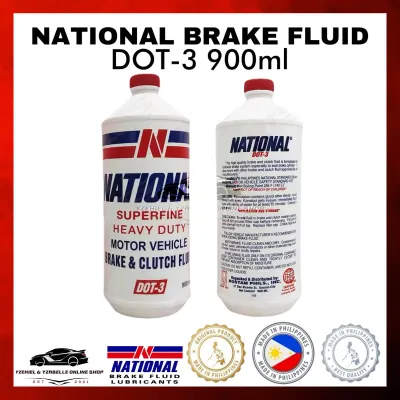
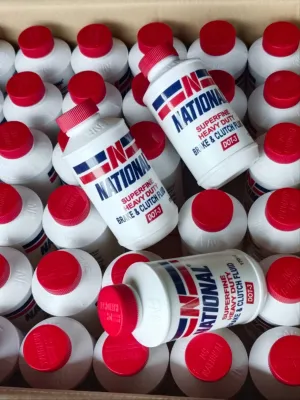
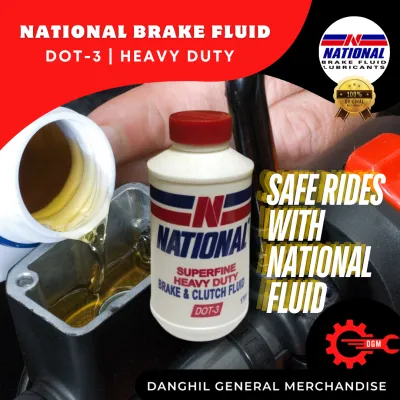
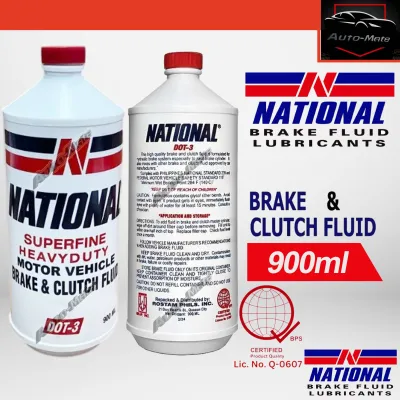
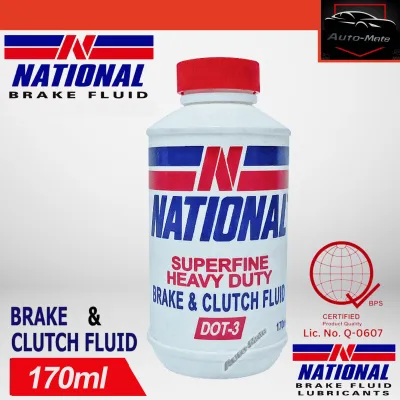
Prices are valid at publication and may change. Please refer to the product page for the latest price.

These regulatory standards primarily classify fluids by their minimum dry and wet boiling points, viscosity at extreme temperatures, chemical stability, and compatibility with various rubber seals and metal alloys. Both DOT3 and DOT4 are glycol-ether-based fluids, meaning they share a fundamentally similar chemical foundation. They are designed to operate within hydraulic systems to transmit force from your foot on the brake pedal directly to the brake pads and rotors.
Despite their shared glycol base, the two ratings differ significantly in their chemical additives. DOT4 fluids contain specialized compounds, such as borate esters, which alter how the fluid behaves under high thermal loads and how it interacts with moisture over its service life. Understanding these underlying differences is essential for maintaining the safety and longevity of your vehicle’s braking system.
Key Differences Between National Break Fluid DOT3 and DOT4 Formulations
While National DOT3 and DOT4 fluids might look virtually identical when poured fresh from a sealed bottle, their performance profiles diverge significantly under operational stress. These differences become critical when your vehicle is subjected to demanding driving conditions, heavy loads, or prolonged use.
Boiling Points and Heat Resistance
The primary differentiator between DOT3 and DOT4 fluids is their thermal tolerance, measured by two distinct metrics: the dry boiling point and the wet boiling point. The dry boiling point represents the temperature at which fresh, completely uncontaminated fluid from a newly opened container will boil. The wet boiling point represents the boiling temperature after the fluid has absorbed a standard 3.7% of water by volume, which naturally occurs over months of vehicle operation.
According to FMVSS 116 standards, DOT3 fluids must maintain a minimum dry boiling point of 205°C (401°F) and a minimum wet boiling point of 140°C (284°F). In contrast, DOT4 fluids are engineered to meet higher thermal thresholds, requiring a minimum dry boiling point of 230°C (446°F) and a minimum wet boiling point of 155°C (311°F). National formulations are designed to meet or exceed these regulatory baselines to ensure consistent hydraulic pressure.
When you brake, the friction between the brake pads and rotors generates intense heat, which transfers directly into the brake calipers and the surrounding fluid. If the brake fluid reaches its boiling point, it undergoes a physical phase change from a liquid to a gas. Because gas is highly compressible, pressing the brake pedal will merely compress the gas bubbles rather than pushing the brake pads against the rotors, leading to a dangerous condition known as vapor lock or brake fade. DOT4 provides a higher thermal ceiling to prevent this failure mode during prolonged braking.
Chemical Composition and Moisture Absorption
Both DOT3 and DOT4 brake fluids are hygroscopic, meaning they naturally and continuously absorb moisture from the surrounding atmosphere. This moisture absorption occurs through microscopic pores in flexible rubber brake hoses, reservoir vents, and rubber seals. Over time, water accumulation is inevitable in any hydraulic braking system.
To manage this water ingress, DOT4 formulations incorporate borate esters into their glycol-ether base. These borate chemical groups actively react with absorbed water molecules, chemically binding them and mitigating their ability to lower the fluid’s overall boiling point. This chemical buffering allows DOT4 to maintain a higher boiling point for a longer period compared to DOT3 as moisture levels rise.
This chemical difference is particularly critical in tropical, high-humidity environments like the Philippines. High ambient humidity accelerates the rate of moisture absorption through the system’s seals and hoses. In these climates, a fluid with superior moisture-handling capabilities, such as DOT4, offers a wider safety margin before the wet boiling point drops to a critical level, provided the vehicle’s hydraulic system is designed to accommodate it.
Viscosity and ABS/ESP Compatibility
Viscosity refers to a fluid’s thickness and its resistance to flow. In modern automotive engineering, viscosity is a critical parameter because of the widespread implementation of advanced electronic safety systems, such as Anti-lock Braking Systems (ABS) and Electronic Stability Programs (ESP). These systems function by rapidly modulating brake pressure through micro-valves that open and close dozens of times per second.
To ensure these safety systems react instantly during an emergency maneuver, the brake fluid must flow freely through incredibly narrow channels, even under extreme temperature variations. Standard DOT3 fluids typically exhibit lower viscosity at cold temperatures compared to standard, non-modified DOT4 fluids. However, many modern DOT4 formulations are engineered as low-viscosity fluids (often designated as DOT4 LV) to match or exceed the rapid flow characteristics of DOT3.
If you introduce a standard, high-viscosity DOT4 fluid into a modern vehicle that explicitly requires a low-viscosity formulation, the thicker fluid can cause a measurable delay in ABS or ESP response times. Conversely, using a fluid with incorrect flow properties can disrupt the pressure feedback loops of the electronic control unit. Always verify whether your vehicle’s manufacturer specifies a low-viscosity fluid before making a purchase.
Can You Mix or Upgrade from DOT3 to DOT4?
One of the most common points of confusion among vehicle owners is whether these two fluids can be mixed or if switching to DOT4 constitutes a simple upgrade. Understanding the physical and chemical boundaries of these fluids is essential for preventing catastrophic braking system failures.
Mixing DOT3 and DOT4
While DOT3 and DOT4 are chemically compatible in the sense that they are both glycol-ether-based and will not cause immediate chemical coagulation or separation when mixed, doing so is strongly discouraged. If you mix DOT3 and DOT4 fluids, the resulting mixture’s overall boiling point will drop toward the lower threshold of the DOT3 fluid. This effectively negates the thermal benefits of the DOT4 fluid.
Mixing fluids also introduces unpredictable physical characteristics, as the additive packages from different formulations may not interact optimally. If you must top up your brake fluid in an emergency, use the exact type currently residing in the reservoir. If you are unsure what fluid is in the system, avoid mixing and instead arrange for a complete system inspection and fluid flush.
Upgrading from DOT3 to DOT4
Upgrading a vehicle’s braking system from DOT3 to DOT4 is theoretically possible because of their shared chemical ancestry, but it is not as simple as pouring new fluid into the reservoir. The internal rubber seals, flexible hoses, and master cylinder components of older vehicles designed for DOT3 were engineered around the specific chemical properties and swelling characteristics of DOT3. Introducing DOT4 can sometimes alter seal swelling rates, potentially leading to slow hydraulic leaks over time.
To perform a safe and successful upgrade, you must execute a complete, professional system flush. This process involves purging every drop of the old DOT3 fluid, cleaning the lines, and refilling the system entirely with fresh DOT4. A simple top-up does not constitute an upgrade and will only result in a compromised, low-performance mixture.
Downgrading from DOT4 to DOT3
You must never downgrade a vehicle’s fluid from DOT4 to DOT3. If a manufacturer specifies DOT4, the braking system is designed to operate at thermal levels that exceed the safe limits of DOT3. Downgrading the fluid introduces an immediate risk of vapor lock and complete brake failure under normal operating temperatures, especially during heavy traffic or downhill descents.
How to Choose the Right Brake Fluid for Your Vehicle
To simplify your decision-making process, you can apply a straightforward, conditional framework based on your vehicle’s design, driving habits, and environmental factors.
- Choose National DOT3 if: Your vehicle’s owner’s manual or reservoir cap explicitly specifies DOT3, you primarily drive a standard commuter vehicle under normal urban or highway conditions, and you are performing a routine top-up or flush of an existing DOT3 system. For most everyday passenger cars operating under standard loads, DOT3 provides reliable, manufacturer-approved performance.
- Choose National DOT4 if: Your vehicle's manufacturer explicitly specifies DOT4, or if you operate a vehicle that generates high brake temperatures, such as a performance car, a heavy SUV, or a vehicle frequently used for towing. DOT4 is also highly recommended if you regularly navigate steep mountain passes or experience prolonged stop-and-go driving in hot, congested urban areas, provided your vehicle's manual confirms compatibility.
- Verify First if: You are unsure of the fluid currently in your system, if your vehicle requires a specialized Low Viscosity (LV) or DOT 5.1 fluid, or if the fluid in your reservoir appears dark, cloudy, or contaminated. In these scenarios, a simple fluid addition is insufficient, and a professional diagnostic check is required.
Ultimately, the vehicle manufacturer’s specification is the absolute authority. No amount of aftermarket advice or general performance claims should override the engineering guidelines printed in your owner’s manual.
Safe Maintenance: Checking and Replacing Your Brake Fluid
Regular inspection and timely replacement of your brake fluid are critical safety practices that directly impact your vehicle’s stopping power and overall control.
Visual Inspection
You can safely check your brake fluid level by looking through the side of the translucent plastic reservoir located in the engine bay. The fluid level should always sit comfortably between the embossed MIN and MAX lines. Avoid opening the reservoir cap unnecessarily; exposing the fluid to open air allows atmospheric moisture to enter the system, accelerating degradation.
Fresh brake fluid is typically clear with a light amber or pale yellow tint. If the fluid in your reservoir appears dark brown, cloudy, or black, it is a clear indication of severe moisture contamination, oxidized rubber seals, or metallic wear debris. Contaminated fluid must be replaced immediately to protect the internal components of your master cylinder and calipers.
Replacement Intervals
Most vehicle manufacturers recommend replacing brake fluid every 2 years or every 20,000 to 40,000 kilometers, whichever comes first. However, in tropical, high-humidity climates, the rate of moisture absorption is significantly higher. Under these conditions, it is wise to have your brake fluid tested for moisture content during your regular oil changes or annual maintenance checks.
Safety Boundaries and Professional Service
Replacing brake fluid requires a process called “bleeding” the brakes, which ensures that all old fluid and trapped air bubbles are completely purged from the hydraulic lines. Because air is highly compressible, even a tiny bubble trapped in the brake lines will result in a spongy pedal and a drastic reduction in braking force.
Before undertaking any brake maintenance, always read the product label on your National brake fluid bottle and consult your vehicle manufacturer’s specific workshop instructions. If the instructions conflict, or if you are dealing with a complex ABS/ESP system, stop immediately and consult a qualified professional.
Unless you possess the specialized tools, precise technical knowledge, and proper safety equipment, brake bleeding should always be performed by a certified mechanic. Improperly executed bleeding sequences or the accidental introduction of air can lead to total brake failure on the road.
Frequently Asked Questions (FAQ)
Is National a reliable brand for brake fluid?
To evaluate the reliability of any brake fluid brand, including National, you should look beyond the brand name and inspect the product label for certified compliance with international safety standards. A high-quality, reliable brake fluid will explicitly state on its packaging that it meets or exceeds FMVSS 116 (Federal Motor Vehicle Safety Standard) and ISO 4925 specifications. It should also clearly display its minimum dry and wet boiling points, along with clear safety and handling warnings.
How often should I change my brake fluid in a humid climate?
In tropical and high-humidity climates, brake fluid absorbs moisture from the air at an accelerated rate. While the standard manufacturer recommendation is typically every 2 years, vehicles operating in humid environments may require more frequent changes. The most accurate way to determine if your fluid needs replacement is to have a professional technician test its moisture content using a specialized electronic conductivity pen or optical refractometer during routine servicing.
What happens if my brake fluid gets too hot and boils?
When brake fluid reaches its boiling point due to extreme heat from prolonged braking, it undergoes a physical transition from a liquid to a gas, creating vapor bubbles within the hydraulic lines. Because gas is highly compressible under pressure, the physical force you apply to the brake pedal will compress these gas bubbles instead of pushing the hydraulic pistons in the brake calipers. This results in a soft, spongy brake pedal and a sudden, dangerous loss of stopping power, a phenomenon known as vapor lock.
Community discussion
Share your experience or ask a question. Comments are reviewed before publication.