
When driving at night through unlit provincial roads or navigating a sudden tropical downpour, a reliable night driving camera is your most important eyewitness. However, choosing the right camera goes far beyond looking at the price tag or picking the highest megapixel count on the box. To capture clear, usable footage that can resolve license plates and road hazards in pitch-black conditions, you must look closely at a few critical hardware specifications: physical sensor size, aperture rating, and exposure-handling technologies. Understanding how these components work together under real-world conditions will help you avoid blurry, overexposed, or noisy video when you need it most.
Sensor Size and Technology: The Foundation of Low-Light Capture
The physical size of the camera’s image sensor is the single most important factor in determining how well it performs in the dark. Many buyers make the mistake of focusing solely on resolution, assuming more megapixels automatically mean better quality. In reality, packing too many pixels onto a tiny sensor makes each individual pixel smaller, reducing its ability to capture light. For a night driving camera, a larger physical sensor (such as a 1/2.8-inch or 1/1.8-inch format) is highly desirable because it features larger individual pixels that act like larger buckets catching light.
When shopping, look for manufacturer specifications that highlight dedicated low-light sensor lines. These specialized sensors are engineered with back-illuminated pixel technology, which repositions the internal circuitry to maximize the light-sensitive area of each pixel. Keep in mind that cameras with larger sensors often require slightly larger physical housings and lens assemblies. Before purchasing, check your vehicle’s windshield clearance and mounting options to ensure the camera module will not obstruct your forward view or interfere with rearview mirror sensors, especially when exposed to intense tropical heat and humidity.
Products mentioned in this guide
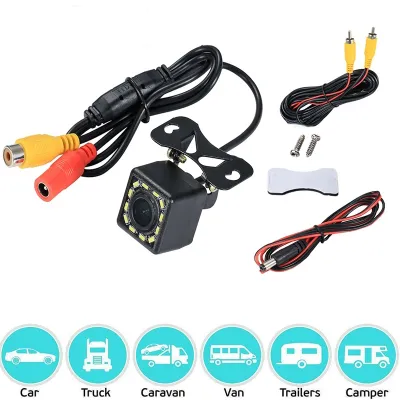
11 Lazada user ratings
🛠️Durability:good
📏Accuracy:good
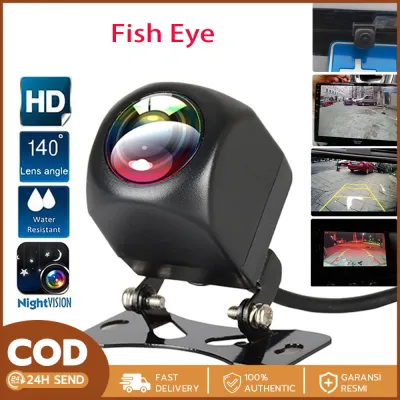
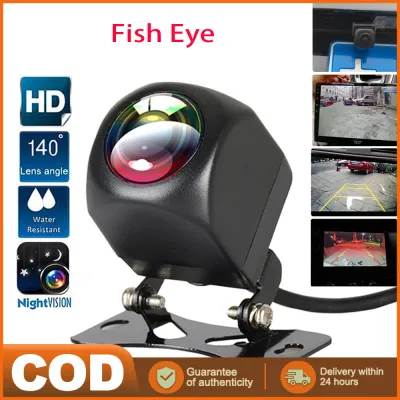
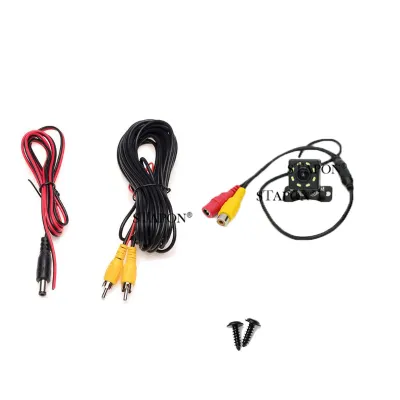
546 Lazada user ratings
Durable and reliable!, Waterproof design is a plus!, Waterproof design is a plus!, Highly recommended for safety!, Provides a wide and clear…Read full reviewShow less
Durable and reliable!, Waterproof design is a plus!, Waterproof design is a plus!, Highly recommended for safety!, Provides a wide and clear rear view!, Easy to install and use!,
Durable and reliable!, Crystal clear night vision!, second order ko na to. I've lost my old one. OK na OK xa gumagana talaga.
Excellent image quality!, Waterproof design is a plus!, Highly recommended for safety!, Provides a wide and clear rear view!,
Durable and reliable!, Waterproof design is a plus!, Perfect for parking assistance!, Easy to install and use!,
Bbvdssswggbbbb vf 📏Accuracy: Crystal clear night vision!, Easy to install and use!, vvcfddefvvvvbb
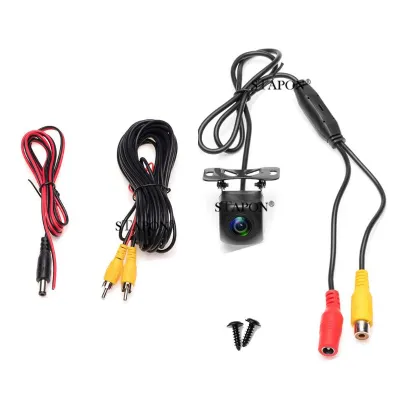
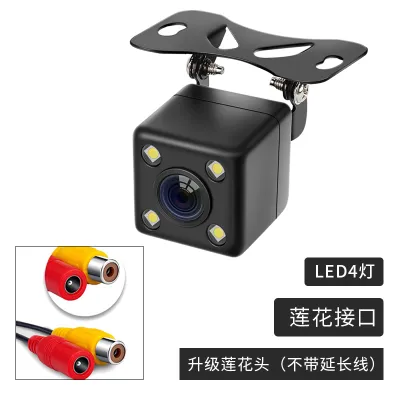
3,597 Lazada user ratings
Great value for the price, malinaw at maliwanag sa dilim. pininturahan ko Ng puti para mag camouflage sa kulay Ng car ko. para di rin pansin…Read full reviewShow less
Great value for the price, malinaw at maliwanag sa dilim. pininturahan ko Ng puti para mag camouflage sa kulay Ng car ko. para di rin pansinin
Great value for the price, Enhanced safety with wide-angle lens, 🔧Ease of Installation:Plug and Play basta bili ka lang Harness
Excellent product. Plug and play device. Worked well with Android auto, Honda Civic. Bang for your buck!
goods nmmn item . dko palng naikabit
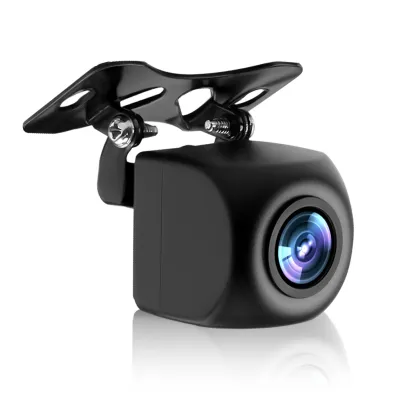
70 Lazada user ratings
Clear and sharp night vision, Easy to install and set up, Reliable performance and functionality, High-definition image quality,
Thank you so much Essgoo for promptly sending me another AHD rear camera as a replacement for the defective one.
Super clear image from the camera, safely packaged and complete hardware from the box! Really great quality.
Provides a clear view of the rear, High-definition image quality, Enhances safety while reversing,
wide angle, malinaw.
123 Lazada user ratings
Дом мой достроен, но я в нём один Хлопнула дверь за спиной Ветер осенний стучится в окно Плачет опять надо мной Ночью гроза, а наутро туман …Read full reviewShow less
Дом мой достроен, но я в нём один Хлопнула дверь за спиной Ветер осенний стучится в окно Плачет опять надо мной Ночью гроза, а наутро туман Солнце остыло совсем Давние боли идут чередой Пусть собираются все Дом мой достроен, но я в нём один Хлопнула дверь за спиной Ветер осенний стучится в окно Плачет опять надо мной Это судьба, а судьбу не могу Я ни о чём просить Только я знаю, как после меня Станут ветра голосить
second time to order from this shop. seller is responsive. interface resolution is good. back camera on reverse has decent resolution. Recom…Read full reviewShow less
second time to order from this shop. seller is responsive. interface resolution is good. back camera on reverse has decent resolution. Recommended!!
Perfect for parking in tight spaces., Crystal clear image quality., Great value for the price.,
Waterproof design works perfectly., Sturdy build quality., Wide view angle covers blind spots.,
Prices are valid at publication and may change. Please refer to the product page for the latest price.
Aperture (f-stop): Letting in More Light
The camera lens acts as the gateway for light, and its efficiency is measured by the aperture, represented as an f-stop number (such as f/1.6 or f/1.8). In optical terms, a lower f-stop number indicates a wider physical opening, which allows more ambient light to reach the sensor. For effective night driving capture, you should prioritize cameras with an aperture of f/1.8 or wider. An f/1.6 lens, for example, lets in significantly more light than a standard f/2.0 lens, which can make the difference between seeing a dark obstacle on the road shoulder or missing it entirely.

However, there is a technical trade-off to consider with extremely wide apertures. As the aperture opens wider, the depth of field—the zone of sharp focus—becomes narrower. If the camera manufacturer has not carefully calibrated the fixed focus of the lens, an ultra-wide aperture can cause distant objects, such as license plates on cars further down the road, to appear slightly soft or out of focus. Ensure you check user feedback regarding long-distance clarity to confirm the lens focus is optimized for highway driving.
WDR vs. HDR: Handling Headlights and Dark Shadows
Night driving presents extreme contrast challenges, where pitch-black roadsides are suddenly pierced by blinding LED headlights or bright streetlights. To prevent these bright spots from blowing out into solid white glare, cameras use either Wide Dynamic Range (WDR) or High Dynamic Range (HDR) technologies. WDR is typically a hardware-based exposure balancing method that processes multiple exposure levels in real-time within a single frame. This makes it exceptionally reliable for automotive use, as it instantly balances the glare of oncoming headlights while retaining detail in the dark shadows along unlit provincial roads.
In contrast, HDR often relies on software-based image stacking, where the camera rapidly captures multiple consecutive frames at different exposures and merges them. While HDR can produce stunning static images, this rapid stacking process can introduce “ghosting” or motion blur when capturing fast-moving vehicles at night. For a night driving camera, hardware-supported WDR is generally the safer choice, as it maintains sharp frame-to-frame clarity without the risk of digital artifacts during sudden maneuvers.
Resolution and Frame Rate: Balancing Detail and Motion
Finding the right balance between resolution and frame rate is crucial for capturing clear night footage. While a 4K resolution sounds impressive, pushing ultra-high resolutions onto a standard-sized sensor can actually degrade low-light performance by shrinking pixel sizes and increasing digital noise. For night driving, a stable 1080p (Full HD) or 2K (QHD) resolution is often superior if it allows for a higher frame rate.
A frame rate of 60 frames per second (fps) is highly recommended over the standard 30fps. At highway speeds, a higher frame rate reduces motion blur, making it much easier to pause a video and read a passing vehicle’s license plate. However, you must verify the camera’s actual performance characteristics in its product manual. Some cameras advertise 60fps but automatically drop down to 30fps or lower in dark environments to allow the sensor more time to gather light, which defeats the purpose of buying a high-frame-rate model for night use.
Marketing Specs You Can Safely Ignore for Night Driving
When browsing online marketplaces or retail shelves, it is easy to get distracted by flashy marketing terms that offer little real-world value for night driving. For instance, ultra-high megapixel ratings for still photos are completely irrelevant, as your primary concern is continuous video capture. Similarly, digital zoom specifications should be ignored; digital zoom simply crops and pixelates the existing image, adding no new detail and worsening low-light noise.
You should also be highly skeptical of generic “night vision” claims that lack supporting hardware specs. Without a high-quality sensor, wide aperture, or hardware WDR, these features are usually just software-based brightness boosts. This digital amplification artificially brightens the image but introduces massive amounts of visual noise and grain, rendering important details like license plates completely unreadable.
How to Verify Night Performance Before Buying
Because spec sheets do not always tell the full story, you should always verify a camera’s real-world performance before making a purchase. Avoid relying solely on the manufacturer’s promotional videos, which are often shot under ideal city lighting conditions or heavily edited. Instead, search for independent, unedited night driving footage uploaded by actual users.
Look specifically for test clips recorded on unlit provincial roads or during heavy rainstorms, as these conditions represent the ultimate test for any night driving camera. Additionally, before finalizing your order on any online marketplace, verify the seller’s return policy. Ensure you have a clear window to test the camera in your own vehicle and return it if the recorded night footage fails to meet your safety expectations.
Community discussion
Share your experience or ask a question. Comments are reviewed before publication.