
Choosing the right engine air filter for your Toyota Vios comes down to a simple balance between your vehicle’s warranty status, your driving environment, and your budget. For owners of newer Vios models still covered by the manufacturer’s warranty, Genuine Toyota (OEM) air filters are the best choice because they guarantee perfect fitment, optimal filtration, and complete warranty compliance.
If your Vios is out of warranty or you are looking to optimize your maintenance costs, reputable aftermarket brands offer excellent value and reliable engine protection. These premium third-party filters provide a high level of filtration that matches factory standards at a more accessible price point. However, you should strictly avoid unbranded, ultra-cheap alternatives, as their poor materials and loose seals can allow harmful dust to bypass the filter and cause severe engine wear.
To make the right choice, you must weigh how each option performs in real-world Philippine driving conditions—from the dusty provincial roads of Central Luzon to the soot-heavy, stop-and-go traffic of Metro Manila. Understanding the technical and practical differences between these filters will help you protect your engine without overspending.
Products mentioned in this guide
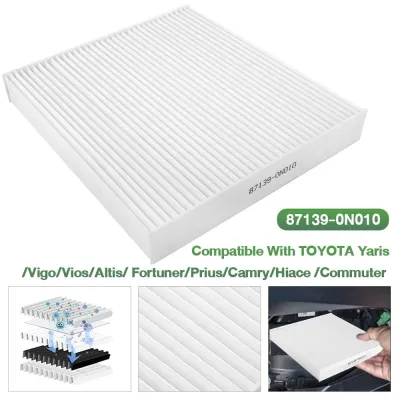
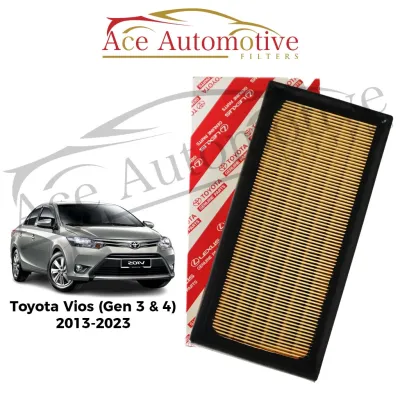
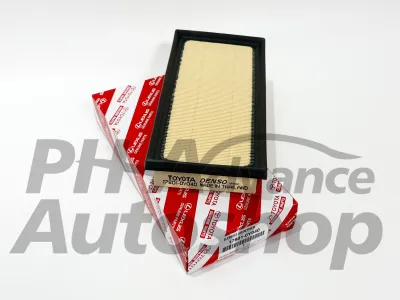
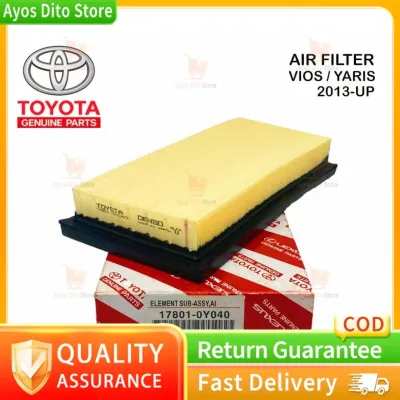
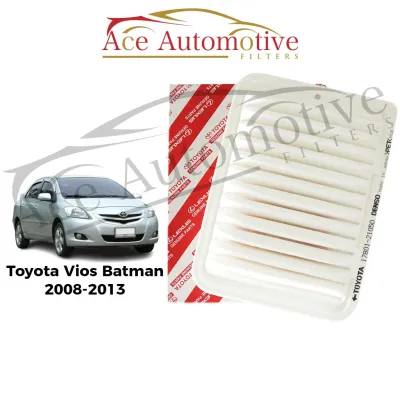
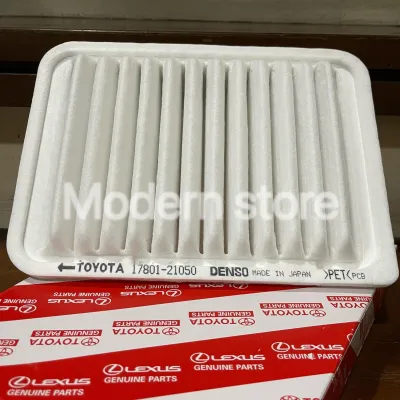
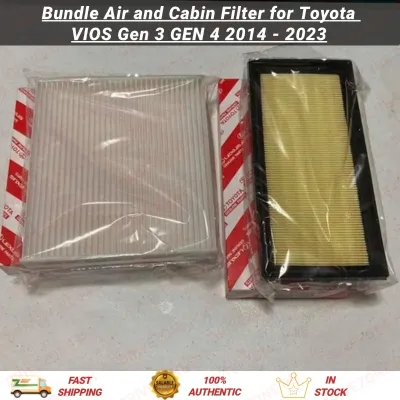
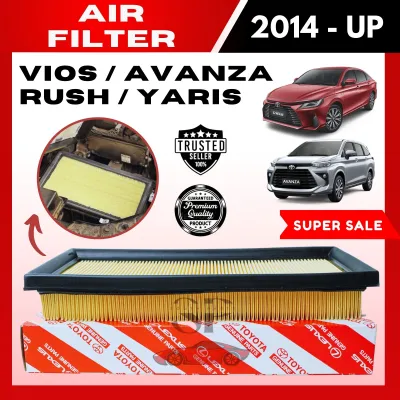
Prices are valid at publication and may change. Please refer to the product page for the latest price.
Understanding the Difference: OEM vs. Aftermarket Air Filters
To make an informed decision, you must first understand what sets these two main categories of replacement parts apart. OEM stands for Original Equipment Manufacturer. In the case of your Toyota Vios, OEM filters are Genuine Toyota parts, which are manufactured either directly by Toyota or by their contracted supplier (such as Denso) to meet the exact technical specifications of your engine. These filters are identical to the one that came inside your Vios when it rolled off the assembly line.
Aftermarket air filters are produced by third-party companies independent of Toyota. This is a broad category that spans a wide spectrum of quality. On one end, you have premium, highly reputable aftermarket brands—such as Denso (sold under their own brand name), Bosch, Sakura, and Vic—that manufacture filters designed to meet or exceed OEM standards. On the other end of the spectrum, you will find unbranded, generic filters sold at extremely low prices, which often compromise on material quality and construction.
It is also important to clarify that this guide focuses specifically on the engine air filter, which is housed in the engine bay and prevents abrasive particles from entering the combustion chamber. This is entirely separate from the cabin air filter, which is located behind your glove compartment and serves only to clean the air blowing through your air conditioning vents into the passenger cabin. While a clogged cabin filter affects your comfort, a compromised engine air filter directly impacts your engine’s health, fuel efficiency, and longevity.
Key Comparison Dimensions for Toyota Vios Air Filters
Evaluating which air filter to buy for your Toyota Vios requires looking closely at several performance and cost factors. Because the Vios is a highly reliable daily commuter, maintaining this reliability depends on how well the air filter performs across four key dimensions.

Filtration Efficiency and Engine Protection
Genuine Toyota OEM filters utilize specialized, high-density cellulose or composite fiber media. This media is engineered to balance high filtration efficiency with optimal airflow, ensuring that the engine receives a steady stream of clean air without restriction. The density of the fibers is carefully calibrated to capture microscopic dust particles while maintaining the correct volumetric airflow required by Toyota’s naturally aspirated engines.
In contrast, aftermarket options vary wildly in filtration media quality. Premium aftermarket brands use multi-layered synthetic or advanced paper media that closely mimics or even improves upon the OEM design. These high-quality media structures are excellent at capturing fine dust, soot, and road debris.
Cheap, unbranded aftermarket filters, however, often use thin, single-layer paper with inconsistent pore sizes. Under a microscope, these budget filters reveal irregular gaps that allow fine dust to pass directly into the engine. In the Philippines, where vehicles frequently encounter volcanic ash, construction dust, and heavy soot from diesel exhaust, using a filter with poor filtration media can lead to premature engine wear, cylinder wall scratching, and contaminated engine oil.
Fit, Sealing, and Compatibility
A filter is only as good as its seal. The Genuine Toyota OEM filter features a highly pliable, precisely molded polyurethane or rubber gasket along its edge. When you drop an OEM filter into the Vios airbox, this gasket compresses perfectly against the plastic housing, creating an airtight barrier. This ensures that 100% of the incoming air is forced to pass through the filtration media.
Reputable aftermarket brands invest heavily in precision engineering to replicate this sealing lip. Brands like Vic and Sakura design their gaskets to match the exact dimensions and pliability of the OEM part, ensuring a snug fit that prevents any air bypass.
Conversely, budget aftermarket filters often skimp on the quality of the sealing gasket. They frequently feature stiff, cheaply molded plastic or hard rubber seals that do not compress adequately. When installed, these stiff seals can leave minor gaps or warp under the intense heat of the engine bay. Even a tiny 1-millimeter gap allows unfiltered air to bypass the filter media entirely, carrying abrasive road grit directly into your intake manifold and cylinders.
Price, Availability, and Overall Value
Price is the primary driver for many Vios owners when choosing maintenance parts. Genuine Toyota OEM air filters sit at the top of the pricing tier, typically costing between ₱800 and ₱1,500 depending on your Vios generation and whether you purchase from an authorized dealership. While more expensive, this price includes guaranteed compatibility, high-quality quality control, and warranty preservation.
Premium aftermarket filters represent the mid-range tier, generally priced between ₱400 and ₱800. These are widely available at local auto supply shops in major automotive hubs like Banawe in Quezon City or Evangelista in Makati, as well as through official flagship stores on major e-commerce platforms. They offer nearly identical performance to OEM filters at a fraction of the cost, making them the sweet spot for overall value.
Ultra-cheap, unbranded filters occupy the lowest tier, often selling for as little as ₱100 to ₱250 online. While the immediate savings of a few hundred pesos might seem appealing, this is a false economy. The engine air filter is a relatively low-cost consumable replaced only once or twice a year; risking a costly engine overhaul or premature wear on your piston rings to save ₱500 is not a sensible financial trade-off.
Lifespan and Replacement Intervals
Both standard OEM filters and high-quality paper-based aftermarket filters are designed for single-use lifespans. In typical driving conditions, these filters should be replaced according to the intervals outlined in your Toyota Vios owner’s manual. However, highly dusty environments or heavy stop-and-go city driving will naturally shorten this lifespan, requiring more frequent replacements.
Some aftermarket brands offer washable and reusable air filters, which are typically constructed from layers of cotton gauze sandwiched between wire mesh. These filters are marketed as lifetime products because you can wash, dry, and reuse them instead of buying a new filter every service interval.
While reusable filters can save money over several years, they introduce a high maintenance burden. They require specialized cleaning solutions and must be completely dry before reinstallation. Furthermore, they must be carefully re-oiled with a specific tackifier spray. If you apply too little oil, the filter will not capture fine dust; if you apply too much oil, the excess oil can easily atomize, travel down the intake tract, and coat your Vios’s Mass Air Flow (MAF) sensor. A contaminated MAF sensor will trigger a check engine light, cause rough idling, and severely disrupt your fuel economy.
How to Verify Compatibility for Your Specific Vios Model
The Toyota Vios has been a staple of Philippine roads for over two decades, spanning multiple generations and engine configurations. Because of this long production history, you cannot simply walk into a store and ask for a generic “Vios air filter.” The physical dimensions, shape, and thickness of the filter have changed significantly across different model years.
To ensure you purchase the correct filter, you must identify your specific Vios generation and engine family:
- First Generation (2003–2007): Typically powered by the 1.3L 2NZ-FE or 1.5L 1NZ-FE engines.
- Second Generation (2007–2013): Retained the 2NZ-FE and 1NZ-FE engines but utilized a redesigned, slightly different airbox shape.
- Third Generation (2013–2018): Early models kept the NZ-series engines, but Toyota introduced a major update in 2016, shifting to the Dual VVT-i NR-series engines (1.3L 1NR-FE and 1.5L 2NR-FE). This engine transition completely changed the airbox design and filter shape.
- Fourth Generation / Facelifts (2018–Present): Continues to use the 1NR-FE and 2NR-FE Dual VVT-i engines, which require a different, more rectangular filter compared to the older generations.
Before purchasing any filter, check your vehicle’s owner’s manual to find the exact OEM part number. If you are buying a Genuine Toyota part, providing your vehicle’s Chassis Number or Vehicle Identification Number (VIN) to the dealership parts counter is the most reliable way to guarantee a perfect match.
If you are shopping for an aftermarket filter, do not rely solely on online product titles that claim to fit “all Vios models.” Instead, consult the aftermarket manufacturer’s official application catalog. Cross-reference your exact model year, engine code (such as 2NR-FE), and engine displacement to find the precise part number designed for your airbox.
Step-by-Step: Inspecting and Replacing Your Vios Air Filter
Replacing the engine air filter on a Toyota Vios is one of the simplest maintenance tasks you can perform yourself. It requires no specialized tools and takes less than ten minutes.
Before beginning, ensure your vehicle is parked on a flat, level surface, the handbrake is firmly engaged, and the engine is turned off and completely cool to the touch. Always consult your vehicle’s owner’s manual for model-specific instructions before opening any engine bay components.
Step 1: Inspecting Your Current Filter
Locate the plastic air filter housing (the black plastic box) in your Vios engine bay. On most modern Vios models, the airbox lid is secured by two metal tension clips. Carefully pry these clips open with your fingers to release the lid. Gently lift the cover and slide the old air filter out of the housing.
Hold the filter up to a strong light source, such as the sun or a bright flashlight. If the light passes through the pleats easily and the media looks mostly white or light grey, the filter is still functional and can be reinstalled. However, if the light is completely blocked, or if you observe heavy black soot, deep dirt accumulation, or oil staining in the pleats, the filter has reached the end of its service life and must be replaced.
Step 2: Preparing the Airbox
Before inserting your new filter, take a moment to inspect the inside of the empty plastic airbox. You will likely find settled dust, dried leaves, or small insects at the bottom of the housing.
Take a clean, slightly damp microfiber cloth and carefully wipe out the interior of the lower airbox housing to remove this debris. Be extremely careful not to push any dirt or loose debris into the clean-air intake tube that leads to the throttle body. Never use compressed air to blow out the airbox while the intake tube is exposed, as this can force abrasive particles deep into your engine.
Step 3: Installing the New Filter
Take your new OEM or premium aftermarket filter out of its packaging. Compare it physically to the old filter to ensure the dimensions, shape, and sealing borders are identical.
Lower the new filter into the airbox housing. Note that the Vios air filter is keyed with specific rounded or notched corners, meaning it will only fit correctly in one orientation. Ensure the rubber or polyurethane sealing gasket sits perfectly flat and flush in the grooves of the lower housing. There should be no buckling, twisting, or lifting along the edges.
Step 4: Securing the Airbox Lid
Carefully lower the airbox lid back onto the housing, ensuring that the rear locating tabs align perfectly with their slots. Press the lid down firmly; it should sit flat against the lower housing without forcing.
Re-engage the metal tension clips until they snap securely into place. If you have to force the clips with excessive pressure, the filter may not be seated correctly in its grooves. Double-check the alignment to ensure there are no visible gaps around the edges of the airbox, which could cause vacuum leaks or allow unfiltered air to bypass the media.
Final Verdict: Making the Right Choice for Your Driving Needs
There is no single “best” air filter for every Toyota Vios owner, as the ideal choice depends entirely on your specific vehicle status and driving habits.
If your Vios is relatively new and still covered under Toyota’s factory warranty, stick exclusively to Genuine Toyota OEM air filters. This eliminates any risk of warranty disputes and guarantees that your engine is protected by parts engineered specifically for your vehicle’s exact specifications.
If your Vios is out of warranty and serves as a daily commuter, a premium aftermarket filter from a highly reputable brand like Denso, Bosch, Sakura, or Vic offers the best balance of engine protection and cost efficiency. These brands provide reliable filtration and a precise physical seal at a highly competitive price point.
Regardless of your budget, you should strictly avoid unbranded, suspiciously cheap air filters sold on online marketplaces. The small amount of money saved upfront is never worth risking the long-term health, fuel efficiency, and reliability of your Toyota Vios’s engine.
Frequently Asked Questions (FAQ)
Can I use an aftermarket air filter without voiding my Toyota warranty?
Using a high-quality aftermarket air filter that meets or exceeds OEM specifications generally does not void your overall vehicle warranty. However, if an engine issue arises and the dealership can prove that a poorly fitting or defective aftermarket filter directly caused the damage (such as by allowing dirt bypass or collapsing), your specific warranty claim for that engine damage may be denied. For absolute peace of mind during the warranty period, using Genuine Toyota OEM parts is highly recommended.
How often should I change the engine air filter on a Toyota Vios?
You should generally inspect your Vios engine air filter every 10,000 kilometers and replace it every 20,000 to 40,000 kilometers, depending on your driving environment. If you frequently drive in highly congested urban areas with heavy exhaust soot, or on unpaved, dusty provincial roads in the Philippines, you may need to replace the filter more frequently. Always check your specific Vios owner’s manual for the manufacturer’s recommended maintenance schedule.
Does a high-flow aftermarket air filter increase Vios horsepower?
While some high-flow aftermarket filters can slightly improve air intake volume, installing a drop-in high-flow filter on a stock Toyota Vios will not result in a noticeable increase in horsepower or torque. The factory ECU tuning and engine design are optimized for reliable daily commuting rather than high-performance output. Your primary focus when selecting an air filter should always be superior dust filtration and reliable engine protection rather than performance gains.
Community discussion
Share your experience or ask a question. Comments are reviewed before publication.