
Choosing between an Original Equipment Manufacturer (OEM) and an aftermarket bendix drive for your Mio i 125 is a decision that directly impacts your scooter’s daily reliability and your maintenance budget. The bendix drive, also known as the starter clutch or starter pinion gear, is the critical link that allows your starter motor to crank the engine. While a genuine Yamaha OEM part offers guaranteed compatibility and factory-standard durability, high-quality aftermarket alternatives present an appealing, budget-friendly option. Deciding which path to take requires evaluating your riding habits, your budget, and your willingness to perform detailed compatibility checks before installation.
For many riders in the Philippines, the Mio i 125 serves as an essential daily workhorse, navigating congested city streets, heavy tropical rains, and high ambient temperatures. These demanding operating conditions place significant stress on every component within the continuously variable transmission (CVT) housing, including the starting system. A failing bendix drive can leave you stranded at the worst possible moment, making it crucial to understand the trade-offs between OEM reliability and aftermarket affordability before purchasing a replacement.
Understanding the Bendix Drive's Role in Your Scooter
To make an informed choice, it is helpful to understand how the bendix drive functions within the starting system of your Mio i 125. When you press the starter button, electrical current flows from the battery to the starter motor, causing it to spin. The starter motor shaft is geared directly to the bendix drive. As the bendix drive spins, centrifugal force or a helical spline mechanism forces its pinion gear to slide outward, engaging the teeth of the starter ring gear on the crankshaft.
Products mentioned in this guide
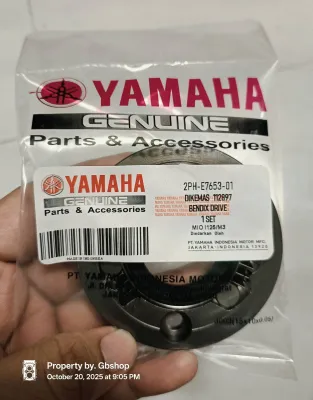
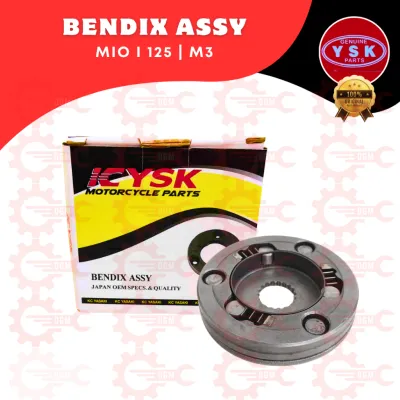
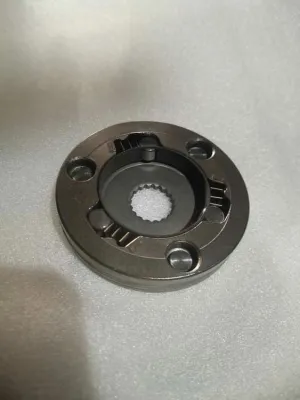
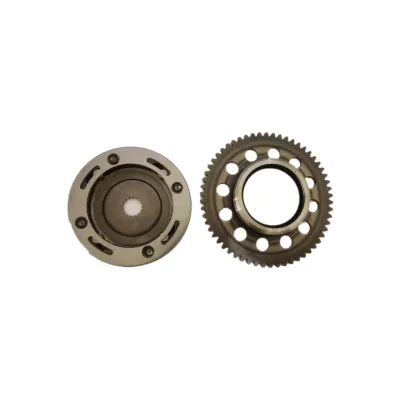
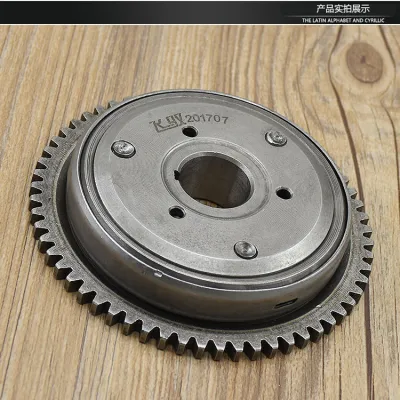
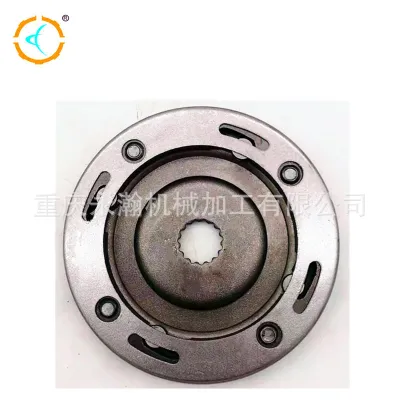
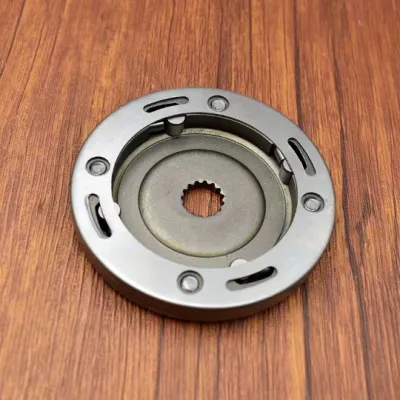
Prices are valid at publication and may change. Please refer to the product page for the latest price.
Once the engine fires, the crankshaft spins much faster than the starter motor. At this point, the bendix drive must instantly disengage and retract. This one-way clutch action prevents the running engine from spinning the starter motor at destructive speeds. Because this component experiences high rotational forces and sudden mechanical engagement every time you start your scooter, it is naturally subjected to wear and tear over time.
In the tropical climate of the Philippines, the CVT housing of your Mio i 125 is exposed to high humidity, road dust, and heat. Over thousands of kilometers, fine dust from the drive belt can migrate into the bendix drive assembly, mixing with grease to form a sticky paste. This accumulation can cause the internal rollers or the sliding gear to stick, leading to starting issues. Recognizing these symptoms early can prevent secondary damage to other starting components.
The most common sign of a failing bendix drive is a distinct slipping sensation, where you hear the starter motor whining or spinning freely, but the engine fails to turn over. You might also hear a harsh, metallic grinding noise as the pinion gear struggles to engage with the crankshaft ring gear. If you experience intermittent starting where the scooter occasionally fails to crank but starts fine on subsequent attempts, the bendix drive is a primary suspect.
Comparing OEM and Aftermarket Options
When shopping for a replacement bendix drive, you will generally find two main categories: genuine OEM parts sourced from Yamaha authorized distributors, and aftermarket alternatives produced by third-party manufacturers. Evaluating these options requires looking beyond the price tag to consider material specifications, manufacturing standards, and long-term value.

Genuine OEM Yamaha bendix drives are manufactured to the exact engineering specifications of the Mio i 125. These parts undergo rigorous quality control to ensure the gear teeth match the hardness and profile of the crankshaft ring gear. When purchasing an OEM part, verify the packaging for genuine Yamaha security holograms and cross-reference the part number to avoid counterfeit products. Genuine parts are typically sold through authorized 3S (Sales, Service, and Spare Parts) dealerships, offering high purchase security.
Aftermarket bendix drives are produced by a wide variety of independent brands and are widely available at local motorcycle parts stores. While some aftermarket brands use high-grade steel and precise manufacturing, others may use softer alloys that wear down quickly under mechanical stress. Because there is no single standard for aftermarket parts, you must carefully inspect the physical build quality, gear tooth count, and overall dimensions of any third-party unit before installation.
Price is often the most significant differentiator. A genuine OEM Yamaha bendix drive typically costs between ₱1,200 and ₱2,500, depending on the dealership. In contrast, aftermarket alternatives are highly accessible, with prices ranging from ₱400 to ₱900. While the lower upfront cost of an aftermarket part is attractive, you must weigh this saving against the potential for a shorter service life and the added labor cost if the part needs to be replaced more frequently.
Warranty terms also differ. OEM parts installed by an authorized Yamaha technician usually come with a limited manufacturer warranty. Aftermarket parts, particularly those purchased from smaller local shops or online marketplaces, often carry very limited store-level warranties or are sold on an “as-is” basis. If you prioritize long-term peace of mind and want to minimize the risk of premature failure, the higher initial investment in an OEM part is often justified.
Fitment and Installation Safety Boundaries
Replacing the bendix drive on a Mio i 125 involves working inside the CVT housing, which requires strict adherence to safety protocols. Before purchasing any replacement part, cross-reference the exact part number with your scooter’s specific model year and variant. While the Mio i 125 has maintained a stable engine design, minor manufacturing updates can occasionally affect component dimensions, making physical verification essential.
Before beginning disassembly, safety must be your top priority. Always park the scooter on its center stand on a flat, level surface and ensure the engine is completely cool. Disconnect the negative terminal of the battery located under the footboard to prevent accidental electrical shorts or starter motor activation while your hands are inside the CVT housing. Working on an active electrical system poses a risk of sudden component damage.
To access the bendix drive, remove the CVT outer cover using an 8mm T-wrench or socket. Take care not to damage the gasket sealing the cover, as a compromised seal can allow water and road grime to enter the transmission during rainy weather. Once the cover is removed, locate the bendix drive positioned just above the primary clutch pulley. Carefully slide the unit out of its mounting boss, noting the position of any thrust washers or spacers.
When installing the new bendix drive, refer to the official service manual for torque specifications. Over-tightening bolts in the aluminum engine casing can strip the threads, while under-tightening can cause components to back out during operation. Apply a very light coat of high-temperature, lithium-based grease to the shaft journals, but keep the gear teeth dry to prevent attracting belt dust.
It is vital to recognize when a DIY repair is no longer safe. If you encounter severely seized bolts, stop immediately to avoid snapping them inside the engine case. Furthermore, if you observe heavy metal shavings inside the CVT housing, deep grooves on the crankshaft starter gear, or if the starter motor shaft exhibits play, these indicate secondary damage. In such scenarios, do not force a new bendix drive into place; instead, consult a qualified motorcycle mechanic.
Decision Framework: Which Option Fits Your Needs?
To choose the right bendix drive for your Mio i 125, you should evaluate your specific riding requirements, mechanical confidence, and budget constraints. There is no universal “best” choice, as the ideal option depends entirely on how you use and maintain your scooter.
Choose a genuine OEM Yamaha bendix drive if you rely on your scooter for daily, long-distance commuting, commercial delivery services, or if you frequently travel outside urban areas where repair shops are scarce. The OEM part is also the correct choice if your scooter is still covered under a factory warranty. While the upfront cost is higher, the predictable service life and guaranteed fitment minimize the risk of unexpected breakdowns, making it highly cost-effective over time.
Conversely, an aftermarket bendix drive is a viable option if you are operating on a strict budget, use your scooter primarily for short-distance neighborhood errands, or plan to sell the vehicle soon. If you enjoy performing your own maintenance and do not mind replacing the part sooner, a reputable aftermarket brand can save you money. When choosing this route, buy from established local motorcycle supply shops with a reputation for sourcing reliable third-party components.
Before purchasing any replacement part, perform a thorough diagnostic check to confirm the bendix drive is the root cause. A weak 12V battery can produce symptoms that mimic a failing bendix drive, such as a slow crank, because the starter motor lacks the electrical power to throw the gear forward. Use a digital multimeter to check your battery’s voltage; it should read at least 12.4V at rest and should not drop below 9.6V under load. Additionally, inspect the starter relay and wiring connections for corrosion or looseness.
Frequently Asked Questions (FAQ)
How do I know if my Bendix drive is actually failing?
A failing bendix drive typically reveals itself through distinct physical and auditory clues. The most common symptom is a high-pitched spinning sound when you press the starter button, indicating that the starter motor is running but the bendix gear has failed to slide outward to engage the engine. You may also experience a harsh grinding noise from partial, slipping contact. To confirm the diagnosis, remove the CVT cover and visually inspect the bendix drive; if the gear does not slide smoothly along its shaft when turned by hand, or if the teeth are visibly chipped or rounded, the unit must be replaced. Always rule out a weak battery first by testing it under load.
Can I clean and reuse a slipping Bendix drive?
In some cases, a slipping bendix drive can be temporarily restored by cleaning, but this is rarely a permanent fix. If the starting issue is caused solely by an accumulation of dry CVT belt dust and old grease blocking the gear’s movement, spraying the assembly with a dedicated brake cleaner can wash away the debris. After cleaning, apply a single drop of light machine oil to the sliding shaft—never use heavy grease or WD-40, which rapidly attracts belt dust. However, if the internal one-way sprag clutch or the return spring is worn, cleaning will not restore function. If the unit continues to slip after cleaning, immediate replacement is mandatory to prevent damaging the starter motor and the crankshaft ring gear.
Community discussion
Share your experience or ask a question. Comments are reviewed before publication.