
Quick Answer: Which Brake Arm is Safer for Your Honda Beat FI?
When it comes to the rear drum brake system of your motorcycle, a genuine OEM Honda brake arm is the safest and most reliable choice. Original equipment manufacturer (OEM) parts are designed, manufactured, and tested specifically for the Honda Beat FI, ensuring exact dimensional fitment, correct spline alignment, and the precise metallurgy required to withstand heavy braking forces.
While high-quality aftermarket brake arms exist, they require rigorous verification of material grades and manufacturing tolerances. Opting for cheap, unbranded, or purely cosmetic aftermarket alternatives introduces significant risks, including metal fatigue, spline stripping, and sudden brake failure. For a critical safety component like the brake arm for honda beat fi, the minor savings of a generic part do not justify the physical risks on the road.
The Role of the Brake Arm in the Honda Beat FI Drum Brake System
To understand why the structural integrity of a brake arm is so critical, you must first understand how the rear drum brake system of the Honda Beat FI operates. When you squeeze the left brake lever on your handlebar, that physical force travels down the rear brake cable to the rear wheel hub. The brake arm is the external metal lever mounted on the splined brake cam shaft projecting from the drum backing plate.
Products mentioned in this guide
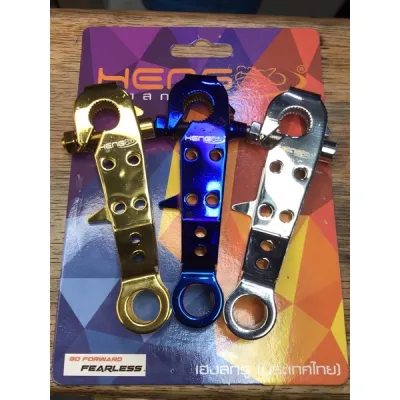
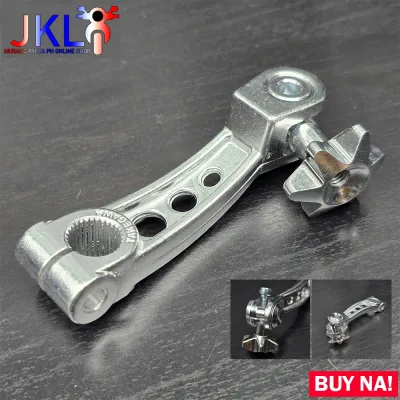
Prices are valid at publication and may change. Please refer to the product page for the latest price.

As the brake cable pulls the brake arm, the arm rotates the brake cam inside the drum. This rotation forces the internal brake shoes outward, pressing their friction linings against the spinning inner surface of the brake drum to slow down your motorcycle. Because the brake arm acts as a mechanical lever, it multiplies the physical force of your hand to press the shoes against the drum with hundreds of pounds of force.
During sudden panic stops or when riding down steep hills with a passenger, the brake arm is subjected to immense torsional stress, tension, and bending moments. If the brake arm is made of substandard materials, it can flex or bend under this pressure. A flexing brake arm absorbs the force that should be going into your brake shoes, resulting in a spongy lever feel and significantly longer stopping distances.
In worst-case scenarios, a structurally weak brake arm can snap or strip its internal splines entirely. If the splines strip, the arm will rotate freely on the cam shaft without expanding the brake shoes, leading to an instantaneous and complete loss of rear braking power. This mechanical reality makes high tensile strength and exact pivot geometry non-negotiable safety requirements for this component.
Genuine OEM Honda Brake Arms: Fitment and Reliability
Genuine OEM Honda brake arms are engineered to meet strict global automotive and motorcycle safety standards. Honda utilizes high-grade, heat-treated forged steel or highly controlled cast steel alloys for these components. This metallurgical precision ensures that the brake arm possesses the high tensile strength required to resist bending under extreme loads while retaining enough ductility to prevent brittle cracking under sudden impacts.
One of the greatest advantages of choosing an OEM brake arm for honda beat fi is the guarantee of exact dimensional accuracy. The splined hole at the pivot point of the arm must match the splines on the brake cam shaft perfectly. Honda designs these splines with incredibly tight tolerances, ensuring a snug, zero-play interface that distributes rotational torque evenly across all splines. This precise fitment prevents the micro-movements that gradually wear down and strip the splines over thousands of kilometers.
Furthermore, the geometry of the cable hook and the pivot alignment on an OEM arm are designed to match the original cable routing of the Honda Beat FI. This ensures that the brake cable pulls at a perfect perpendicular angle, minimizing friction, preventing premature cable fraying, and ensuring smooth, predictable lever feedback.
While OEM parts generally sit in a higher price tier—typically ranging from ₱400 to ₱800 depending on the authorized dealer—and may occasionally require a waiting period if local stocks are low, they eliminate all guesswork. Using genuine parts preserves your motorcycle’s factory safety margins, ensures long-term durability in harsh riding conditions, and maintains compliance with manufacturer warranty terms.
Aftermarket Brake Arms: Navigating Quality and Cost
The aftermarket motorcycle parts market in the Philippines is vast, offering everything from high-end performance components to cheap, unbranded aesthetic upgrades. Navigating this ecosystem requires a careful distinction between reputable, certified aftermarket manufacturers and generic, low-cost parts found on online marketplaces.
Reputable aftermarket brands often produce replacement brake arms using standardized steel alloys that offer adequate strength for daily commuting. These brands typically publish their material specifications and adhere to basic quality control measures. However, the market is also flooded with ultra-cheap, unbranded brake arms—frequently made of colorful anodized aluminum—that are marketed primarily as visual upgrades.
Many of these cheap cosmetic brake arms are machined from low-grade aluminum castings rather than forged steel. While they may look appealing on a customized scooter, aluminum is generally more brittle and has a lower fatigue limit than the forged steel used in OEM parts. Under heavy, repetitive braking, these soft metals can stretch, deform, or develop micro-cracks that eventually lead to catastrophic failure.
Additionally, generic aftermarket parts often suffer from poor quality control, resulting in incorrect pivot hole sizing, shallow splines, or loose tolerances. If you choose to explore aftermarket options, you must physically inspect the component before installation. Look for consistent casting or machining marks, verify the thickness of the metal around the pivot hole and cable hook, and check that the pivot bushing is made of high-quality brass or self-lubricating bronze rather than soft plastic or low-grade zinc.
OEM vs. Aftermarket: Core Comparison Dimensions
To make an informed decision, it is helpful to compare genuine OEM Honda brake arms against typical aftermarket alternatives across several critical engineering and practical dimensions.
Material Quality and Tensile Strength
- Genuine OEM: Forged or high-grade cast steel with specialized heat treatment. It offers exceptional tensile strength and resistance to fatigue, ensuring the arm will not bend or crack even under panic-braking loads.
- Aftermarket: Highly variable. Reputable brands use adequate steel alloys, but cheap generic options often use low-grade cast aluminum or soft steel alloys that can flex, deform, or snap under high stress.
Dimensional Accuracy and Spline Fitment
- Genuine OEM: Machined to exact micro-tolerances. The spline count, spline depth, and pivot hole diameter match the Honda Beat FI brake cam shaft perfectly, eliminating play and preventing spline wear.
- Aftermarket: Often inconsistent. Minor variances in spline pitch or depth can cause the arm to slip on the shaft, leading to rapid wear of both the brake arm and the expensive brake cam shaft.
Longevity and Corrosion Resistance
- Genuine OEM: Finished with high-quality zinc plating or durable powder coating designed to withstand tropical, highly humid environments, heavy monsoon rains, and road salt in coastal areas of the Philippines.
- Aftermarket: Cheap aftermarket arms often feature thin anodized finishes or low-grade paint that quickly fades, chips, and corrodes when exposed to road grime and water, leading to rust and potential pivot seizure.
Price-to-Value and Long-Term Costs
- Genuine OEM: Higher initial purchase price (typically ₱400 to ₱800), but offers an exceptionally long service life, often lasting the entire lifespan of the motorcycle under normal maintenance.
- Aftermarket: Low initial cost (often under ₱200 for generic options), but carries a high risk of premature failure, which can lead to expensive secondary damage to the brake hub, cable, or worse, a costly accident.
Decision Framework: Choosing the Right Brake Arm
Your choice between an OEM and an aftermarket brake arm should be guided by your riding habits, safety priorities, and your ability to verify part quality. Use the following framework to determine the best path for your Honda Beat FI.
Choose OEM Honda if:
- You use your Honda Beat FI for daily commuting in heavy traffic, where reliable braking is constantly required.
- You frequently carry pillion passengers (angkas), heavy cargo, or delivery loads, which increases the total vehicle weight and puts extra stress on the braking system.
- You regularly ride in hilly or mountainous regions with steep descents that demand prolonged, heavy rear braking.
- You want a simple, hassle-free "plug-and-play" installation with absolute peace of mind regarding material safety and structural integrity.
Choose a Reputable Aftermarket Brand if:
- A genuine OEM Honda brake arm is completely unavailable at local authorized dealerships, and you need an immediate replacement to keep your motorcycle operational.
- You select a well-known, established motorcycle parts brand that explicitly guarantees compatibility with the Honda Beat FI and uses forged steel construction.
- You have the technical knowledge or a trusted mechanic to physically inspect and verify the material thickness, spline depth, and overall build quality of the part before mounting it.
- Your riding is strictly limited to low-speed, light-duty neighborhood errands where the braking system is not subjected to extreme thermal or mechanical stress.
- You are willing to monitor the component regularly for signs of wear, play, or corrosion.
Avoid Unbranded or Generic Aftermarket Parts if:
- The part is exceptionally cheap, lacks clear branding, or is sold without verified material specifications.
- The brake arm is made of thin, lightweight, or highly stylized colored aluminum with no structural reinforcement around the load-bearing pivot and cable hook zones.
- You cannot physically inspect the spline fitment on your specific brake cam shaft before finalizing the purchase.
- You rely on your motorcycle as a primary tool for daily livelihood, where any mechanical breakdown results in lost income and safety risks.
Installation Safety and Professional Verification
Replacing a brake arm is not merely a cosmetic task; it involves disassembling and adjusting a primary safety system of your vehicle. Incorrect installation can lead to dragging brakes, rapid brake shoe wear, overheating of the rear hub, or sudden brake failure on the road. Before undertaking any work, always consult the official Honda Beat FI service manual for your specific model year to verify the correct assembly sequence, component clearances, and safety guidelines.
When installing the brake arm, several critical safety boundaries must be respected:
- Spline Alignment: Ensure the splines on the brake arm and the brake cam shaft are clean, free of debris, and perfectly aligned before sliding the arm on. Never force or hammer a misaligned brake arm onto the shaft, as this will deform the splines and ruin both components.
- Pinch Bolt Torque: The bolt securing the brake arm to the splined shaft must be tightened to the exact torque specification defined by Honda (typically around 10 to 14 N·m, though you must verify this in your specific service manual). Under-tightening can allow the arm to wobble and strip the splines, while over-tightening can strip the bolt threads or crack the arm's clamping collar.
- Pivot Lubrication: Apply a thin layer of high-temperature, water-resistant grease to the brake cam pivot shaft during assembly to ensure smooth rotation. However, you must take extreme care to keep grease completely away from the brake shoes, drum lining, and cable hook, as any grease contamination on friction surfaces will catastrophically reduce your braking power.
- Cable Clearance and Play: Adjust the rear brake cable adjusting nut so that the handlebar lever has the factory-recommended freeplay (typically 10 to 20 mm). Ensure the return spring has sufficient tension to pull the brake arm fully back to its resting position when you release the handlebar lever, preventing the brake shoes from dragging against the drum.
Because of the high safety risks involved, it is strongly recommended that you have the brake arm replacement, brake shoe alignment, and subsequent system testing performed by a qualified, professional motorcycle mechanic. A professional has the specialized tools, such as a calibrated torque wrench, and the experience to ensure the rear drum brake system operates smoothly, engages predictably, and provides the maximum stopping power required to keep you safe on the road.
Community discussion
Share your experience or ask a question. Comments are reviewed before publication.