
Choosing between an Original Equipment Manufacturer (OEM) and an aftermarket brake arm for your Honda Wave 125 comes down to balancing guaranteed safety against customization or cost. The brake arm is a critical mechanical link in your motorcycle’s drum brake system, translating physical lever input into stopping force. For most daily riders navigating busy roads, unpredictable tropical downpours, and heavy traffic, a genuine OEM Honda brake arm is the safest and most reliable choice because it guarantees exact fitment and material integrity without modification. However, high-quality aftermarket options can be viable alternatives if you carefully verify their physical dimensions, material composition, and manufacturing standards before installation.
Understanding Brake Arm Function and Safety Risks
The rear drum brake system of the Honda Wave 125 relies on a simple but highly effective mechanical linkage. When you press the rear brake pedal, the movement pulls a brake cable or rod connected directly to the brake arm. The brake arm acts as a lever, rotating the brake cam inside the drum hub. This rotation forces the brake shoes outward against the spinning drum, creating the friction required to slow down or stop your motorcycle. Because this component relies entirely on mechanical leverage, any physical failure or misalignment directly compromises your ability to stop.
Using a poorly fitted, low-grade, or structurally weak brake arm introduces severe safety hazards. If the splines inside the brake arm pivot hole do not match the brake cam perfectly, the arm can slip under sudden, hard braking. This slippage leads to an immediate loss of braking response, leaving you unable to decelerate in an emergency. Furthermore, a weak brake arm made from inferior cast metals can bend or snap entirely when subjected to heavy foot pressure, causing complete rear brake failure.
Products mentioned in this guide
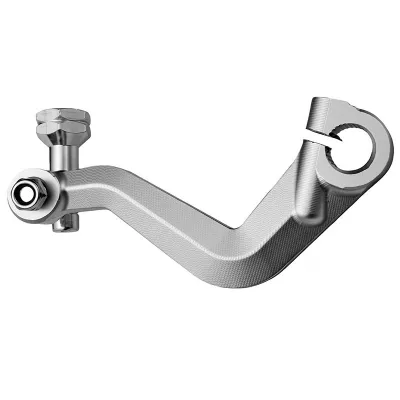
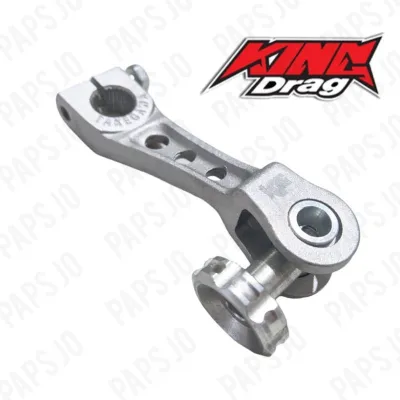
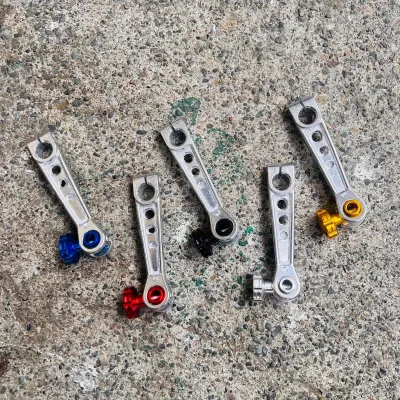
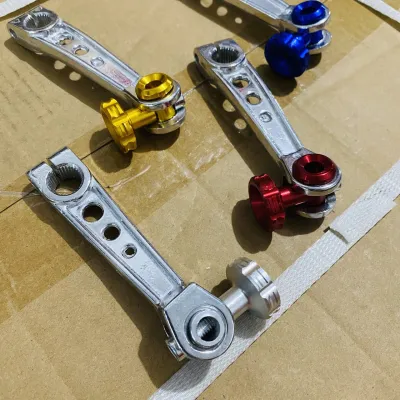
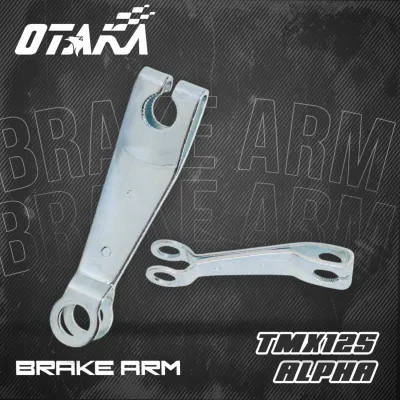
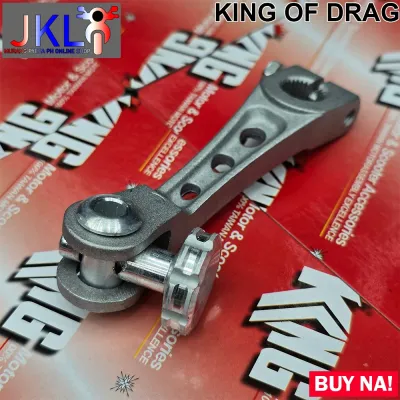
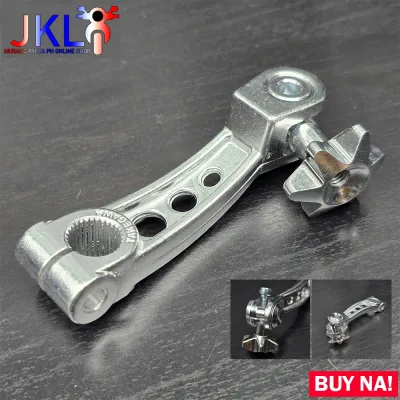
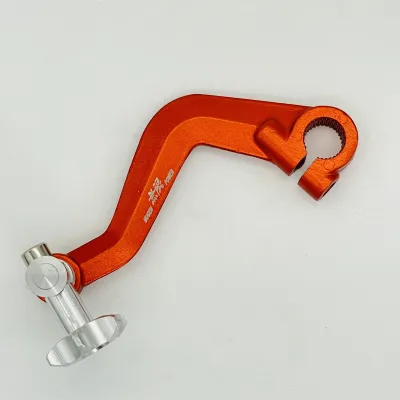
Prices are valid at publication and may change. Please refer to the product page for the latest price.
In tropical climates, where high humidity, road salt, and heavy monsoon rains are common, corrosion can accelerate material degradation. A substandard brake arm may rust rapidly around the pivot point or cable slot, leading to binding or delayed release. Because braking components are safety-critical, structural integrity, precise dimensions, and reliable material sourcing must always take precedence over aesthetic upgrades, anodized colors, or minor cost savings.
OEM Honda Brake Arms: Fit, Quality, and Value
A genuine OEM Honda brake arm is engineered specifically for the Wave 125, ensuring that every dimension matches the factory specifications of your motorcycle. The pivot hole features precise splines designed to interlock perfectly with the original brake cam, preventing any rotational play or slippage. The metal alloy used by the manufacturer is selected for its high tensile strength and resistance to fatigue, ensuring the arm can withstand repeated high-stress braking cycles over many years of daily commuting.

To ensure you are purchasing a genuine OEM part, it is essential to buy directly from authorized Honda dealerships or highly reputable parts distributors. Genuine Honda parts are packaged in official branded wrapping, typically featuring a distinct red label with clear part numbers, barcodes, and origin markings. Inspecting the part itself should reveal clean, crisp casting or forging marks, a uniform finish, and precise splines without any metal shavings or deformities. Cross-referencing the part number on the packaging with the official Honda Wave 125 parts catalog is a reliable way to verify authenticity before purchase.
While a genuine OEM brake arm may carry a higher initial price premium in ₱ compared to unbranded aftermarket alternatives, it offers superior long-term value. The precise fitment prevents premature wear on associated components, such as the brake cam splines and the brake cable end. By avoiding the risk of secondary damage or early replacement, investing in an OEM part minimizes overall maintenance costs and ensures your motorcycle remains safe and roadworthy for its entire service life.
Aftermarket Brake Arms: What to Verify Before Buying
If you decide to explore aftermarket brake arms for your Honda Wave 125, you must distinguish between established, reputable aftermarket brands and unbranded, mass-produced replicas. Reputable aftermarket manufacturers design their components to meet or exceed OEM standards, often using CNC-machined billet aluminum or high-grade forged steel. Conversely, cheap, unbranded replicas sold on online marketplaces often prioritize low production costs over safety, using brittle cast alloys that are highly prone to cracking under stress.
Before purchasing any aftermarket brake arm, you must physically measure and verify several critical dimensions to ensure compatibility with your Wave 125. First, measure the pivot hole diameter and count the splines to ensure they match your brake cam exactly. Second, check the cable slot width to confirm the brake cable barrel or rod clevis fits securely without binding or excessive play. Third, verify the pivot bolt thread pitch and the overall lever length, as a shorter or longer arm will alter the mechanical leverage and change the feel and responsiveness of your rear brake.
A thorough visual and tactile inspection is mandatory before installing any non-OEM brake arm. Examine the component closely for casting porosity, which appears as tiny air bubbles or pits on the surface of the metal; these pits indicate internal structural weaknesses that could lead to sudden failure. Check for sharp, unmachined edges along the cable slot and pivot area, as these can cut into your brake cable or wear down the pivot pin. Finally, ensure the pivot bushing or bearing surface is smooth, uniform, and free of play to guarantee consistent, smooth operation.
Direct Comparison: OEM vs. Aftermarket for Wave 125
To help you make an informed decision, the following comparison outlines the key differences between genuine OEM Honda brake arms and typical aftermarket alternatives across critical evaluation criteria.
| Evaluation Criterion | Genuine OEM Honda Brake Arm | Reputable Aftermarket Brake Arm | Unbranded / Replica Brake Arm |
|---|---|---|---|
| Fitment Certainty | Guaranteed exact fit; no modifications required | High, but requires physical verification of dimensions | Low; high risk of loose splines or incorrect cable alignment |
| Material Traceability | Fully traceable; certified automotive-grade alloy | Generally traceable; often CNC-machined aluminum or steel | Poor or none; unknown metal composition and strength |
| Warranty Coverage | Covered under official manufacturer parts warranty | Limited brand warranty; varies by manufacturer | No warranty; high risk of immediate failure without recourse |
| Availability | Available at authorized dealers and official service centers | Available at specialized motorcycle shops and online | Widely available on online marketplaces; quality highly variable |
When applying this decision framework, choose a genuine OEM brake arm if you prioritize absolute safety, hassle-free installation, and long-term reliability without needing to modify or measure components. If you are on a strict budget or desire a specific aesthetic upgrade, a reputable aftermarket brake arm is acceptable only if you can physically verify all critical dimensions and confirm the manufacturer’s reputation. You should completely avoid unbranded or replica parts that lack clear packaging, branding, or traceable material specifications.
It is also important to recognize scenarios where replacing the brake arm alone will not resolve your braking issues. If your brake cam splines are stripped, or if the rear brake cable is stretched, frayed, or binding inside its sleeve, installing a new brake arm will not restore proper stopping power. In these cases, you must replace the worn brake cam, cable, or drum shoes simultaneously to ensure the entire braking system operates safely and effectively.
Installation Boundaries and When to Seek Professional Help
Replacing a brake arm requires basic mechanical tools, but because it is a safety-critical component, you must follow precise installation steps. Begin by securing your Honda Wave 125 on its center stand on a flat, level surface. Carefully disconnect the rear brake cable or rod from the existing brake arm, noting the position of the return spring and adjusting nut. Remove the pivot bolt, slide the old arm off the brake cam, and clean the cam splines thoroughly with a wire brush to remove any dirt or rust. Apply a thin layer of high-quality, water-resistant grease to the cam splines and pivot bolt to prevent future corrosion and ensure smooth movement.
Slide the new brake arm onto the splines, ensuring it aligns correctly with the original angle of operation. If you must force the arm onto the splines or if it feels loose, stop immediately; this indicates a mismatch in spline count or diameter. Tighten the pivot bolt to the manufacturer’s specified torque settings, ensuring the bolt threads are clean and undamaged. Reconnect the brake cable or rod, ensuring the barrel or clevis seats perfectly in the arm’s slot without binding or twisting.
You must stop your DIY installation immediately and consult a qualified motorcycle mechanic if you encounter any of the following issues:
- Stripped threads on the brake cam or the pivot bolt.
- Excessive play or wobbling of the brake cam inside the drum panel, indicating worn internal bushings.
- Misalignment between the brake arm and the brake cable, which causes the cable to pull at an angle and wear prematurely.
- Any cracking or deformation of the new brake arm during installation.
Before riding your Honda Wave 125 in traffic, perform a comprehensive post-installation safety check. With the motorcycle still on the center stand, press the rear brake pedal several times to check the static lever feel; it should feel firm and return smoothly to its starting position without sticking. Adjust the rear brake play using the adjusting nut so that the pedal has the correct amount of free play before the brakes engage. Finally, conduct a low-speed test ride in a safe, enclosed area away from traffic, performing several controlled stops to verify that the rear brake engages smoothly, releases completely, and provides reliable stopping power.
Frequently Asked Questions (FAQ)
Can I use a brake arm from a different motorcycle model on my Wave 125?
No, you should not use a brake arm from a different motorcycle model on your Honda Wave 125. Even if two motorcycles have similar engine displacements, their brake cam diameters, spline counts, cable pull ratios, and overall lever lengths often vary significantly. Attempting to adapt a non-compatible brake arm can lead to loose fitment, stripped splines, or incorrect mechanical leverage, which highly increases the risk of sudden braking failure or mechanical interference with other moving parts.
How do I spot a counterfeit OEM Honda brake arm?
Counterfeit OEM Honda brake arms often exhibit several distinct visual flaws. Look closely at the packaging; fake parts frequently feature misspelled brand names, blurry logos, or low-quality printing on the red label, and they usually lack the official holographic security stickers found on genuine Honda packaging. On the component itself, counterfeits often have rough, uneven casting surfaces, poorly defined splines, off-center pivot holes, or missing part number stamps. To protect your safety, always purchase replacement parts from authorized Honda dealers or highly verified distributors.
Does replacing the brake arm affect my motorcycle's warranty?
Installing a non-OEM or aftermarket brake arm can affect your motorcycle’s warranty coverage. Because the brake arm is a safety-critical component, vehicle manufacturers may void warranty claims related to the braking system, rear wheel hub, or associated mechanical failures if they determine that an aftermarket part caused or contributed to the damage. Before modifying any component on a motorcycle that is still under active factory warranty, consult your official warranty booklet or contact your authorized dealer to understand the specific terms and limitations.
Community discussion
Share your experience or ask a question. Comments are reviewed before publication.