
Choosing between original equipment manufacturer (OEM) and aftermarket brake shoes for your Honda Wave 125 comes down to balancing predictable safety, long-term durability, and your daily maintenance budget. For a commuter motorcycle operating in the demanding tropical climate of the Philippines—where heavy rains, flooded streets, and intense stop-and-go traffic are daily realities—your choice of friction material directly impacts your stopping distance and overall road safety. While genuine OEM parts offer guaranteed compatibility and a balanced wear rate designed specifically for your motorcycle’s drum, high-quality aftermarket alternatives can provide specialized performance characteristics or cost savings. Deciding which path to take requires understanding how these options handle heat, moisture, and wear over time.
Verify Safety and Compatibility Before Buying
Before purchasing any braking components, you must verify the exact model year and variant of your Honda Wave 125. Over its long production history, this underbone motorcycle has seen various updates, and drum brake dimensions or actuation mechanisms can differ between older carburetor models and newer fuel-injected generations. Always consult your owner’s manual to identify the correct OEM part numbers and to confirm the specified friction material requirements for your specific model. Never assume compatibility based solely on a generic category term or a broad product listing.
Furthermore, installing new brake shoes on a damaged or excessively worn drum is a major safety hazard. Before buying replacement parts, inspect the inner surface of your rear wheel hub’s brake drum for deep scoring, ridges, or uneven wear. If the drum’s inner diameter has worn past the service limit specified in your vehicle documentation, installing new shoes will not restore proper stopping power and may lead to brake fade or sudden failure. In such cases, the drum must be machined or the wheel hub replaced entirely by a qualified professional.
Products mentioned in this guide
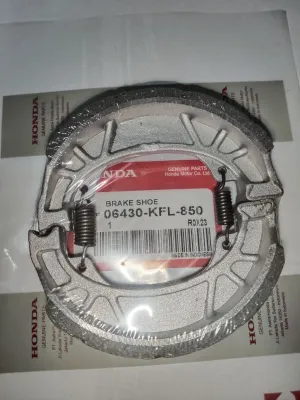
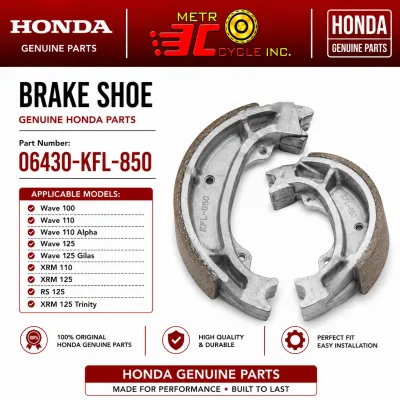
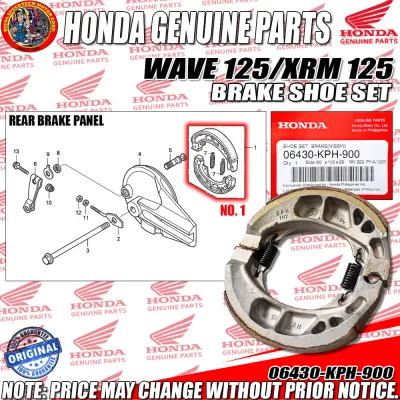
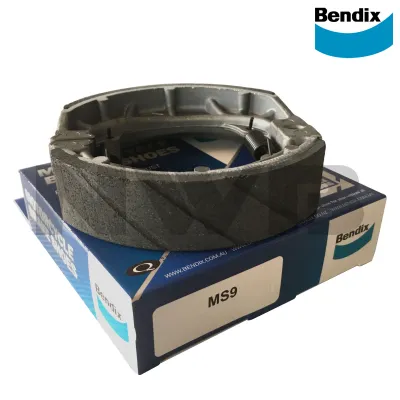
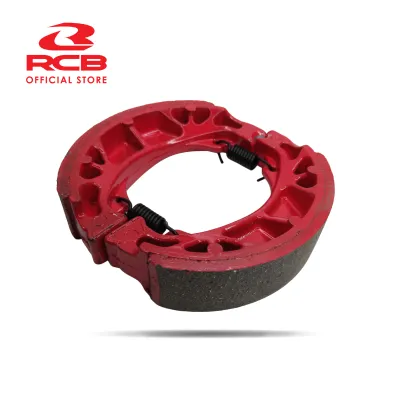
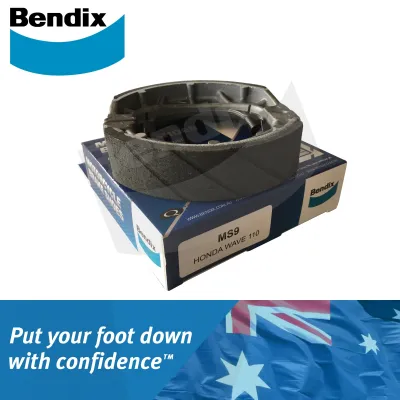
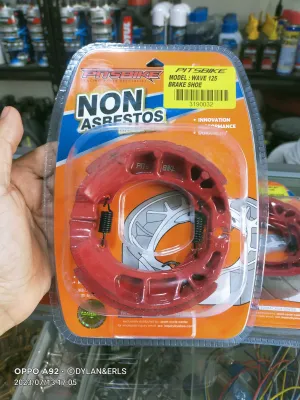
Prices are valid at publication and may change. Please refer to the product page for the latest price.
Understanding Genuine OEM Honda Brake Shoes
Genuine OEM Honda brake shoes are engineered to deliver a highly predictable, progressive braking feel under standard commuting conditions. Honda designs these components with a focus on low noise, minimal dust generation, and maximum drum longevity. The friction compound is formulated to wear down gradually without aggressively cutting into the softer cast-iron liner of the wheel hub’s drum, preserving the life of your wheel assembly over tens of thousands of kilometers.

Because counterfeit motorcycle parts are common in online marketplaces and unauthorized physical shops, verifying the authenticity of your OEM brake shoes is critical. Genuine Honda parts are typically sold through authorized dealerships and come in distinct, branded packaging featuring high-quality printing, specific part number labels, and holographic security stickers that shift color when tilted. Purchasing from an authorized dealer ensures you receive the exact friction compound formulated for your Wave 125, avoiding the safety risks associated with substandard imitation parts. While OEM shoes carry a fixed price premium compared to entry-level aftermarket options, they eliminate the guesswork of compatibility and performance.
Evaluating Aftermarket Brake Shoe Brands
When exploring aftermarket brake shoes, you must distinguish between established, reputable motorcycle parts manufacturers and unbranded, generic alternatives. Reputable aftermarket brands invest in quality control, using standardized friction formulations that comply with international safety regulations. These manufacturers clearly print their brand names, manufacturing dates, and friction material classifications on the packaging, allowing you to make an informed decision based on verifiable specifications.
Be cautious of aftermarket products marketed with terms like “racing,” “sintered,” or “high-performance” unless you can verify they are explicitly designed for standard underbone drum brakes. Sintered or highly aggressive metallic compounds require high operating temperatures to function effectively, which standard daily commuting on a Wave 125 rarely generates. Using an overly aggressive compound on a standard drum can cause the brakes to grab unexpectedly, accelerate drum wear, or cause severe brake fade when cold. For daily commuting, stick to non-asbestos organic (NAO) or mild semi-metallic compounds from trusted third-party brands.
Key Comparison Dimensions for Daily Commuters
To choose the right option for your daily ride, compare OEM and aftermarket brake shoes across three primary dimensions: friction material feel, durability, and overall value.
Friction Material and Feel: OEM brake shoes utilize a balanced organic compound that provides a smooth, progressive bite, meaning the braking force increases predictably as you apply more pressure to the pedal. Aftermarket options vary widely; some budget-friendly organic shoes offer a softer initial bite, while premium semi-metallic aftermarket shoes might provide a sharper, more immediate grab. When considering aftermarket brands, check verified user reviews from other Wave 125 riders to understand how a specific shoe performs in wet conditions, as some compounds lose efficiency when water enters the drum during heavy downpours.
Durability and Wear: Assessing the physical characteristics of the shoes can help you gauge their lifespan. Look for shoes with clear wear indicators and consistent material thickness across the entire arc. Softer aftermarket compounds may offer excellent initial grip but wear down rapidly, requiring more frequent adjustments and replacements. Conversely, excessively hard aftermarket compounds might last a long time but will accelerate the wear of your brake drum, leading to a much more expensive hub replacement down the road. OEM shoes are specifically balanced to optimize the wear rate of both the shoe and the drum.
Price and Value: While budget aftermarket shoes are highly accessible and save you money upfront, you must weigh this cost difference in ₱ against their expected lifespan and safety. A cheap, unbranded shoe that glazes over quickly or glues its friction material poorly to the metal backing can fail under hard braking, putting you at risk. Investing slightly more in genuine OEM parts or certified aftermarket shoes from established brands ensures consistent friction performance and peace of mind during emergency stops.
Decision Framework: Which Option Fits Your Needs?
To finalize your decision, evaluate your specific riding profile, budget, and maintenance habits against these guidelines:
- Choose OEM if: You prioritize maximum safety, guaranteed fitment, and a predictable braking feel. If you prefer to maintain your Honda Wave 125 to its exact factory specifications and want to ensure your brake drum lasts as long as possible, genuine Honda parts are the most reliable choice.
- Choose Aftermarket if: You are working within a strict budget in ₱, need a quick replacement from a trusted local motorcycle supply shop, or have specific commuting needs—such as carrying heavy loads—that benefit from a slightly firmer semi-metallic compound. Always ensure the aftermarket brand you select is well-established and has a proven track record of safety.
- Verify First if: You are tempted by high-performance or specialized aftermarket shoes. Always check the manufacturer's catalog to confirm the shoes are engineered specifically for the drum diameter of your Wave 125 model year, rather than relying solely on generic retail descriptions.
Installation and Bed-In Safety Procedures
Because brakes are a critical safety system, proper installation is paramount. If you do not have the proper tools, torque specifications, and experience with drum brake adjustment, have the installation performed by a qualified motorcycle mechanic. Incorrectly installed springs, misaligned shoes, or improper cam lubrication can cause the brakes to lock up unexpectedly or fail to engage when needed.
Once new brake shoes are installed, they must be properly bedded in to achieve full stopping power. Avoid hard, sudden braking for the first few dozen kilometers of riding. Instead, apply gentle, progressive pressure to the brake pedal during normal stops to allow the high spots on the new friction material to wear down evenly and transfer a thin, consistent layer of friction material to the inner surface of the drum.
After the initial bed-in period, perform a series of post-installation checks. Elevate the rear wheel and spin it by hand to verify that the wheel spins freely without excessive dragging. Adjust the brake cable or rod tension so that the pedal has the correct amount of free play as specified in your owner’s manual, and ensure the wear indicator pointer on the brake camshaft is properly aligned within the safe operating zone.
Frequently Asked Questions (FAQ)
How often should I replace the brake shoes on my Wave 125?
Brake shoe lifespan depends heavily on your riding style, payload, and environmental conditions rather than a strict mileage interval. Riding in stop-and-go city traffic or carrying heavy loads will wear down the friction material much faster than highway cruising. To monitor wear, regularly check the external wear indicator pointer on the rear brake panel when the pedal is fully depressed. Additionally, inspect the actual thickness of the friction material during routine tire changes; if the lining has worn down to the manufacturer’s minimum limit (typically 2mm or as specified in your manual), replace the shoes immediately.
Can I use brake shoes from a different Honda underbone model?
You should avoid using brake shoes from other underbone models unless the manufacturer’s official compatibility catalog explicitly lists them as an exact match. Even if shoes from another model physically fit inside the drum, minor differences in the friction arc, the width of the shoe, or the contact angle of the actuation cam can prevent the shoes from making full contact with the drum. This partial contact reduces braking efficiency, causes rapid localized overheating, and can lead to sudden brake failure. Always match the replacement part to your specific Honda Wave 125 model year.
Community discussion
Share your experience or ask a question. Comments are reviewed before publication.