
Quick Answer: OEM vs Aftermarket Brake Shoes for XRM
When replacing the brake shoes on your Honda XRM, choosing Original Equipment Manufacturer (OEM) parts is the safest and most reliable decision. Genuine Honda brake shoes are designed specifically for your motorcycle’s drum dimensions and weight distribution, ensuring predictable stopping power and an exact fit. While high-quality aftermarket brake shoes from reputable brands serve as excellent, budget-friendly alternatives, they require careful verification of compatibility and quality. Conversely, ultra-cheap, unbranded aftermarket options pose severe safety risks, as their friction materials can fail under heavy loads or wet conditions. Because your motorcycle’s braking system is a critical safety component, compromising on quality to save a small amount of money is never recommended.
Understanding Your Options: OEM vs Aftermarket
To make an informed decision for your Honda XRM, it is essential to understand what sets OEM and aftermarket components apart. OEM brake shoes are genuine replacement parts authorized by Honda and manufactured to match the precise metallurgical specifications, friction coefficients, and mechanical tolerances of your motorcycle’s original factory build.

Aftermarket brake shoes are produced by independent third-party manufacturers. This category is highly diverse, ranging from premium, globally recognized braking specialists to obscure, budget-focused factories. Premium aftermarket brands often conduct extensive development to offer alternative friction compounds, such as semi-metallic or advanced organic blends, targeting specific riding preferences like reduced dust or enhanced wet-weather grab. On the other end of the spectrum are low-cost, unbranded aftermarket parts, which prioritize low production costs over quality control and material consistency.
Products mentioned in this guide
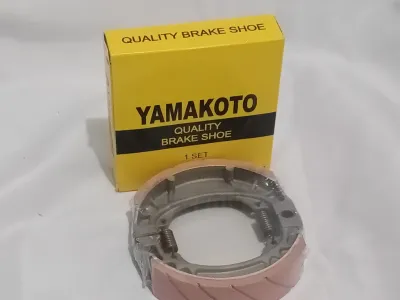
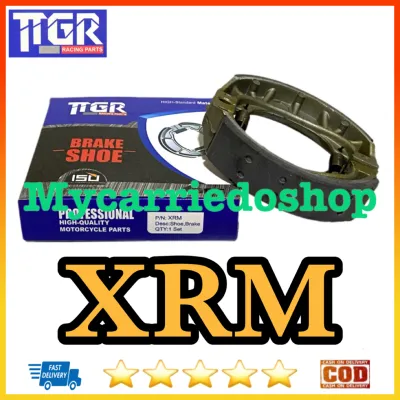
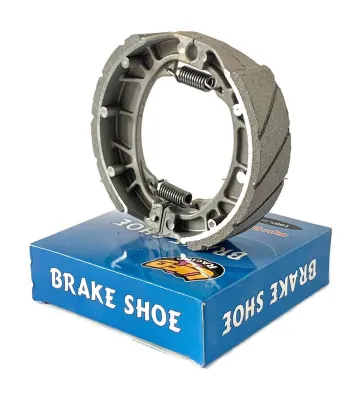
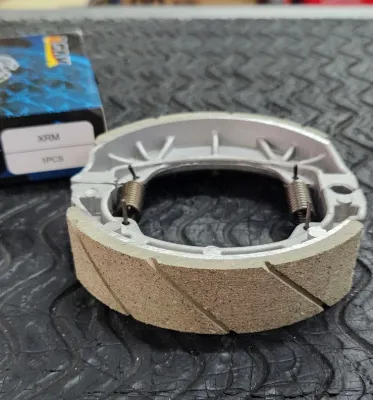
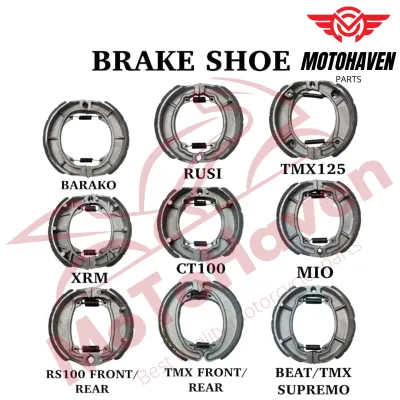
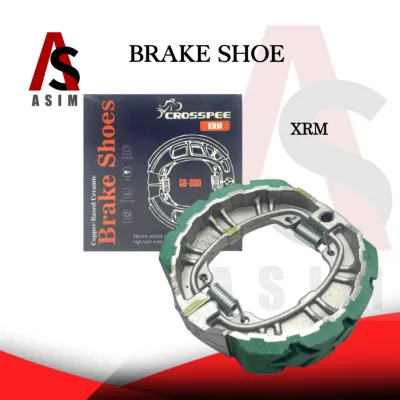
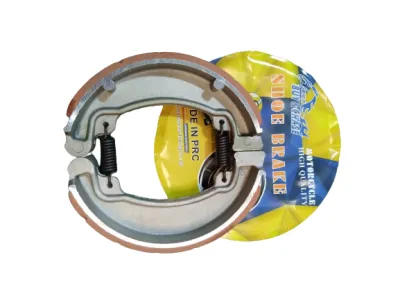
Prices are valid at publication and may change. Please refer to the product page for the latest price.
XRM owners in the Philippines frequently face this choice because of the motorcycle’s immense popularity. As a primary workhorse for daily commuting and commercial deliveries, the Honda XRM operates under demanding local conditions. Consequently, local motorcycle parts shops and online marketplaces carry a vast inventory of both genuine Honda parts and third-party alternatives, making it crucial for riders to understand the trade-offs before purchasing.
Comparing OEM and Aftermarket Brake Shoes for the XRM
Material Quality and Stopping Performance
The friction material bonded to the brake shoe backing plate determines how effectively your Honda XRM decelerates. Genuine OEM Honda brake shoes utilize high-grade non-asbestos organic (NAO) compounds. This material is specifically formulated to deliver a predictable, progressive bite, allowing the rider to modulate braking force smoothly through the handlebar lever or foot pedal. OEM shoes are engineered to maintain stable friction levels across a wide temperature range, ensuring consistent performance.
In contrast, aftermarket brake shoes exhibit highly variable material quality depending on the manufacturer. Premium aftermarket brands often utilize advanced organic or semi-metallic compounds designed to optimize specific performance aspects, such as rapid water dispersion or resistance to brake fade. These high-quality alternatives can perform excellently in the challenging Philippine climate, where sudden tropical downpours and flooded streets demand immediate, reliable braking response.
However, cheap, unbranded aftermarket brake shoes often utilize inferior binding resins and low-grade friction materials. These sub-par materials can result in a hard, grabby braking sensation that makes smooth modulation difficult, increasing the risk of rear-wheel lockup on slippery roads. Furthermore, poor-quality compounds often suffer from severe wet-weather performance degradation, where water film on the drum face cannot be cleared quickly, leading to a dangerous delay in stopping power during heavy rain.
Lifespan and Wear Characteristics
The longevity of your brake shoes and the preservation of your motorcycle’s brake drums are closely linked to the hardness and composition of the friction material. Genuine OEM Honda brake shoes are engineered to strike a precise balance between shoe wear and drum wear. Because the friction material is designed to wear down gradually while preserving the harder cast-iron liner of the wheel hub, OEM shoes help prevent premature drum wear, saving you from the high cost of replacing the entire wheel hub assembly.
Premium aftermarket brake shoes also offer commendable wear characteristics, with some brands formulating compounds that emphasize low dust production and extended service life. These premium options are designed to wear even without causing excessive abrasion to the mating surface of the drum, making them a durable choice for high-mileage riders.
Cheap, low-quality aftermarket shoes, however, present significant wear risks. Some budget alternatives use excessively hard metallic inclusions or low-grade bonding agents that can score, scratch, or permanently gouge the inner surface of the XRM’s brake drum. Once a drum is severely scored, installing new shoes will not restore proper braking performance, as the uneven surface prevents full contact; the only remedy is a costly hub replacement. Alternatively, some ultra-cheap shoes use materials that are too soft, wearing out in a fraction of the normal service life and glazing over quickly under high heat, which renders the brakes slick and ineffective.
Price and Overall Value
In the Philippine motorcycle market, price is often the primary driver for maintenance decisions, but true value must be calculated over the lifespan of the component. Genuine OEM Honda brake shoes command a price premium, typically retailing in broad bands from ₱300 to ₱600 depending on the specific XRM variant and the authorized dealership’s location. This higher upfront cost reflects the rigorous quality control, guaranteed fitment, and safety testing backing the OEM label.
Aftermarket options offer a much wider pricing spectrum. Premium third-party brake shoes generally sit in a middle price band, typically ranging from ₱200 to ₱400, offering a balanced middle ground for riders seeking reputable performance at a slightly lower price point. Meanwhile, generic, unbranded aftermarket shoes are widely available for as low as ₱80 to ₱150, making them highly appealing to budget-constrained riders.
However, evaluating these options solely on upfront cost is a false economy. A cheap ₱100 brake shoe that wears out quickly, performs poorly in the rain, or damages your brake drum—requiring a wheel hub replacement costing thousands of pesos—ultimately costs far more than a genuine ₱500 OEM shoe. When framed in terms of cost-per-kilometer and personal safety, genuine Honda parts or premium aftermarket options from trusted manufacturers consistently deliver superior long-term value and peace of mind.
Safety First: Installation and Compatibility Checks
Because motorcycle brakes are a life-critical safety system, any repair, replacement, or modification must be approached with extreme caution. Improper installation, incorrect part selection, or using incompatible components can lead to sudden brake failure, wheel lockup, or loss of vehicle control. Before purchasing or installing any brake component, always check the applied product’s label and the treated item’s manufacturer instructions. If instructions conflict, the item is unidentified, or the intended use is not covered, stop immediately and consult the motorcycle manufacturer or a qualified professional mechanic.
Compatibility is a critical hurdle when purchasing brake shoes for the Honda XRM. The XRM lineup has evolved significantly over the years, spanning various models such as the XRM 110, XRM 125 Dual Sport, XRM 125 Motard, and XRM 125 DSX. These variants may use different wheel configurations—such as cast alloy wheels versus spoked wheels—which can feature different rear hub dimensions, drum diameters, and shoe widths. Never assume a brake shoe will fit simply because the packaging mentions “XRM.” You must verify the exact part number and physical dimensions against your specific model year’s parts catalog or owner’s manual before finalizing your purchase.
While basic maintenance can be satisfying, professional installation by a qualified mechanic is highly recommended for drum brake systems. Replacing brake shoes involves handling high-tension return springs, which can cause injury or become damaged if pried with improper tools. Furthermore, a professional mechanic will know how to properly clean the brake backing plate, inspect the drum for out-of-round wear, lubricate the brake camshaft and pivot pins with high-temperature grease without contaminating the friction linings, and adjust the brake cable or rod play to meet original factory specifications.
If you choose to perform the inspection or replacement yourself, adhere strictly to safety protocols. Never use compressed air to blow away accumulated brake dust, as inhaling these fine particulates is hazardous; instead, use a dedicated, label-authorized brake cleaner spray and a clean cloth. Never attempt to modify, grind, or file a brake shoe’s backing plate or friction lining to force it into a drum that is too small or mismatched. Finally, if you detect any unusual squealing, grinding noises, lever pulsations, or a spongy feel after installation, stop riding the motorcycle immediately and have the system inspected by a professional.
Decision Framework: Which Brake Shoe Should You Choose?
To help you decide between OEM and aftermarket options for your Honda XRM, we have outlined a practical decision framework based on different riding profiles, budgets, and operating conditions.
Choose OEM Honda Brake Shoes if:
- Safety and Reliability are Your Top Priorities: If you use your XRM for daily commuting through heavy traffic, carry passengers, or operate a delivery service, the guaranteed performance of genuine parts is indispensable.
- You Prefer a Direct, Hassle-Free Fit: OEM parts eliminate the guesswork of compatibility, ensuring that the shoe dimensions and spring anchor points perfectly match your model variant.
- You Want to Protect Your Wheel Hubs: Genuine Honda shoes use optimized friction compounds designed to wear out before your brake drums do, preserving your wheel hubs over tens of thousands of kilometers.
Choose Premium Aftermarket Brake Shoes if:
- OEM Parts are Out of Stock: Premium aftermarket brands offer a safe, reliable alternative that keeps your motorcycle on the road without compromising safety.
- You Want Specific Performance Characteristics: Some premium third-party manufacturers offer specialized compounds tailored for enhanced wet-weather grip, which is beneficial during the monsoon season.
- You Want a Balanced, Cost-Effective Solution: If you want to save a modest amount of money while still benefiting from rigorous manufacturing standards and quality control.
Avoid Unbranded or Ultra-Cheap Aftermarket Shoes if:
- You Ride in Demanding Conditions: If you navigate steep hills, carry heavy loads, or ride in wet, muddy environments, cheap shoes are highly prone to glazing, fading, or failing completely.
- You Want to Avoid Costly Secondary Repairs: The money saved by buying a cheap shoe is quickly wiped out if the hard, low-grade metal inclusions in the friction material score your brake drum, requiring an expensive wheel hub replacement.
Verify First if:
- You Own an Older or Modified XRM: If your motorcycle has aftermarket wheels, physical measurements and part number cross-referencing are mandatory before purchase.
Where to Buy and How to Avoid Counterfeits
The high demand for Honda XRM parts in the Philippines has unfortunately led to a proliferation of counterfeit products in the market. To protect yourself and ensure your safety, you must be vigilant about where you buy your brake components and how you verify their authenticity.
The most reliable way to purchase genuine OEM Honda brake shoes is to buy them directly from authorized Honda 3S (Sales, Service, and Spare Parts) shops, flagship dealerships, or certified parts distributors. Purchasing from these official channels guarantees that you are receiving authentic parts backed by Honda’s quality assurance.
If you are purchasing from local motorcycle retail shops or online marketplaces, you must carefully inspect the packaging for signs of counterfeiting. Genuine Honda parts packaging features high-quality, crisp printing, clear security holograms that shift color under light, precise barcode alignment, and accurate part numbers matching official catalogs. Counterfeit packaging often exhibits blurry text, off-center logos, peeling labels, or cheap, flimsy cardboard. Additionally, be highly skeptical of prices that seem too good to be true; a seller offering “genuine Honda” brake shoes for the price of a cheap aftermarket alternative is almost certainly selling a counterfeit.
When buying aftermarket brake shoes, stick to established, globally or locally recognized braking brands. Purchase these parts from official brand stores or highly rated, verified sellers on e-commerce platforms. Avoid generic listings that do not specify a brand name or those that use vague descriptions like “high-quality replacement,” as these products rarely undergo the safety testing required to protect you on the road.
Frequently Asked Questions (FAQ)
How do I properly break in new brake shoes on my XRM?
New brake shoes require a proper bedding-in, or burnishing, period to ensure optimal stopping performance and safety. During manufacturing and installation, the friction material of the shoe and the inner surface of the brake drum will have microscopic high spots that prevent full, even contact. To bed them in, perform gentle, progressive braking for the first 100 to 200 kilometers of riding, avoiding sudden, hard stops unless it is an absolute emergency. This gradual process allows the friction material to wear down slightly and conform perfectly to the drum’s inner diameter, ensuring maximum surface contact, preventing thermal glazing, and gradually improving your XRM’s overall braking bite and modulation.
Community discussion
Share your experience or ask a question. Comments are reviewed before publication.