
Choosing the right clutch housing for sniper 150 is a critical decision that directly impacts your motorcycle’s power delivery, shifting smoothness, and long-term engine health. The clutch housing, often referred to locally as the clutch basket, acts as the structural anchor for your transmission’s clutch pack. When replacing this vital component, riders must choose between sticking with the original equipment manufacturer (OEM) genuine Yamaha part or upgrading to an aftermarket alternative.
For the vast majority of riders in the Philippines, the OEM genuine Yamaha clutch housing is the safest, most reliable, and most practical choice. It is engineered specifically to handle daily commuting, heavy stop-and-go city traffic, and standard delivery services while maintaining factory-level durability. Conversely, aftermarket options are best reserved for highly specific scenarios, such as track-focused racing builds requiring lightweight materials or heavily modified, big-bore engines needing reinforced, heavy-duty components. Ultimately, the correct choice depends on your daily riding conditions, performance goals, budget, and willingness to follow precise installation protocols.
Diagnosing Wear on the Clutch Housing for Sniper 150
Before spending your hard-earned Pesos on replacement parts, it is essential to accurately diagnose whether your clutch housing is actually worn out or if your transmission issues stem from simpler components like the friction plates. The clutch housing for sniper 150 plays a dual role: it houses the clutch plates and meshes directly with the primary drive gear on the engine’s crankshaft. This means any physical damage or wear on the housing directly disrupts the transfer of power from the engine to the gearbox.
Products mentioned in this guide
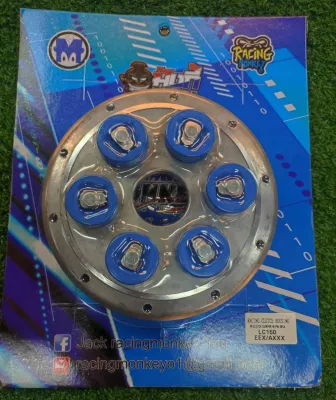
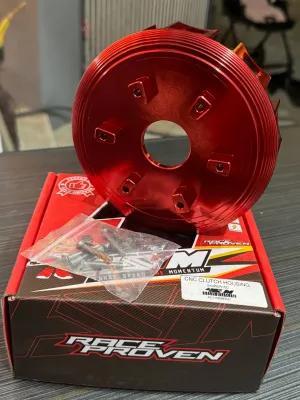
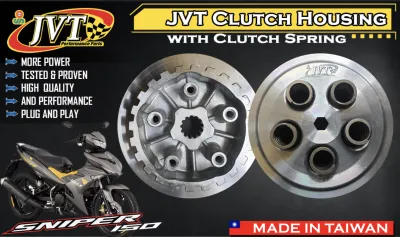
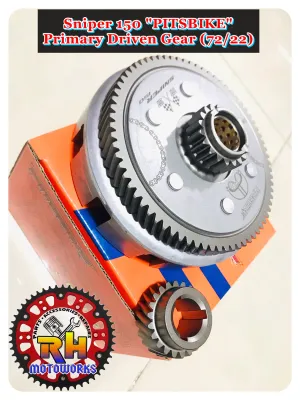
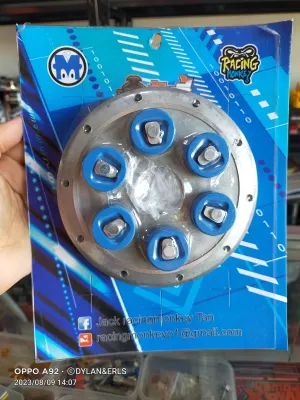
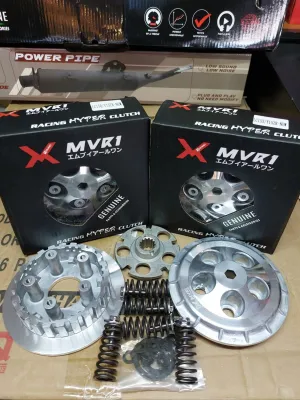
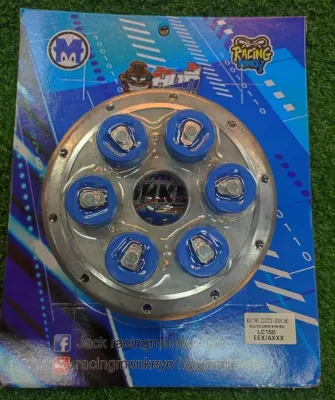
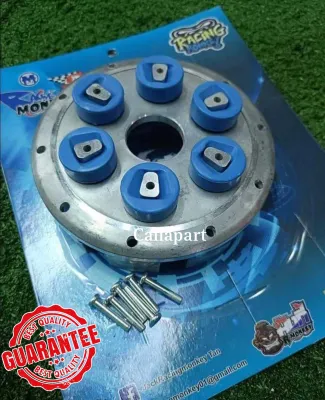
Prices are valid at publication and may change. Please refer to the product page for the latest price.
Several observable symptoms point directly to a failing or worn clutch housing. One of the most common signs is a persistent clutch slip that remains unresolved even after you have installed brand-new friction plates, steel plates, and stiffer clutch springs. If the housing itself is damaged, the plates cannot compress or release evenly, leading to continuous slippage under acceleration. Another clear indicator is an unusual rattling or metallic knocking sound coming from the right-side engine cover. This noise often becomes quieter or changes pitch when you pull the clutch lever in, signaling that the internal clearance between the clutch boss, plates, and housing fingers has exceeded safe tolerances.
Furthermore, if you experience extreme difficulty finding neutral while idling or if your gear shifts feel unusually stiff and notch-like, the housing fingers may be severely worn. Over tens of thousands of kilometers of riding, the tabs on the friction plates continuously hammer against the aluminum fingers of the housing. This constant impact creates deep grooves, scoring, or “notching” along the sides of the fingers. These notches trap the friction plates, preventing them from sliding smoothly back and forth when you pull or release the clutch lever.
It is crucial to differentiate between standard clutch plate wear and structural housing wear. Friction plates are consumable items designed to wear down over time through normal friction. In contrast, the clutch housing is a semi-permanent structural component that should last for years under normal riding conditions. Premature housing wear is typically accelerated by aggressive riding habits, such as frequent hard downshifting, clutching up for wheelies, using poor-quality engine oil, or neglecting oil change intervals in hot, humid tropical climates.
OEM Clutch Housing: Reliability for Daily Commuting
Evaluating the OEM clutch housing reveals why it remains the benchmark for everyday riders. Genuine Yamaha parts are manufactured using high-pressure cast aluminum alloys that are precisely machined to meet strict factory tolerances. This casting process ensures that the housing can absorb the continuous vibrations and thermal expansion generated by the Sniper 150’s liquid-cooled 150cc engine, particularly during long hours of idling in dense urban traffic.

One of the greatest advantages of choosing the OEM housing is guaranteed fitment and compatibility. Because it is an exact replacement, it integrates seamlessly with your existing clutch center, pressure plate, and the primary drive gear on the crankshaft. There is no need for machining, grinding, or using custom spacers. The gear teeth on the back of the OEM housing are engineered with the exact tooth profile and backlash tolerances specified by Yamaha, ensuring quiet operation and preventing premature wear on the crankshaft gear.
In terms of longevity, a genuine Yamaha clutch housing offers a highly predictable and reliable lifespan. When paired with regular engine oil changes using high-quality JASO MA2 certified oil and maintaining the recommended 10 to 20 millimeters of clutch lever free play, the OEM housing can easily last for over 50,000 kilometers of daily street riding. This predictability is highly valued by daily commuters and delivery riders who rely on their motorcycles for their livelihoods and cannot afford unexpected breakdowns.
However, the OEM housing does have its limitations. Cast aluminum is naturally heavier than CNC-machined billet aluminum, meaning the OEM component has higher rotational mass. While this extra weight helps maintain a smooth, stable idle and provides excellent low-end momentum for easy takeoffs, it slightly slows down the engine’s throttle response and rev-building speed. Sourcing genuine Yamaha parts in the local market also requires caution. Due to the popularity of the Sniper 150, counterfeit OEM parts are common on unverified online platforms. To ensure you are buying a genuine part, always purchase directly from authorized Yamaha 3S dealerships or highly reputable, established motorcycle parts distributors.
Aftermarket Options: Performance Gains and Heavy-Duty Use
Aftermarket options present an appealing alternative for riders looking to extract more performance from their underbone or those who have modified their engines beyond stock specifications. These components generally fall into two main categories: heavy-duty reinforced housings and lightweight billet aluminum housings. Heavy-duty options are designed to handle the increased torque of big-bore engine modifications (such as 62mm or 65mm cylinder kits), while lightweight billet options focus on reducing rotating mass for competitive track racing.
The primary benefit of a premium aftermarket clutch housing is its superior material construction. Many high-end aftermarket brands CNC-machine their housings from solid blocks of billet aircraft-grade aluminum, such as 6061-T6 or 7075-T6. This manufacturing method yields a component with significantly higher tensile strength and impact resistance compared to standard cast aluminum. Furthermore, premium aftermarket housings often undergo hard-anodizing surface treatments, which create an extremely hard outer layer on the housing fingers, making them highly resistant to the notching caused by friction plate tabs.
Another performance advantage is the reduction of rotating mass. A lightweight billet housing allows the crankshaft to spin up much faster, resulting in sharper throttle response and quicker acceleration out of corners. This is a massive advantage on the racetrack where every millisecond counts. Additionally, some aftermarket designs feature optimized cooling fins or oil holes that improve oil flow through the clutch pack, helping to dissipate heat more efficiently during aggressive riding or high-load situations.
Despite these performance benefits, aftermarket housings carry notable risks and limitations. The market is flooded with cheap, unbranded aftermarket parts on general online marketplaces that suffer from poor quality control and inconsistent machining tolerances. Installing a low-quality housing can lead to severe issues, such as improper gear meshing that produces a loud, high-pitched whining noise, or excessive engine vibration that can damage internal bearings. In the worst-case scenarios, a cheap housing can crack or shatter under high RPMs, sending metal fragments throughout your crankcase and completely destroying your engine. Some performance housings also require the use of proprietary clutch plates or specific aftermarket clutch hubs, which can significantly drive up the total cost of the upgrade.
Before purchasing any aftermarket clutch housing, it is absolutely vital to verify the manufacturer’s material claims and machining standards. Avoid relying solely on flashy product listings, generic marketing terms, or unverified seller descriptions. Take the time to research reputable motorcycle forums, local riding groups, and community reviews to see how a specific brand performs under real-world conditions in the Philippines.
Key Comparison Dimensions to Evaluate Before Buying
When deciding between these options, evaluating specific technical dimensions will help you make an objective, informed choice. Rather than relying on vague marketing promises, you should compare the physical attributes, structural materials, and operational trade-offs of each category.
Material and construction serve as the foundation of the housing’s durability. Standard cast aluminum, used in the OEM housing, is excellent for absorbing engine harmonics and dampening noise, but it is softer and more prone to gradual wear and notching over time. On the other hand, forged or CNC-machined billet aluminum offers maximum strength and resistance to deformation, but it is more expensive to manufacture. When looking at aftermarket options, always check the product packaging or manufacturer documentation for verified material grades like 6061-T6 aluminum.
Weight and rotating mass represent a major performance trade-off. While a lightweight billet housing improves throttle response, it also reduces the engine’s rotational inertia. For a daily commuter navigating the heavy stop-and-go traffic of Manila, a heavier OEM housing is actually more beneficial. The extra weight acts as a small flywheel, helping to maintain a smooth idle and preventing the engine from stalling easily when pulling away from a dead stop at low RPMs. Conversely, if your Sniper 150 is built for the track, the reduced weight of a billet housing is highly desirable for rapid acceleration.
Gear and spline compatibility is the most critical safety dimension. The primary drive gear on the back of the clutch housing must align and mesh perfectly with the teeth of the crankshaft’s primary gear. The inner splines must also match the transmission shaft precisely. Any misalignment, improper tooth profile, or loose tolerances will result in rapid gear wear, severe transmission noise, and potential gear tooth breakage, which can lock up your transmission mid-ride.
To help you visualize these differences, the following table compares the three primary categories of clutch housings available for the Sniper 150:
| Evaluation Dimension | OEM (Genuine Yamaha) | Premium Aftermarket (Billet) | Budget Aftermarket (Unbranded) |
|---|---|---|---|
| Intended Use Case | Daily commuting, delivery, standard touring | Racing, highly modified engines, heavy-duty use | Low-budget emergency replacement |
| Fitment Guarantee | 100% perfect direct fit; no modifications needed | Highly precise; brand-dependent fitment | Variable; may require modifications or custom spacers |
| Material Verification | Certified factory-grade cast aluminum | Documented billet aluminum (e.g., 6061-T6) | Unverified, low-grade cast aluminum alloy |
| Risk Level | Extremely low; backed by factory quality control | Low to moderate; depends on brand and installation | High; risk of gear misalignment or structural failure |
The Decision Framework: Which Option Fits Your Riding Style?
To make your final purchase decision, you should map your specific riding style, motorcycle setup, and budget against the characteristics of each housing type.
Choose OEM if:
- You use your Sniper 150 as a daily commuter, for courier or delivery work, or for long-distance touring.
- You prioritize maximum engine reliability, quiet operation, and a hassle-free, direct-fit installation.
- You prefer a predictable maintenance schedule and want to avoid the need for custom tuning or modifying adjacent transmission parts.
- You want to ensure full compatibility with standard, widely available replacement clutch plates and springs.
Choose Premium Aftermarket if:
- You have significantly upgraded your engine's displacement (such as a 62mm, 63mm, or larger big-bore kit) and need a housing that can handle increased horsepower and torque.
- You participate in competitive track racing or drag racing where rapid throttle response and reduced rotating mass are critical for performance.
- You regularly carry exceptionally heavy loads or ride in steep, mountainous regions where the clutch is subjected to extreme thermal and physical stress.
- You are willing to invest in high-end, documented brands and pay for professional installation to ensure perfect alignment.
Avoid Budget or Unbranded Aftermarket if:
- The product lacks clear manufacturer branding, material specifications, or verifiable certifications.
- There are no reliable community reviews or real-world feedback from experienced mechanics regarding the product's long-term durability.
- You cannot afford the risk of a catastrophic engine failure, as a broken clutch housing can easily destroy your entire engine block and transmission assembly.
Verify first if:
- You are unsure of the exact model year or specific variant of your Sniper 150. While many parts are interchangeable across different model years, subtle mid-cycle production revisions by Yamaha can sometimes alter part numbers, gear tooth counts, or housing depths. Always verify your motorcycle's chassis number or consult an authorized parts catalog before finalizing your purchase.
Installation Safety and Professional Service Boundaries
Replacing a clutch housing is a highly technical procedure that directly affects your motorcycle’s primary drive system and overall safety. It is not a basic DIY task. The process requires draining the engine oil, removing the right-side engine cover, and completely disassembling the clutch pack.
To perform this task safely and correctly, specialized tools are absolutely necessary. You must use a dedicated clutch holding tool to secure the clutch boss while loosening or tightening the high-torque main shaft nut. Attempting to lock the engine using makeshift methods, such as jamming a screwdriver into the gears or putting the bike in gear and holding the rear brake, can easily bend transmission shafts, chip gear teeth, or crack the engine crankcase. Furthermore, a calibrated torque wrench must be used to tighten all fasteners, including the main clutch nut and the clutch spring bolts, to the exact torque specifications detailed in the official Yamaha service manual.
A critical safety boundary involves the primary drive gear. On many clutch housings, the primary driven gear is pressed or staked onto the aluminum basket using heavy-duty rivets and rubber dampers. If your replacement housing requires you to transfer the old gear, improper installation or misalignment during this step can alter the gear backlash, causing severe gear whine, rapid wear, or catastrophic crankshaft damage. Because of these tight tolerances and the high risk of engine damage, we strongly recommend having this procedure performed by a qualified, experienced motorcycle mechanic at a professional service center.
After the installation is complete, always perform a thorough post-installation check before taking the motorcycle onto public roads. Start the engine on the center stand and listen closely for any unusual whining, rattling, or knocking sounds from the right engine cover. Check the clutch lever free play and adjust it to the recommended 10 to 20 millimeters. Finally, test the clutch engagement, disengagement, and gear shifting in a closed, safe area to ensure the motorcycle operates smoothly and does not creep forward when the clutch lever is fully pulled in.
Frequently Asked Questions (FAQ)
Can I use a clutch housing from a different Yamaha 150cc model on my Sniper 150?
While several Yamaha 150cc models share similar engine architectures, you should not assume their clutch housings are interchangeable. Differences in primary drive gear ratios, internal spline counts, overall housing depth, and outer cover clearances can prevent proper installation or cause severe transmission damage. Always verify and use the exact part number designated specifically for your Sniper 150 model year to ensure safe and reliable operation.
Does changing the clutch housing require changing the clutch plates and springs?
It is highly recommended to replace your clutch plates and springs when installing a new clutch housing. If your old housing was worn or notched, the friction plates have likely suffered uneven wear or heat damage. Installing worn plates into a brand-new housing can quickly damage the new component. Furthermore, if you are upgrading to a performance aftermarket housing, pairing it with fresh, high-quality friction plates and matching springs ensures you get the full performance and durability benefits of the upgrade.
Will an aftermarket clutch housing void my motorcycle's warranty?
Yes, installing a non-OEM clutch housing will generally void the manufacturer’s warranty on your motorcycle’s engine and transmission systems. Yamaha’s factory warranty typically covers defects in materials and workmanship under standard operating conditions using genuine parts. If you modify the internal transmission components with aftermarket parts, any subsequent damage to the engine or gearbox will not be covered. If your Sniper 150 is still under warranty, it is best to stick with genuine OEM parts installed by an authorized dealer.
Community discussion
Share your experience or ask a question. Comments are reviewed before publication.