
Quick Answer: OEM or Aftermarket for Your TMX 155?
The Honda TMX 155 remains an iconic workhorse on Philippine roads, serving as the backbone for daily commutes, cargo deliveries, and sidecar-equipped tricycles. When the clutch system begins to fail, choosing between an Original Equipment Manufacturer (OEM) Honda clutch housing set and an aftermarket alternative is a critical decision that directly impacts your motorcycle’s reliability, operating costs, and daily performance.
The default recommendation is to purchase a genuine OEM Honda clutch housing set. This guarantees precise factory fitment, superior metallurgy capable of withstanding heavy commercial loads, and long-term durability. High-quality aftermarket alternatives from reputable manufacturers serve as viable, cost-effective solutions for budget-constrained repairs or older motorcycles not subjected to extreme hauling.
Ultimately, your decision should align with how you use your motorcycle. If your TMX 155 is a commercial tricycle carrying heavy passenger loads, the structural integrity of an OEM housing is necessary to prevent premature failure. For personal commuting, a reputable aftermarket set offers a practical compromise, provided you verify the part’s authenticity and build quality before installation.
Products mentioned in this guide
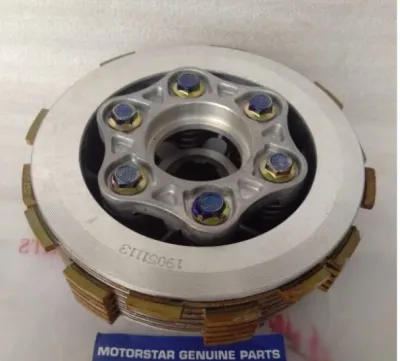
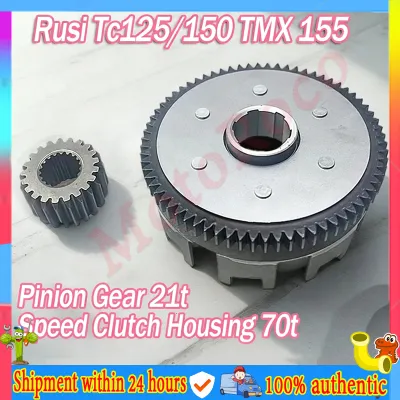
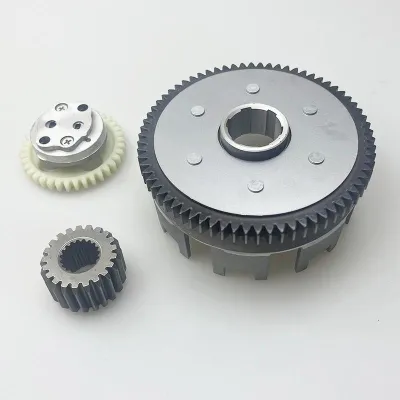
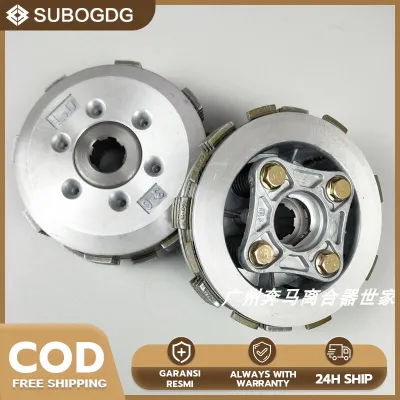
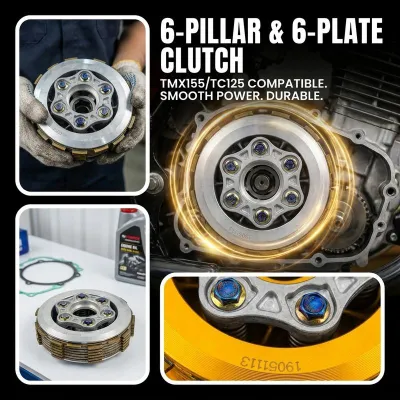
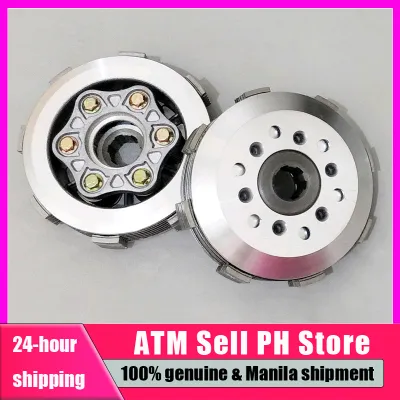
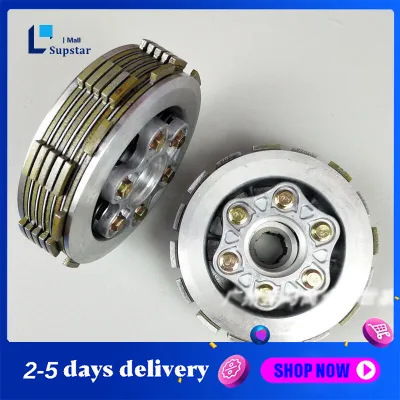
Prices are valid at publication and may change. Please refer to the product page for the latest price.
What Does the Clutch Housing Set Do on a TMX 155?
To understand why the clutch housing is vital, you must understand its role within the TMX 155’s overhead valve (OHV) engine. The clutch housing set, commonly called the “clutch basket” or “outer clutch assembly,” acts as the link between the crankshaft and the transmission. It houses the clutch friction plates, steel plates, pressure plate, and center hub, forming the core of the wet multi-plate system.

The exterior of the clutch housing features a large primary driven gear that meshes directly with the primary drive gear on the engine’s crankshaft. When the engine is running, the crankshaft spins the clutch housing continuously. Inside the housing, vertical slots or “fingers” hold the outer tabs of the friction plates. When you release the clutch lever, heavy-duty springs compress the friction plates and steel plates together, locking the spinning clutch housing to the inner clutch hub, which is splined directly to the transmission input shaft. This engagement transfers the engine’s rotational power to the rear wheel.
Because the TMX 155 is frequently subjected to stop-and-go traffic and heavy cargo, the clutch housing experiences immense stress. Over time, the tabs of the friction plates hammer against the aluminum fingers of the housing, creating physical grooves or notches. When these grooves become deep, the plates get trapped, preventing them from sliding smoothly. This results in clutch slippage, a stiff lever, difficult gear shifting, and a metallic rattling noise from the right crankcase.
OEM vs Aftermarket: Core Comparison Dimensions
Evaluating the differences between OEM and aftermarket clutch housing sets requires looking closely at material science, financial trade-offs, and the realities of the local supply chain. While both options perform the same basic mechanical function, their manufacturing standards and long-term reliability can differ significantly.
Material Quality and Manufacturing Tolerances
Genuine OEM Honda clutch housing sets are engineered to strict factory tolerances. The housing is constructed from high-grade die-cast aluminum alloy that balances lightweight operation with high tensile strength. The integrated primary driven gear is made of heat-treated carbon steel, securely riveted to the aluminum basket with dampening rubbers inside. This precise construction ensures the gear teeth mesh perfectly with the crankshaft gear, minimizing gear whine, reducing vibrations, and protecting the crankshaft main bearings.
In contrast, aftermarket clutch housing sets exhibit a wide variance in material quality and manufacturing precision. High-quality aftermarket brands often use comparable alloys and automated machining to replicate OEM dimensions closely. However, low-end, unbranded, or generic aftermarket parts frequently utilize cheaper casting methods and lower-grade aluminum alloys. These sub-standard materials are more prone to rapid wear, meaning the plate fingers will develop notches much faster under load. Furthermore, poorly manufactured aftermarket housings may suffer from misaligned primary gears or weak backing rivets, which can lead to catastrophic failure if the gear detaches from the basket while the engine is running at high revolutions.
When evaluating an aftermarket option, you must carefully inspect the physical part. Look for smooth, clean casting lines without porous air pockets or rough edges. Examine the guide fingers to ensure they are perfectly parallel and free of machining burrs. It is also wise to check the dampening rubbers between the gear and the basket; any noticeable play or loose rivets on a brand-new aftermarket assembly is a clear sign of poor manufacturing quality and should be rejected.
Pricing and Long-Term Value
The financial comparison involves balancing immediate expenses against the total cost of ownership over the motorcycle’s lifespan. In the Philippine market, genuine OEM Honda clutch housing sets command a premium. Depending on the authorized dealer, an OEM set can range from approximately ₱1,800 to over ₱3,500. This price reflects the cost of factory testing, import duties, and the assurance of genuine quality.
Aftermarket clutch housing sets are significantly more affordable, generally priced between ₱600 and ₱1,300. This lower price point makes them highly attractive for riders facing immediate budget constraints or those performing emergency repairs. However, evaluating these parts solely on their initial purchase price can be misleading. If a cheaper aftermarket housing wears out in a fraction of the time of an OEM part, you will face the recurring cost of replacement parts and mechanic labor.
In the Philippines, professional labor rates for a complete clutch overhaul typically range from ₱300 to ₱600, depending on your location and the shop’s expertise. If your TMX 155 is a commercial vehicle, such as a tricycle, the financial impact of downtime is even more severe. Every hour the motorcycle spends in the repair shop is an hour of lost income. When you factor in the repeated labor costs and the lost daily earnings, a genuine OEM clutch housing that lasts for years without trouble often proves to be the more economical choice in the long run, offering a much lower cost-per-kilometer.
Availability and Sourcing in the Philippines
Sourcing parts for the TMX 155 is straightforward due to the motorcycle’s popularity, but navigating the market requires caution. Genuine OEM Honda parts are widely distributed. You can purchase them at authorized Honda 3S (Sales, Service, and Spare Parts) dealerships, flagship stores, and established parts distributors in commercial hubs like 10th Avenue in Caloocan or provincial centers. Sourcing from authorized channels ensures you receive genuine components.
Aftermarket parts enjoy even broader availability, filling the shelves of almost every local neighborhood “motorparts” shop and dominating online ecommerce platforms. While this makes finding a replacement part incredibly convenient, it also exposes riders to a significant risk: counterfeit parts. The Philippine market has a high prevalence of counterfeit clutch housings packaged in fake OEM Honda boxes, often labeled as “genuine” or “Class A” to deceive buyers. These counterfeits are typically low-grade aftermarket parts sold at near-OEM prices.
To protect yourself from counterfeit products, always verify the seller’s credentials. Avoid buying from unverified online shops with suspiciously low prices for “genuine” parts. When purchasing in person, inspect the packaging carefully; genuine Honda packaging features crisp, high-quality label printing, correct part numbers, and clear holographic security stickers. If a deal seems too good to be true, or if the seller cannot provide a clear provenance for the part, it is safer to opt for a known, reputable aftermarket brand sold in its own branded packaging rather than risking a fake OEM part.
Decision Framework: Which Clutch Housing Set Fits Your Needs?
To choose the right clutch housing set for your TMX 155, you must evaluate your specific riding conditions, financial situation, and long-term plans for the motorcycle. Use the following guidelines to make an informed decision:
Choose OEM if:
- Your motorcycle is used for commercial tricycle operations: Tricycles carry heavy passenger loads, operate in constant stop-and-go traffic, and frequently climb steep local roads. This extreme duty cycle demands the maximum structural strength and heat resistance that only genuine OEM components can guarantee.
- You prioritize long-term reliability and low maintenance: If you rely on your TMX 155 for daily long-distance commuting or cargo deliveries and cannot afford unexpected breakdowns or frequent garage visits, the OEM set is the most dependable choice.
- You plan to keep the motorcycle for several years: Investing in genuine parts preserves the mechanical integrity of the engine, maintains a higher resale value, and ensures the transmission operates smoothly for tens of thousands of kilometers.
Choose Aftermarket if:
- You are on a strict, limited budget: If an unexpected repair is required and you cannot afford the premium price of an OEM part, a high-quality aftermarket set can get your motorcycle back on the road safely without breaking the bank.
- The motorcycle is older or used only for light, occasional tasks: For a secondary bike used mainly for short errands around the neighborhood, light solo commuting, or farm-to-market transport of light goods, a reputable aftermarket housing is a practical and cost-effective solution.
- You are purchasing a verified, reputable aftermarket brand: If you choose an aftermarket part, ensure it comes from a recognized manufacturer known for producing reliable transmission components, rather than an anonymous, unbranded box.
Verify first if:
- You are purchasing online or from an unfamiliar retailer: Always cross-reference the manufacturer's part number with your specific TMX 155 model year to ensure compatibility.
- The physical part shows any signs of manufacturing defects: Before accepting or installing the housing, inspect the casting quality, check the tightness of the backing gear rivets, and verify that the plate slots are smooth and uniform.
- The seller offers a clear return or exchange policy: Ensure you have recourse in case the part exhibits fitment issues or manufacturing defects upon initial inspection.
Installation, Safety, and Maintenance Boundaries
Replacing a motorcycle’s clutch housing is a precise mechanical procedure that directly impacts the safety and operability of the vehicle. This task requires a solid understanding of motorcycle mechanics, a clean working environment, and specialized tools. To perform this replacement, the engine oil must be fully drained, and the kickstarter lever, footrest assembly, and right-side crankcase cover must be carefully removed.
Because incorrect assembly can lead to catastrophic engine failure or sudden transmission lockup on the road, it is highly recommended to have a qualified motorcycle mechanic perform the installation. The clutch housing is secured to the input shaft with a specialized locknut that must be tightened to the manufacturer’s exact torque specifications using a calibrated torque wrench and a dedicated clutch holding tool. Standard hand tools or improper methods—such as using a hammer and cold chisel to tighten the locknut—can easily bend the transmission shaft, crack the aluminum clutch basket, strip the threads, or cause the nut to back off during high-speed operation, presenting a severe safety hazard.
When replacing the clutch housing, you should also inspect the surrounding wear items. It is highly practical to replace the clutch friction plates, steel plates, clutch springs, and the crankcase cover gasket at the same time. Installing worn friction plates into a brand-new clutch housing will cause rapid, uneven wear on the new basket’s fingers, defeating the purpose of the replacement. Measure the free length of the clutch springs using a vernier caliper to ensure they are within the service limits specified in your owner’s manual; weak springs will cause clutch slippage even with a brand-new housing set.
Finally, proper lubrication is critical for the break-in and longevity of your new clutch components. During reassembly, thoroughly coat all new friction plates and the clutch housing in clean engine oil. Always refill the engine with high-quality oil that meets the JASO MA or JASO MA2 specification, which is specifically formulated for wet clutch systems. Avoid using passenger car engine oils, as they often contain friction modifiers that can cause the clutch plates to slip continuously against the new housing, leading to rapid overheating and premature failure.
Frequently Asked Questions (FAQ)
Can I mix an OEM clutch housing with aftermarket clutch plates?
Yes, it is physically possible to mix an OEM clutch housing with aftermarket clutch plates, provided the aftermarket plates are designed specifically for the TMX 155 and match the original physical dimensions, thickness, and tab profiles. However, doing so can sometimes result in unpredictable wear patterns. Different manufacturers use varying material hardness levels for their clutch plate tabs and aluminum housings. If the aftermarket plate tabs are harder than the OEM housing fingers, they may wear notches into the basket more rapidly. For the most consistent clutch lever feel, smooth engagement, and predictable service life, it is generally recommended to install a matched set—either all OEM components or a complete, high-quality set from a single reputable aftermarket manufacturer.
How do I know if my TMX 155 clutch housing needs replacement?
You can diagnose a failing TMX 155 clutch housing through several distinct operating symptoms and a physical inspection. On the road, a worn housing typically causes the clutch to slip under acceleration or heavy loads, makes finding neutral difficult, and causes the motorcycle to creep forward even when the clutch lever is fully pulled in. You may also hear a prominent rattling or clanking noise coming from the right side of the engine crankcase while idling, which often disappears or changes tone when you pull the clutch lever. To confirm the diagnosis, remove the right crankcase cover and inspect the clutch basket. If you can see or feel physical notches, ridges, or deep grooves worn into the aluminum fingers where the clutch plate tabs sit, the housing must be replaced to restore smooth shifting and proper power transfer.
Community discussion
Share your experience or ask a question. Comments are reviewed before publication.