
Deciding between a genuine Honda original equipment manufacturer (OEM) clutch lining and an aftermarket alternative for your TMX 155 comes down to how you use your motorcycle, your maintenance budget, and your ability to verify part specifications. For riders who use their motorcycle for daily heavy hauling, such as tricycle operations in tropical conditions, or those who want a straightforward installation without measuring parts, genuine OEM linings are the most straightforward choice because they guarantee exact factory dimensions and predictable friction performance. On the other hand, high-quality aftermarket linings from reputable manufacturers offer a cost-effective solution for daily commuters, provided you carefully verify the plate thickness, spline count, and material compatibility before installation.
The Honda TMX 155 is a widely used workhorse in the Philippines, known for its durability under demanding road and weather conditions. Because the clutch system is the direct link between the engine’s power and the rear wheel, choosing the right clutch lining is critical to maintaining fuel efficiency, preventing engine overheating, and ensuring rider safety. This guide provides a comprehensive comparison to help you evaluate both options, spot counterfeit parts, and execute a safe replacement process.
Recognizing When Your TMX 155 Needs a Clutch Lining Replacement
Before purchasing replacement parts, you must determine whether your TMX 155 is experiencing clutch lining wear or if the issue lies elsewhere in the transmission. The most common indicator of worn clutch linings is clutch slippage, which occurs when you roll on the throttle to accelerate, but the engine revolutions per minute (RPM) increase rapidly without a corresponding increase in road speed. This mismatch happens because the friction material has worn down past its serviceable limit, losing the grip required to lock the clutch plates together under load.
Products mentioned in this guide
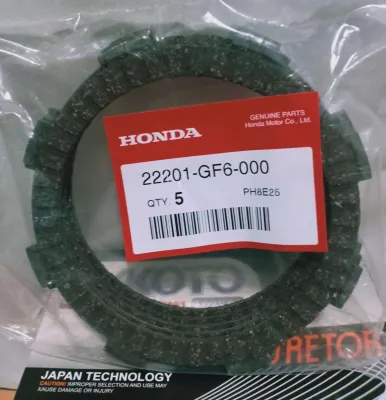
![[KV] Honda TMX155 Genuine CLUTCH LINING SET 22201-GF6-000 - 5pcs in 1set](https://img.lazcdn.com/g/p/7c2a7a4798172384158dd9ebb747a03d.jpg_400x400q80.jpg_.webp)
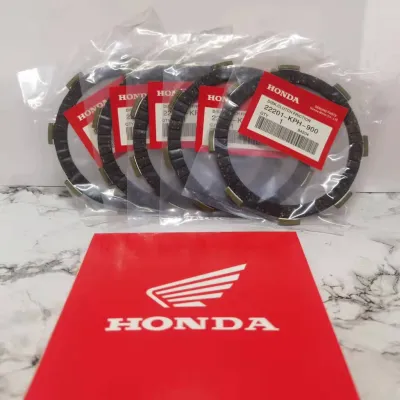
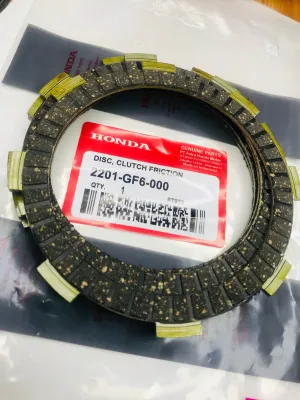
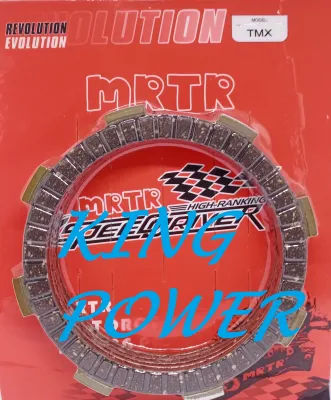
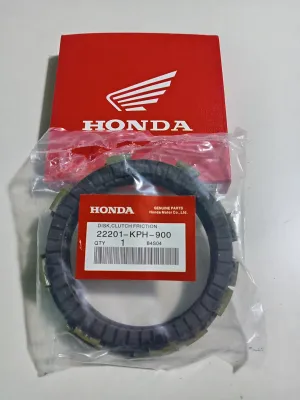
Prices are valid at publication and may change. Please refer to the product page for the latest price.
Another frequent symptom is difficulty shifting gears, particularly when trying to find neutral while idling. When the friction plates warp or degrade, they may not disengage fully when you pull the clutch lever, causing the transmission to drag. You might also notice a spongy or excessively loose clutch lever feel that cannot be resolved by adjusting the cable tension at the handlebar or the crankcase bracket.
The TMX 155 utilizes a wet clutch system, meaning the clutch assembly is submerged in engine oil to dissipate heat and lubricate moving parts. Over time, the friction material naturally sheds microscopic particles into the oil, and the plates thin out. If you continue to ride with severely worn linings, the metal backing of the friction plates can rub directly against the steel plates, generating extreme heat that can warp the steel plates and contaminate your engine oil.
Therefore, a physical inspection is a mandatory prerequisite before buying new linings. You must drain the engine oil, remove the right-side crankcase cover, and disassemble the clutch assembly. Simply replacing the linings on a damaged clutch basket—which may have deep grooves worn into its fingers by the plate tabs—will cause the new linings to hang up, leading to premature wear and erratic clutch engagement.
Evaluating OEM Clutch Linings: Factory Fitment and Authenticity
Genuine Honda OEM clutch linings are engineered specifically to match the metallurgical and thermal characteristics of the TMX 155 engine. By choosing OEM parts, you are purchasing components manufactured to strict factory tolerances, ensuring that the friction coefficient matches the tension of the stock clutch springs. This precise engineering guarantees a smooth, progressive engagement that minimizes shock loads on the transmission gears and provides a predictable lever feel from the moment of installation.

Furthermore, OEM linings are designed to withstand the high operating temperatures common in tropical climates, where stop-and-go traffic and heavy passenger loads put immense thermal stress on the wet clutch system. The proprietary friction compounds used in genuine parts are formulated to resist glazing—a condition where extreme heat crystallizes the surface of the lining, causing it to lose its grip permanently.
However, because the TMX 155 is incredibly popular, the market is flooded with counterfeit OEM parts packaged in convincing replica boxes. To protect your engine, you must actively verify the authenticity of any genuine Honda parts you purchase. Always inspect the packaging for high-quality, crisp printing, and look for the official security holograms that shift color when tilted under direct light. The part numbers printed on the label must match the official Honda parts catalog for the TMX 155, and the packaging should be completely sealed without any signs of tampering.
The primary trade-off with genuine OEM clutch linings is their higher upfront cost compared to aftermarket alternatives. While they require a larger initial investment, this cost is offset by the long-term predictability of their lifespan and the reduced risk of premature transmission failure. For riders who rely on their motorcycles for daily income, the peace of mind offered by genuine parts is often worth the premium.
Navigating Aftermarket Options: Cost Savings and Specification Checks
The aftermarket landscape for TMX 155 clutch linings is vast, ranging from established, globally recognized motorcycle component manufacturers to unbranded, low-cost alternatives. While the potential for cost savings is highly appealing, navigating this market requires a cautious, detail-oriented approach to ensure you do not compromise your motorcycle’s safety or performance.
When evaluating aftermarket options, focus on reputable aftermarket brands that specialize in motorcycle transmission components. These manufacturers often publish detailed technical specifications, use high-grade organic friction materials, and subject their products to rigorous quality control. Conversely, unbranded or generic parts are often sold at exceptionally low prices but lack any verifiable manufacturing standards or material specifications.
To safely select an aftermarket clutch lining, you must verify several critical specifications on the product packaging or the manufacturer’s official documentation. First, check the exact dimensions of the plates, including the outer diameter, inner diameter, and overall thickness. Even a fraction of a millimeter deviation from the stock TMX 155 specifications can prevent the clutch pack from fitting inside the basket or cause the clutch to slip or drag. Second, verify the spline count and tab configuration to ensure the plates align perfectly with the clutch center and basket slots.
Be vigilant for red flags when shopping for aftermarket parts. A complete lack of manufacturer contact information, vague compatibility claims, or inconsistent spline cuts are clear indicators of poor quality control. Additionally, if the price of a complete set of aftermarket linings is suspiciously low, it is highly likely that the friction material is of inferior quality and may disintegrate inside your crankcase, clogging your oil pump screen and causing catastrophic engine failure.
Making the Choice: OEM vs. Aftermarket Decision Framework
To make an informed decision, you must weigh your specific riding conditions, mechanical expertise, and budget against the verifiable characteristics of each option. The following framework is designed to guide your choice based on practical, real-world scenarios.
You should choose genuine OEM clutch linings if your primary goal is consistent reliability and you want to maintain the original factory riding feel of your TMX 155. This option is highly recommended if you use your motorcycle for heavy commercial hauling, such as operating a passenger tricycle or carrying heavy cargo over steep terrain, where the clutch is subjected to continuous slipping and extreme heat. OEM parts are also the best choice if you do not own precision measuring tools, such as a vernier caliper, to verify the dimensions of aftermarket alternatives before installation.
Conversely, you may choose a reputable aftermarket clutch lining if you are working within a tight maintenance budget and are sourcing the parts from a highly trusted, verifiable local distributor. Aftermarket options are also highly practical when genuine OEM stock is temporarily depleted at local dealerships, allowing you to get your motorcycle back on the road without unnecessary delay. This path is suitable for daily commuters who ride primarily on flat roads with light loads, where the thermal and mechanical demands on the clutch are relatively moderate.
However, you must verify first if your specific riding application demands specialized materials. For instance, if your TMX 155 has been modified for heavy-duty commercial use, you should check if the aftermarket manufacturer explicitly rates their linings for heavy loads or if they recommend upgrading to stiffer clutch springs to compensate for different friction coefficients. Never assume that an aftermarket part is suitable for heavy hauling simply because it fits physically inside the clutch basket.
Installation Requirements and Break-In Safety Boundaries
Replacing the clutch lining on a TMX 155 is a precise mechanical task that directly impacts the safety and road legality of your motorcycle. Before beginning, you must consult the official TMX 155 service manual to obtain the correct torque specifications for the clutch spring bolts and the main clutch hub nut. Over-tightening these fasteners can strip the aluminum threads of the clutch center, while under-tightening can cause the assembly to back out during operation, leading to a sudden loss of drive power.
During disassembly, you must inspect the clutch springs using a vernier caliper to measure their free length. If the springs have compressed beyond the service limit specified in the manual, they will not apply sufficient pressure on the new linings, causing them to slip. Additionally, you must check the steel plates for flatness by placing them on a precision flat surface and attempting to slide a feeler gauge underneath them. Any warped steel plates must be replaced alongside the friction linings.
Before installing the new clutch linings, you must soak them in clean, fresh motorcycle engine oil of the correct viscosity (typically 10W-40 or 20W-50 API SG or higher, JASO MA rated for wet clutches) for at least 30 minutes. Installing dry friction plates will cause them to burn and glaze almost instantly upon the first engine start, permanently ruining the new parts.
Once the installation is complete and the clutch cable free play has been adjusted to the manual’s specification (usually 10 to 20 millimeters of play at the lever tip), you must adhere to a strict break-in procedure. For the first 100 to 200 kilometers of riding, avoid carrying heavy passenger loads, climbing steep hills, or making aggressive high-RPM starts. This break-in period allows the new friction material to gradually seat against the steel plates, ensuring an even distribution of contact pressure.
You must establish clear stopping conditions during the installation process. If you discover deep notches or ridges worn into the fingers of the clutch basket, or if the clutch center hub shows signs of severe pitting or cracking, stop the installation immediately. Attempting to install new linings into a damaged clutch assembly is unsafe and can cause the clutch to stick, preventing you from disengaging the engine in an emergency. In such cases, you must consult a qualified motorcycle mechanic to replace the damaged housing components before proceeding.
Frequently Asked Questions (FAQ)
How often should I replace the clutch lining on a TMX 155?
There is no fixed mileage interval for replacing the clutch lining on a TMX 155, as its lifespan depends heavily on your riding habits, the loads you carry, and your oil change frequency. A motorcycle used for light daily commuting on flat roads may go tens of thousands of kilometers on a single set of linings, whereas a tricycle carrying heavy passenger loads in stop-and-go traffic may require replacements much sooner. Instead of relying on a set schedule, you should replace the linings immediately when you observe physical symptoms of wear, such as clutch slippage under acceleration, a sudden drop in fuel efficiency, or difficulty shifting gears.
Is it safe to mix OEM and aftermarket clutch plates?
No, it is not safe or advisable to mix OEM and aftermarket clutch plates within the same clutch pack. Different manufacturers use distinct friction material formulations, which result in varying friction coefficients, heat dissipation rates, and plate thicknesses. Mixing different types of plates can cause uneven contact pressure across the clutch pack, leading to localized overheating, rapid wear of the softer plates, and potential warping of the steel plates. To ensure smooth, reliable power transfer and protect your clutch basket from uneven wear, always replace the entire set of friction plates with identical parts from the same brand and product line.
Community discussion
Share your experience or ask a question. Comments are reviewed before publication.