
Quick Answer: Which Clutch Spring Should You Choose?
When maintaining or tuning your scooter’s transmission, choosing the correct clutch spring click 125i riders rely on is essential for maintaining optimal power delivery. The Honda Click 125i is one of the most popular automatic scooters in the Philippines, prized for its fuel efficiency, sharp styling, and reliability in dense urban traffic. However, like any mechanical component subjected to constant friction and heat, the clutch springs in the Continuously Variable Transmission (CVT) system will eventually wear out, stretch, or lose their tension. When this happens, riders are faced with a critical decision: should they replace them with genuine Honda Original Equipment Manufacturer (OEM) parts, or is it better to opt for aftermarket alternatives?
The short answer depends heavily on your budget, riding habits, and performance expectations. For the vast majority of riders who use their Click 125i for standard daily commuting and value long-term durability without the hassle of trial-and-error tuning, OEM clutch springs are the highly recommended choice. They offer guaranteed physical compatibility, factory-standard engagement, and a predictable lifespan. On the other hand, reputable aftermarket clutch springs are ideal for riders who are actively tuning their CVT system for specific performance characteristics—such as carrying heavy passenger loads up steep roads or improving initial throttle response—provided they carefully verify the part specifications and avoid low-quality counterfeits.
Understanding the Role of Clutch Springs in Your Click 125i
To make an informed decision, it is crucial to understand how these small but vital components function within the Honda Click 125i’s CVT system. The clutch assembly is located inside the rear pulley housing, protected by the aluminum CVT cover. Inside this assembly, the clutch springs (often called clutch tension springs or clutch shoe springs) are hooked between three pivoting clutch shoes. These springs exert a constant inward pull, keeping the clutch shoes retracted and preventing them from contacting the outer clutch bell when the engine is idling.
Products mentioned in this guide
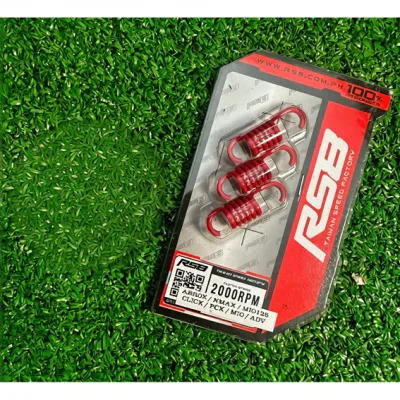
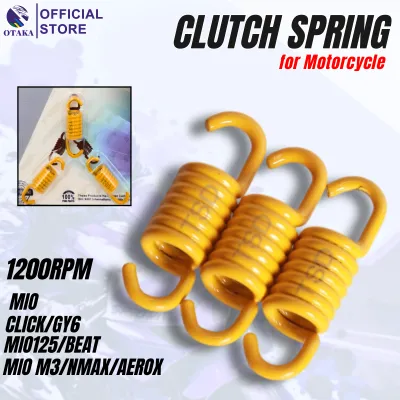
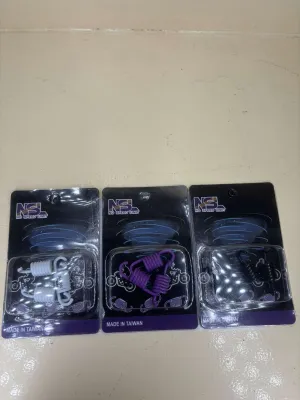
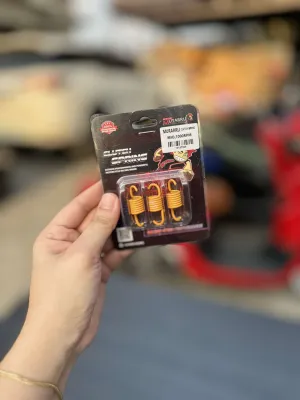
Prices are valid at publication and may change. Please refer to the product page for the latest price.

As you twist the throttle, the engine’s crankshaft spins the front drive pulley, which drives the belt and rotates the rear clutch assembly. As the rotational speed of the rear pulley increases, centrifugal force begins to pull the clutch shoes outward. Once the engine reaches a specific RPM, the centrifugal force overcomes the inward tension of the clutch springs. The clutch shoes swing outward, making firm contact with the inner lining of the clutch bell. This friction locks the shoes and the bell together, transferring rotational power to the final drive gears and ultimately spinning the rear wheel.
Over thousands of kilometers of daily riding, these springs are subjected to intense thermal and mechanical stress. The constant stretching and contracting, combined with the high operating temperatures inside the CVT casing—especially during hot Philippine summer afternoons or prolonged stop-and-go traffic—causes the spring steel to fatigue. When clutch springs become worn, soft, or stretched, they can no longer hold the clutch shoes back effectively. This leads to premature clutch engagement at an excessively low RPM, which manifests as a distinct shuddering or vibrating sensation (often called panginginig or palyado) when taking off from a complete stop. You may also notice a sluggish, spongy throttle response, as the clutch shoes slip repeatedly against the bell instead of locking cleanly into place.
Modifying the spring stiffness directly alters the RPM threshold at which the clutch engages. Stiffer springs require higher engine RPM to fling the clutch shoes outward, resulting in a more aggressive “launch” as the engine is already producing more power when engagement occurs. Softer springs engage earlier at lower RPMs, which promotes smoother, quieter cruising but can feel sluggish when accelerating under heavy loads.
Comparing OEM vs Aftermarket Clutch Spring Click 125i Options
Let us explore the core differences between OEM and aftermarket options across three critical dimensions: material quality, performance characteristics, and local market availability.
Material Quality and Durability
Genuine Honda OEM clutch springs are manufactured under strict quality control standards to meet the precise engineering specifications of the Click 125i. Honda utilizes high-grade, heat-treated spring steel that is specifically formulated to resist thermal fatigue. This means that even after hours of idling in the humid, tropical heat of Manila, the springs will maintain their exact tension rating. The metallurgy is highly consistent, ensuring that every spring in the set performs identically, which prevents uneven shoe engagement and maintains a balanced load on the clutch carrier.
The aftermarket landscape, however, is incredibly diverse and ranges from premium performance brands to cheap, unbranded components. High-end aftermarket manufacturers often use advanced alloys, such as silicon-chrome steel, which can withstand even higher temperatures and stresses than standard factory steel. These are excellent for modified engines or heavy-duty applications. Conversely, the market is also flooded with low-cost, unbranded springs made from inferior carbon steel. These budget options often lack proper heat treatment, causing them to sag, lose tension, or even snap after only a few weeks of use. When evaluating aftermarket options, it is vital to look for reputable brand packaging, security seals, and clear manufacturer markings rather than relying on generic product listings.
Performance and Engagement Feel
The performance of your scooter is directly tied to the stiffness of your clutch springs. OEM springs are calibrated to engage at a moderate, factory-specified RPM. This calibration is designed to deliver a smooth, quiet, and highly predictable acceleration curve that maximizes fuel efficiency and minimizes engine vibration. It is the ideal setup for standard daily commuting, where smooth low-speed filtering between cars is more important than aggressive off-the-line acceleration.
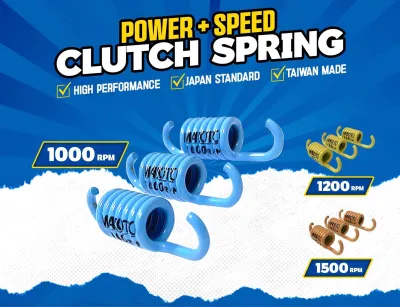
Aftermarket springs allow you to alter this engagement behavior by choosing different stiffness ratings, typically measured in RPM increments (such as 1000 RPM, 1500 RPM, or 2000 RPM). Stiffer aftermarket springs (such as 1000 RPM or 1500 RPM over stock) delay the engagement of the clutch shoes. This forces the engine to rev higher and generate more power before the scooter begins to move. When the clutch finally engages, the scooter launches forward with more urgency. This can be highly beneficial if you frequently carry heavy cargo, ride with a pillion passenger, or navigate steep inclines like those in Antipolo or Tagaytay. However, installing excessively stiff springs (like 2000 RPM) on an otherwise stock Click 125i can make daily city driving frustrating. It leads to a loud, high-revving engine at low speeds, jerky acceleration, reduced fuel efficiency, and accelerated wear on both the clutch linings and the CVT belt due to the sudden, high-RPM friction shocks.
Price and Availability in the Philippines
In the Philippine market, price and availability are major deciding factors for motorcycle owners. Genuine Honda OEM parts carry a price premium, reflecting their guaranteed quality and factory testing. They are best purchased from authorized Honda 3S shops, flagship dealerships, or highly trusted local motorcycle parts distributors. While they cost more upfront than basic aftermarket alternatives, they offer predictable value because they do not require frequent replacement or cause unexpected damage to surrounding CVT components.
Aftermarket clutch springs are widely available across a vast network of local motorcycle shops (from small neighborhood parts stores to major hubs in Caloocan) and online ecommerce platforms. They span a wide price range, from premium performance brands that cost as much as OEM parts, to incredibly cheap, unbranded options. While the low price of unbranded springs can be tempting, riders must be highly vigilant against counterfeit OEM parts. Online marketplaces are frequently populated with fake Honda parts packaged in convincing red-and-white labels but sold at suspiciously low prices. Purchasing these counterfeits is highly risky; they are often made from substandard metals that can fail catastrophically, leading to expensive repairs of the entire rear pulley assembly.
Detailed Comparison: What to Expect from Each Option
To help you systematically evaluate your options, let us look at the practical, verifiable attributes you must check before making a purchase. Rather than relying on vague marketing claims, focus on these physical and logistical dimensions:
- Part Number Verification: Genuine OEM springs must match the exact part number listed in the official Honda parts catalog for your specific Click 125i model year and variant (such as the Version 2 or the Version 3). Aftermarket brands utilize their own cataloging systems, meaning you must carefully verify their application lists to ensure the physical dimensions, wire diameter, and hook shapes are compatible with your rear pulley.
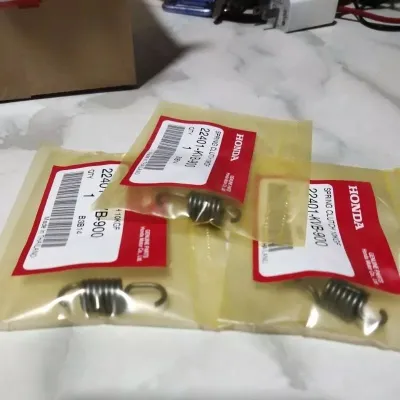
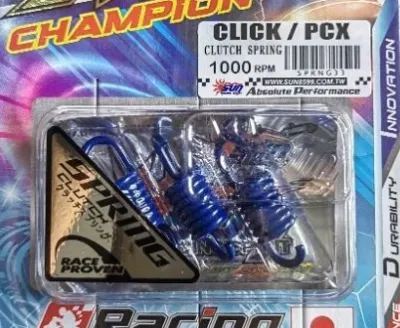
- Packaging and Labeling: Authentic Honda parts are sealed in thick, high-quality plastic packaging with crisp, high-contrast red-and-white labels featuring a scannable barcode, precise part number formatting, and clear country-of-origin markings. Counterfeits often have blurry text, off-center logos, or thin, easily torn plastic. Reputable aftermarket brands package their products in custom blister packs or branded boxes that clearly state the spring's stiffness rating and compatible scooter models.
- Spring Free Length: Before installing any clutch spring, always measure its uninstalled "free length" using a digital vernier caliper. Compare this measurement against the factory service manual specifications. OEM springs will match the factory dimensions perfectly. Aftermarket springs may have a slightly different free length or wire thickness to achieve their target stiffness, which is acceptable only if they are from a verified, reputable brand designed specifically for the Click 125i.
- Warranty and Return Policy: Sourcing OEM parts from an authorized dealer provides a reliable path for returns if there is a manufacturing defect or packaging error. In contrast, cheap aftermarket springs purchased from unverified online sellers rarely come with any warranty or return policy, meaning you bear the full financial risk if the part fails or is incompatible.
How to Decide: Matching the Spring to Your Riding Style
To choose the right clutch spring click 125i owners should buy, you must evaluate your primary riding environment, budget, and mechanical goals.
Choose OEM clutch springs if:
- Your scooter is primarily used for daily commuting, city riding, and standard utility tasks.
- You prioritize maximum fuel efficiency, smooth low-speed handling, and a quiet engine note.
- You want a straightforward, reliable repair that restores your scooter to its original factory performance without the need for additional CVT tuning.
- You prefer the peace of mind that comes with genuine parts backed by Honda's quality control.
Choose aftermarket clutch springs if:
- You are customizing your CVT system to achieve a specific performance goal, such as improved climbing ability on steep roads or sharper throttle response under heavy loads.
- You are purchasing from a highly reputable, established aftermarket brand with verified customer reviews and clear performance specifications.
- You are experienced with CVT tuning (or are working with a professional mechanic) and understand how to balance stiffer clutch springs with appropriate roller weights and a matching center spring.
Neither option will solve your problem if:
- The friction shoes on your clutch carrier are worn down past their service limit or have become heavily glazed from excessive heat.
- The inner surface of your clutch bell is deeply grooved, out of round, or exhibits a bluish discoloration, which indicates severe overheating and warping.
- Your CVT belt is worn thin, cracked, or slipping. Installing new clutch springs on a worn-out transmission assembly will not restore performance and may accelerate the wear of your new parts.
Verify first if:
- You are purchasing parts online. Always message the seller to confirm the exact model year compatibility for your Honda Click 125i, as minor mid-generation updates can affect the physical dimensions of the clutch carrier and the spring mounting holes.
Installation and Safety Checks Before You Ride
Working on your motorcycle’s transmission involves high-tension components and critical safety boundaries. Before attempting to replace your clutch springs, you must consult the official Honda Click 125i service manual for the correct procedures, safety warnings, and torque specifications.
Disassembling the rear pulley assembly requires specialized tools, including a CVT holding tool (or y-spanner), a clutch spring compressor, a large clutch nut wrench, and a calibrated torque wrench. The large nut holding the clutch carrier to the rear pulley is under significant tension from the heavy center compression spring. If you attempt to remove this nut without a proper clutch spring compressor, the assembly can fly apart violently, posing a severe risk of personal injury and damaging the delicate aluminum threads of the pulley shaft.
Safety Boundary: If you do not possess these specialized tools, have not been trained in CVT maintenance, or feel unsure about handling high-tension springs, do not attempt this installation yourself. Take your scooter and your new clutch springs to a qualified motorcycle mechanic at a reputable service center. A professional will ensure that the clutch nut and the outer clutch bell are tightened to the exact torque specifications recommended by Honda, preventing catastrophic transmission failure while riding.
After the installation is complete and the CVT cover is securely bolted back on, perform these essential safety checks before riding on public roads:
- Idle Check: Place the scooter on its center stand, start the engine, and let it idle. The rear wheel should not spin rapidly or try to pull the scooter forward at idle. If the wheel spins aggressively while idling, the clutch springs may be too soft, broken, or incorrectly installed, causing the shoes to engage prematurely.
- Noise Check: Listen carefully for any unusual metallic clicking, scraping, or rattling noises coming from inside the CVT casing, which could indicate loose components or incorrect assembly.
- Low-Speed Test: Conduct a brief test ride in a closed, safe environment (such as a quiet subdivision street). Slowly roll on the throttle to ensure that the clutch engages smoothly and predictably without slipping, shuddering, or forcing the engine to rev excessively before moving.
Frequently Asked Questions (FAQ)
Can I mix OEM and aftermarket clutch springs in the same clutch?
No, you must never mix different brands, stiffness ratings, or old and new springs within the same clutch assembly. The clutch carrier on your Click 125i uses three identical springs to pull the three clutch shoes inward with equal force. Mixing springs will cause the shoes to engage unevenly against the clutch bell. This imbalance leads to severe clutch shuddering, rapid and uneven wear of the clutch linings, localized overheating of the clutch bell, and an unstable, jerky riding experience. Always replace all three springs as a complete, matched set.
How do I know if my clutch springs are actually worn out?
The most reliable method is physical inspection and measurement. Remove the clutch springs and measure their uninstalled free length using a digital caliper, comparing the result to the wear limit specified in your Honda Click 125i service manual. You should also inspect the springs visually for signs of fatigue, such as permanent stretching (sagging), physical distortion, micro-cracks in the metal coils, or heat discoloration (a bluish tint), which indicates the spring steel has lost its tempered tension due to extreme operating temperatures.
Will stiffer aftermarket springs make my Click 125i faster?
No, stiffer clutch springs will not increase your scooter’s top speed or engine horsepower. They only delay clutch engagement to a higher engine RPM, which can make your initial launch feel more responsive and powerful because the engine is closer to its peak torque band when the clutch shoes grip the bell. However, once the clutch is fully engaged and locked, the springs have no further influence on your speed. Stiffer springs can actually reduce your fuel economy and make low-speed city riding feel loud and jerky.
Community discussion
Share your experience or ask a question. Comments are reviewed before publication.