
Choosing between an Original Equipment Manufacturer (OEM) and an aftermarket radiator coolant reservoir tank for your Honda Click or Yamaha Mio is a decision that impacts both your wallet and your engine’s survival. For most riders in the Philippines—especially those who navigate congested urban roads, commute daily, or operate delivery services—purchasing an OEM coolant reservoir tank is the highly recommended choice. OEM tanks offer guaranteed fitment, robust material composition engineered for tropical heat, and long-term durability that ensures your cooling system remains pressurized and leak-free.
Conversely, an aftermarket reservoir tank can be an acceptable choice if you are on a tight budget, own an older out-of-warranty scooter, or need a temporary replacement. However, choosing aftermarket requires you to carefully inspect the material grade, wall thickness, and mounting point alignment before installation. Because the cooling system is the primary line of defense against severe engine damage, compromising on the quality of this reservoir introduces high mechanical risks that could lead to expensive engine rebuilds.
Why the Coolant Reservoir Tank Matters for Your Scooter
In liquid-cooled scooters like the Honda Click 125i or 150i and liquid-cooled Yamaha models, the radiator coolant reservoir tank—often called the expansion or overflow tank—plays a vital role in thermal management. This is especially true in the Philippines, where high tropical ambient temperatures and dense, stop-and-go traffic in urban areas like Metro Manila put immense thermal stress on scooter engines. As your engine runs, the coolant absorbs heat and expands. This expansion increases pressure within the cooling system, forcing excess fluid out of the radiator through the pressure cap and into the reservoir tank. When the engine cools down, a vacuum is created, pulling the coolant back into the radiator.
Products mentioned in this guide
![CLICK 150 & CLICK 125 V1 / V2 V3 COOLANT RESERVOIR / TANK RESERVE HONDA GENUINE [Fast Delivery]](https://img.lazcdn.com/g/p/2e6fd0ab81b55eba2395fcad1be0c964.jpg_400x400q80.jpg_.webp)
![[Fast Delivery] ORIGINAL HONDA - TANK RESERVE- CLICK 125 V2- 19111-K59-A10](https://img.lazcdn.com/g/p/46f316997bec5a1e98c3fd4af320b632.png_400x400q80.png_.webp)
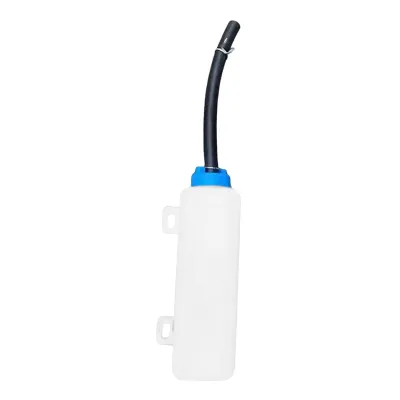
![[Fast Delivery] Radiator Coolant Reservoir Overflow Tank Recovery Bottle with Cap Replacement Part for Motorcycle](https://img.lazcdn.com/g/p/5c93953bb3da01cb21a8c5206d9e34ce.jpg_400x400q80.jpg_.webp)
Prices are valid at publication and may change. Please refer to the product page for the latest price.
This continuous cycle requires a reliable, sealed container that can handle fluctuating pressures and temperatures. If this tank fails, the delicate balance of the cooling loop is disrupted.
Recognizing the early warning signs of a failing reservoir tank can save you from expensive engine repairs. Look for visible cracks along the plastic seams, which often develop due to age, vibration, and constant heat cycling. Puddles of colored coolant pooling under your parked scooter are a clear indication of a leak. You might also notice discolored or highly contaminated fluid inside the tank, or find yourself frequently topping off the coolant because of slow, undetected leaks. Addressing these symptoms immediately prevents air from entering the system, which can otherwise cause localized hot spots inside the engine cylinder.
OEM vs. Aftermarket: Key Comparison Dimensions
Evaluating the differences between genuine and third-party reservoir tanks requires looking at several critical engineering metrics. While they may look similar on the outside, their performance under pressure and heat can vary significantly.

Material Quality and Build Durability
OEM reservoir tanks are manufactured from high-grade, heat-stabilized plastics, typically polypropylene or specialized polyethylene blends. These materials are specifically engineered to withstand prolonged exposure to elevated engine bay temperatures, high humidity, and UV radiation without becoming brittle. The manufacturing process involves precision blow molding or injection molding, resulting in uniform wall thickness and seamless joints that resist splitting under pressure.
With aftermarket alternatives, material quality varies widely across different manufacturers. Some budget-friendly aftermarket tanks are made from cheaper, non-heat-stabilized plastics that degrade rapidly when exposed to hot coolant and tropical ambient temperatures. When shopping for third-party options on online marketplaces or at local motorcycle shops, it is crucial to physically inspect the part if possible. Look closely at the molding lines, check for uneven plastic thickness, and search for manufacturer labels indicating the plastic grade. Avoid buying any tank that feels excessively light, flexible, or has rough, unfinished edges, as these are indicators of low-quality manufacturing.
Fitment Accuracy and Mounting Points
One of the most significant advantages of choosing an OEM coolant reservoir tank is guaranteed fitment accuracy. Because these parts are built to the exact blueprints of the Honda Click or Yamaha Mio, they align perfectly with the factory mounting brackets, pre-drilled bolt holes, and hose connections. This precise fitment ensures there is no physical tension on the plastic tabs or hoses once installed, which is critical for preventing stress fractures over thousands of kilometers of riding.
Aftermarket tanks, on the other hand, frequently suffer from minor dimensional discrepancies. A mounting tab that is off by just a few millimeters can make installation difficult, forcing you to bend brackets, use zip-ties, or force-fit coolant hoses. These workarounds introduce constant mechanical stress to both the tank and the hose connections, making them highly susceptible to premature failure due to engine vibrations. If you decide to purchase an aftermarket unit, verify the seller’s return policy so you can easily exchange or return the part if it does not line up correctly with your scooter’s frame.
Heat Resistance and Coolant Compatibility
The reservoir tank must be chemically compatible with the specific coolant formulations used in modern scooters. Genuine coolants contain ethylene glycol and various anti-corrosion additives designed to protect the aluminum components of your engine. OEM tanks are thoroughly tested to ensure they do not react chemically with these fluids, maintaining their structural integrity over years of operation.
Lower-grade aftermarket tanks may use plastics that are sensitive to chemical degradation or high thermal stress. Over time, exposure to hot coolant can cause these substandard plastics to leach chemicals into the cooling system or become highly brittle, leading to sudden cracking. Before purchasing an aftermarket tank, check the manufacturer’s product documentation or packaging to verify its rated temperature thresholds and chemical compatibility. Remind yourself that using the wrong coolant type in a substandard tank can accelerate plastic degradation, leading to sudden failure.
Price and Value: Is the OEM Premium Justified?
In the Philippine market, pricing is often the deciding factor for many scooter owners. OEM coolant reservoir tanks carry a price premium, reflecting the rigorous quality control, material testing, and exact engineering standards of brands like Honda and Yamaha. These parts are typically sourced from authorized dealerships or certified parts distributors. In contrast, aftermarket options are widely available on online marketplaces and local retail shops at a fraction of the cost, making them highly attractive to budget-conscious riders.
However, evaluating the true cost of a replacement part requires looking beyond the initial purchase price. A cheap, low-quality aftermarket reservoir tank carries a high risk of premature failure. If the tank cracks or leaks while you are riding, your scooter can experience rapid coolant loss. Without sufficient coolant, the engine temperature will spike almost instantly, which can lead to severe mechanical failures such as a warped cylinder head, blown head gasket, or a completely seized engine.
Repairing a seized engine or replacing a warped cylinder head on a Honda Click or Yamaha Mio can cost thousands of pesos in parts and professional labor. When viewed from this perspective, the price premium of an OEM reservoir tank acts as an affordable insurance policy. For daily commuters who rely on their scooters to navigate heavy traffic in metro areas, or delivery riders whose livelihoods depend on their vehicles, investing in an OEM tank is a highly cost-effective decision that minimizes the risk of expensive downtime.
Installation and Cooling System Safety Boundaries
Replacing a coolant reservoir tank is a manageable task, but it requires strict adherence to safety protocols and manufacturer guidelines. Before beginning any work, you must ensure the scooter’s engine is completely cold. Never attempt to open the radiator cap or disconnect any coolant hoses while the system is hot or warm. The cooling system operates under high pressure, and opening it prematurely can cause scalding hot liquid and steam to spray out, resulting in severe burn injuries.
The general replacement workflow begins with locating the reservoir tank, which is typically positioned near the rear frame or under the body panels depending on your specific scooter model. Place a clean drain pan beneath the scooter to catch any escaping fluid. Carefully disconnect the overflow and bypass hoses from the old tank, noting their orientation. Remove the mounting bolts securing the tank to the frame, slide the old unit out, and mount the new reservoir in its place.
Once the new tank is secured and the hoses are tightly reconnected, you must refill the system with the correct coolant type specified in your owner’s manual. After refilling, it is critical to bleed any trapped air pockets from the cooling system. Air pockets can block the flow of coolant, leading to localized overheating and erratic temperature readings on your dashboard. To bleed the system, start the engine with the radiator cap off (only when starting from a completely cold state), let it idle for a few minutes until it reaches operating temperature, and watch for air bubbles escaping from the filler neck. Top off the fluid as needed, then securely tighten the cap.
Always consult the official Honda or Yamaha service manual for your specific model and year to verify exact torque specifications, hose clamp placements, and the correct coolant type. If the scooter is under warranty, recommend professional dealership installation to avoid voiding coverage.
Decision Framework: Which Tank Should You Buy?
To make the best purchasing decision for your scooter, consider your specific riding conditions, budget, and vehicle age. Use the following conditional guidelines to choose the right coolant reservoir tank:
Choose an OEM tank if:
- You use your Honda Click or Yamaha Mio for daily commuting, long-distance rides, or ride-sharing; your scooter is relatively new; or you prioritize peace of mind and exact fitment.
- You want a straightforward, drop-in installation without the need for modifying brackets or adjusting hose alignments.
- You want to maintain the manufacturer's warranty coverage and ensure long-term mechanical reliability.
Choose an aftermarket tank if:
- You are on a strict budget and need an immediate, low-cost solution to keep your scooter running.
- Your scooter is an older, high-mileage model that is out of warranty, and it is used primarily for short, low-speed trips.
- You have verified the seller's reputation, checked positive feedback from other owners of your exact model, and confirmed the part's material specifications.
Before finalizing any purchase, especially when shopping on online marketplaces, always cross-reference the part number with your exact scooter model year and variant, as mounting brackets and hose routing can change between generations. For example, the mounting design may differ between a Honda Click 125i older version and the newer Click 160, or between different model years of liquid-cooled Yamaha scooters. Taking a few minutes to verify compatibility with the seller before purchasing will save you time and prevent the hassle of returning an incompatible part.
Frequently Asked Questions (FAQ)
Can I use a universal coolant reservoir tank on my Honda Click or Yamaha Mio?
Using a universal coolant reservoir tank on your scooter is highly discouraged. Universal tanks are not designed for the specific spatial constraints, mounting configurations, or hose routing of individual scooter models. Attempting to install one often requires extensive modifications, such as fabricating custom brackets or routing hoses at sharp angles that can kink and restrict coolant flow. These modifications can compromise the overall efficiency of your cooling system and increase the risk of leaks or structural failure under vibration. For proper thermal management, always use a model-specific OEM or aftermarket tank designed specifically for your vehicle.
How often should I replace the coolant reservoir tank?
Unlike engine oil, spark plugs, or air filters, the coolant reservoir tank is not a routine maintenance item with a fixed replacement schedule. It is designed to last for many years under normal operating conditions. You should only replace the reservoir tank when a physical inspection reveals damage, such as visible cracks, leaks at the seams, distorted mounting tabs, or severe plastic degradation caused by age and heat exposure. It is good practice to visually inspect the tank and check the coolant level during every regular oil change or scheduled maintenance interval to catch potential issues early.
Community discussion
Share your experience or ask a question. Comments are reviewed before publication.